

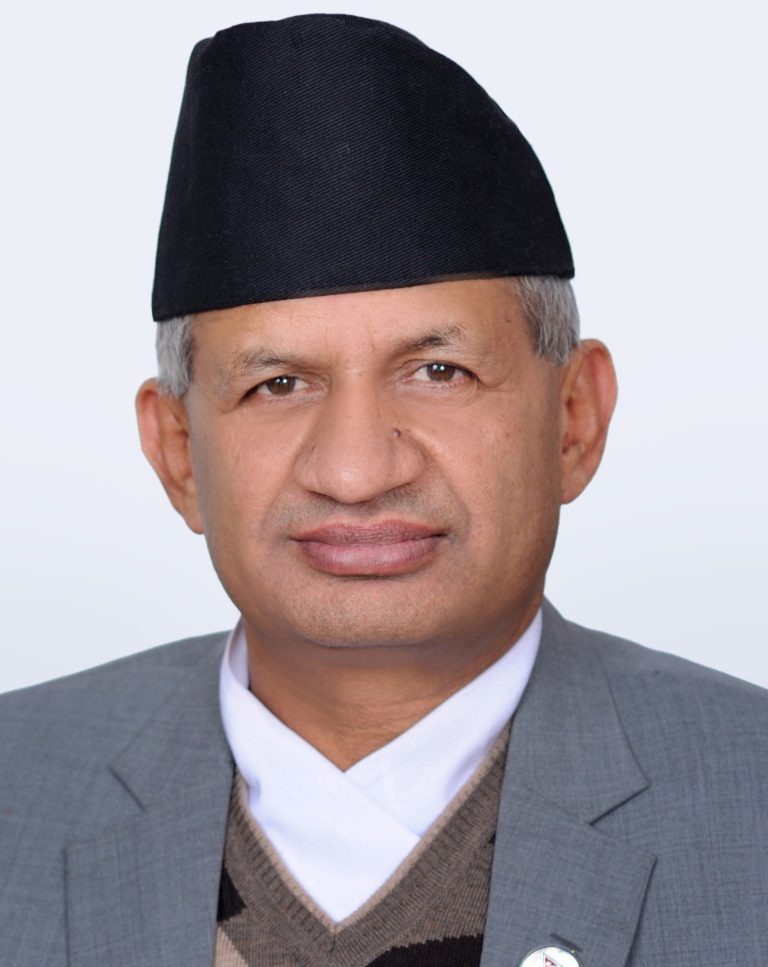
CPN-UML’s Deputy General Secretary and former Foreign Minister Pradeep Gyawali is known as a leader who closely observed the ten-year-long Nepal Armed Conflict, the Comprehensive Peace Agreement, and the transitional justice process. This is a conversation between Ramesh Timilsina and Mr. Gyawali regarding the contents of the Comprehensive Peace Agreement and the processes to be followed in transitional justice.
How do you analyze the overall human rights situation in Nepal?
From a theoretical perspective, the scope of democracy and human rights is quite broad. Our country also has a long legacy of human rights. Even when the state was autocratic, political parties fought for democracy and human rights, making them key issues. In the first pamphlet issued by the Nepal Communist Party in 2006, the slogan of “Long Live -Civil Liberties” was mentioned. Similarly, the Nepali Congress also promoted democracy and human rights. Even during long periods of autocratic rule, political parties continued to push forward the banner of democracy. Both mass organizations closely associated with the parties and civil society, and organizations not directly linked to the parties, continued to advance the issues of democracy and human rights. The reflection of this was seen in the changes of 1989(2046) and 2006(2063). After the change of 2006(2063), the constitution that was created allowed for a broader arrangement of human rights.In terms of democracy, we are ahead of many countries that merely talk about it. From a theoretical, policy, and legal perspective, human rights and democracy are fully guaranteed in Nepal. We have incorporated the latest definitions and dimensions of human rights into the constitution and laws. However, there are challenges in implementation. To achieve the goal and vision of building an equitable, democratic, and prosperous Nepal as specified in the constitution, the existing gaps need to be bridged.
Are you stating that there is a problem with implementation?
From a constitutional and legal perspective, we have made sufficient provisions for human rights. Looking at our constitution and key laws, there is no room for anyone to question Nepal’s commitment to human rights. There is no doubt about it. In fact, in many cases, we are in a position to set a new example, even for countries that call themselves democratic. The real question is how to translate the letter and spirit of these constitutional and legal provisions into practice. And whether citizens have been able to enjoy the human rights guaranteed by the constitution and laws or not. In other words, the policy provisions must be brought into simple and practical implementation.
In the Comprehensive Peace Agreement, tasks that were supposed to be completed within six months have still not been done even after 18 years. What could be the reason for this, political reluctance or something else?
In 1995, when the then CPN-Maoist took up arms, there were still serious questions about the legitimacy, justification, relevance, and necessity of that decision and step. The weapon that was not raised against the Panchayat was raised In the fifth year of the multi-party system, was this decision just a theoretical and misunderstanding at that time?There were other factors behind it, which aimed to weaken Nepal’s newly established democracy and push the country towards conflict. This is a question under consideration in history.
The country endured great suffering for 10 years. There may have been some positive aspects as well. It likely played a role in the change. That is why the peace agreement was made. The peace agreement was considered a political consensus. However, the serious human rights violations that occurred at that time cannot be forgiven. We committed to resolving such incidents through transitional justice. It is the acknowledgment of the serious human rights violations that led to the advancement of the transitional justice process.
When looking at Nepal’s peace process, two pictures emerge. One shows that we have accomplished some tasks in an incredibly swift and positive manner. The other shows that, in some areas, there has been unnecessary and extreme delay. Generally, the peace process had three main aspects. The first was the political issue, which we successfully addressed. We held the Constituent Assembly elections, created the constitution through the Constituent Assembly, established a republic, and restructured the state. We established an inclusive and proportional electoral system and incorporated broad human rights dimensions. We successfully resolved these issues. The second aspect was the management of Maoist combatants. This was also fundamentally resolved in the right way, though there was room for even better handling. Former combatants largely agreed to the process, which is a very positive outcome.
In many other countries, when political leadership tries to make peace agreements, we see incidents where one party disagrees, groups split, and violence continues. Nepal was different in this regard, which was a good thing. The third aspect was transitional justice. The 17–18 year delay in this area is unusual. This delay is primarily the result of the extreme neglect by the warring parties. Transitional justice became a victim of political maneuvering and negligence. We, who were not part of the warring parties and played a crucial role in advancing the peace process, perhaps did not generate enough pressure to ensure that, despite everything, the bill was passed unanimously and the law was created. This can be said to have set a path of consensus. It has given rise to some hope. The process is moving forward, and the commission is now in the process of being formed. This creates an encouraging situation.
You might be referring to the Maoists and Congress as the warring parties. Why is the UML, which has been in power multiple times, not included as one of the warring parties?
At that time, an agreement was made between the seven political parties and the Maoists. The warring side refers to the government of that time (which was mostly led by the Nepali Congress, and at one point, the king ruled directly). The rebel Maoists were naturally included. However, we are not one of the warring parties. From the beginning, the then CPN-UML believed that the Maoist movement was essentially a political issue. However, there were elements of injustice within it. We addressed the issues with a three-pronged policy: opposing injustices, rejecting the political and ideological wrong paths, and approaching the problem politically through dialogue for a political solution while addressing violence and atrocities in that context.
You might be trying to refer to the Maoists and the Congress as the conflicting parties. Why is the UML, which has been in power repeatedly, not included as a conflicting party?
The agreement between the seven political parties and the Maoists during that time established certain sides in the conflict. The “conflicting party” at that time was the government (mostly led by the Nepali Congress, although the King also took control during his direct rule for some time) and the insurgent Maoists. However, we do not consider ourselves as part of the conflicting parties. From the beginning, the CPN-UML believed that the Maoist movement was essentially a political problem. While there were aspects of oppression within it, we opposed the injustices and rejected the political ideologies behind them. We addressed the problem by acknowledging it as a political issue, aiming for a political solution through dialogue, and responding to the acts of violence and injustice with a policy of three main dimensions: addressing the issue politically, rejecting ideological errors, and addressing violence and oppression in a corresponding manner.
Undoubtedly, we have been in government for a long time. During our time in government, we have worked with full dedication, and the facts themselves confirm this. There is no need to say much. The government led by Madhav Kumar Nepal initially presented the bill related to transitional justice in the Legislature Parliament. This was the first step in establishing a legal framework for transitional justice. The bill could not take legal form due to disputes over which crimes or events should be pardoned and which should not. Even after that, we continued to push forward. Later, the government led by Baburam Bhattarai introduced an ordinance, which eventually became a law. I myself participated in the creation of that ordinance. However, I disagreed with the provision that pardons could be granted for incidents other than rape and sexual violence. Despite my disagreement, the law was passed. The Supreme Court later raised serious questions regarding that law, and certain provisions were annulled. After that, during the tenure of Prime Minister KP Oli, there were repeated efforts and initiatives to resolve the issue. As a result, the government led by KP Oli later presented a bill, which was unanimously passed by Parliament, and now we are at the stage of forming commissions. These events highlight our efforts. This issue should not be turned into a political game. We must ensure justice for the victims as soon as possible and close the door on the matter. It must be addressed in a way that is acceptable to the victims, the international community, and the main stakeholders.
During the conflict, serious human rights violations occurred from both sides. However, there seems to be a tendency of intimidation and terror from the Maoists. Why?
Serious human rights violations have taken place from both sides. A long list can be made, including incidents like Harjang, Bandarmude, Muktinath Adhikari, Kajol Khatun, among others. These are representative incidents of serious human rights violations committed by the Maoist side. Similarly, representative incidents of serious human rights violations committed by the state side include Doramba, Shivpuri, Maina Sunar, Krishna Sen, and others. There was a situation where it seemed like there was a competition for atrocities. It felt like a race to see who could commit more atrocities. Regardless of which side they came from, civilians were the victims. Our concern, our focus, our attention is that the innocent must receive justice. The victims must get justice.
The situation where the victim’s family is deprived of justice must come to an end. Only when justice is delivered can we ensure that the recurrence of the conflict will not happen. It is said that there should be no pardon for heinous human rights violations, and this is to prevent the recurrence of the conflict. It is for the justice of the victims. For a long time, this issue remained controversial. We made continuous efforts to reach an agreement. The main four issues extrajudicial killings (excluding direct confrontations), rape and sexual violence, forced disappearances, and other incidents of torture were agreed upon, with provisions for reducing or granting pardons in some cases.
Is this process a trap to mislead us? This psychology can be found among friends on both sides of the conflict. There is a concern that we might be dragged into it in the name of the chain of command. These kinds of issues have caused fear among them, and that is the truth. Even though the then-government made laws, it adopted a policy of repression. The rebels adopted a policy of seizing power. This is a political issue. However, within that context, we have stated that there must be personal accountability for what happened. If someone was involved or if the event occurred under someone’s direction, those details will come out in the testimony. The investigation will reveal them. We will discuss such matters at that time. Only after reaching this conclusion was the agreement made. Otherwise, as you mentioned, there seemed to be a psychology where, in the name of the chain of command, one would have to be dragged into it, either explicitly or implicitly.
Some exaggerated discussions have also gained attention. A topic that has been in discussion for a long time in Nepal is the Hague. However, as we all know, Nepal has not yet become a party to the Rome Statute of the International Criminal Court. The day Nepal becomes a party, it will apply to the events that occur thereafter. The Rome Statute does not have retroactive provisions. Without understanding this, issues like sending people to the Hague have been topics of discussion. When such topics surface, a certain level of fear is naturally generated. However, there is no need to panic about this issue. But, within Nepal’s judiciary, those responsible for serious human rights violations must be held accountable. They must face punishment. However, we have made provisions for up to a 75% reduction. There will be symbolic action in cases involving politically motivated events, but there will be no amnesty. In cases of serious violations, there will be no concession in prosecution.
After the peace agreement, the Maoists showed leniency in the integration of fighters and weapons management, but the process slowed down once they were increasingly singled out as the only ones to be blamed. What do you have to say about this?
That is not true. In incidents of human rights violations and atrocities, they are not the only ones responsible. Many such incidents have also been committed by the state side, as recorded in the records, which we discussed earlier. It is well known that even a minister openly said, ‘Bring the head of some Maoist leaders and take money in the bag.’ We should not forget such issues. Therefore, the Maoists should not be solely targeted as the accused, and they have not been. Atrocities occurred from both sides. The peace process is meant to include the victims. That means including the citizens who were victims from both sides. Our focus is on the victim. The main concern of the peace process is reconciliation. However, reconciliation should not be understood as something that can happen anywhere, at any time. Since reconciliation is the central focus, the name of the commission is Truth and Reconciliation Commission, not Truth and Punishment Commission. Reconciliation cannot happen until the victims are satisfied. For the victims to be satisfied, the truth must be established. The perpetrator must confess to their wrongdoing. After that, amnesty can be granted for other incidents, except for four categories (extrajudicial killings, rape and sexual violence, forced disappearances, and torture). Even when granting amnesty, it will be with a 25% penalty. It will not be full amnesty.
What is the basis for believing that victims will now receive justice through this process?
First of all, we have already been delayed a lot. As human rights advocates or, let’s say, as journalists, you have the right to raise this question. We will answer this question through our actions. We will work in a way that renders this question irrelevant. The Prime Minister, the leader of the major political party, and the leader of the main opposition party have already apologized in parliament regarding the delay in passing the bill. There will be no further delay. It should not happen. We can no longer afford to delay it.