

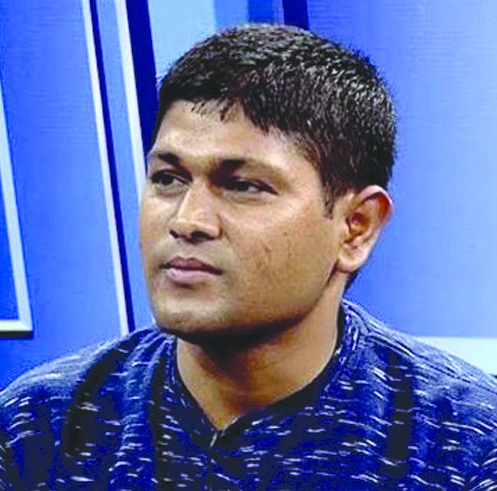
The School of Psychology Nepal’s Chairperson, psychologist Dr. Narendra Thagunna, says that the development of positive thinking can help prevent mental health problems. After natural disasters and pandemics, what can be done to reduce possible mental health issues? Below is an interview with psychologist Dr. Thagunna conducted with INSEC Online.
After natural disasters or pandemics, it is said that mental health is significantly affected. Can you explain the risks?
After natural disasters, pandemics, or unexpected events, mental health is affected. This is natural. In such situations, the risk to mental health increases. The COVID-19 pandemic changed our daily lives. That is why the risk to mental health in such situations is very high. This projection has also been made by organizations working in the field of mental health. The World Health Organization has also indicated that such risks may increase.
What kinds of mental health problems can emerge?
Levels of stress may increase, anxiety disorders may develop, depression may occur, and there may be an increase in suicidal tendencies and post-traumatic stress-related conditions. Sleep-related mental health problems may also rise. The risk of suicide can be significantly high. The American Psychological Association has stated that the risk of suicide may sharply increase after lockdowns are lifted. Therefore, various mental health challenges and risks are almost certain in the coming days.
What measures can ordinary citizens take to avoid these possible risks?
There are many measures. At such times, attention should be given to a balanced diet. Another important measure is to avoid letting negative thoughts dominate the mind. Even in the midst of difficulties, struggles, and negative situations, one should try to find positive aspects. Although lockdown itself is not a good situation, it can also be seen as an opportunity—for example, staying at home to avoid risks, strengthening family relationships by spending time together, increasing care and affection among family members, and improving self-care. These should be understood as positive aspects of lockdown.
Increasing positivity and reducing negativity can help protect mental health from potential risks. One should also focus on self-care and spend time creatively. Creativity helps reduce negativity. Allocating time for activities one enjoys also helps develop positive emotions. Positive thinking reduces despair. One should also talk with people who understand their feelings. If we accept our thoughts and try to transform them positively, we can avoid potential mental health risks.
So you mean that keeping busy in free time and developing positive thinking improves mental health?
Those who suffer from mental health problems are often found to have a significant role of negative thinking. In particular, people who are negative about themselves, others, and their circumstances are more likely to develop mental health problems. Therefore, developing positive thinking, accepting one’s thoughts, and staying away from unnecessary news related to pandemics can improve mental health.
Repeated exposure to news about deaths, problems, and distress can negatively affect mental health, so one should allocate a specific time for receiving news and information. Excessive use of social media can also continuously expose people to such content, which may further worsen the situation. Therefore, such behaviors should also be avoided.
It is said that compared to other countries, the rate of mental health patients is lower in Nepal. Is this true?
Generally, studies conducted in Western countries suggest that about 8–10 percent of people affected by an event may develop post-traumatic stress disorder. However, studies conducted in Nepal after the earthquake found that only about 4–5 percent experienced such conditions. However, large-scale studies have not been conducted.
In our context, social and cultural systems play a role. Our social norms of helping others in times of distress help prevent people from reaching severe mental health conditions. Religious practices such as prayers and devotional songs also contribute to mental well-being. These factors reduce the rise of negative thoughts, which is why the rate of mental health patients in Nepal is comparatively lower than elsewhere.
So you mean that people who understand their situation have fewer mental health problems?
Those who are able to return to their previous state after a difficult situation tend to have fewer mental health problems. In the context of a pandemic, those who can accept that “this is not happening only to me, it is happening to everyone” experience fewer such issues. This is what is meant by understanding the situation.
Since we are a connected society, we share our joys and sorrows with others. As a result, our social relationships are relatively strong. We also share our problems with others, which helps lighten the mental burden and brings peace of mind. Therefore, people who understand their situation tend to have fewer mental health problems.