

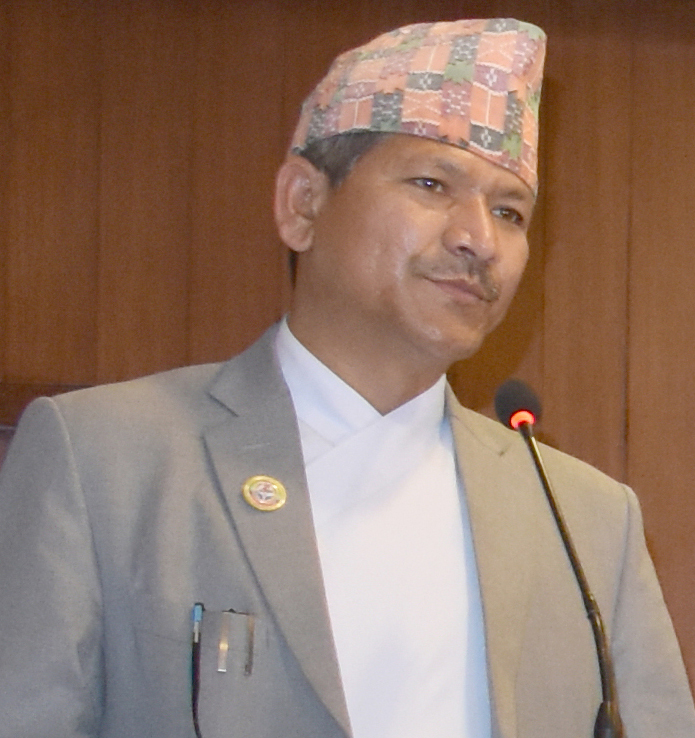
Article 255 of the Constitution of Nepal outlines the existence of the National Dalit Commission. In this interview, Devaraj Bishwakarma, the Chairperson of the Commission, discusses its ongoing efforts to protect Dalit rights and address issues affecting the Dalit community in Nepal.
What is the status of caste discrimination and untouchability in Nepal?
Incidents of caste discrimination have decreased in Nepal as comparison to the past. In the past, the state itself institutionalized caste discrimination by enacting laws that deeply embedded religious beliefs. The Manusmriti was a religious law, and the Muluki Ain of 1910 BS continued its legacy. While the new constitution was designed to displace the impact of the Manusmriti and the 1910 Muluki Ain, no time-bound measures were set to eradicate these practices. As a result, progress has only shifted from 20 to 19, and it seems it will take a long time to eliminate these issues entirely. While there is a gradual decline, it is happening at a very slow pace.
What legal provisions exist to end caste discrimination and untouchability in Nepal?
While there are some progressive legal provisions, they are not up to date with the current needs. The Constitution has made significant commitments to address the Dalit issue with sensitivity, but despite nearly a decade passing, the corresponding laws have not been enacted. The situation has arisen due to the devaluation of the labor and contribution of the Dalit community. They have been marginalized economically, socially, educationally, and politically, not because they have failed to act, but because they have been prohibited from doing so. The provisions in Article 40 of the Constitution cannot be implemented until the law is enacted, which means indicators of Dalit progress will not improve. On the other hand, laws related to punishing offenders have also proven ineffective. It appears that the Nepal Police has not prioritized the enforcement of these laws. Additionally, laws related to enhancing education, healthcare, employment, and mainstreaming have not been enacted. Overall, the legal framework necessary to address this communal practice as an obstacle to Nepal’s progress has not been established as it should have been.
What is the reason for the lack of decrease in caste discrimination incidents despite various constitutional and legal provisions?
The reason for the persistence of caste discrimination incidents seems to lie in the mindset of Nepali society itself. We have not been addressing the deep-rooted social customs that we have been following for thousands of years with the sensitivity they deserve. For example, when a person from Dalit community is not allowed to worship in a temple, fetch water from a stream, is given separate food at school, is deprived of playing an appropriate role in public ceremonies, or is denied opportunities due to their community despite having all the qualifications. We normalize these practices as if they are just part of tradition. This is why incidents of discrimination have not decreased. When voices are raised against such behavior, Dalits are often accused of dividing society. Those who engage in such practices are the ones preventing social unity. The main reason for the persistence of discrimination is that the mindset and values of those who discriminate have not changed.
What can be done to reduce caste discrimination incidents?
To reduce caste discrimination, it is crucial to raise awareness among the non-Dalit community about the hardships faced by Dalits, such as humiliation, exclusion, and discrimination, by helping them empathize with the Dalit experience. Alongside this, effective implementation of constitutional provisions, laws, and policies is necessary to ensure that the rights of Dalits are protected. Furthermore, as the Dalit community remains disadvantaged in economic, social, educational, and political areas, focused efforts on their empowerment and inclusion in mainstream society are essential. This includes providing equal access to education, employment opportunities, and social services, as well as creating platforms for their active participation in political and civic life. Through these targeted actions, caste-based discrimination can be significantly reduced and eventually eradicated.
What actions is the National Dalit Commission taking to protect the rights of Dalits?
The Commission is primarily working to ensure that key institutions, which should play a major role in ending discrimination, are made accountable. It is focusing on encouraging all three levels of government to address caste-based discrimination, particularly at the community level, where harmful traditions, superstitions, and social practices need to be eradicated. The Commission is also working on coordinating and collaborating on various other rights for the Dalit community. It is involved in all forms of human rights protection for Dalits. Additionally, the Commission provides policy recommendations to the three levels of government and is actively engaged in research and studies related to Dalit issues.
You mentioned that the Commission is doing a lot of work, but there are complaints that the Commission is not effective. What do you have to say about that?
The Commission was established with significant responsibilities and duties, but to fulfill these duties, adequate resources and funding are essential. Due to the government’s inability to provide the necessary resources, it is natural that the work has been affected. However, it is not that the Commission has done nothing. The Commission has utilized its existing capacity to the maximum extent possible. It is still committed to working in line with public expectations. We are appealing to all individuals and organizations working in the field of human rights to collaborate and partner in protecting the human rights of the Dalit community.