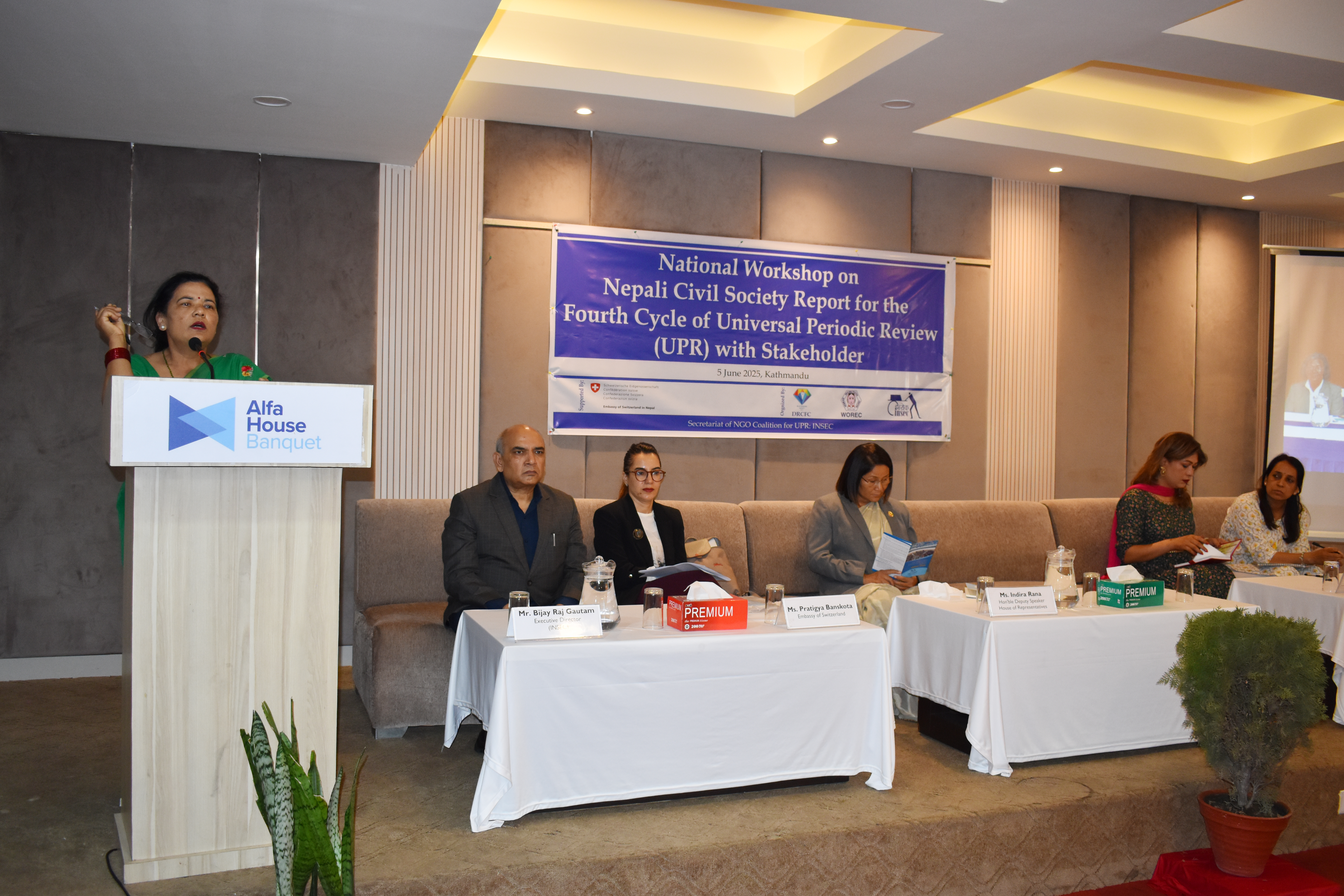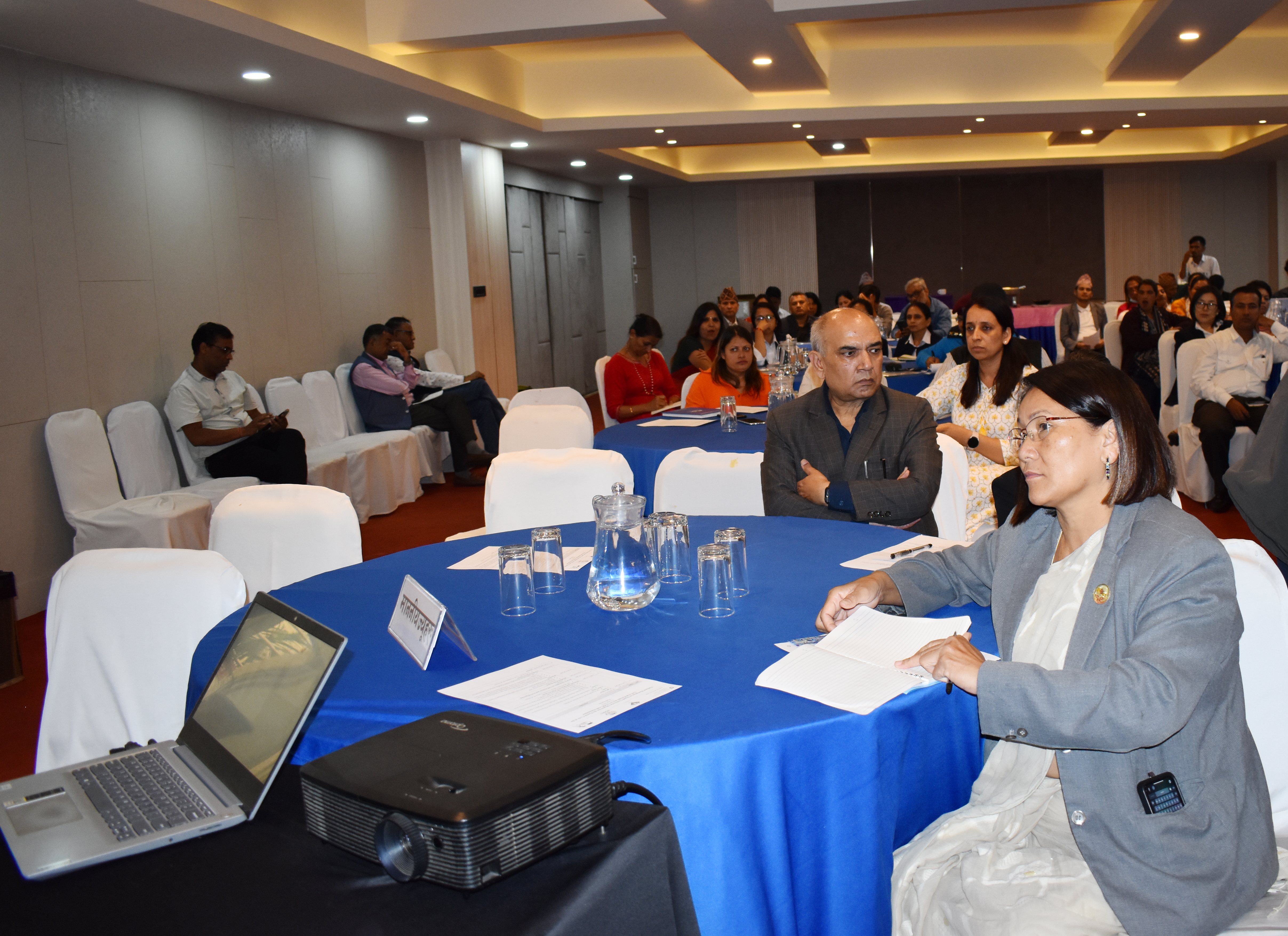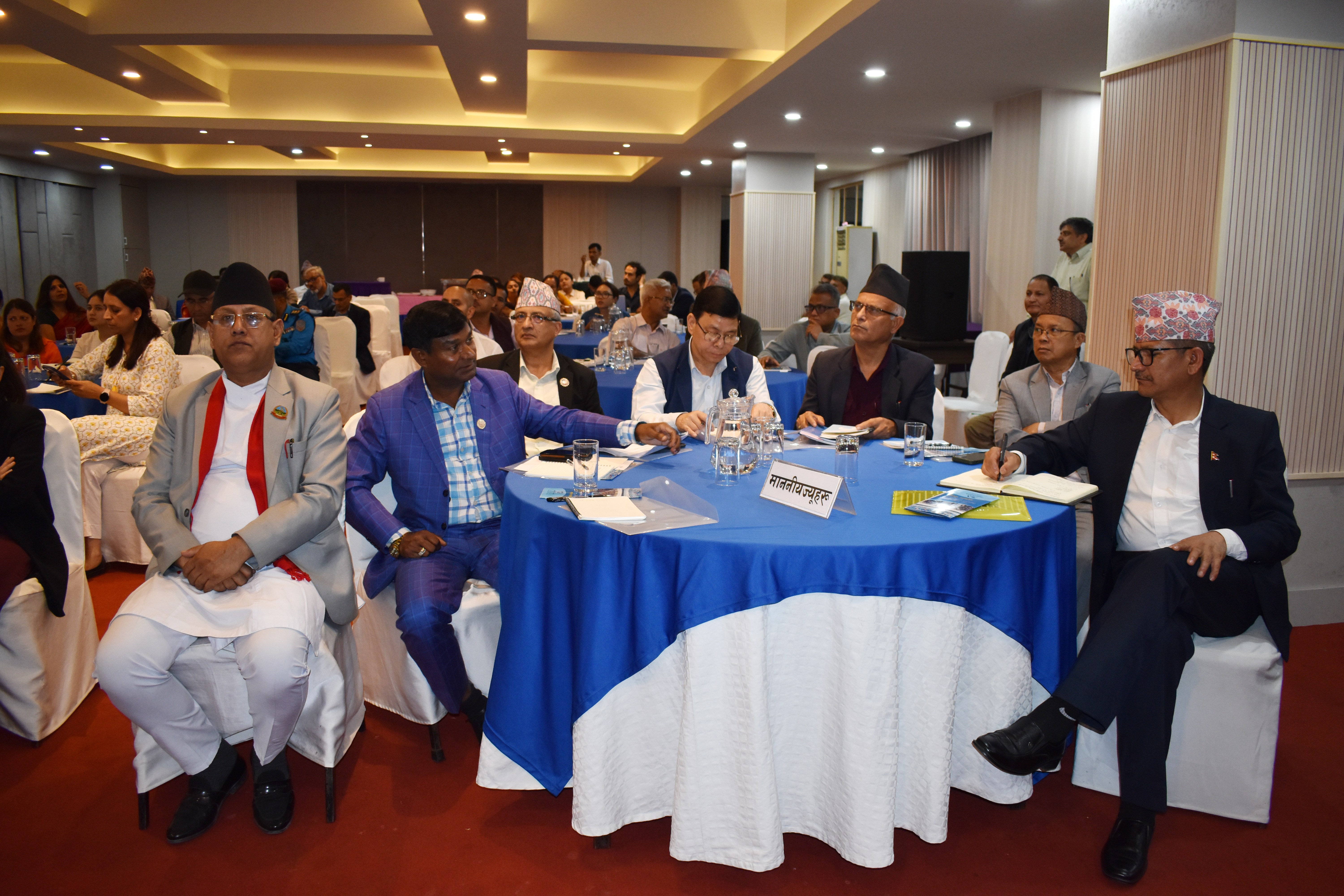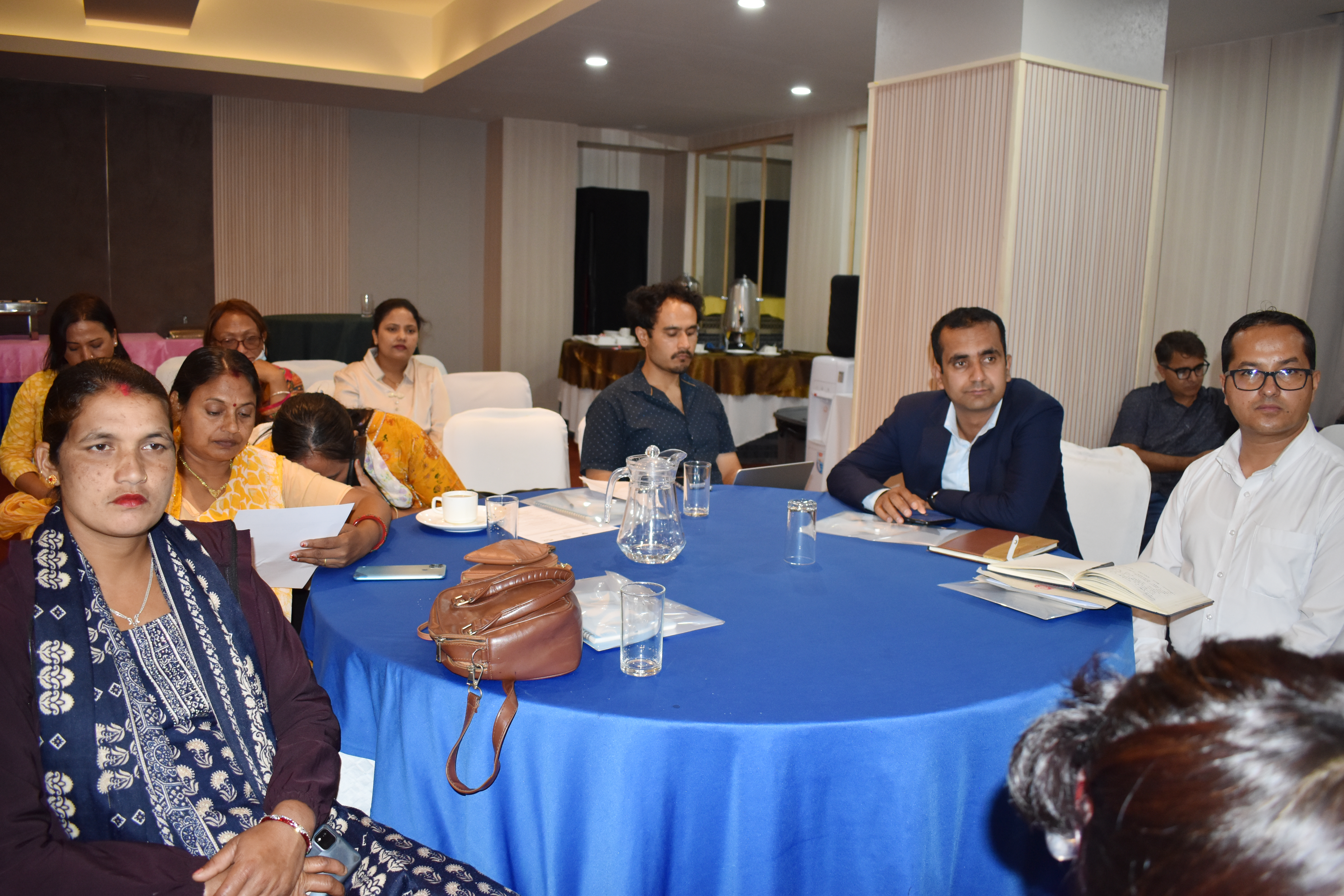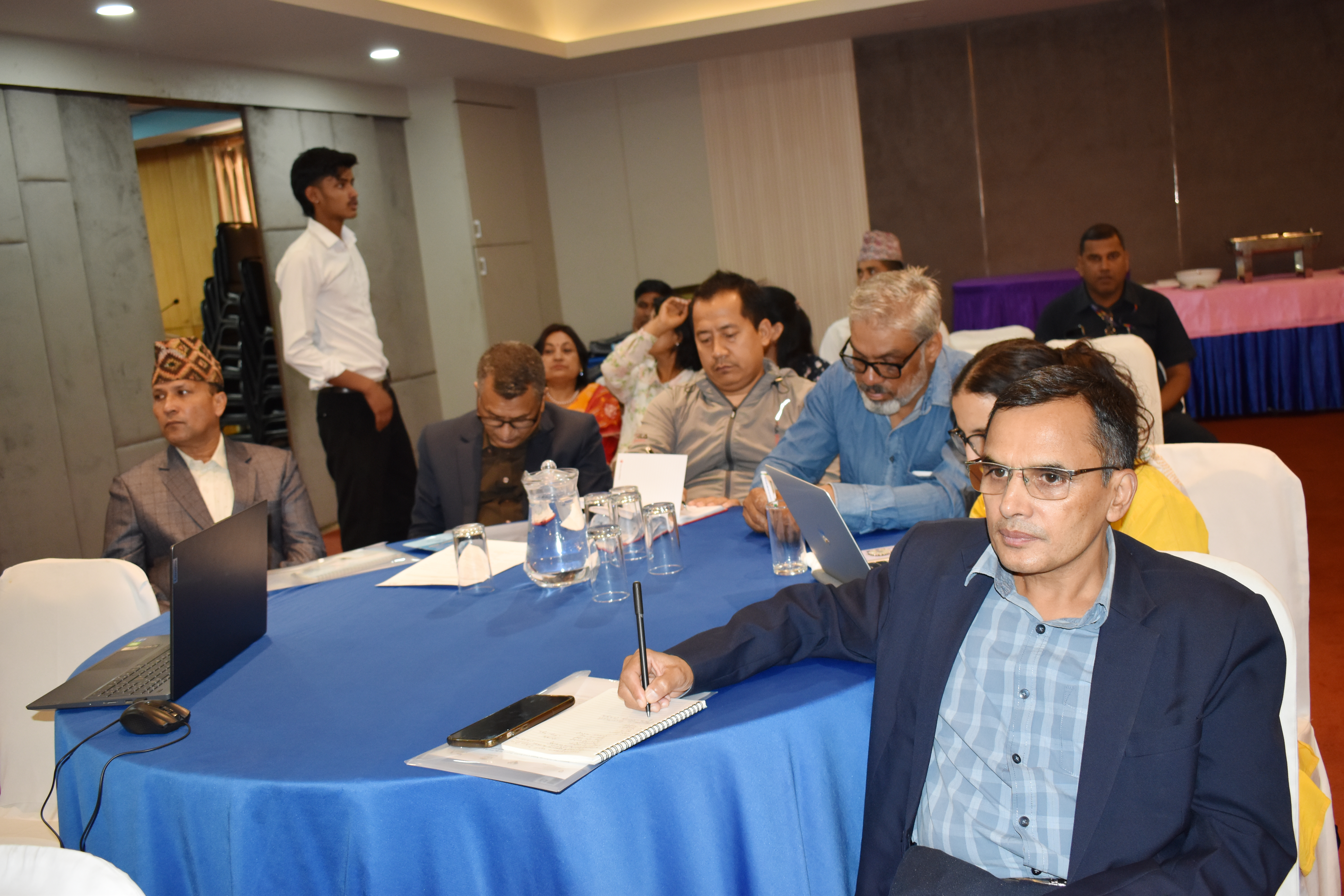

Deputy Speaker of the Federal Parliament, Indira Rana, stated that delays in rescue occur due to complicated legal procedures. She expressed this view during a program held on June 5, 2025, organized by the Informal Sector Service Centre (INSEC), the secretariat of the NGO Network for UPR, WOREC the secretariat of the Women’s Network for UPR, and Blue Diamond Society, the secretariat of the Marginalized Community Network (DRCFC) with the support of the Embassy of Switzerland. She pointed out that delays in completing legal procedures hinder helicopter rescue operations, including the rescue of pregnant women at risk and those affected by disasters. She emphasized the need for Nepal to adopt international practices in such situations.
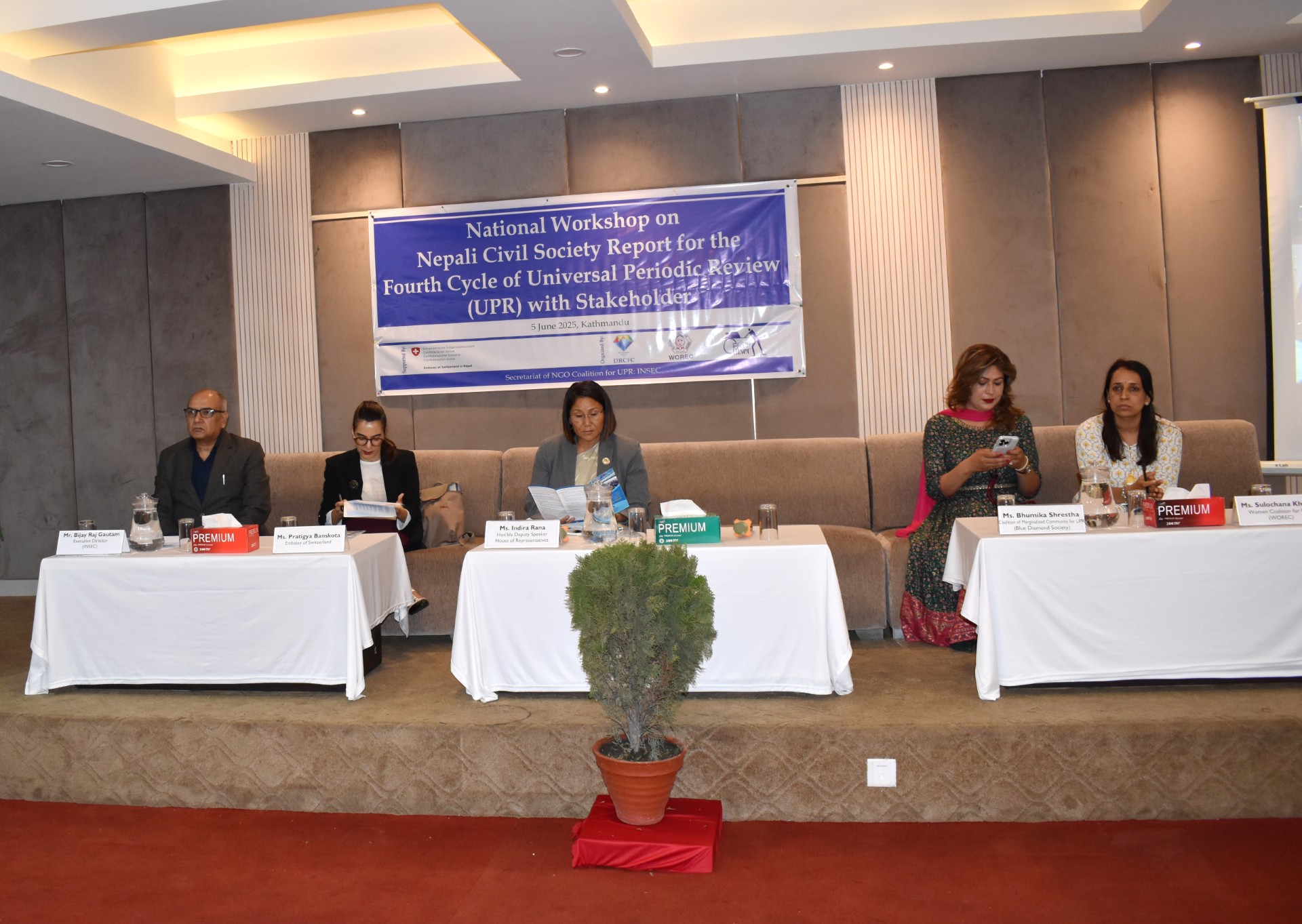
She emphasized that the government should implement the recommendations and suggestions made by the NGOs of Nepali non-governmental organizations. She stressed the need for legal reforms to ensure that children involved in juvenile delinquency cases are provided with opportunities for income generation and personality development alongside their custody. She stated that orphaned Nepali children should be protected within Nepal and emphasized that they should have easy access to citizenship rights.
Deputy Speaker Rana acknowledged that more than 444 non-governmental organizations are preparing reports for the fourth cycle of the Universal Periodic Review (UPR) on human rights. She praised INSEC for its contribution to social justice and human rights and emphasized the importance of joint efforts to fulfill fundamental rights.
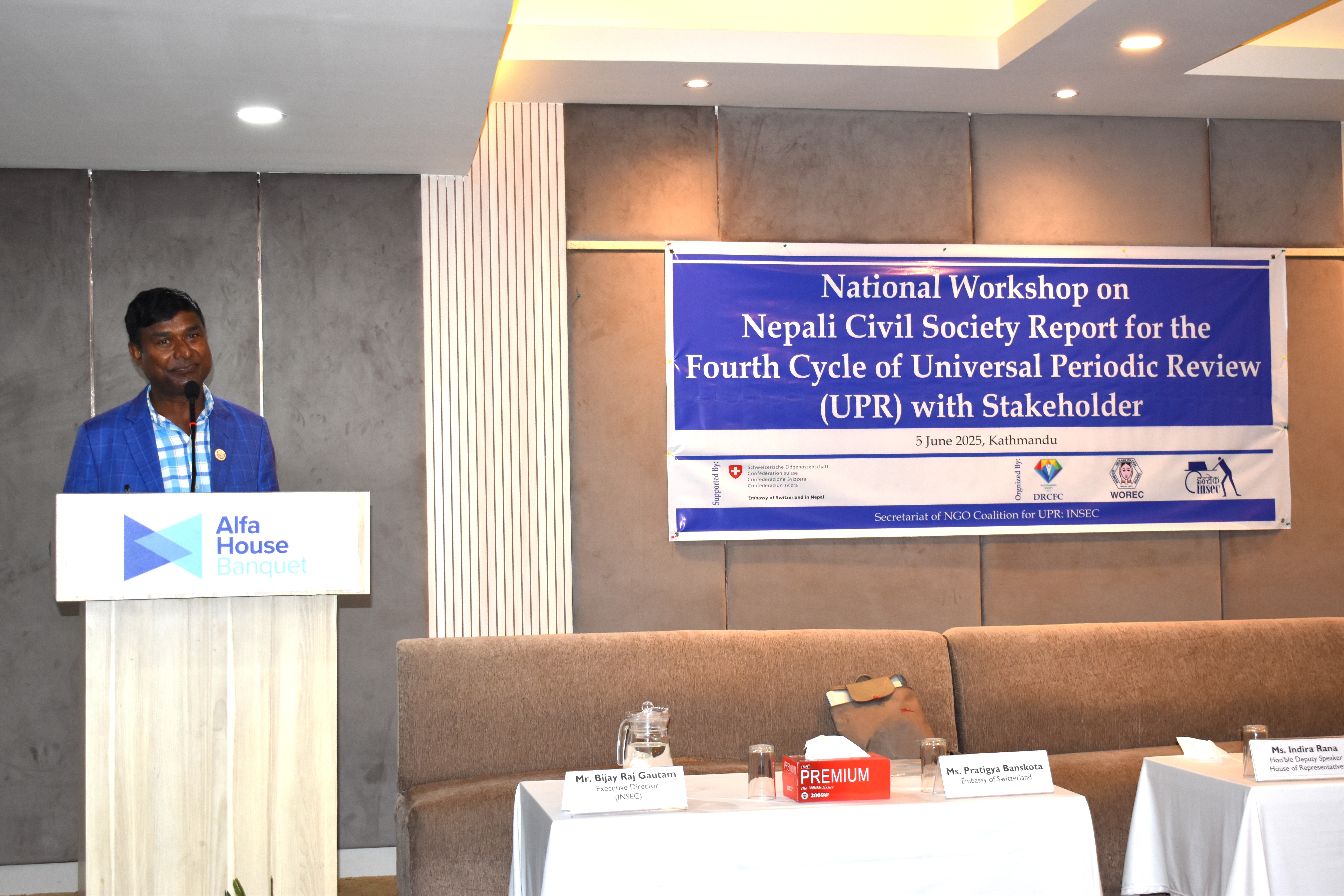
Madhesi Commission Chairperson Jibachha Sah emphasized the need for the Nepal government to focus on implementing its commitments made at the international level. He pointed out that problems between the timeframes mentioned in the Constitution and their actual implementation have caused disputes. He stressed the need to bring improvements in education, health, and employment in Madhesh, and emphasized the importance of safe shelters.
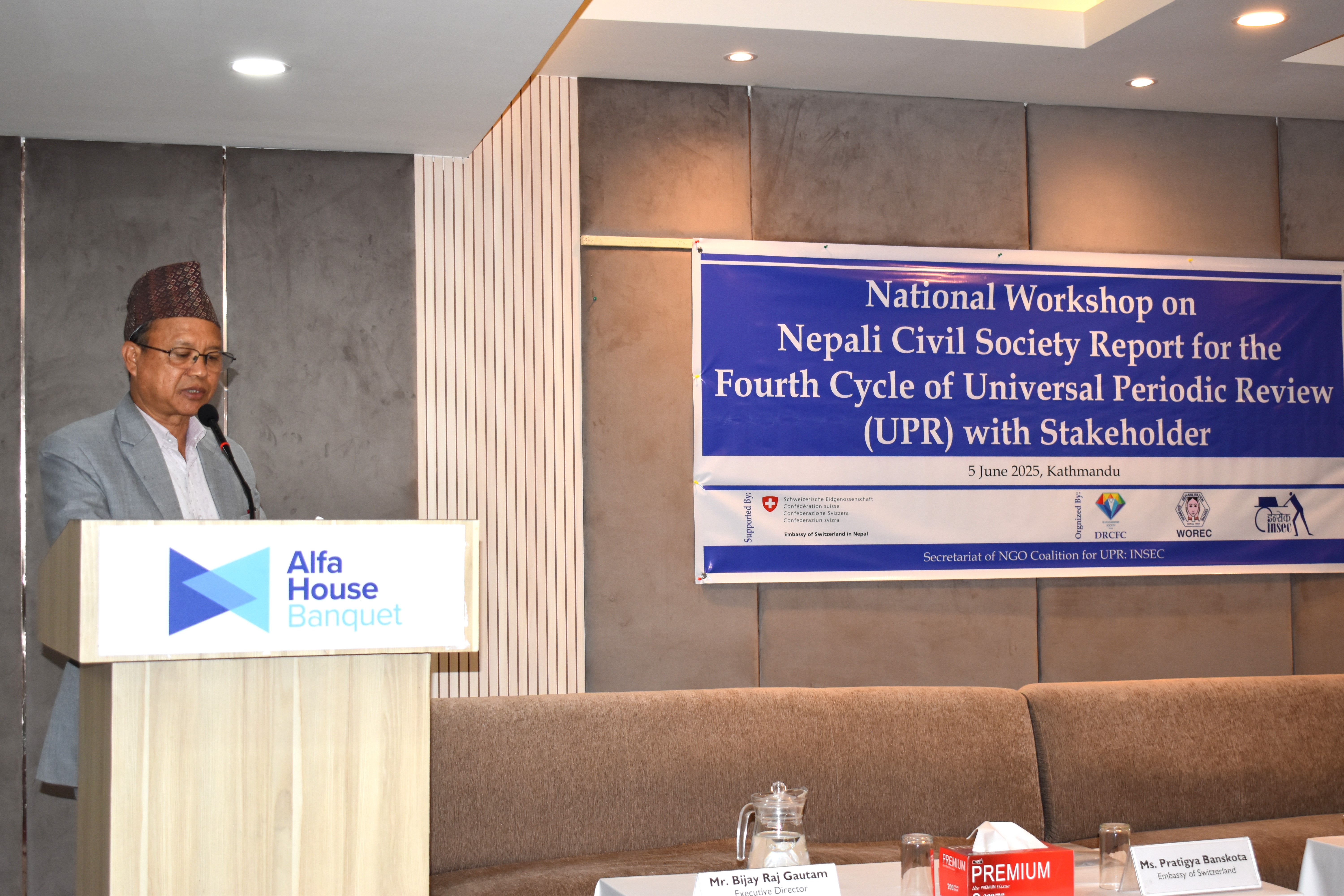
Ram Bahadur Thapa Magar of the Indigenous Nationalities Commission, Devaraj Bishwakarma, Chairperson of the Dalit Commission, and Haridatta Joshi of the National Inclusion Commission emphasized that there should be a clear account of the progress made on the recommendations of the third cycle. They also stressed that poverty, being a major issue, must be addressed.
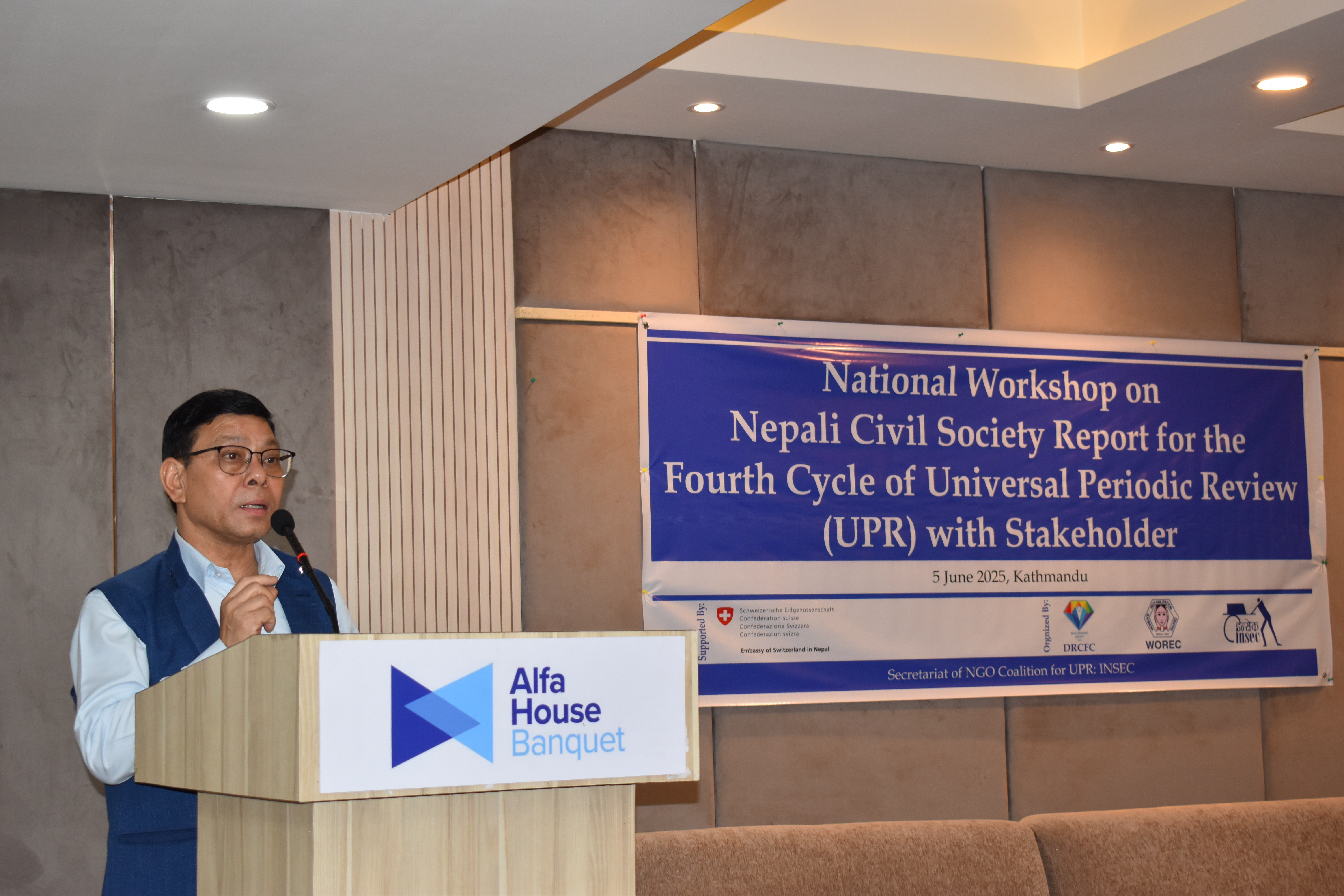
Subodh Singh Tharu, Acting Chairperson of the Tharu Commission, pointed out that reports submitted by the NGOs of Nepal for the UPR have so far not included issues concerning the Tharu community. He expressed hope that the upcoming fourth cycle report will include the concerns of the Tharu community.
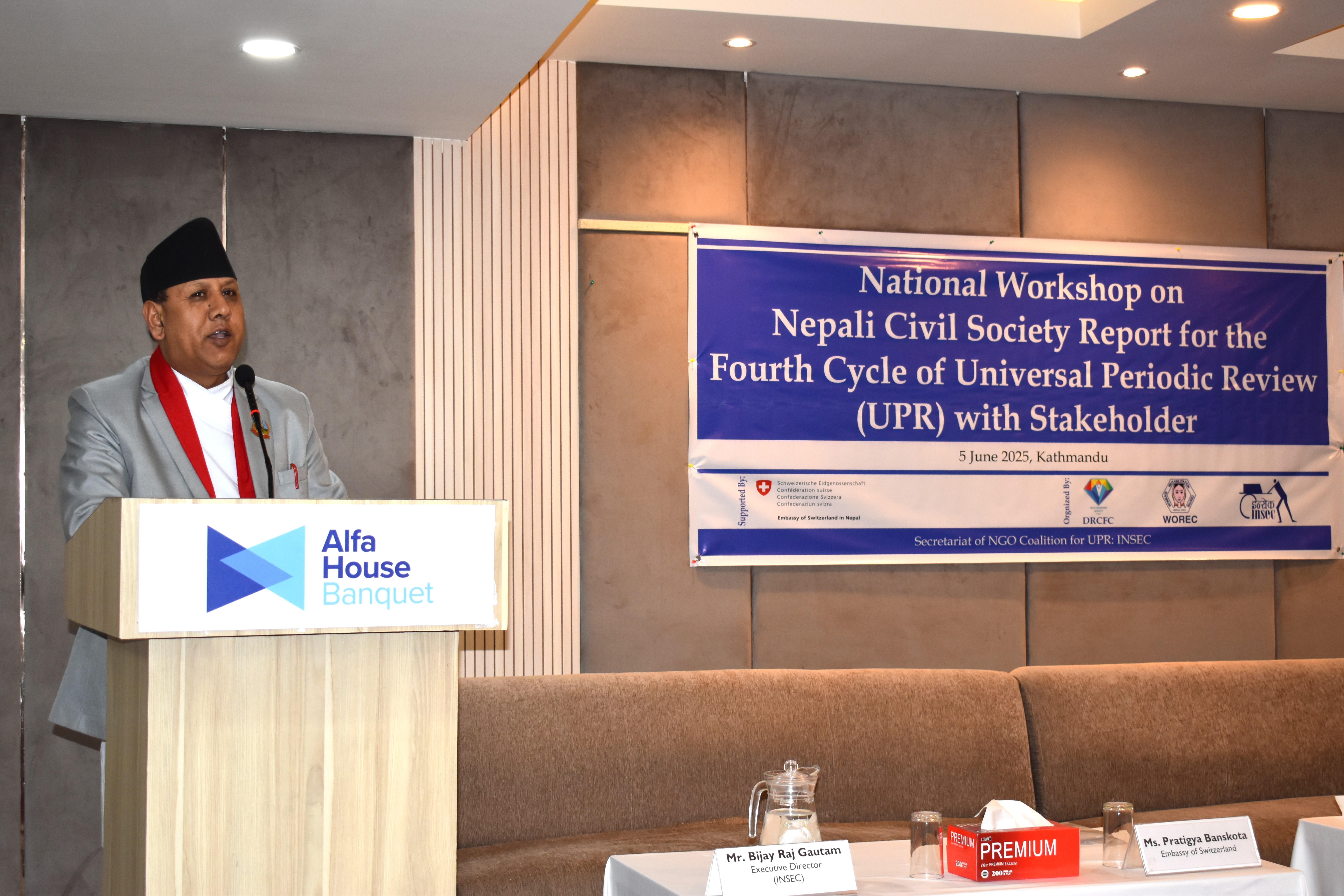
Acting Chairperson of the Muslim Commission, Mohoddin Ali, urged that reports should mention whether human rights have been implemented or not. He also suggested including information on whether the Muslim community has been able to exercise their rights. He requested that all commissions cover the minimum rights received by citizens from all sectors and groups within their respective areas.
Commissioner of the National Human Rights Commission, Mihir Thakur, stated that the mid-term review of the UPR is necessary and mentioned that the report to be submitted in the fourth cycle, as discussed during the program, holds significant importance.
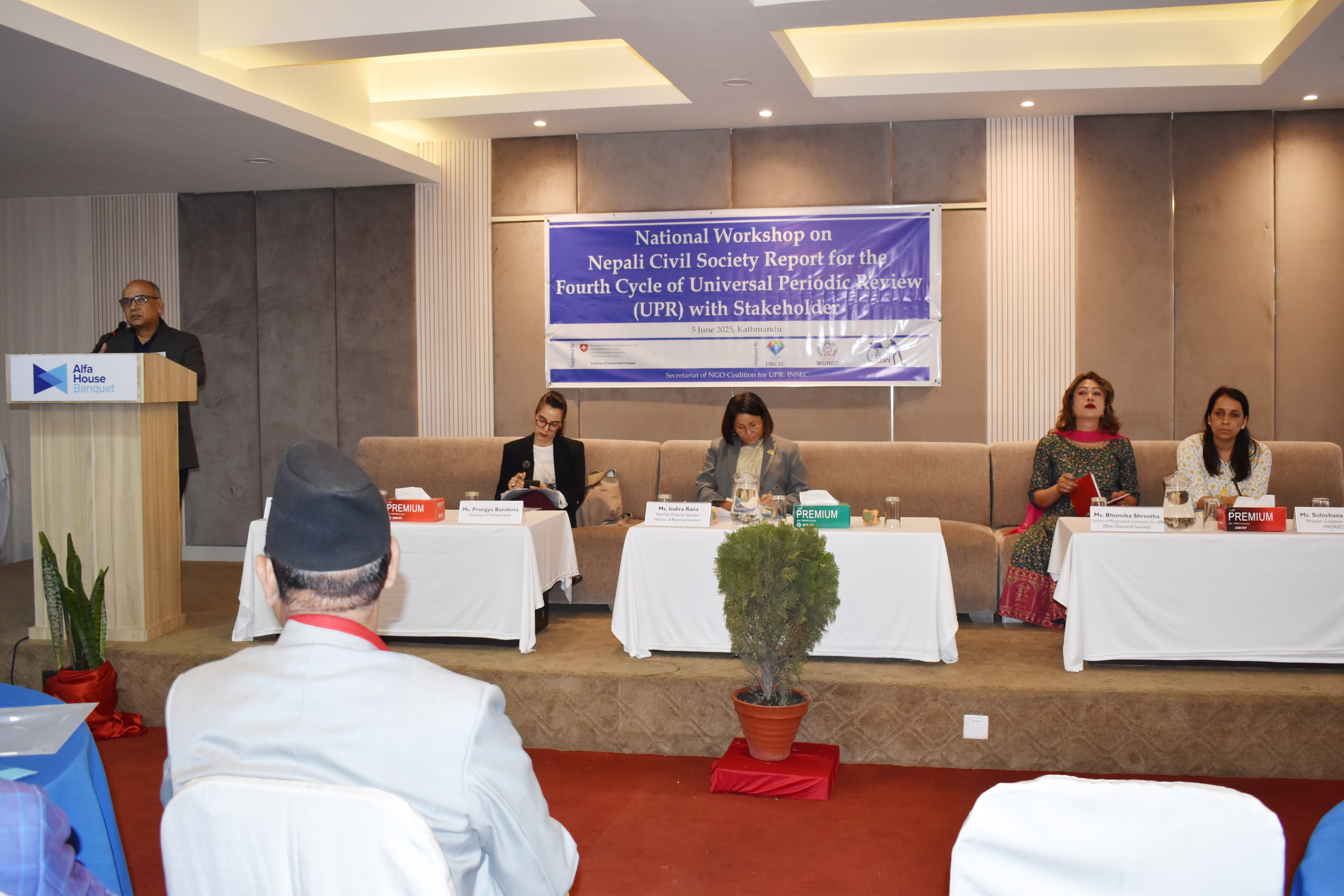
At the program, INSEC Executive Director Bijay Raj Gautam explained the objective of the workshop and the process of the Universal Periodic Review (UPR). He stated that during the third cycle of the UPR, the Government of Nepal received 196 recommendations. He mentioned that Nepal noted 37 of them and informed that NGOs in Nepal have been preparing and submitting reports since 2011, with the next report scheduled to be submitted in July 2025. Gautam informed that more than 444 non-governmental organizations from across the country have sent their suggestions from the provincial level, which are now being discussed at the federal level for the preparation of the report.
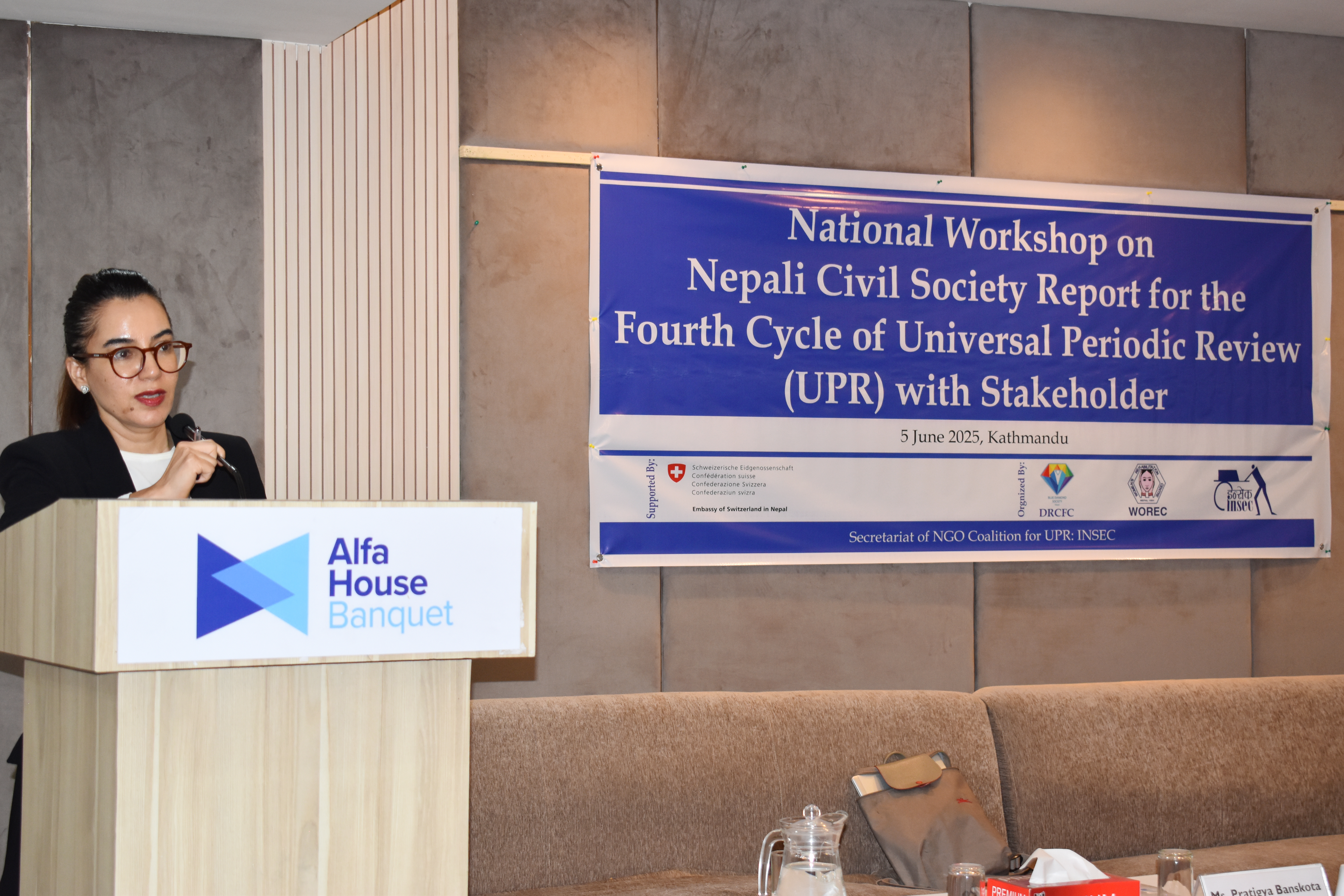
Representative of the Embassy of Switzerland in Nepal, Pratigya Baskota, spoke about the importance of the report prepared by the NGO coalition and the National Human Rights Commission (NHRC).
Recalling Switzerland’s presidency of the Human Rights Council, she discussed INSEC’s coordination on the opportunities and challenges of improving the human rights situation through the UPR. She expressed the Swiss government’s commitment to continue supporting human development in Nepal.
UPR Info consultant Kapil Aryal said that the final report will be prepared by including the suggestions received from the discussions on the UPR. He noted that there has been progress in Nepal’s institutional structures and legal aspects concerning human rights and laws have been enacted to end caste-based discrimination. However, their implementation remains weak. Aryal emphasized the need to improve torture and pressure practices to end the situation of prisoners dying inside prisons. The report highlights that the recommendations made by the Human Rights Commission for transitional justice have not been implemented, resulting in conflict victims lacking trust in the officials of the commission formed for transitional justice. He suggested that the implementation of the National Human Rights Commission’s recommendations remains weak and emphasized the need to make the Dalit Commission more active. The report states that Nepal lacks proper initiatives to manage the mental health issues of children and has not provided age-appropriate access to positive content for children and adolescents.
Bhumika Shrestha of Blue Diamond Society highlighted that the issues of the marginalized groups addressed by DRCFC are challenging, emphasizing that the concerns of disadvantaged areas, classes, and Dalit communities should be prioritized based on equality and equity. She emphasized that INSEC should take the initiative to hold the state accountable on issues concerning LGBTIQ. Shrestha highlighted the need for government bodies and public offices to have disability-friendly physical infrastructure and noted that the report includes the need to harmonize legal and practical measures on gender and minority community issues across all castes and communities.
WOREC representative Binita Pandey emphasized the issues related to gender discrimination included in the report and highlighted the topics that need to be raised for women’s rights in the UPR. She stressed the need for the government’s structural effectiveness to reduce incidents of human trafficking and smuggling and pointed out the focus on implementing the National Human Rights Commission’s recommendations on transitional justice.
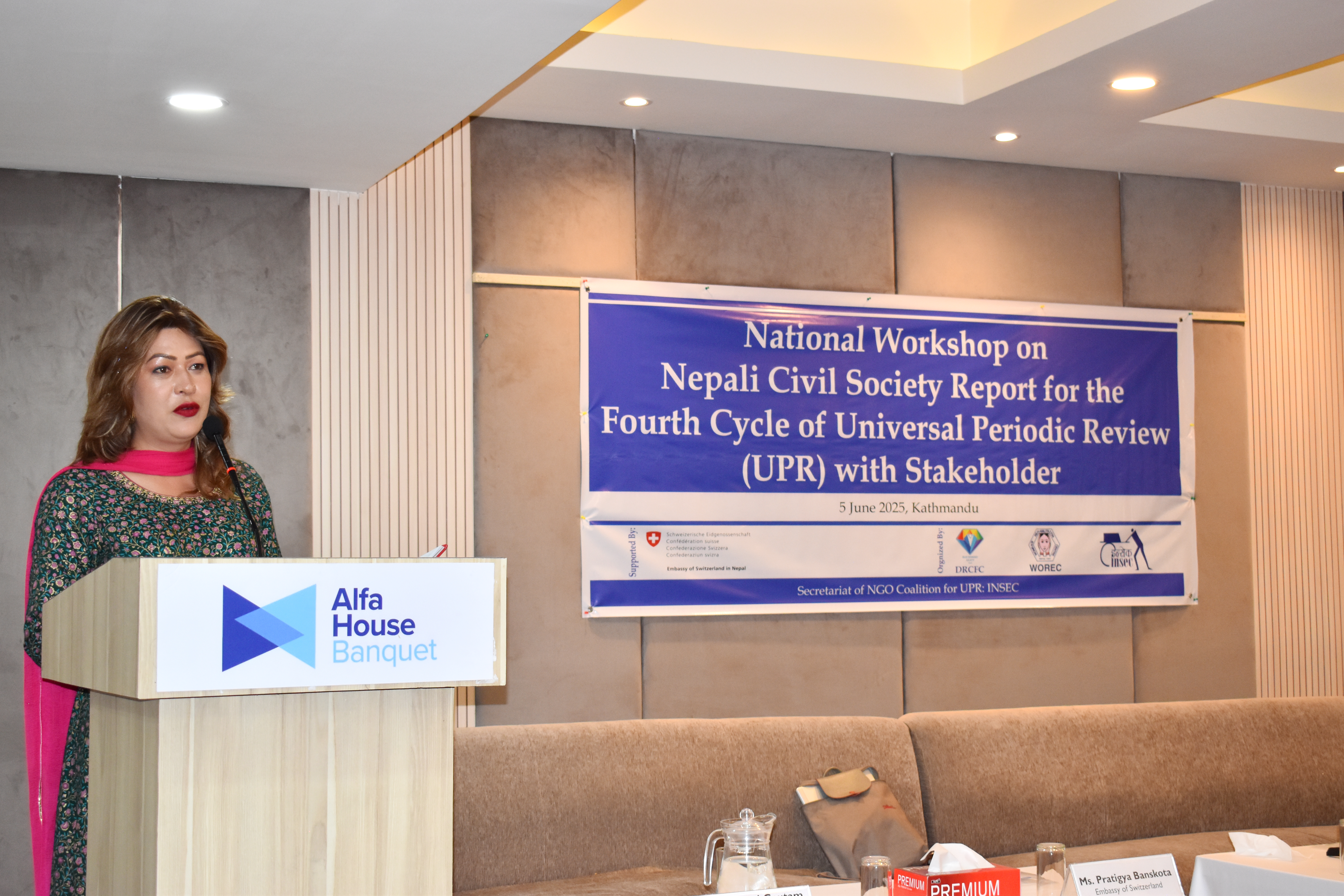
At the program, Suman Nepali of Blue Diamond Society recalled the vulnerable situation of women in the Muslim community and emphasized the need to seriously consider the changes in the lifestyle of citizens displaced by large ongoing projects in the country. He also urged that the recommendations to improve Madrasa education and management for citizens with disabilities should be implemented.
Samjha Shrestha Chief of the INSEC Human Rights Advocacy Program emphasized that the fourth cycle of the UPR review is important for ensuring citizens’ human rights and urged for suggestions to be included in the report.