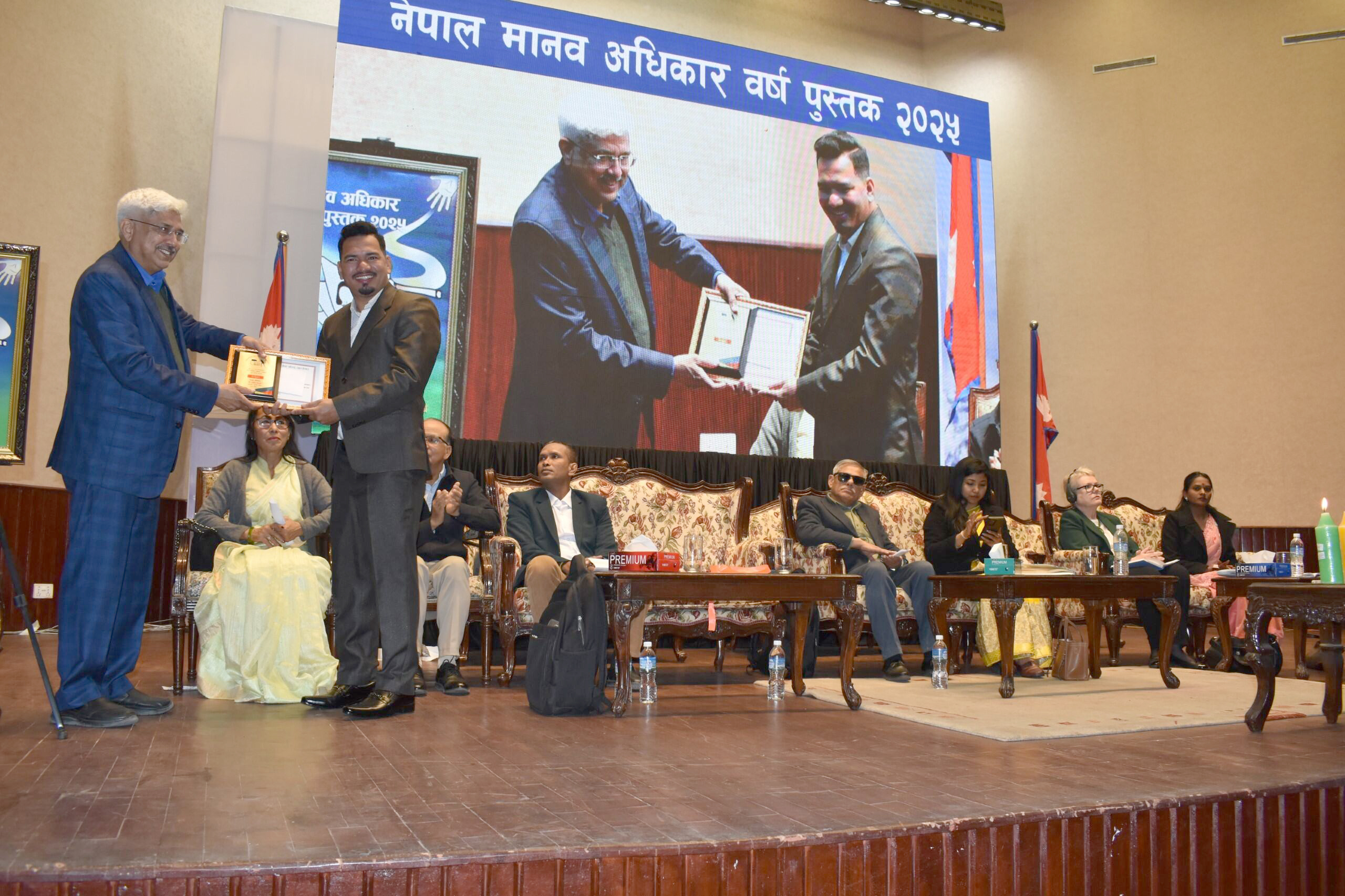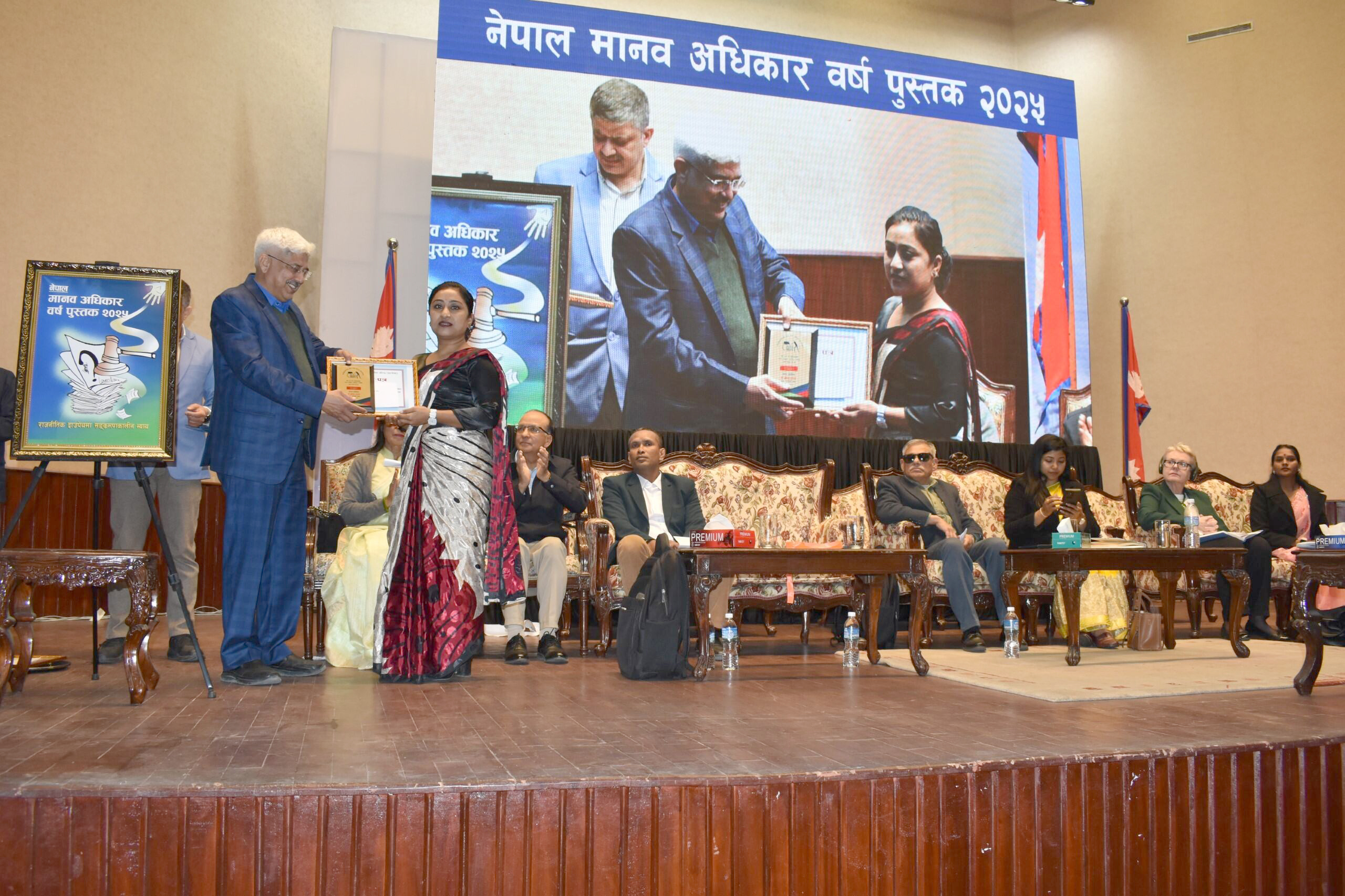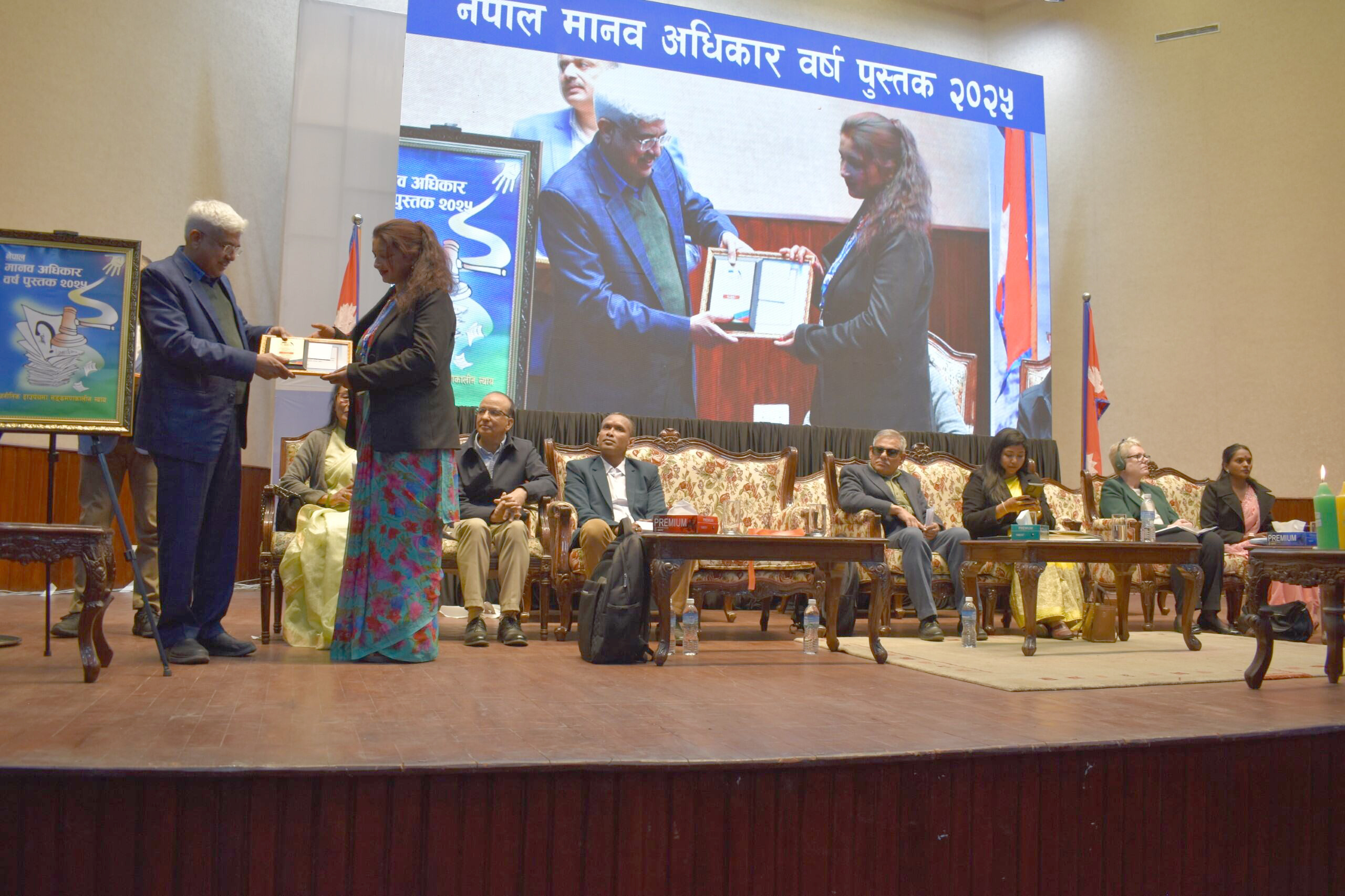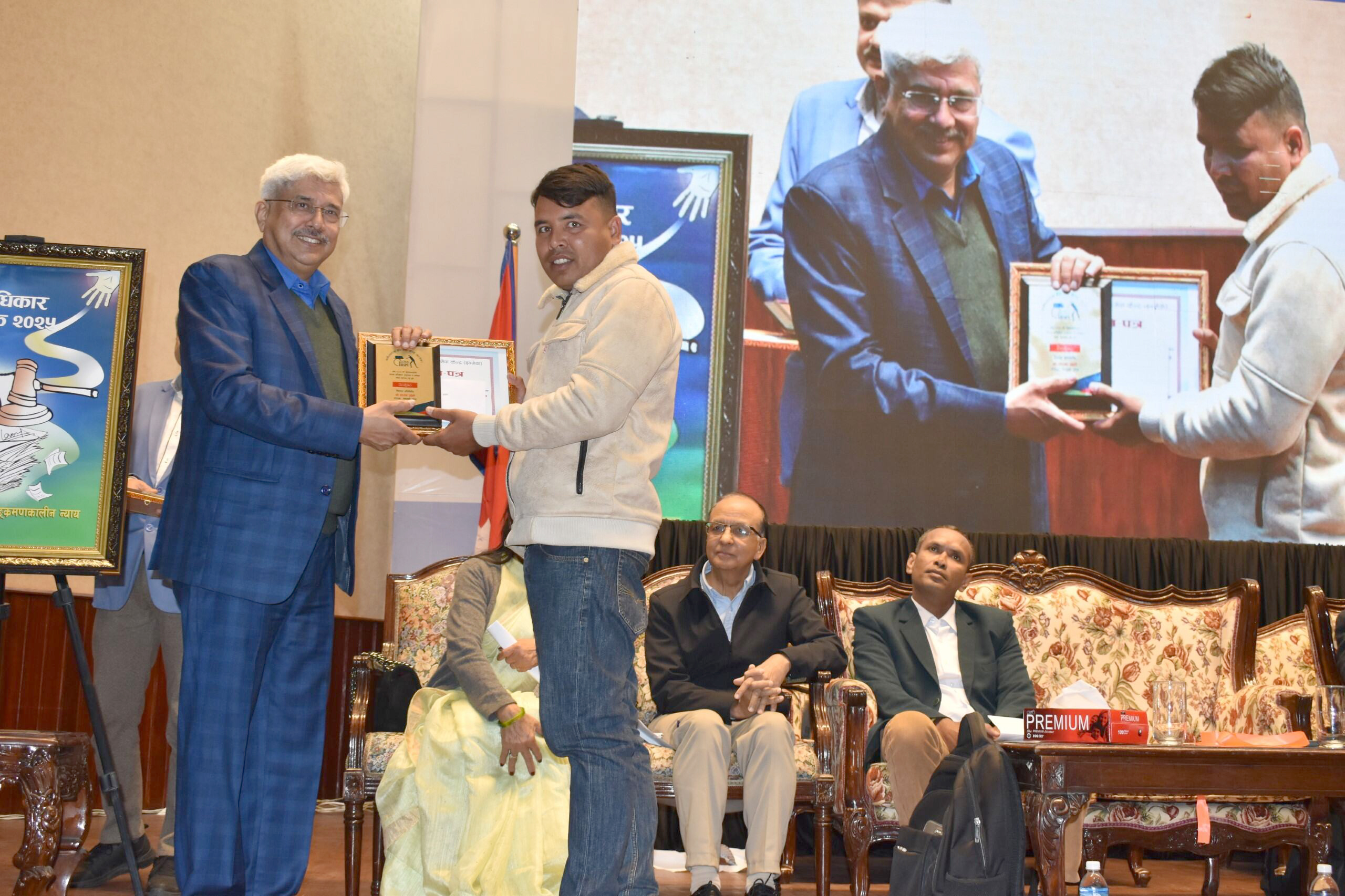

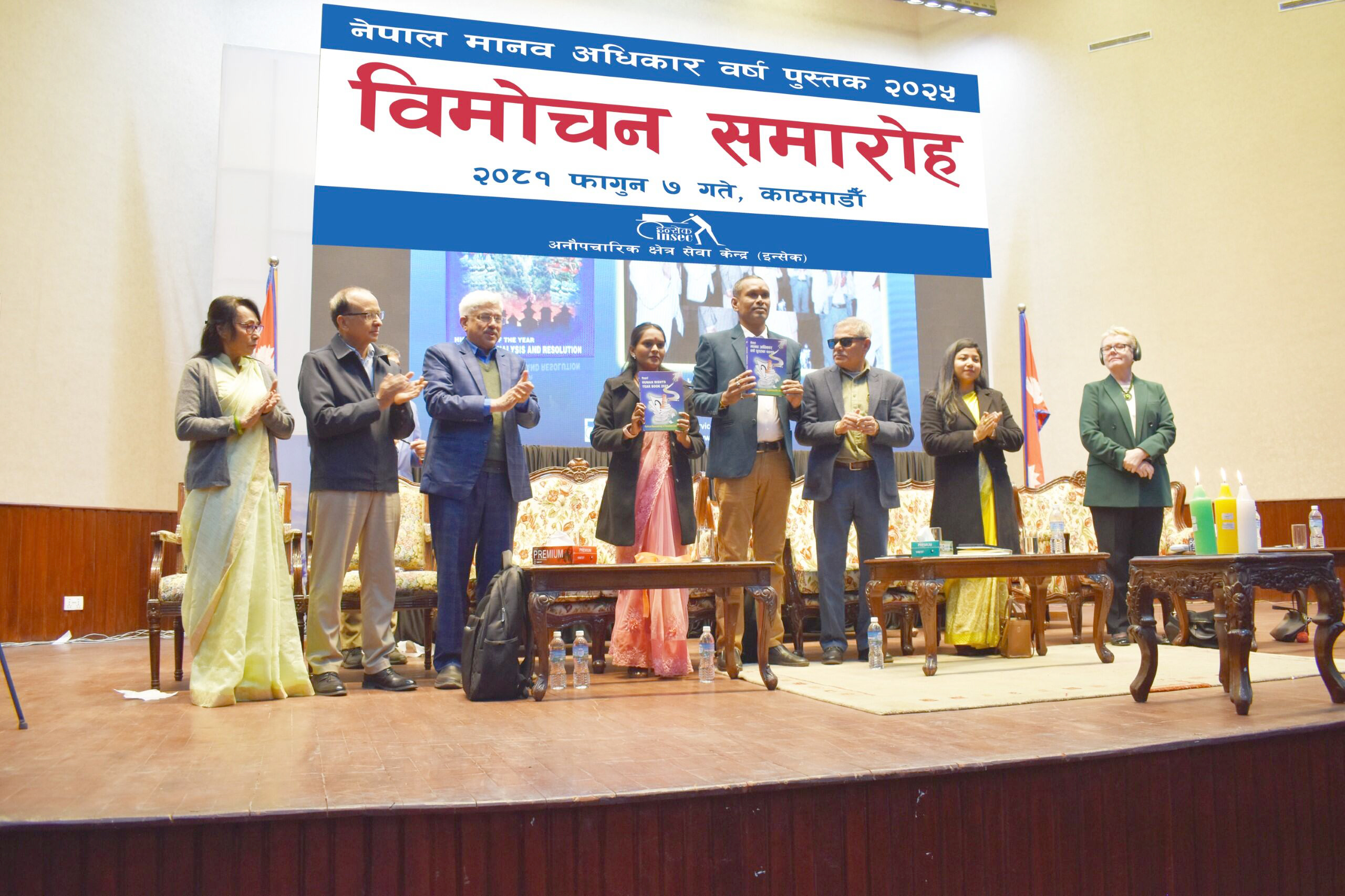
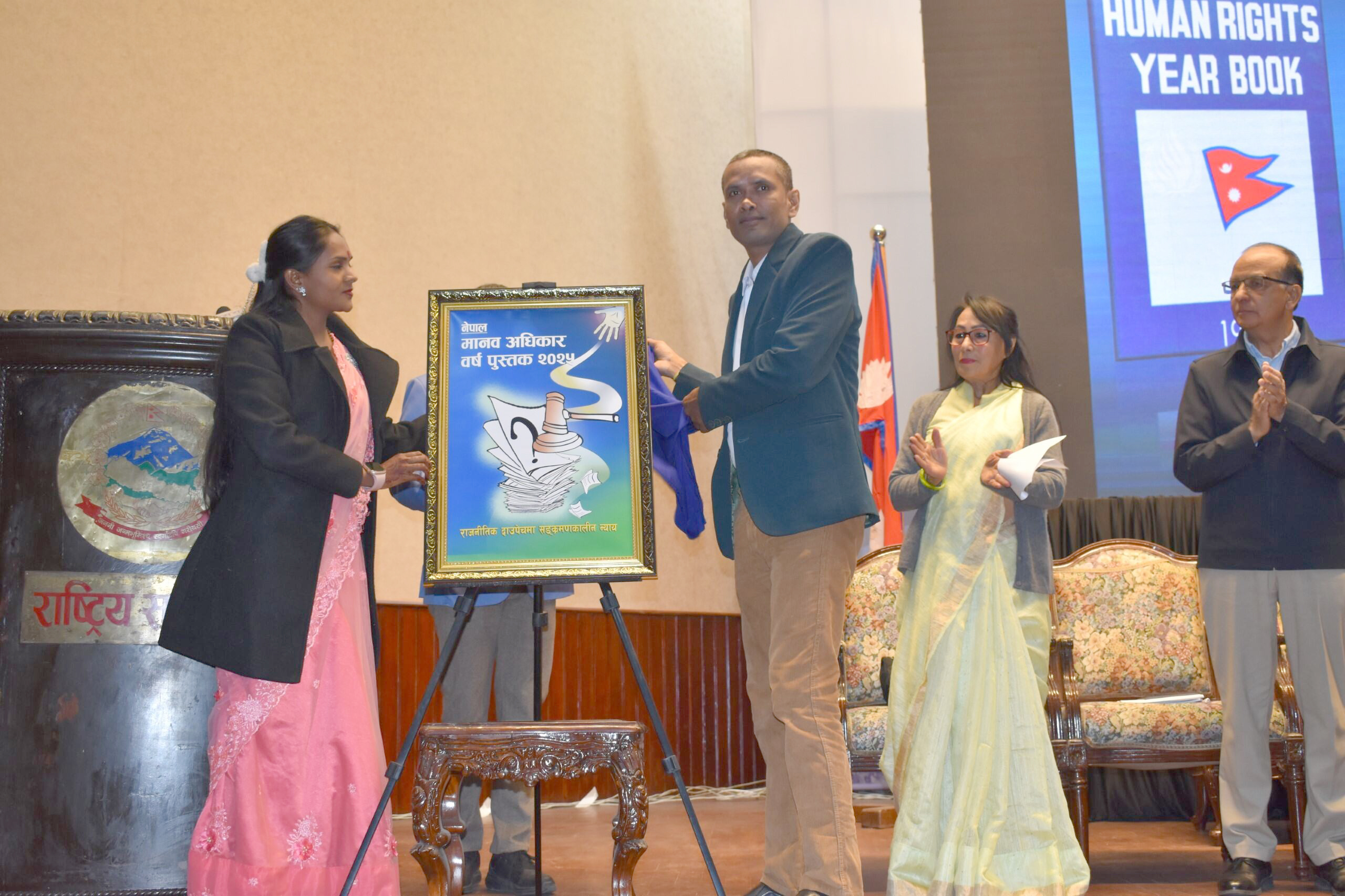
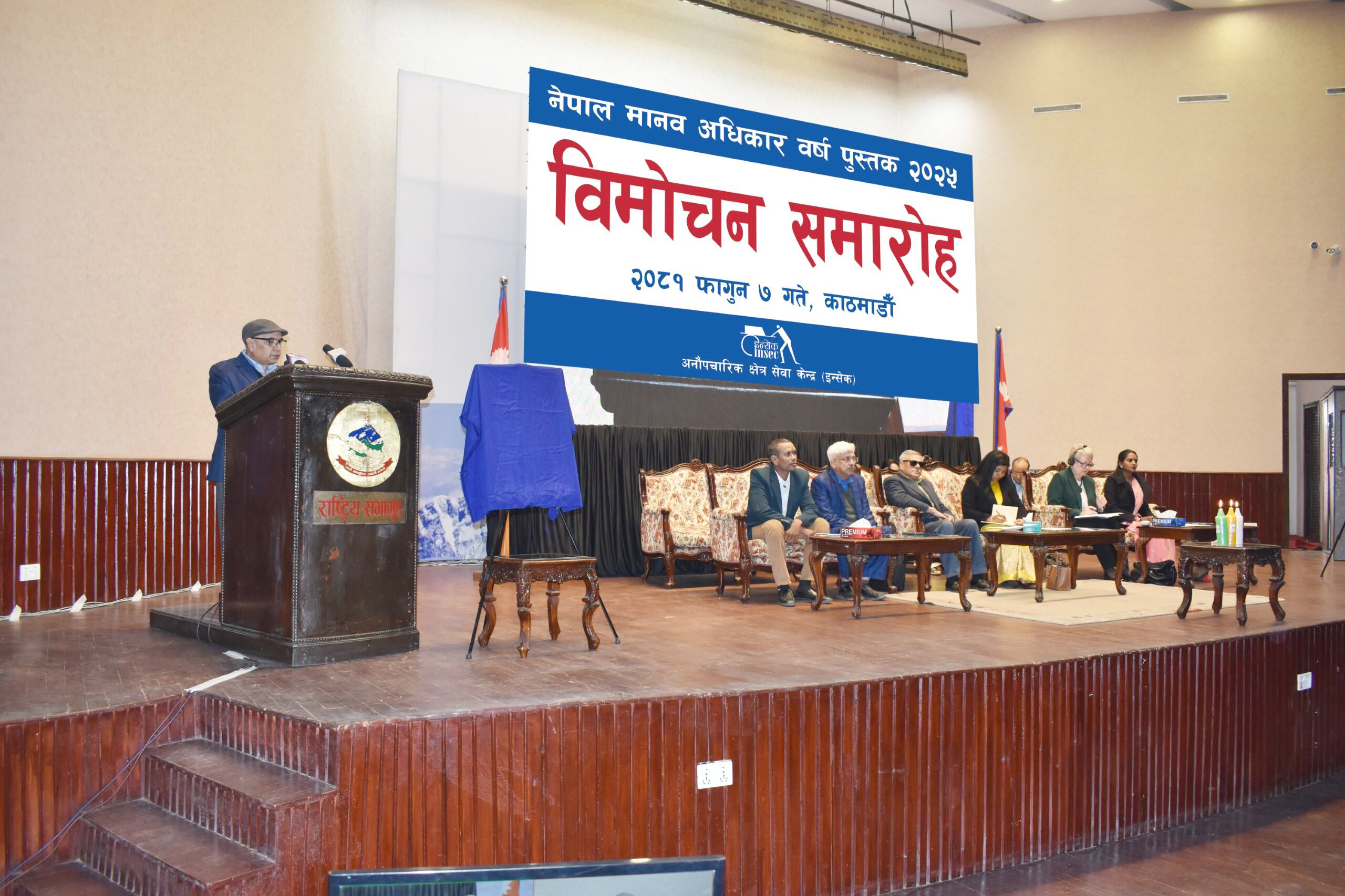
The Nepal Human Rights Yearbook 2025, published by the Informal Sector Service Centre (INSEC), was launched on February 19 by environmental activists Sunil Yadav and Laxmi Kumari Mahato.
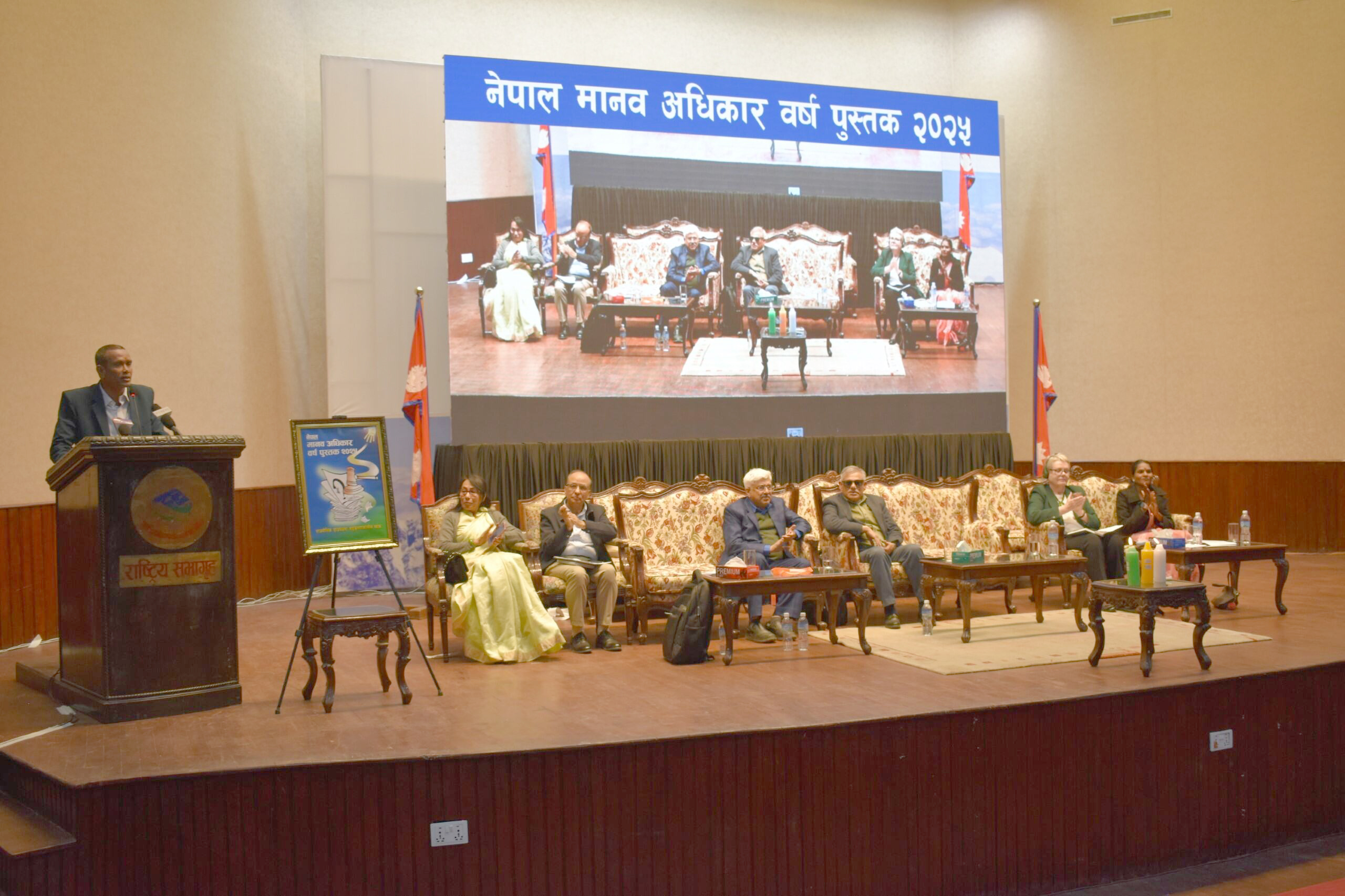
During the program, environmental activist Sunil Yadav emphasized the need to consider environmental rights for equality, freedom, and a successful life. He expressed that the Nepal Human Rights Yearbook 2025 would serve as an important document for exploring and studying the situation of human rights in Nepal. Additionally, the yearbook can be used as a reference document for studying the opportunities, challenges, and responsibilities related to environmental issues. He stated that despite being actively involved in the Chure conservation campaign since 2018 and repeatedly drawing the attention of the Madhesh Province government, the issue was not taken seriously. As a result, he embarked on a 102-day campaign, walking to Kathmandu to urge the federal government to take action. However, the authorities failed to respond. Yadav highlighted that even the educated have been responsible for environmental degradation and the exploitation of natural resources. He urged INSEC to extend its awareness efforts to the grassroots level.
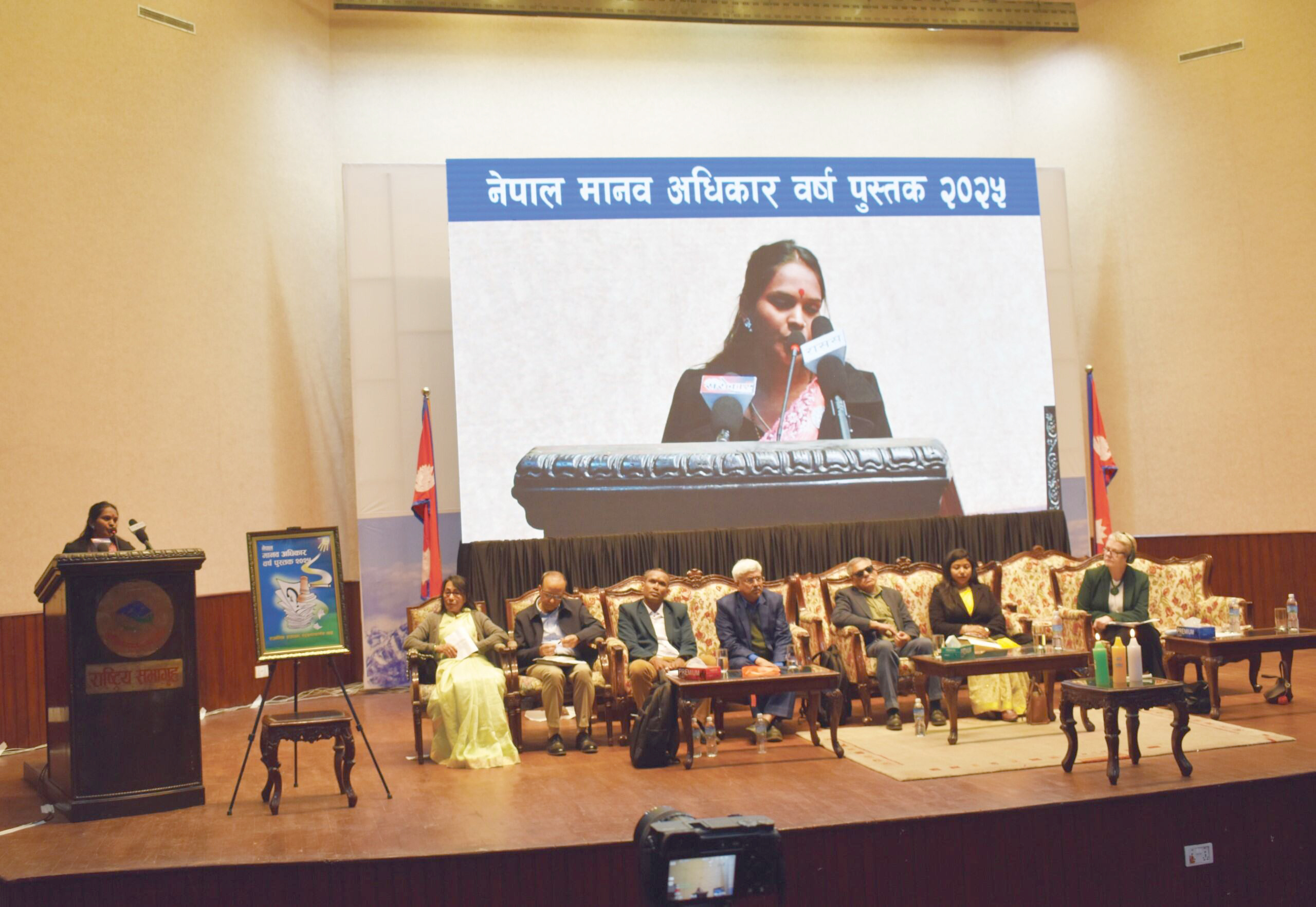
Likewise Laxmi Kumari Mahato, an Environmental activist drew the government’s attention to the case of Dilip Mahato, who had been leading the Chure conservation and environmental protection campaign but was brutally killed in the Aurahi River on January 10, 2020. She emphasized that the extraction of minerals from rivers without conducting an Environmental Impact Assessment (EIA) has contributed to Chure degradation. She urged that Dilip Mahato be declared an environmental martyr while calling for an end to Chure degradation.
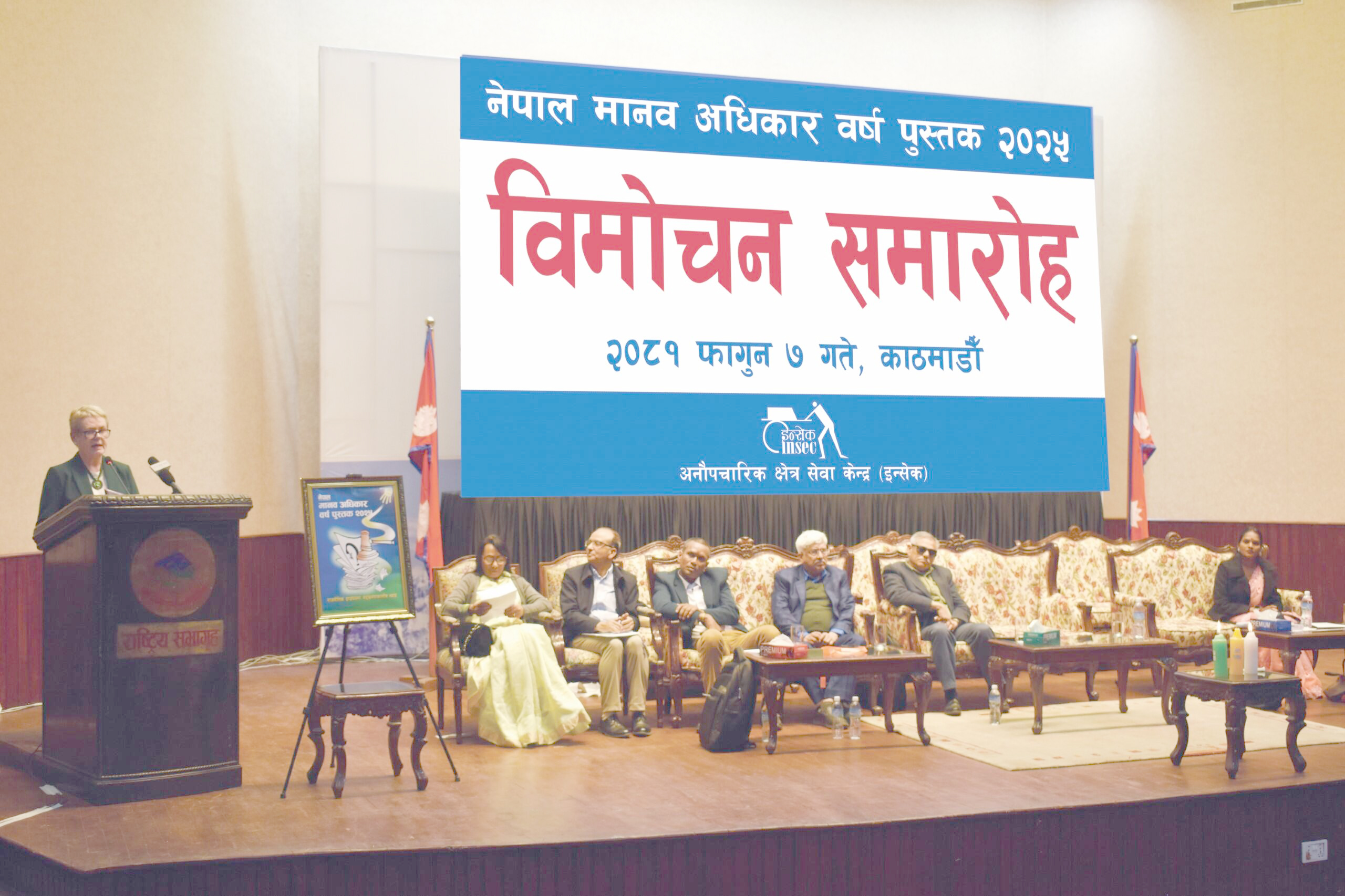
In the program, Norwegian Ambassador Ms. Torun Dramdal highlighted the ongoing collaboration in areas such as renewable energy and gender inclusivity. She emphasized the need to ensure the economic, social, and cultural rights of Nepali women and girls. She stated that Norway has been collaborating with INSEC for the past 30 years in publishing the Nepal Human Rights Yearbook. Referring to the analysis of data included in the yearbook, she noted that the human rights situation in the country remains unsatisfactory. She also highlighted that the inability of nature to absorb carbon has made climate change a global challenge.
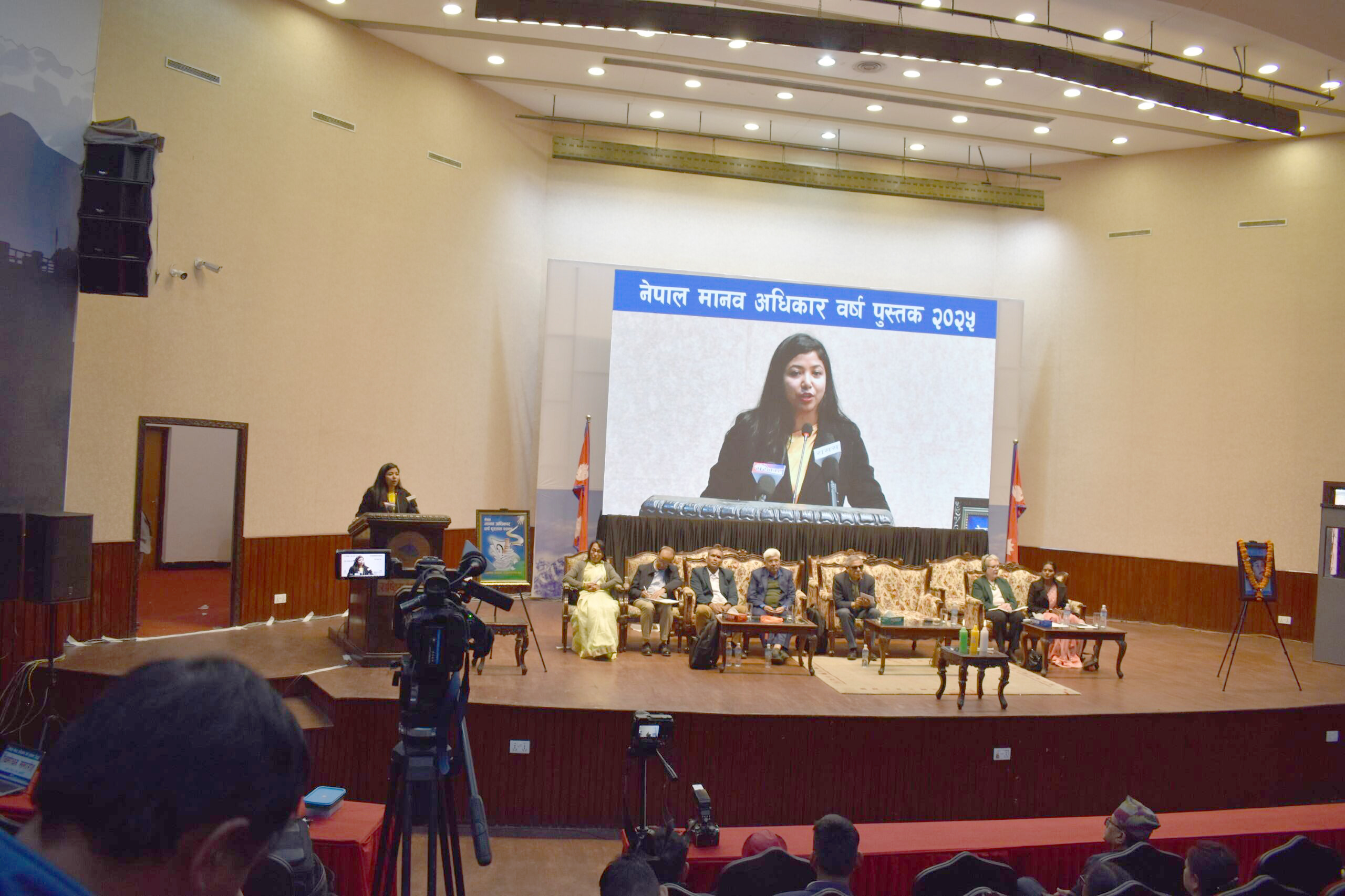
Deputy Mayor of Kathmandu Metropolitan City, Sunita Dangol, during the same program emphasized that environmental and human rights issues cannot be addressed separately. She highlighted the need to view topics such as clean air, drinking water, forests, rivers, mountains, and a clean environment in an integrated manner when discussing human rights and environmental human rights. She mentioned that environmental rights are recognized as human rights in the Universal Declaration of Human Rights, reminding that everyone has the right to live, grow, and survive in a clean environment. She pointed out that air pollution causes 42,00,000 deaths worldwide and 35,000 deaths in Nepal each year, emphasizing that these statistics cannot be ignored when considering the loss of life due to air pollution.
The founding Chairperson of INSEC and former commissioner of the National Human Rights Commission, Sushil Pyakurel, recalled that those who fueled the conflict are now in power, yet there has been no accountability for bringing transitional justice to a conclusion during their tenure. He stated that it is the government’s responsibility to ensure that transitional justice is concluded. He also highlighted that Nepalese citizens are responsible for the air pollution in the Kathmandu Valley and stressed the need for awareness in the actions we take, suggesting that we must reflect on the kind of future we want to leave for our children. Additionally, he recommended that INSEC move forward by addressing not only civil, political, economic, social, and cultural rights but also including climate change in its efforts.
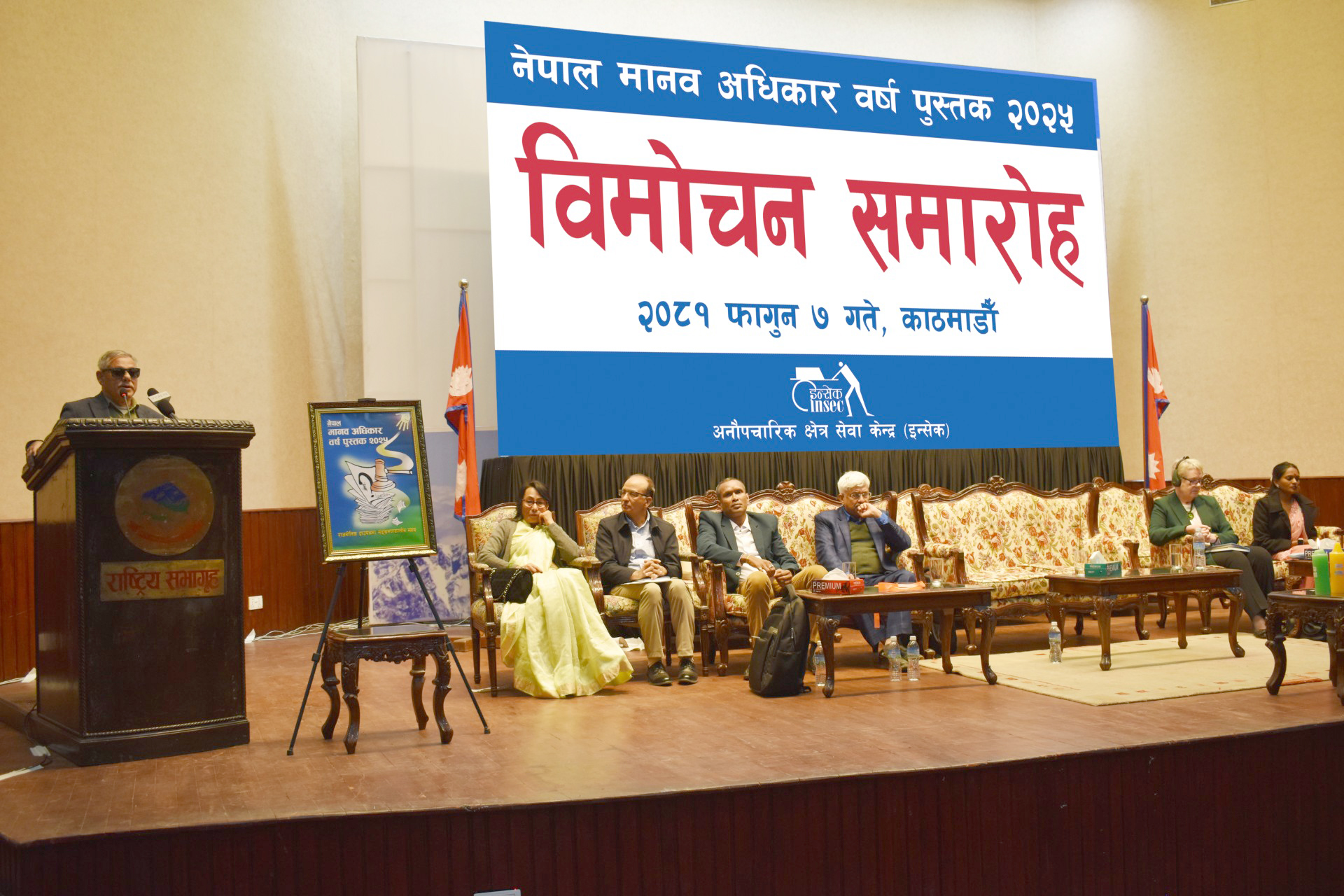
Samjhana Bista, Representative of DCA Nepal, stated that INSEC has been documenting new topics and data on environmental human rights. She emphasized that it is crucial to address the losses caused by climate change. Bista further highlighted that environmental human rights protection, being a new issue for all, requires collaboration between DCA and INSEC. She stressed the importance of establishing help desks at the provincial level to assist victims and help them reach justice.
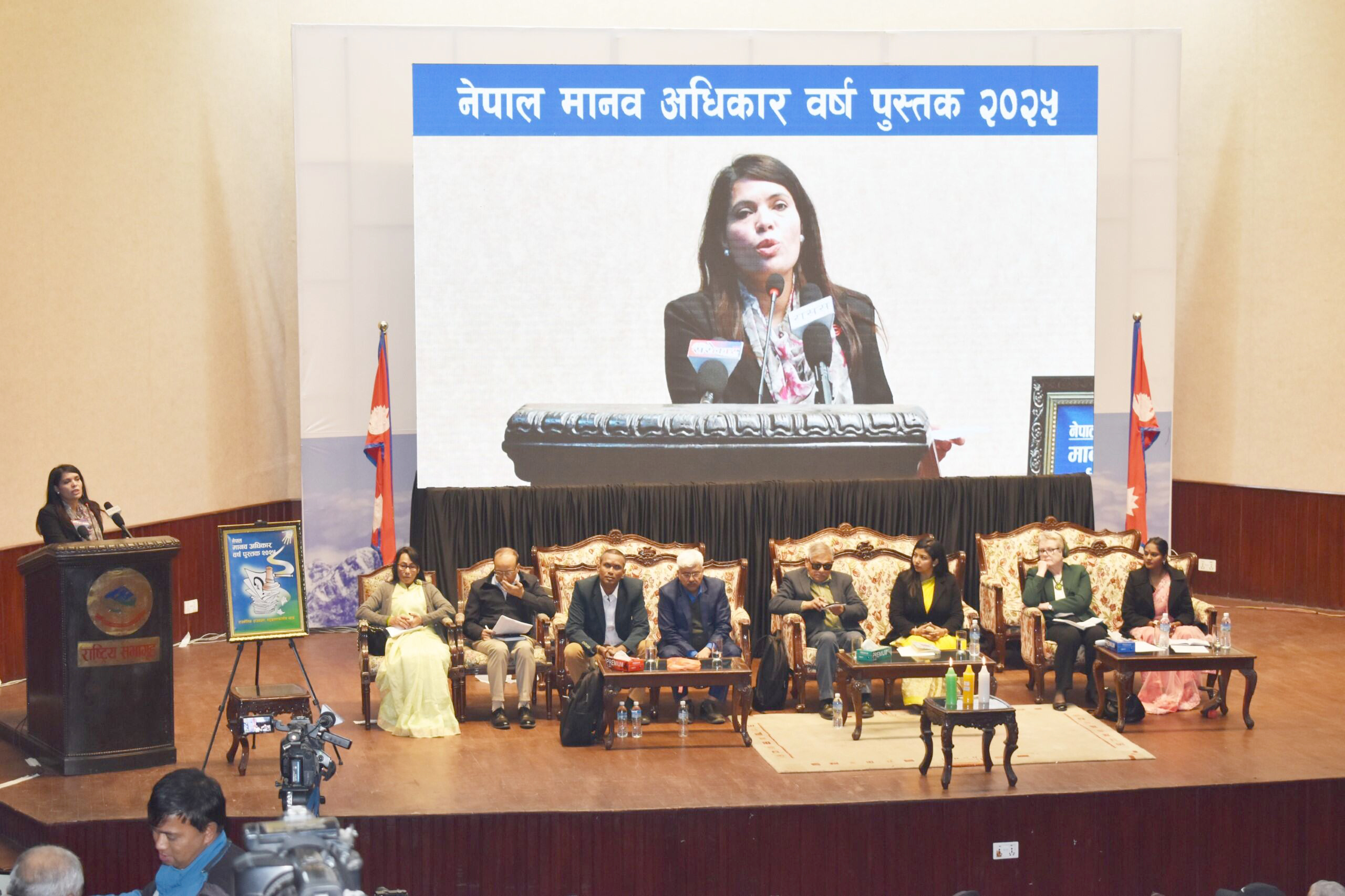
Environmental expert Dr. Dinesh Bhuju recalled that the current environmental conditions in the Kathmandu Valley make activities like morning walks inadvisable. He pointed out that poor air quality causes the loss of 42,100 lives annually in Nepal and that government statistics show that 17,50,000 people (around 6% of the population) suffer from respiratory diseases each year. Dr. Bhuju also mentioned that in 1948, the United Nations included the environment alongside human rights. As INSEC raises issues related to life, environment, food, drinking water, and public toilets in the Nepal Human Rights Yearbook, he emphasized the need for all of us to be aware and conscious of these concerns.
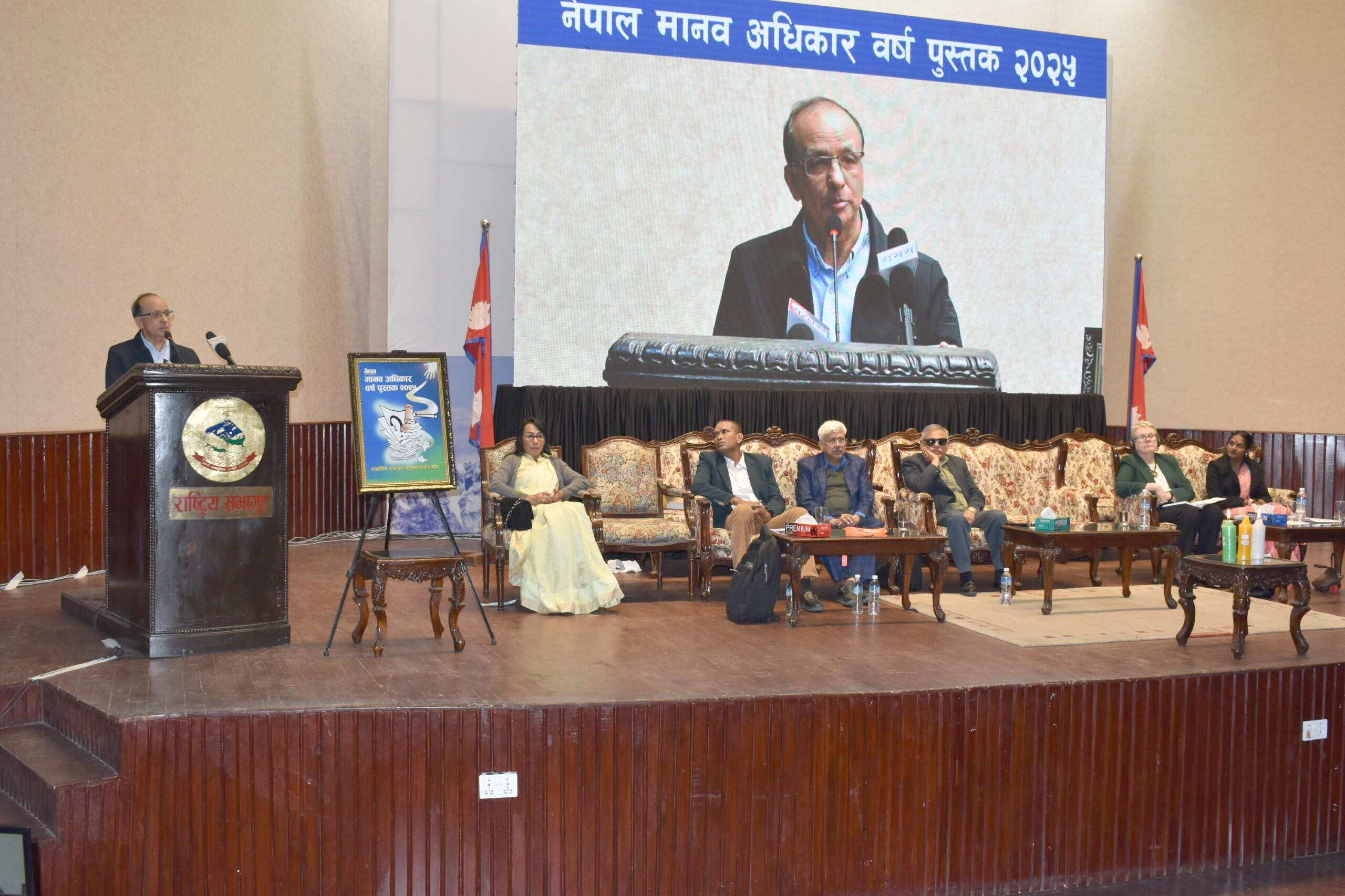
Dr. Kundan Aryal, Chairperson of INSEC, stated that the Nepal Human Rights Yearbook 2025 covers not only civil, political, economic, social, and cultural rights but also addresses critical issues such as cybercrime, climate change, and its impacts. He urged everyone to study the yearbook and provide constructive suggestions based on its findings.
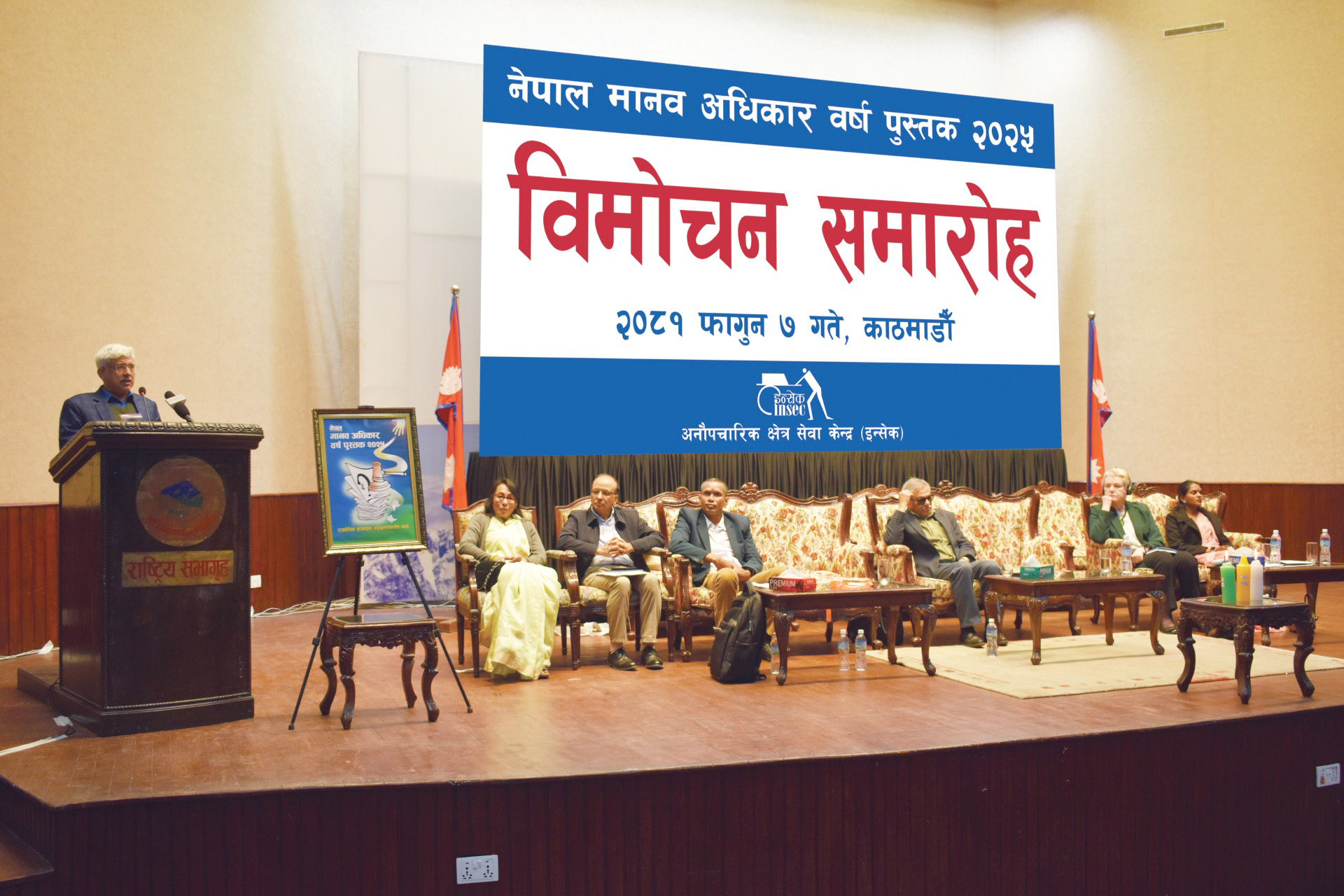
Bijay Raj Gautam, Executive Director of INSEC, while highlighting the topics included in the Nepal Human Rights Yearbook 2025, emphasized that the yearbook prioritizes environmental issues. He also mentioned that the situation in all seven provinces of the country has been analyzed in the publication. This year, INSEC documented 10,734 victims of human rights violations and abuses, up from 9,388 last year. This marks an increase of 1,346 cases compared to the previous year. Gautam noted that this year, one person died from gunshot by the police, and five people were found dead in police custody. Some of the deaths in custody were labeled as suicides. He emphasized that there has been no accountability for such incidents, which occur in police custody that are under 24-hour surveillance. Gautam noted that women, children, and senior citizens are the most affected by human rights violations. He emphasized that providing proper support and rehabilitation for the victims is still an unresolved issue. Gautam mentioned that the government at all three levels failed to provide compensation for the damages caused by the floods, landslides, and disasters that took place from 26th to 29th September 2024.
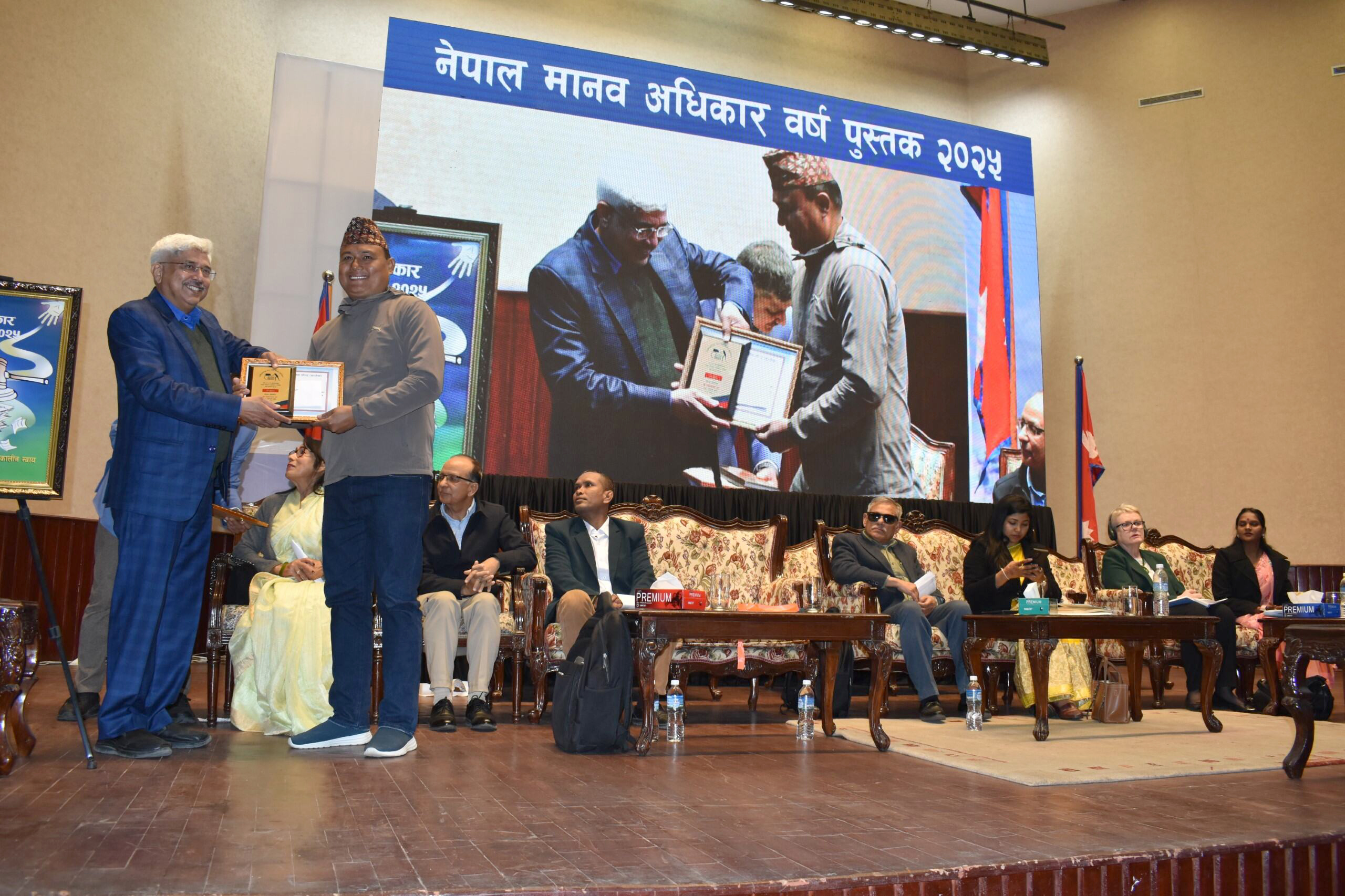
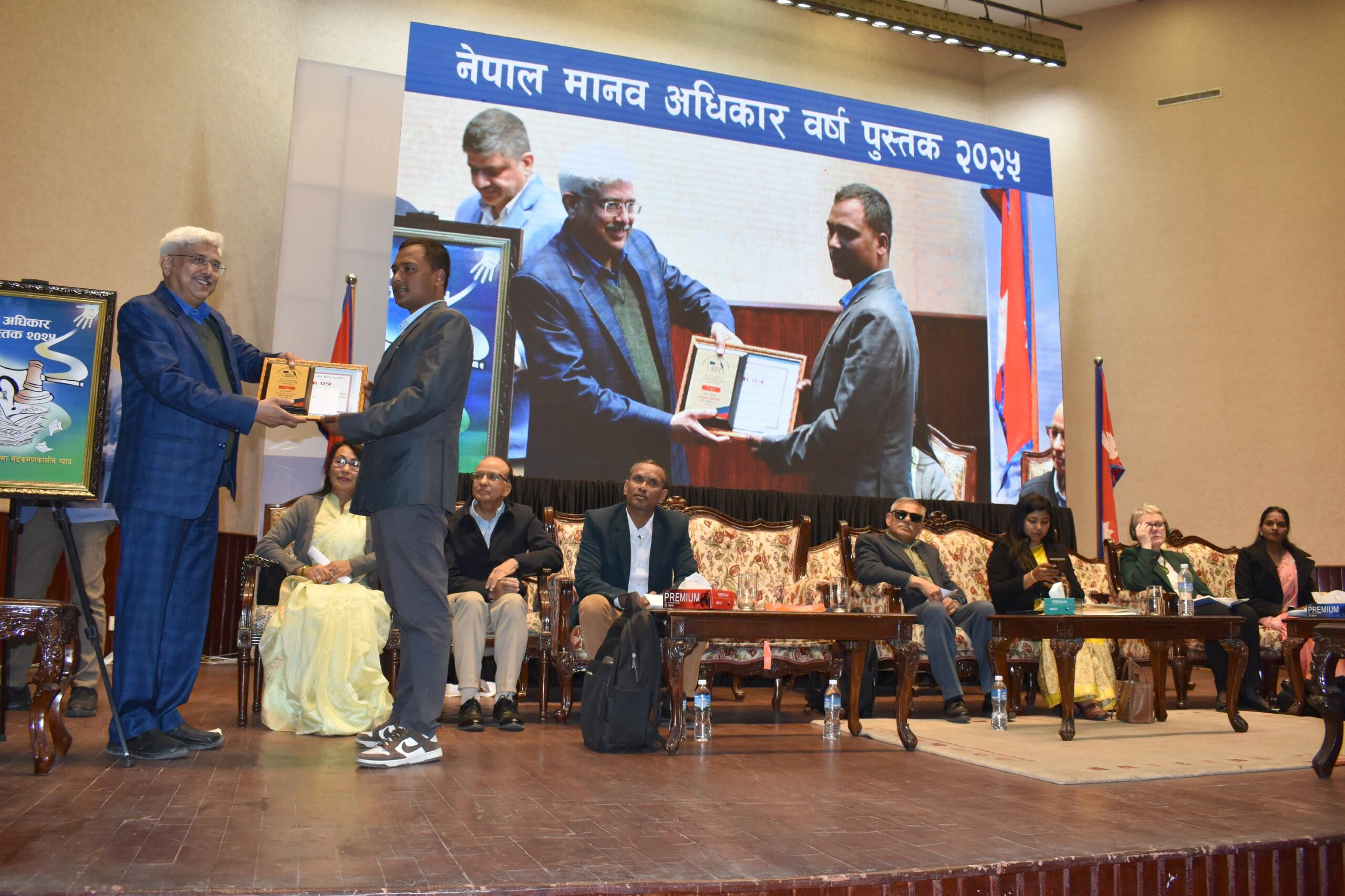
During the program, Dr. Kundan Aryal honored seven district representatives from INSEC’s seven provinces with cash prizes for their outstanding work. Among the awardees was Rakesh Nepali from Udaipur, Koashi Province, Mamata Bishwakarma from Mahottari, Madhesh Province, Sumitra Acharya from Kavre, Bagmati Province, Hare Ram Upreti from Gorkha, Gandaki Province, Jayanarayan Pun from Dang, Lumbini Province, Jagatdal Janala Bika from Surkhet, Karnali Province, and Satyaraj Bahadur Singh from Bajhang, Sudurpashchim Province.