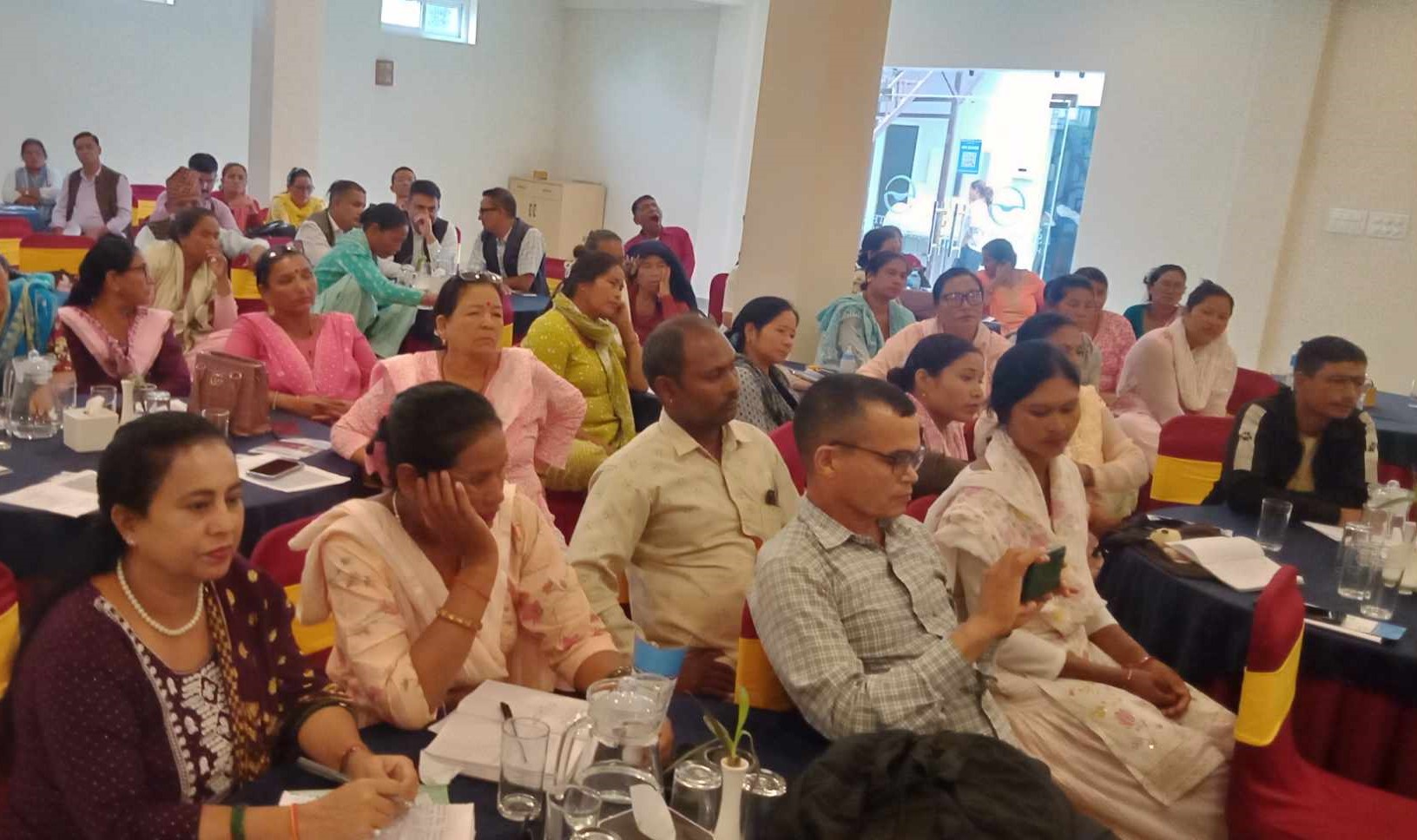

Conflict victims in Lumbini Province have demanded their involvement in the implementation of the Transitional Justice Act. The conflict-affected leaders from 12 districts of serious human rights violations have called for the mandatory inclusion of victims in the Act’s implementation process.
In the Lamahi Declaration, conflict-affected victims have demanded their involvement in all processes and mechanisms necessary to complete the transitional justice process. They have called for the immediate implementation of the law once it is passed the houses of federal parliament and urged for the prompt formation of a commission focused on conflict victims. They emphasized that the selection of commission officers should be done with the victims’ consent. Additionally, they have requested mandatory support for psycho-social counseling for victims and their families. They also urged for the establishment of provincial and local units and coordinated with the victims, to ensure easy access to these services. Similarly, the conflict-affected victims have demanded that the operation of the Peace Fund be led by Nepalis, ensuring it addresses the daily realities of marginalized victims. This includes focusing on education and skill training, employment opportunities, physical and mental health, economic deprivation, and social stigma. Alongside the formation of the commission, they have called for the implementation of support, relief, and compensation programs to address the immediate needs of the victims.
Similarly, the conflict-affected victims have demanded that when formulating assistance and compensation programs, the personal, family, economic, social, and geographical conditions of the victims must be taken into consideration. They emphasize that policies and methods for collective and community compensation should include the entire community in affected areas, such as the Tharu community in Dang, Banke, and Bardiya, as well as the Magar communities in the Rapti. The victims call for these communities to be declared special victim zones, with compensation programs implemented through active participation from the victims themselves.
Likewise, the conflict-affected victims have demanded that their participation in the units of the commissions be ensured. They call for social security and welfare programs to be recognized as rights for the majority of marginalized victims. Additionally, they stress that all compensation efforts should be coordinated by the local government, in collaboration with the federal and provincial governments, with active victim participation. The victims also insist on their leadership and involvement in the processes of localization, socialization, and memorialization of their cases. A provincial-level network representing victims of serious human rights violations has been established to advocate for the victims across 12 districts of Lumbini Province. This 27-member network is coordinated by Sanjay Kumar Gupta, a conflict victim from Rupandehi.