

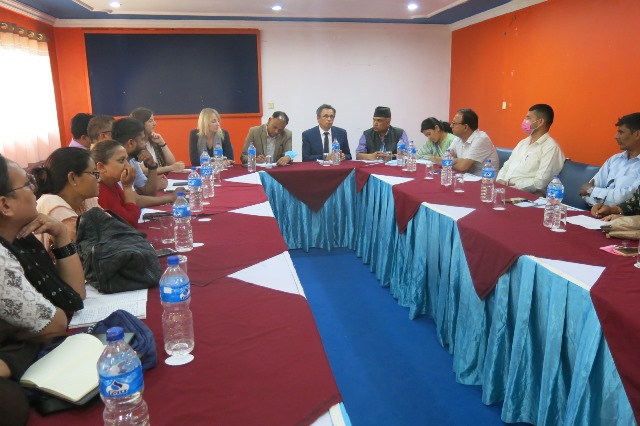
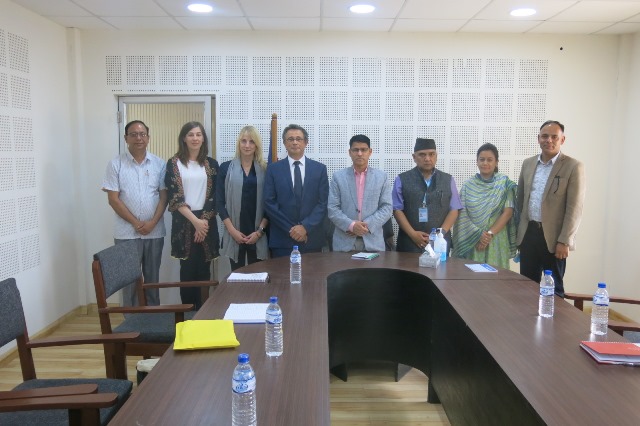
European Union Working Group on Human Rights Defenders and representatives of INSEC met the Chief Minister of Sudurpaschim Province, Trilochan Bhatta and the government officers to discuss on the security and protection of human rights defenders on April 11, 2022.
In the discussion, the Chief Minister of Sudurpaschim Province, Trilochan Bhatt expressed his commitment to pass the model law related to the Security and Protection of Human Rights Defenders- 2078 (2021/22) in the upcoming session of the Provincial Assembly. The model law was prepared in coordination and facilitation of INSEC.
The team of representatives of the European Union Working Group on Human Rights Defenders led by INSEC met with the Chief Minister of the provincial government, Chief District Officer of the district, Superintendent of Police and human rights activists to get information about the works being done by the provincial government in the sector of protection of human rights and human rights defenders.
The representative of the European Union Working Group on Human Rights Defenders, Stephene Maicon shared that the European Union Working Group has also been conducting periodic reviews in the sector of protection of the rights of human rights defenders and the meeting was regarding the status of human rights defenders.
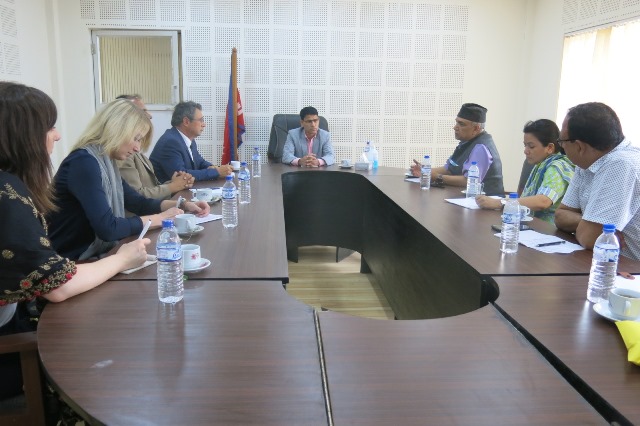
He further said that although the Government of Nepal has done good work in the field of protection and promotion of human rights constitutionally, legally and structurally; they have visited to get information about the progress made in coordination with the province and local governments for the implementation of those works.
The representative of the delegation Stephene had a discussion with Chief Minister Bhatt about the coordination of the provincial government with the civil society, various other organizations and stakeholders for the effective implementation of the policies and programs formulated by the provincial government.
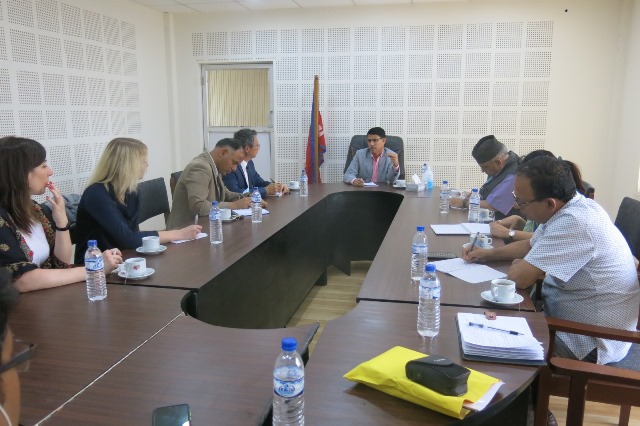
Chief Minister Bhatta shared that the human rights situation in the Sudurpaschim province was improving and the provincial government has been addressing the marginalized communities through policies and programs. They have been working for the protection of the rights of Dalits, Indigenous groups, and freed bonded labours like the Kamalharis, Kamaiyas and Haliyas. He said the law on the empowerment of Dalits was passed in the winter session.
Chief Minister Bhatta said that the provincial government has made a policy of providing subsidies and mortgage-free loans to Kamalhari, freed Haliya, freed Kamaiya, indigenous people and economically deprived families to make them self-reliant and assist them to run their enterprise.
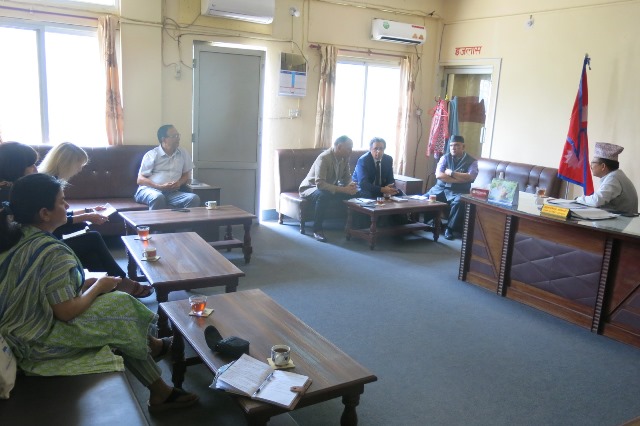
Bhatta further added that the economic prosperity of the province would not be possible until its people are deprived of access to education, health and employment therefore, the provincial government has launched programs to ensure the basic rights of the citizens.
He said that the provincial government has been expecting coordination and cooperation with all the stakeholders for the economic empowerment of the citizens as this would not be possible just with the sole efforts of the province government.
Minister Bhatta further said, ‘The provincial government has been holding regular discussions and interactions with different CSOs along with INSEC for the protection and promotion of human rights. The provincial government is also working in coordination with the federal and local governments to implement the recommendations made to the Government of Nepal during the Universal Periodic Review of Human Rights.’
The delegation of the European Union Working Group on Human Rights Defenders also met the Chief District Officer of Kailali, Kiran Thapa and DSP Bed Prasad Joshi of the District Police Office to discuss the peace and security status of the district and the security of human rights defenders.
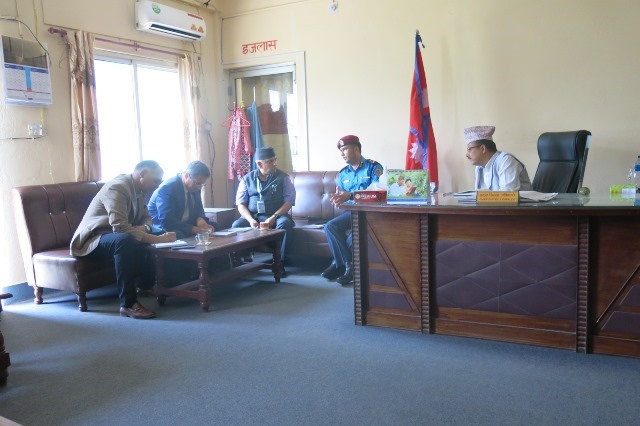
Chief District Officer Kiran Thapa said that recently there were no such incidences of risk and insecurity against the human rights defenders. He further added that there was no problem in the protection of human rights as the government had given responsibility for the protection and promotion of human rights through structural development.
DSP Bed Prasad Joshi of the District Police Office, Kailali said that although there were incidents of suicide and drug addiction in Kailali, there were no incidents of brutal human rights violations. He said that due to open borders, the crime rate increases and even in normal incidents, activities like strikes add to the challenges to peace and security.
DSP Joshi shared that the order issued by the Ministry of Home Affairs for the protection of human rights defenders has been implemented in the subordinate offices as well.
The delegation along with INSEC met with human rights defenders who have been contributing actively, women human rights defenders, Chiefs and representatives of various organizations, media persons and law practitioners in Kailali district and gathered information about the current situation of human rights defenders.
Human rights activists expressed that they have to work at their own risk because of the lack of identification and security arrangements.
The journalists, law practitioners and representatives of the people of disability and minorities said as the province has to become more responsible for the protection, promotion and fulfilment of the rights of women human rights defenders, Dalits, minorities, persons with disabilities, single women, queer community, journalists and law practitioners.
According to INSEC’s Executive Director Bijay Raj Gautam, the team will meet the key stakeholders of the district on April 11, 12 and 13 to get information about the situation of human rights defenders in Kailali, Kanchanpur and Banke of Lumbini province.