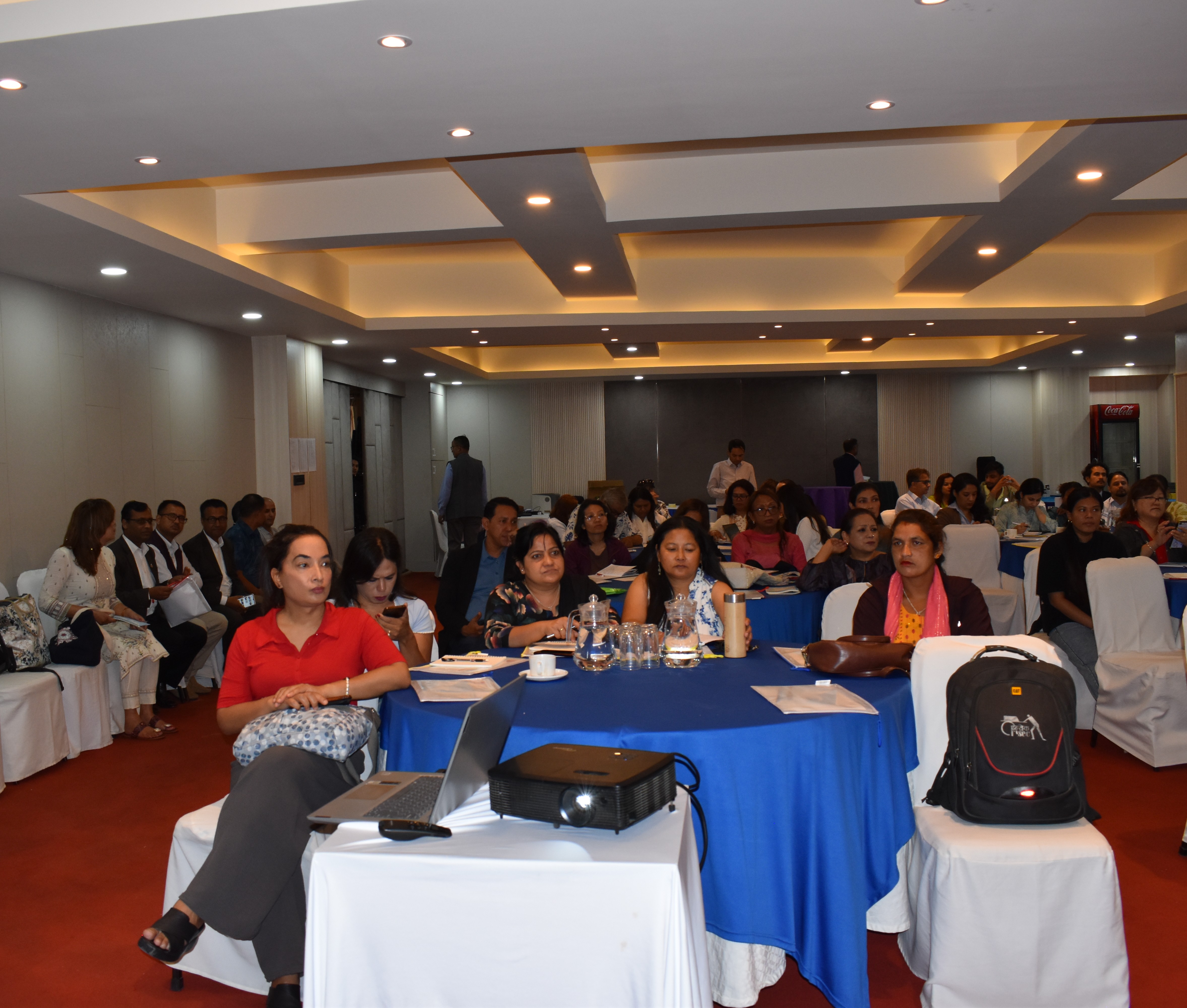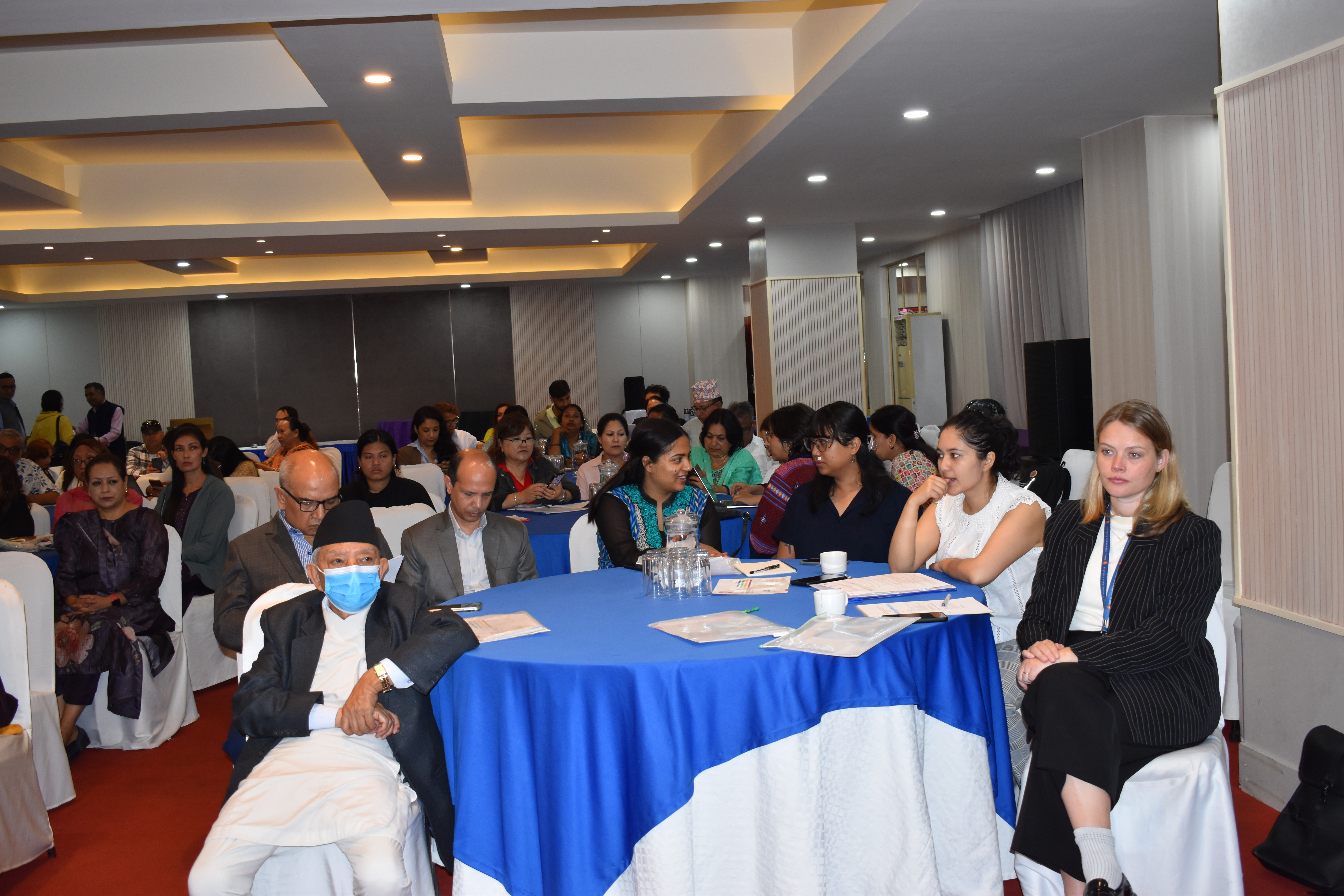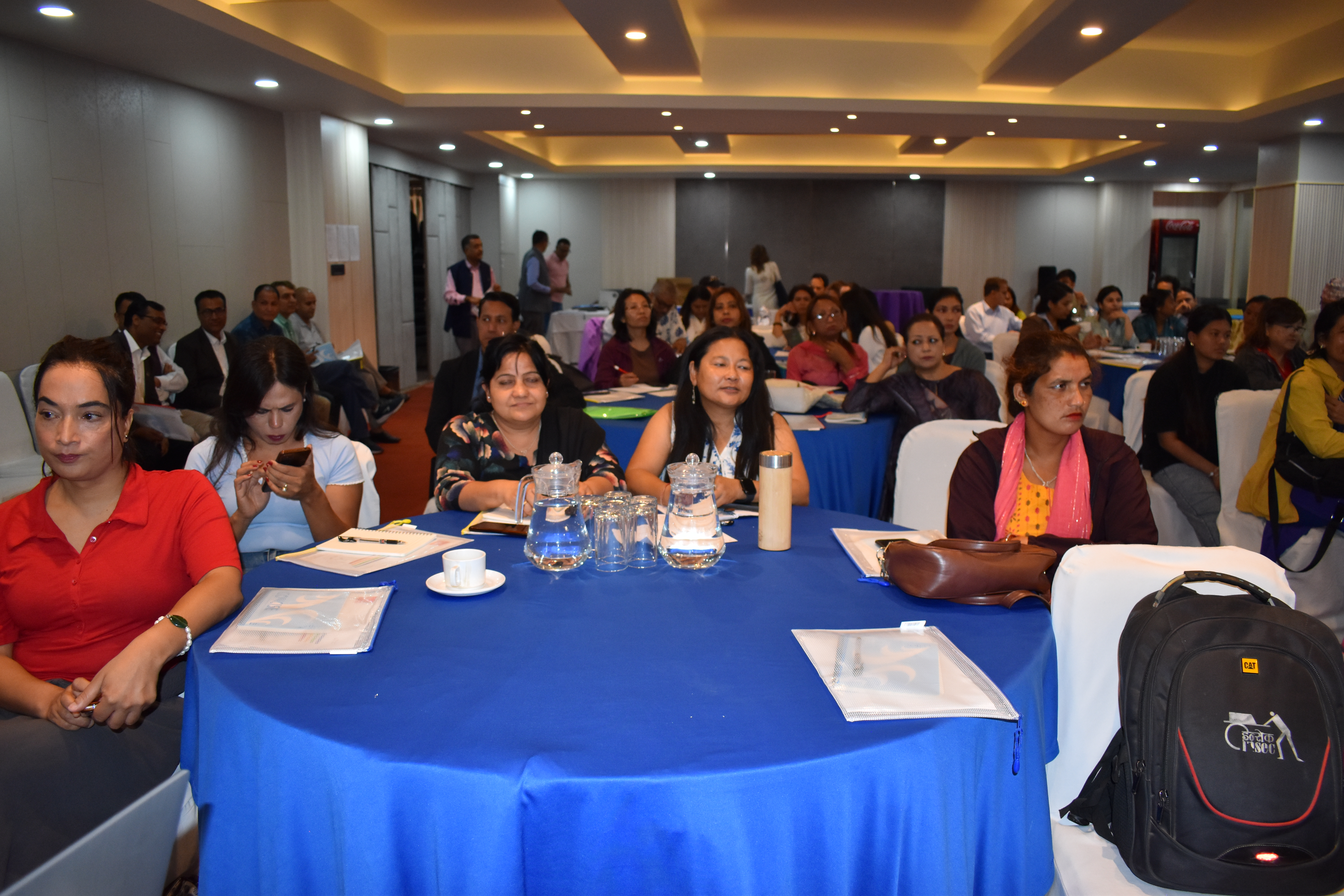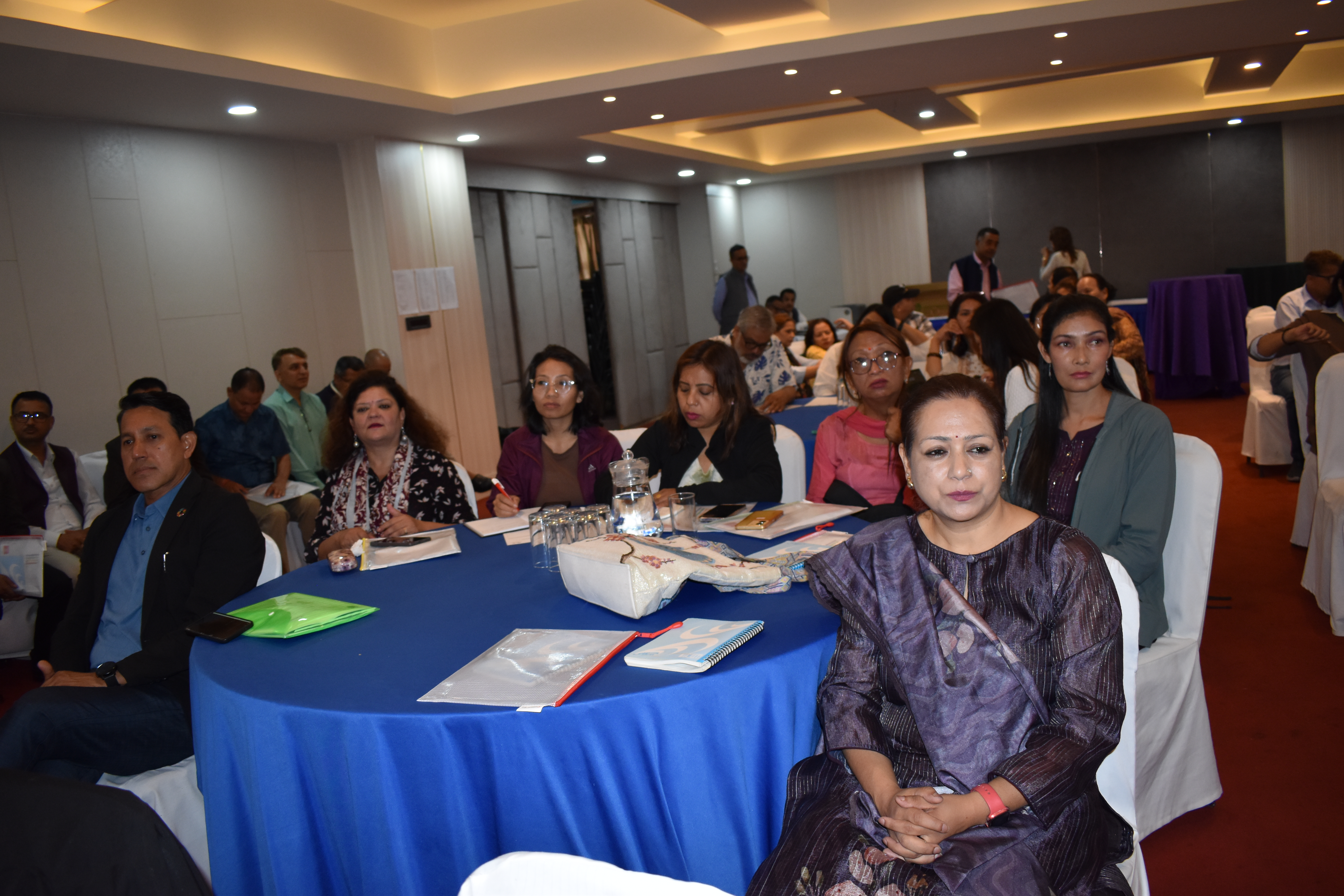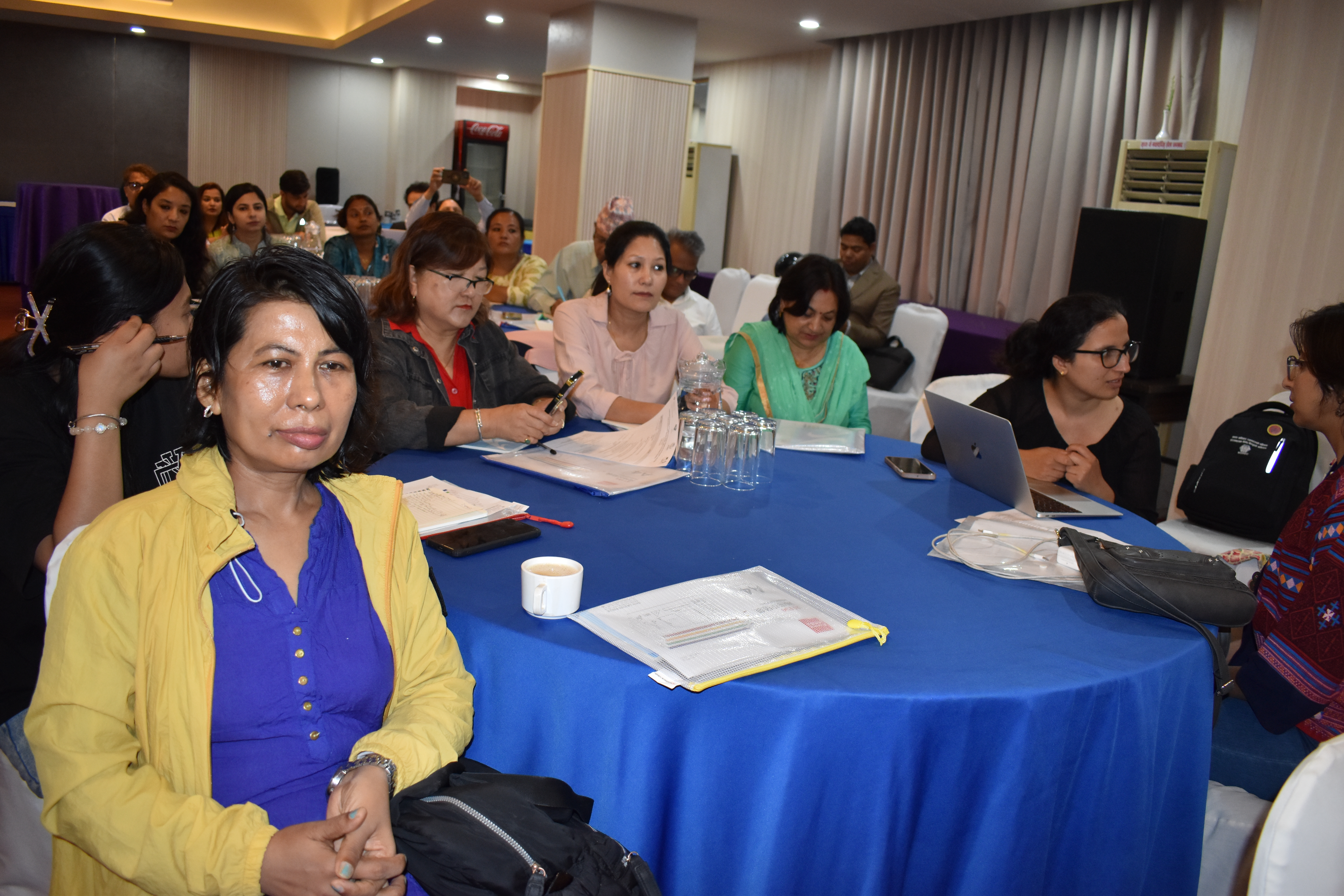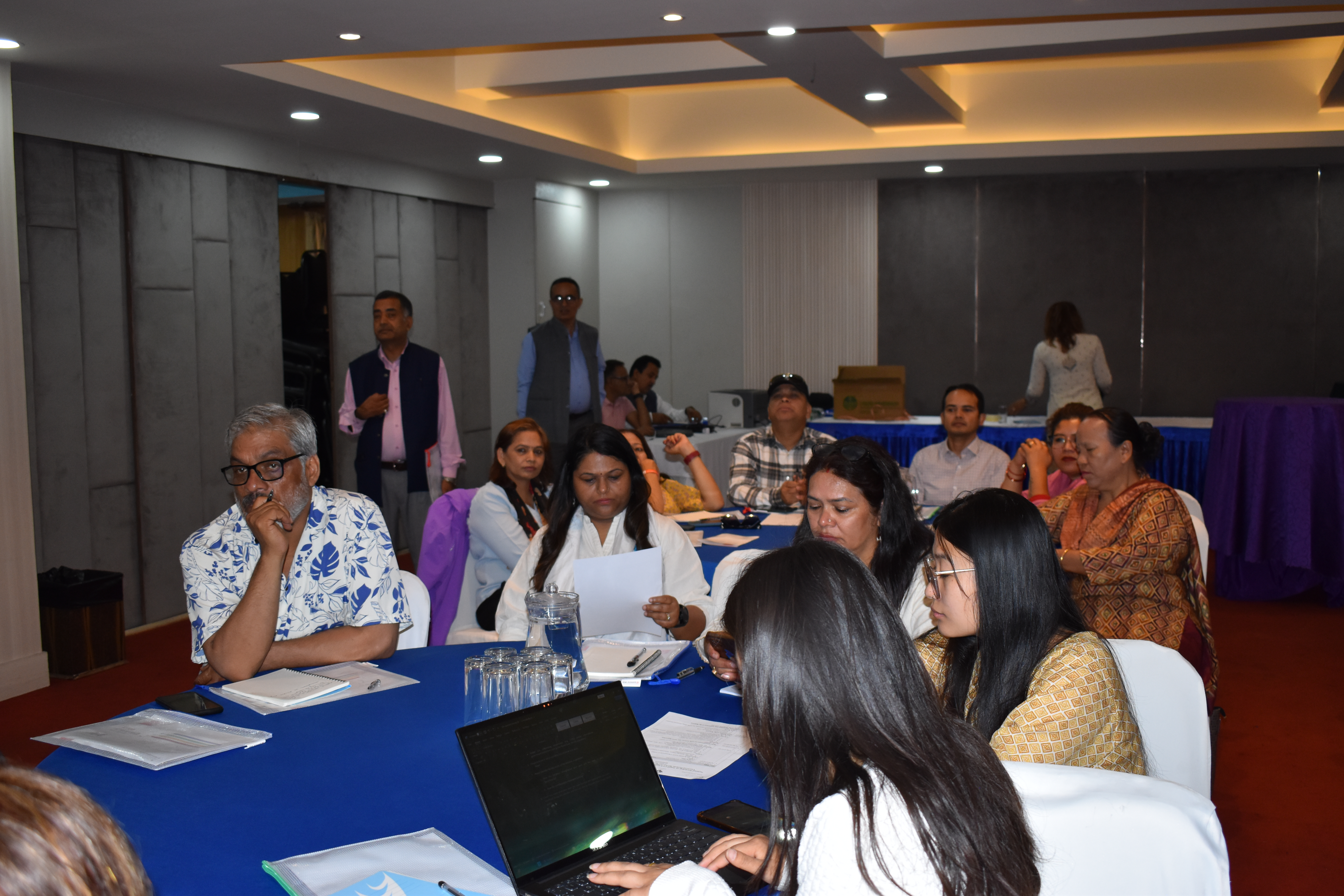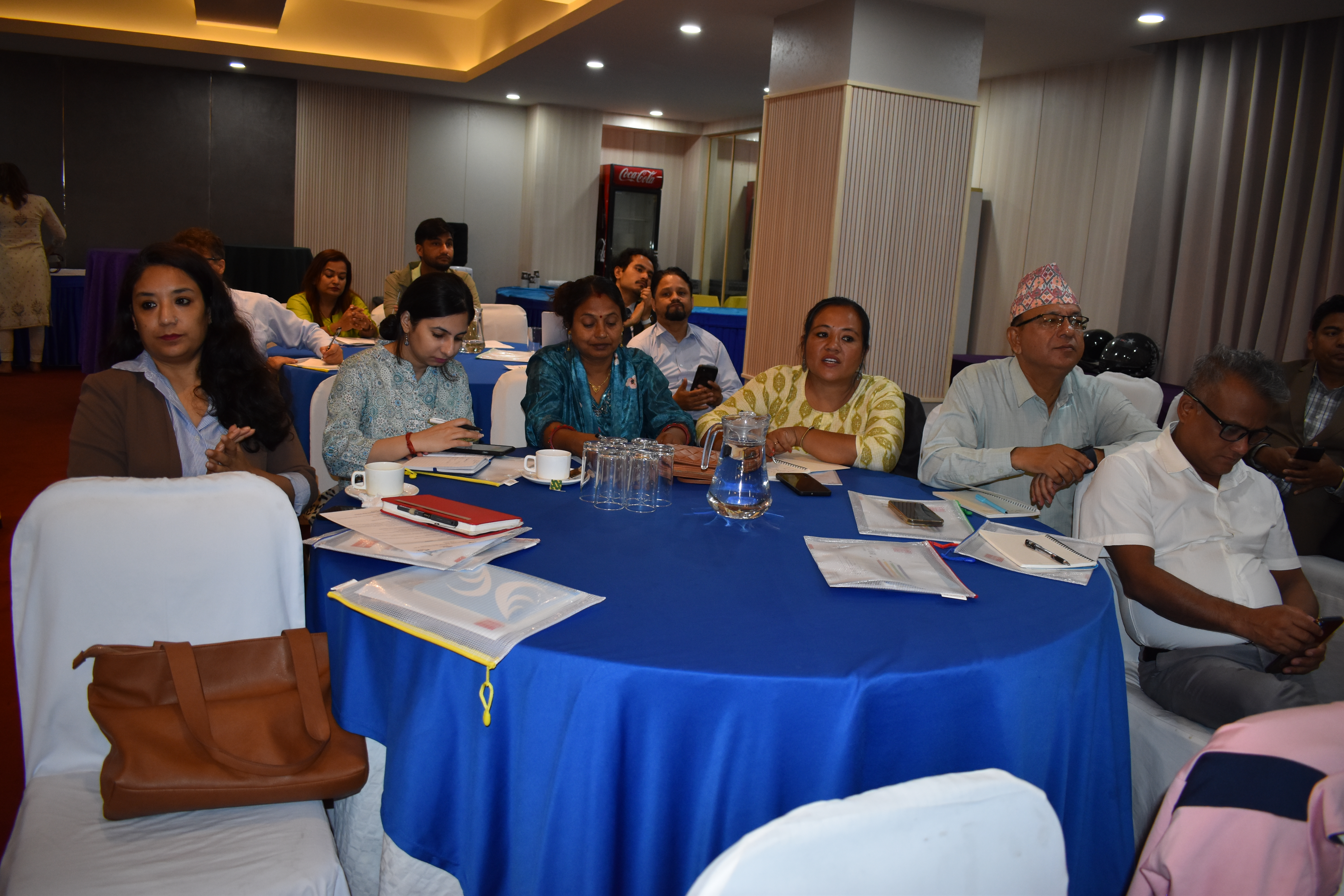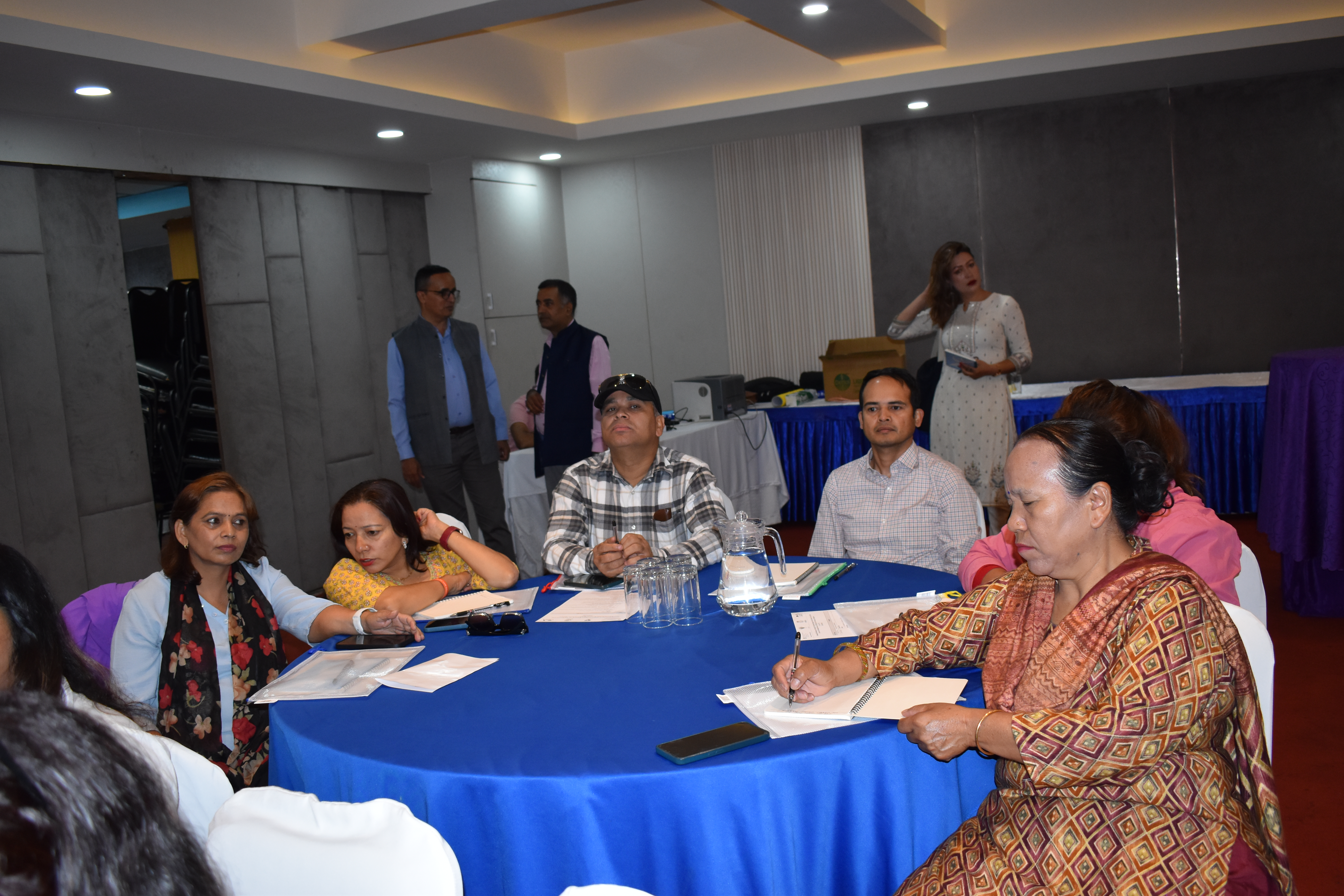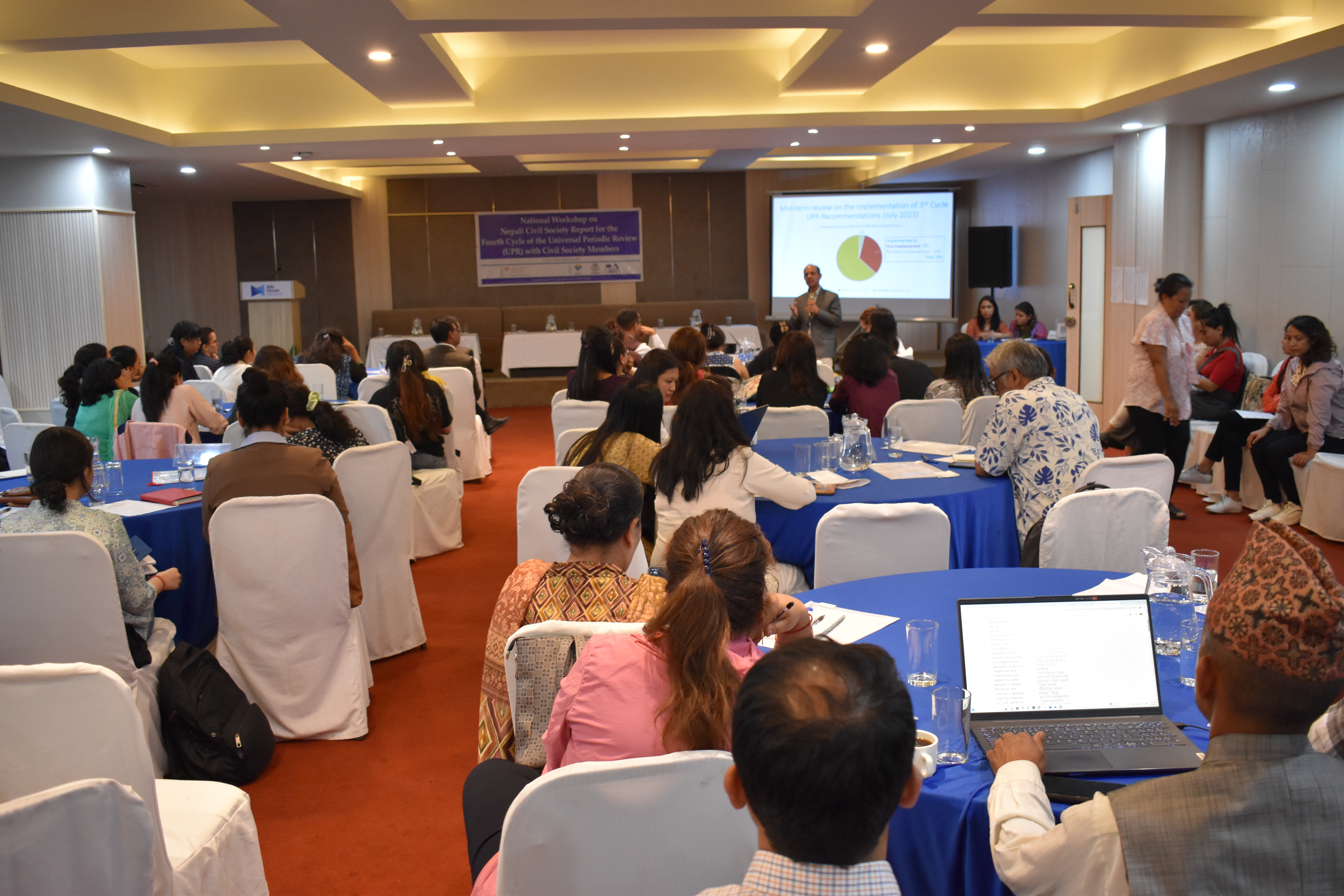

The National Workshop on the Nepali Civil Society Report for the Fourth Cycle of the Universal Periodic Review (UPR) began on June 4 in Kathmandu and will continue until June 5. The event brought civil society members together to discuss human rights issues and prepare recommendations for the UPR report. The program has been organized by the Informal Sector Service Centre (INSEC), WOREC, and the Blue Diamond Society, in collaboration with the DRCFC, with support from the Embassy of Switzerland.
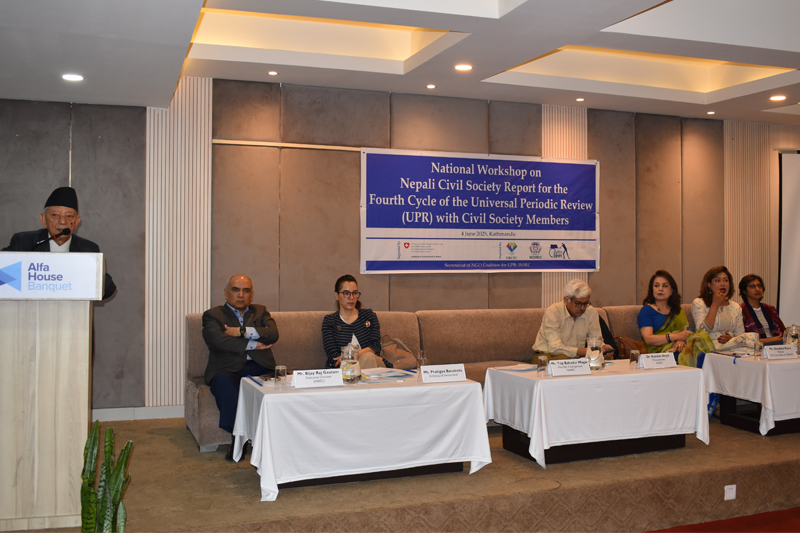
During the event Chairperson Tapa Bahadur Magar of the National Human Rights Commission, stated that the government’s failure to implement the Commission’s recommendations is also a violation of human rights. He informed participants that the National Human Rights Commission of Nepal is preparing its report for the fourth cycle of the Universal Periodic Review on human rights. Chairperson Magar shared these remarks during the workshop, highlighting the importance of effective implementation to uphold human rights in the country. As the international community is also monitoring the situation of protection, promotion, and enhancement of human rights in Nepal, it is the responsibility of both the National Human Rights Commission and civil society to monitor the implementation of the commitments made by Nepal and the corresponding action plans. Chairperson Magar also highlighted the government about the issues of human rights, justice for conflict victims, and caste-based discrimination. He urged the government to take action on the recommendations made to address these problems.
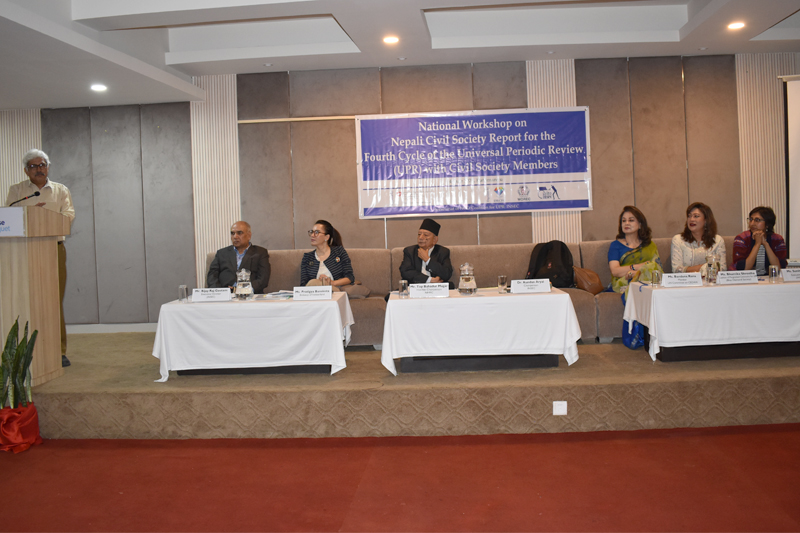
Dr. Kundan Aryal, Chairperson of INSEC, expressed concern over the government’s failure to implement the National Human Rights Commission’s recommendations. He stated that independent monitoring for the periodic review is being carried out through the unified efforts of more than 440 civil society organizations across the country. He highlighted that human rights are improving in Nepal and recalled that Nepal’s human rights situation has strengthened as a result of Nepal’s democracy and republic system. He also talked about the ongoing support and cooperation from Switzerland in helping develop human rights in the country. Chairperson Aryal emphasized that although the Nepal government’s commitments are positive, inconsistencies between words and actions mean that civil society must keep working and monitoring the situation.
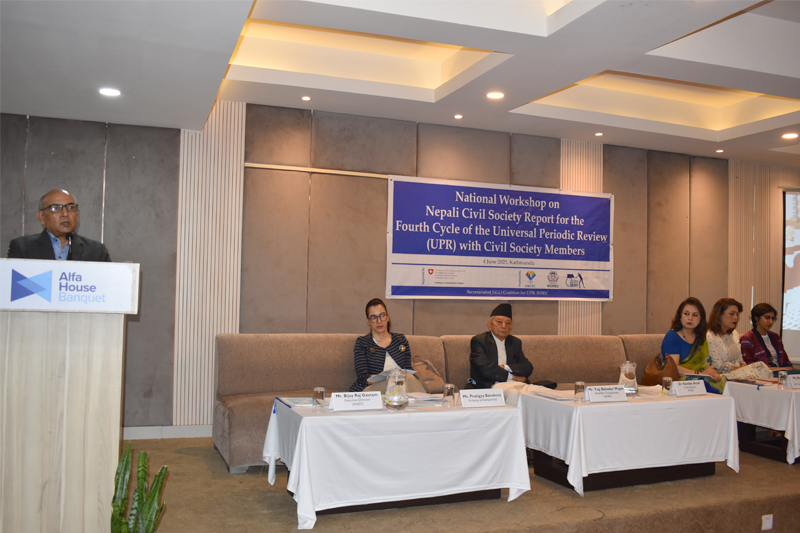 At During the program, Executive Director of INSEC Bijayraj Gautam explained the purpose of the workshop and the process of the Universal Periodic Review (UPR). He stated that the suggestions and feedback raised by civil society organizations play an important role in shaping the recommendations of the UPR.
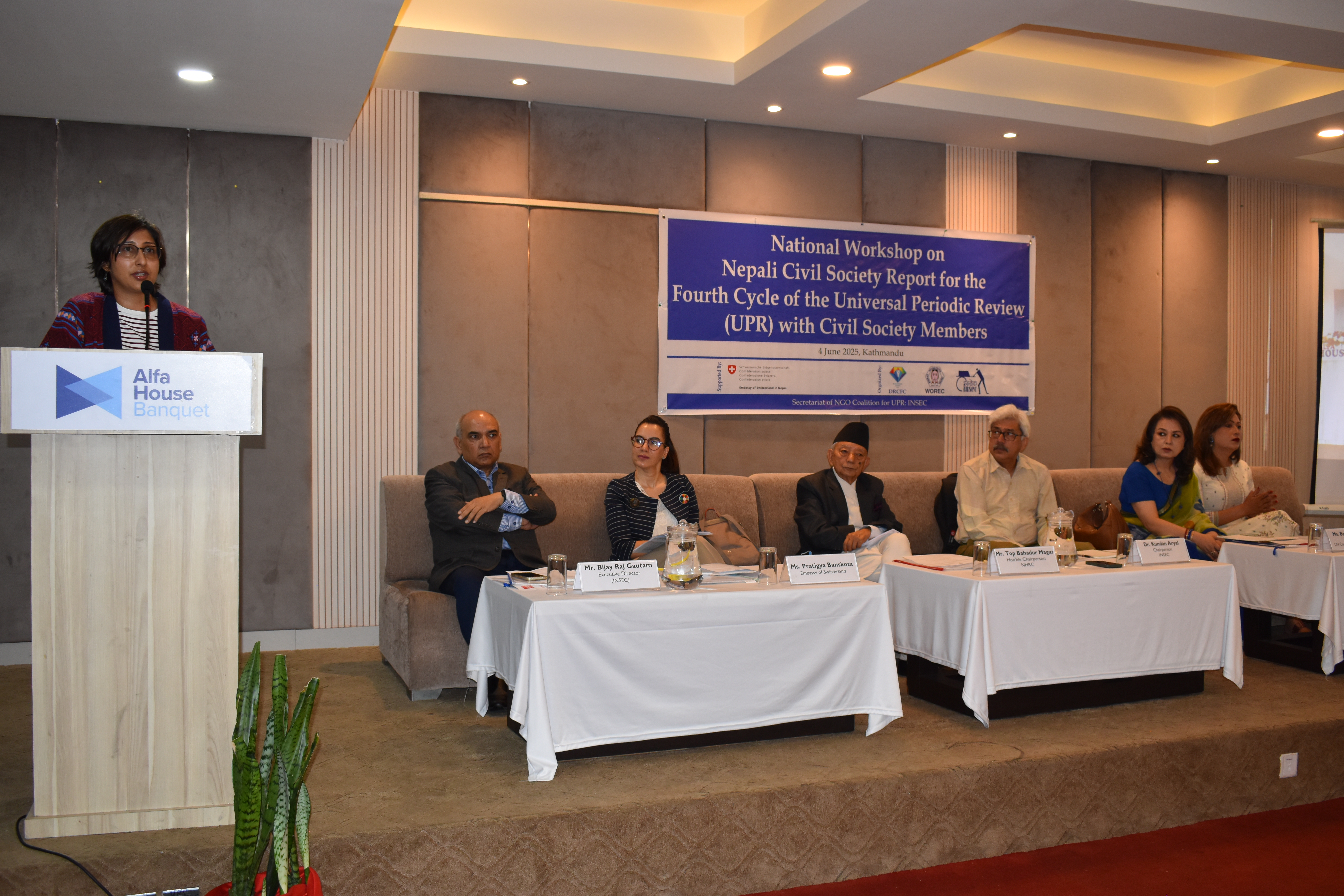 Executive Director of WOREC Sunita Mainali recalled the coordination efforts among women’s rights defenders and emphasized the need to hold the state accountable and responsible when looking at the national situation. She also highlighted the need to transform the growing despair among Nepali youth into hope.
Bandana Rana, a member of the UN CEDAW Committee, expressed that Switzerland will play an important role in the fourth cycle review of the UPR, especially since Nepal has been unable to fully implement its commitments regarding women’s issues. She emphasized that Nepal needs to collaborate with other countries as well to end all forms of discrimination against women.
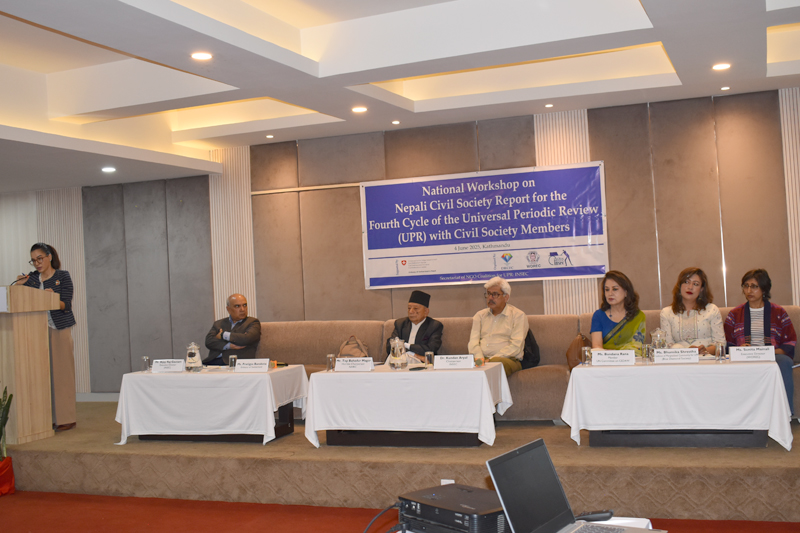
Bhumika Shrestha from the Blue Diamond Society highlighted that the issues raised by DRCFC regarding marginalized groups are challenging. She emphasized that the concerns of Dalit communities, along with those from marginalized groups, should be prioritized based on equality and fairness. She emphasized that INSEC should take special initiatives to hold the state accountable for the rights of the LGBTIQ community.
Pratigya Baskota, Program Officer at the Embassy of Switzerland in Nepal discussed the status of UPR, opportunities, and challenges in Nepal and highlighted how INSEC coordinates these efforts. She emphasized that INSEC plays an important role in national policy-making and the implementation of global human rights standards. She also mentioned that truth and reconciliation for the conflict victims are still pending and emphasized the need for monitoring by civil society and impartial discussions for reparation.

UPR report consultant Kapil Aryal stated that the final report would be prepared by incorporating the suggestions that emerge from discussions on the UPR. He mentioned that the suggestions gathered from the program would be included in the refined final report. He further noted that although there has been progress in institutional structures and legal aspects regarding human rights in Nepal, the implementation aspect remains weak. He stated that the Constitution of Nepal includes a provision for the review of the National Human Rights Commission Act within ten years of its promulgation. He added that the issue of the government not giving attention to the implementation of the Commission’s recommendations would be raised as a priority in the report. Nepal has been submitting reports under the Universal Periodic Review (UPR) since 2011, and although legal measures have been taken to end caste-based discrimination, weak implementation has led to differences like caste-based discrimination between the different regions of Nepal. He recalled that women in the Muslim community are in a vulnerable position and emphasized the need to take the changes in their lifestyle seriously when displacing citizens for major ongoing projects in the country.
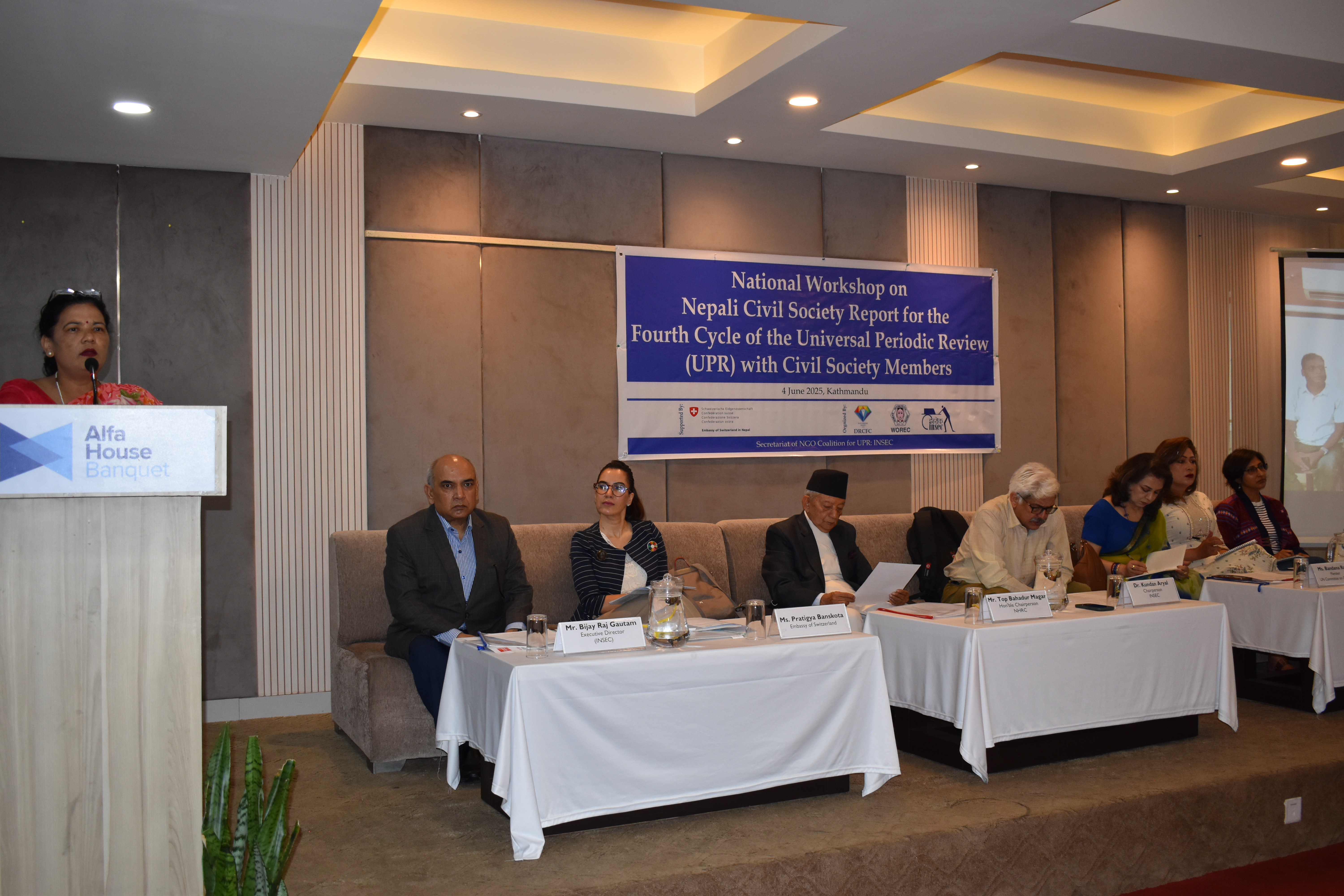
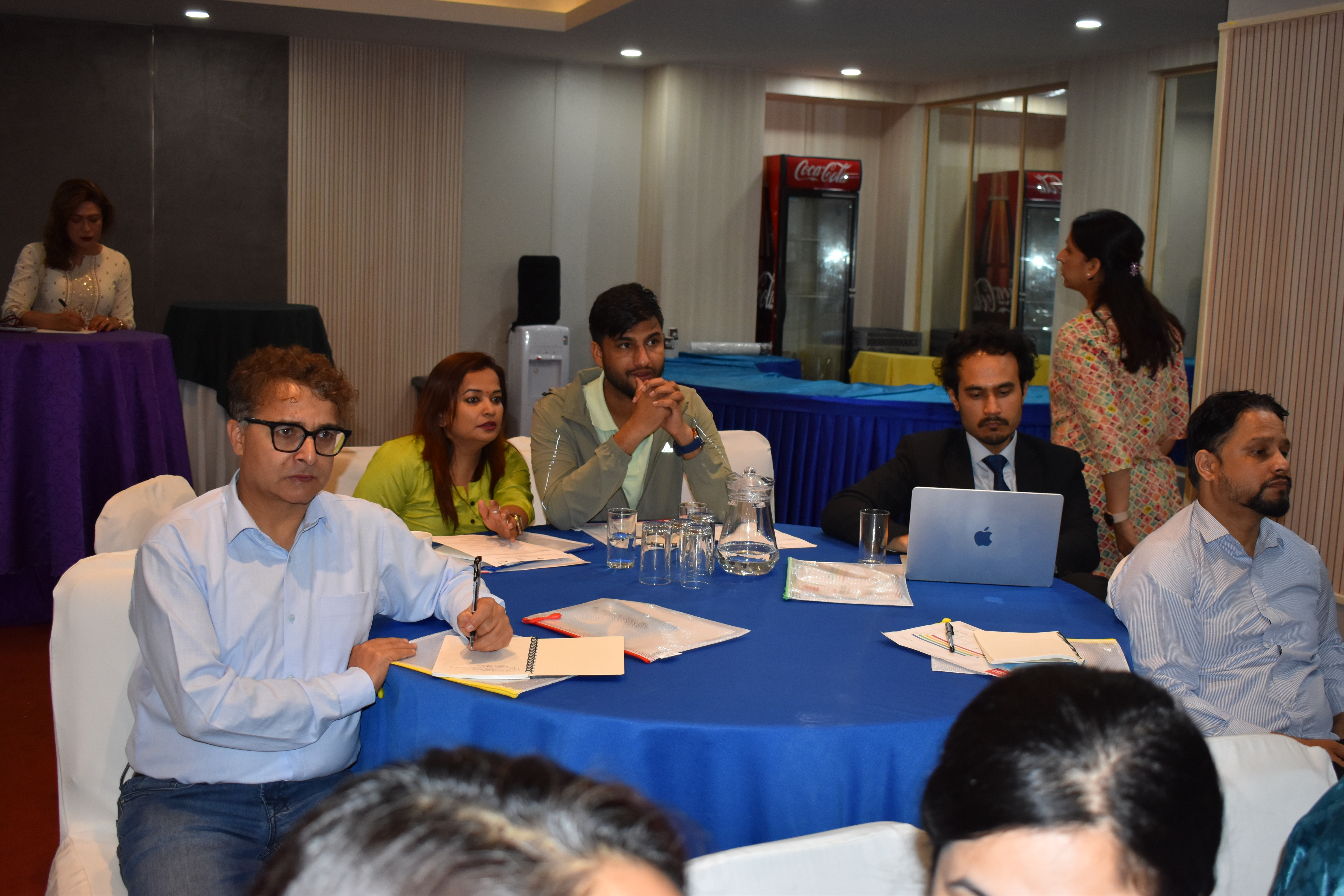
Samjha Shrestha, Chief of the Human Rights Advocacy Program at INSEC emphasized the importance of the fourth phase of the UPR review for guaranteeing citizens’ human rights and urged stakeholders to provide suggestions for the report. In the program, participants were divided into four thematic groups to collect and present suggestions for the UPR report.