

Human rights activists have emphasized the need for all parties to coordinate in holding the government accountable for ensuring a victim-friendly transitional justice system. This opinion was expressed during the discussion program on “The Efforts and Suggestions Made by the Commission Regarding Transitional Justice,” organized by the National Human Rights Commission on July 8.
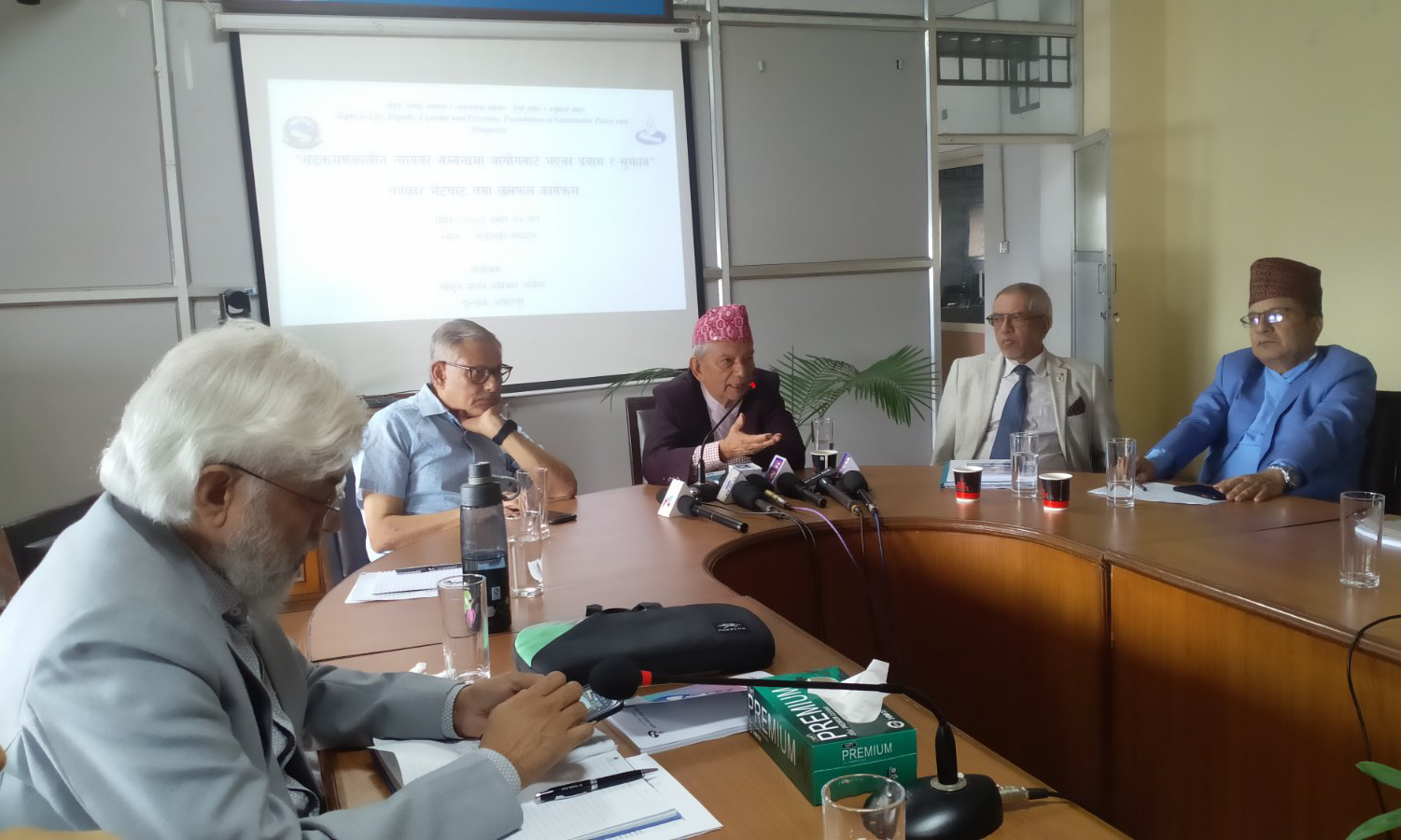
While announcing the report on ‘National Human Rights Commission and Transitional Justice,’ Chairperson Tapa Bahadur Magar of the Commission emphasized the need for a joint effort of civil society, the media, and the Human Rights Commission to ensure that the government enacts laws and policies that provide justice to victims and punish the accused.
Magar recalled that it is a serious problem that issues regarding transitional justice have not been concluded even after 18 years of peace process. Additionally, he complained that the government has not implemented transitional justice measures despite repeated attention and suggestions. Magar stated ‘We have put forward 12 points for the judicial determination of transitional cases, and we are telling the government that our recommendations should be implemented’.The commission believes a law should be passed to ensure that the committees formed for finding the truth, uncovering facts, and rendering justice can work effectively. It emphasizes that everything should be evaluated and decisions should be reached by consensus.
Dr. Surya Prasad Sharma Dhungel, a member of the Commission, emphasized the important role of journalism in supporting the Human Rights Commission for Transitional Justice. He highlighted that the Commission has been documenting abuses during the conflict and called for increased cooperation from the media. Dhungel stated, ‘The nation must play a parental role in delivering justice, and the media must hold the nation accountable. We cannot be satisfied by comparing ourselves with other countries. Therefore, victims, civil society, and human rights activists must collaborate.’ He further stressed the need to address our situation, prioritize the victims, resolve the issues, and bring transitional justice to its conclusion. Dhungel also highlighted that despite government commitments, there’s a problem with implementation. He emphasized that without the right laws, the Commission can’t act alone, so positive steps are crucial.
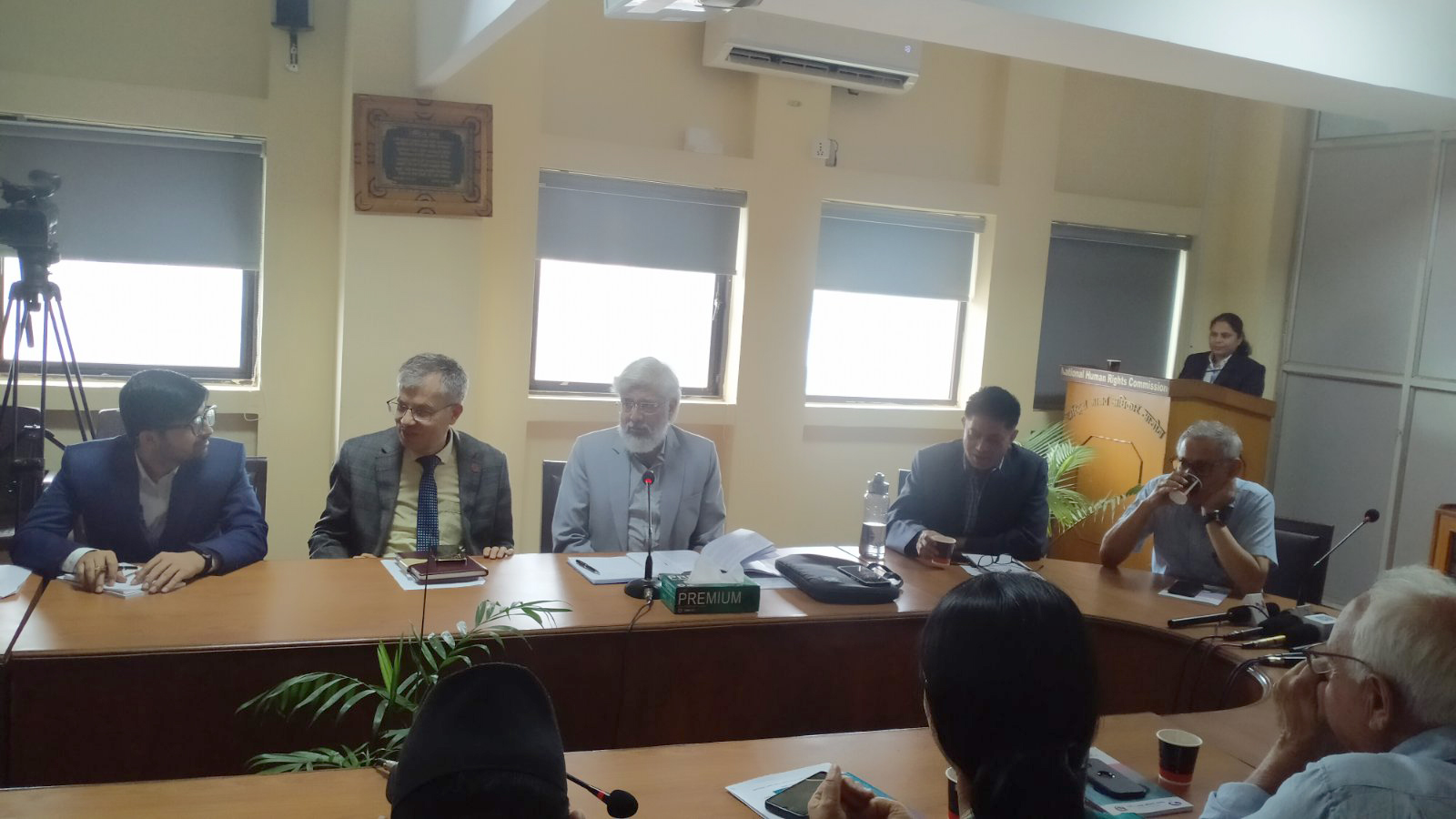
Sushil Pyakurel, a former member of the commission and founding Chairperson of INSEC, stated that the participation of those seeking justice in the judicial process is indispensable for completing the remaining aspects of the peace process. Pyakurel stated that with the end of the conflict, the Peace and Reconstruction Commission became a ministry, serving merely to justify political interests. Consequently, based on our reality, the peace process and transitional justice issues could not be properly addressed.
Dr. Kundan Aryal, the Chairperson of INSEC and Chief of the Central Department of Journalism and Mass Communication at Tribhuvan University stated that attention should be prioritized on searching for truth and facts rather than simply providing compensation. He said ‘In the context of transitional justice, there are numerous political commitments. There must be no general amnesty for serious human rights violations.’ Additionally, he emphasized that the Commission should play a greater role in searching for the truth if transitional justice has not yet concluded. It is necessary to move forward not only with suggestions and recommendations but also with concrete actions.
Dr. Rishikesh Wagle, Dean of Kathmandu University School of Law, opined that the topics presented in the report published by the commission can be important reference material for researchers. Dr. Rishikesh Wagle, Dean of Kathmandu University School of Law, noted that the Commission should not only find out the truth but also take action. He claimed that unless the Commission is made responsible for uncovering the truth and facts, nothing will be achieved by simply improving the law. He expressed concern that not enough attention had been given to uncovering the truth and facts about serious human rights violations during the conflict. Therefore, everyone should be aware that the truth and facts may not come out if it is too late.
Veteran journalist Kanak Mani Dixit expressed his belief that the report will significantly contribute to future progress as it documents the events of the conflict. He mentioned that the commission has made some progress in delivering justice and suggested that the government should be more accountable while addressing the pain of the victims.
Devi Khadka, a conflict victim and leader of the CPN Maoist Center, emphasized the importance of establishing truth based on the topics covered in the report. She complained that out of 66,000 complaints filed for Truth Reconciliation, 314 complaints were put on hold, and the victims did not receive justice because the government and political leadership did not take sexual violence seriously. Khadka expressed sadness that the victims were being unfairly treated due to the excessive politicization of the TRC Bill.
Likewise, Sushila Chaudhary, a family member of a missing conflict victim and an advocate, emphasized the importance of the suggestion submitted by the National Human Rights Commission regarding transitional justice, particularly in terms of constitutional elements.
While discussing the contents of the book, Murari Prasad Kharel, the secretary of the commission, provided information about the suggestions made to the government. These suggestions covered issues such as addressing those involved and affected during the armed conflict, actions to be taken in cases of human rights violations where free consent was absent, and the determination of appropriate punishment.
Durga Pokharel, Human Rights Officer of the Commission, informed that the Commission has forwarded 19 additional suggestions and recommendations to the Government of Nepal in the report. These suggestions are aimed at ensuring a proper conclusion to transitional justice, in line with international practices, universally accepted human rights, and humanitarian law.