
Businesspersons have complained that issues of business and human rights have not been able to move forward in a balanced manner due to the government’s inconsistent policies and practices.
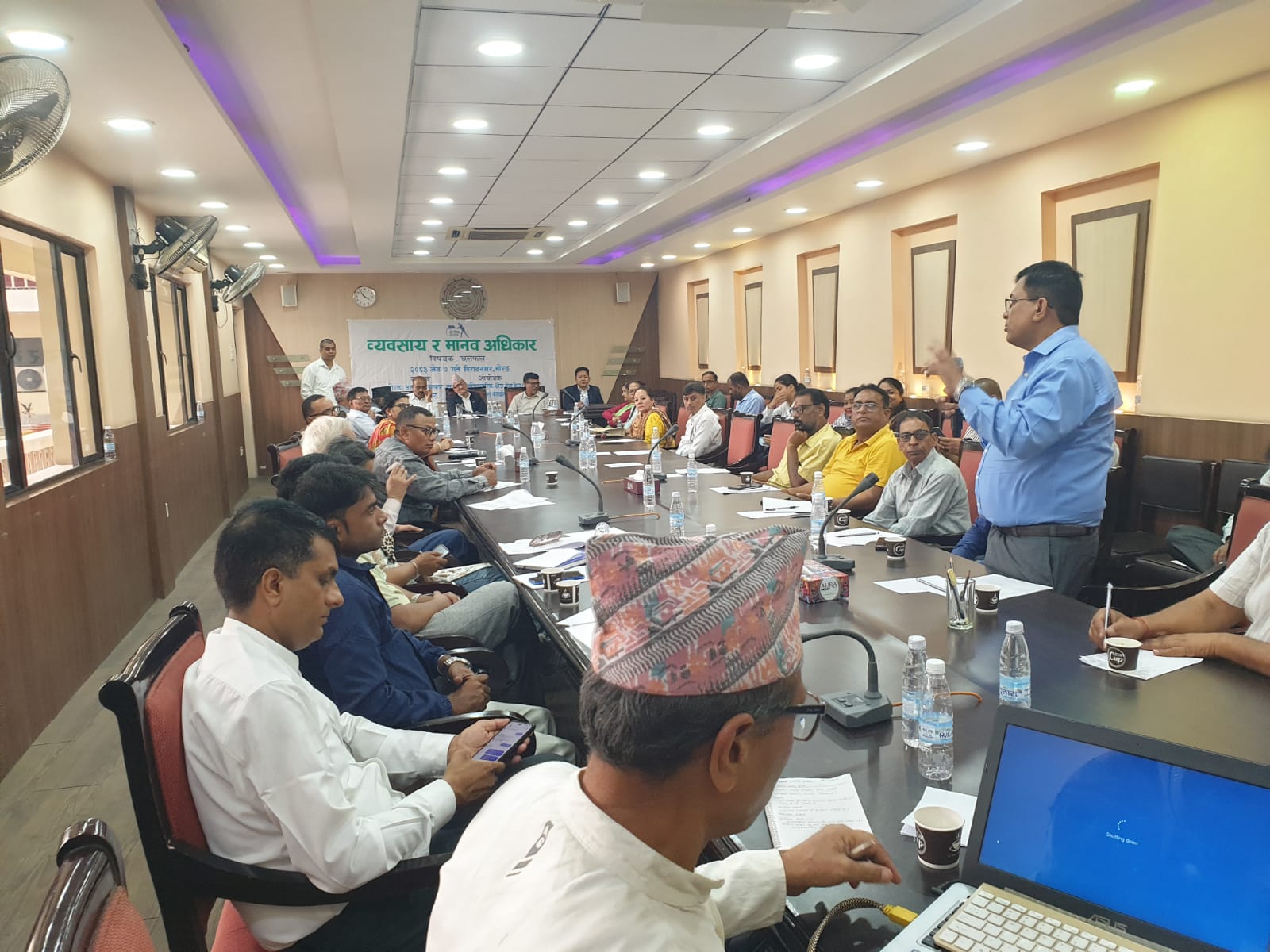
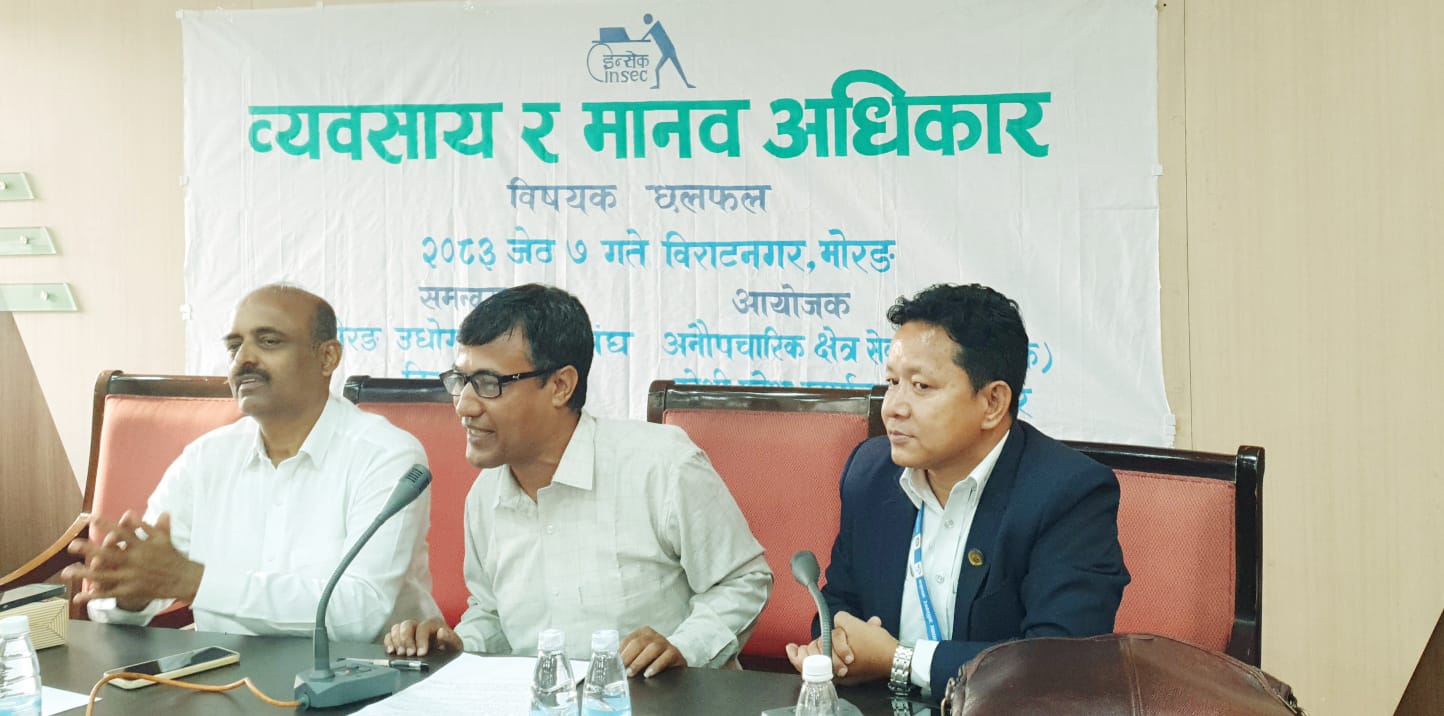
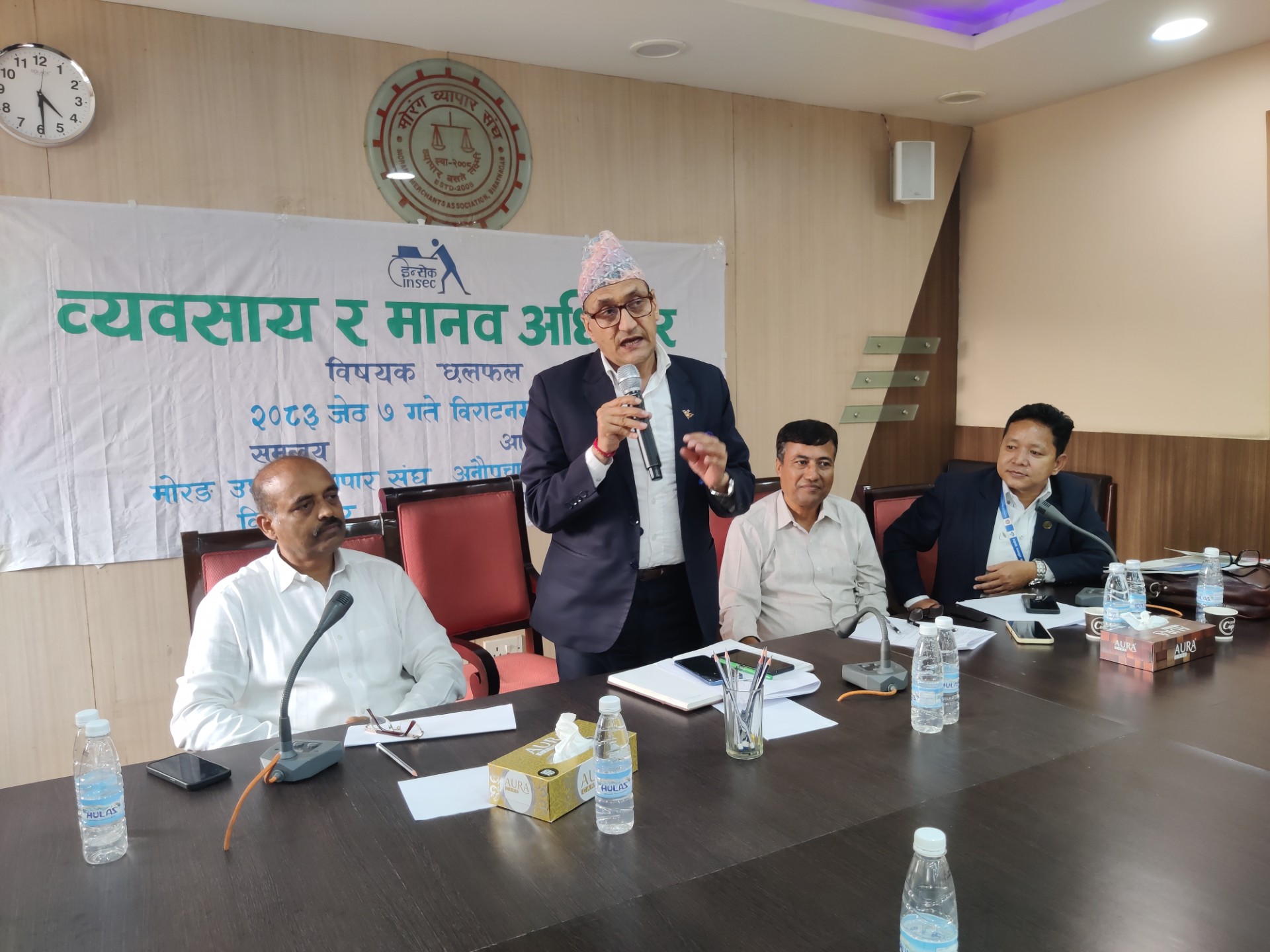
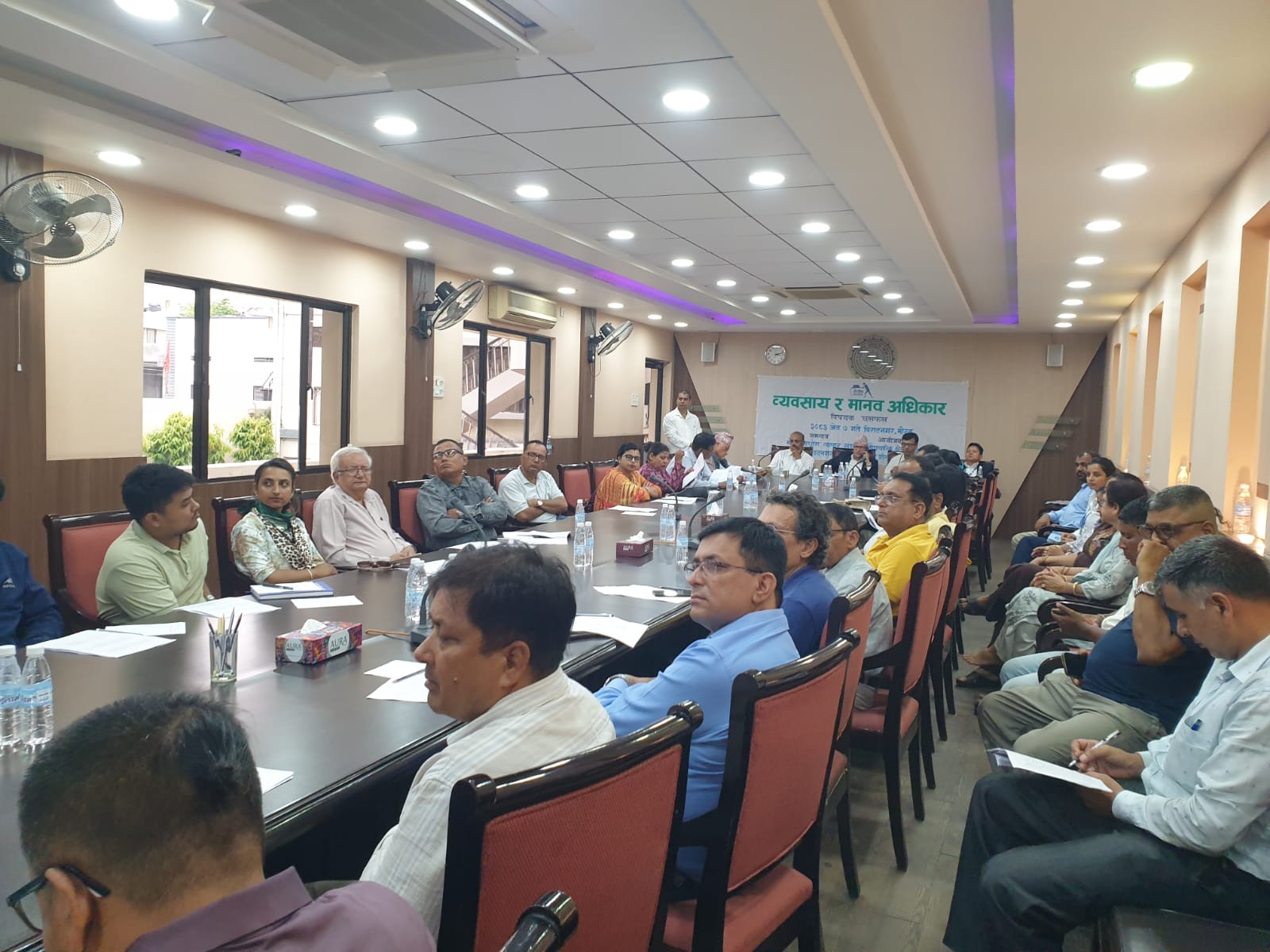
Participating businesspersons at an interaction program on business and human rights organized by INSEC Koshi Province in coordination with Morang Chamber of Industries and Commerce in Biratnagar on May 21 complained that instead of being complementary, business and human rights have been drifting apart because of the state’s inconsistent policies and practices.
Speaking at the program, Senior Vice President of the Morang Chamber of Industries and Commerce, Anil Sah, said that although it is possible to implement Maximum Retail Price (MRP) on imported goods and services, the provision requiring imported goods to carry MRP labels at the customs point itself is impractical and cannot be effectively implemented. He stated that keeping containers halted unnecessarily at customs points for many days has increased the cost of imported goods due to additional charges, forcing consumers to pay higher prices. He said that although importers may initially bear the extra cost, the additional amount is ultimately added to the imported products before they are released into the market, meaning consumers are suffering because of the government’s impractical policies. Senior Vice President Sah stated that the government should allow traders to bring goods to warehouses first and apply MRP labels there before sending them to the market, instead of requiring labeling at customs points. He said that businesspersons do not intend to cheat consumers, but consumers are suffering due to the government’s impractical policies. He further stated that although industrialists and businesspersons are serious about human rights issues, the relationship between business and human rights often becomes disconnected because of the government itself. Senior Vice President Sah said that organizations such as INSEC should raise before the state not only rights-related issues but also the problems businesspersons face due to government policies.
At the program, Chairperson of Consumer Campaign Nepal, Krishna Prasad Bhandari Marseli, said that since the government recently conducted a Price List Week campaign, the administration should publicly disclose information regarding the extent of market monitoring conducted in the Biratnagar market during that period. He stated that they have repeatedly raised consumer rights issues at the ministry level regarding the government’s tendency to conduct market monitoring only for show. He further stated that the government’s decision made on July 17, 2019, to measure pesticide levels in imported goods at customs points before releasing them to the market was withdrawn by July 4 of the same year, which has affected consumers’ right to health.
Chief Guest of the program and Chief District Officer Yubaraj Kattel said that the greatest responsibility of businesspersons and consumers alike is to inform the state, and accordingly, they should report fraud, adulteration, and other irregularities occurring in the market to the government. Chief District Officer Kattel stated that business and human rights appear separate, and only when both consumers and businesspersons play equal roles can the protection and promotion of business and human rights be ensured. He said that INSEC has played an important role in the field of human rights and that business, government, and civil society must jointly advance issues related to economic, social, and cultural rights in order to make the relationship between business and human rights truly interdependent.
 At the program, Assistant Secretary of the Biratnagar Provincial Office of the National Human Rights Commission, Bir Bahadur Budhamagar, stated that the government has been working to connect business and human rights through a dedicated action plan. He said that businesspersons need to understand the fundamental rights guaranteed by the Constitution and provide goods and services accordingly.
President of NGO Federation of Nepal, Bishnu Sharma, stated that neither the government alone nor businesspersons alone can address human rights issues, and therefore, civil society has been trying to connect the government, businesspersons, and consumers.
At the program, a member of the Human Rights Defenders Network Koshi Province, formed by INSEC, Aakriti Rani Phuyal, stated that in some cases, persons with disabilities are dismissed from jobs simply because of their disability and are even deprived of remuneration in accordance with the Labour Act. She said that persons with disabilities are equally capable of working like non-disabled persons if given opportunities, and urged businesspersons to provide opportunities to persons with disabilities in various ways in accordance with social responsibility.
 At the program, Chairperson of the Transport Association Biratnagar, Som Prasad Bhattarai, complained that people involved in the transport sector have not been able to live with dignity. He said that although human rights should be equal for everyone, those involved in transportation work are often demeaned, insulted, labeled as dirty, and mocked as truck drivers, due to which laborers working in the transport sector have not even been able to enjoy the fundamental rights guaranteed by the Constitution.