

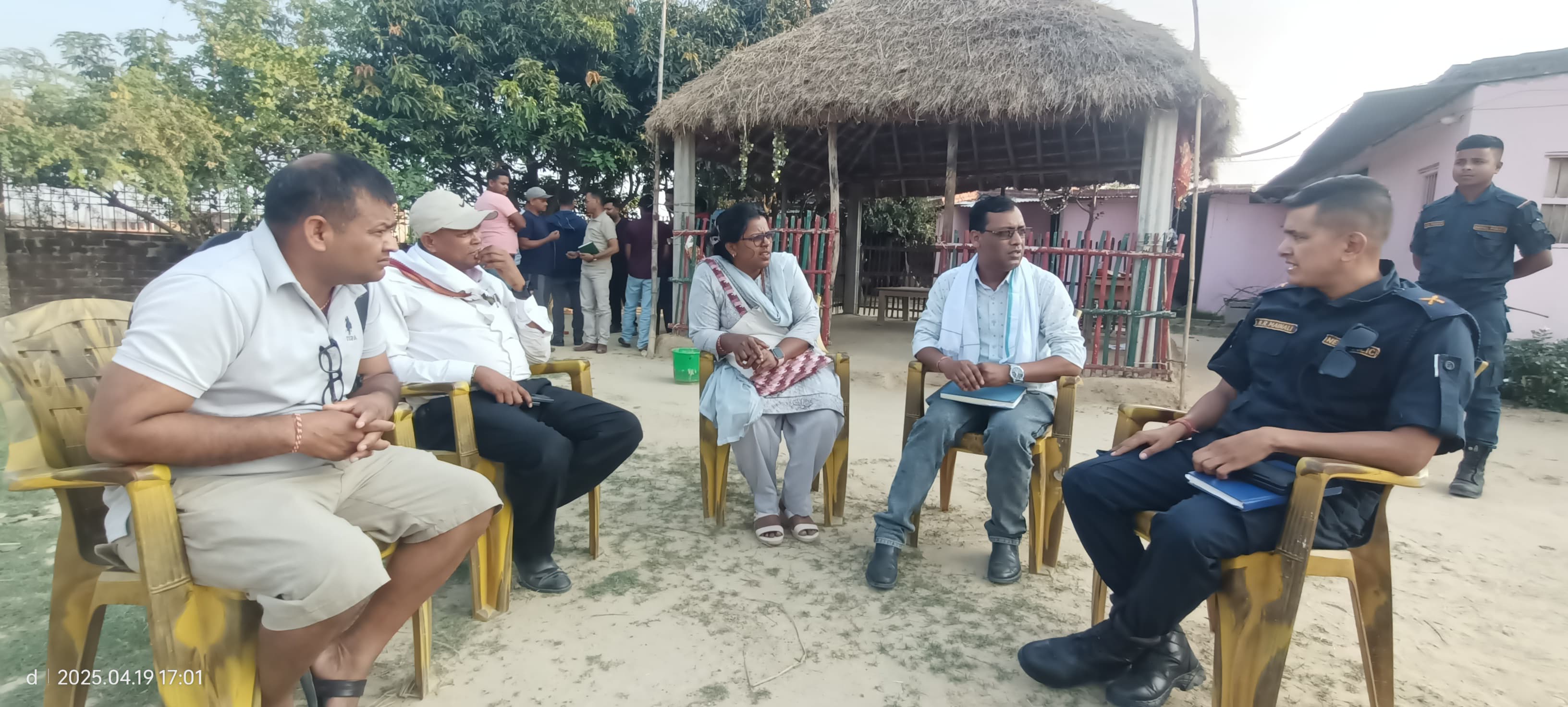
On April 19, INSEC and other Human Rights Activists conducted an onsite monitoring of the suicide incident of the 18-year-old girl of Araha Rural Municipality-1 who was attempted to be raped on April 15. A joint team, including Raju Paswan, Coordinator of INSEC Madhesh Province Office, Durga Pariyar, INSEC Siraha Representative, Shyamkumari Shah, Chairperson of the Women’s Human Rights Defenders Network, and Sijendra Sada, Coordinator of the FEDO, Dhanusha conducted the field monitoring.
During the monitoring, the team met with the family members of the deceased to gather information about the incident. The deceased’s father Jogendra Sada stated that on December 24, when the victim was going to her sister’s house, Sanjip Yadav, 25, and Shyamsundar Yadav, 32 of Nawrajapur Municipality-3 attempted to rape her by blocking the road. After she returned home and informed the family about the incident, Jogendra went immediately to the Ward Chairperson, who advised him to go to the police. On the same day, they filed a complaint at the Maheshpur Patar Area Police Office. Jogendra mentioned that the police took the complaint and told them to wait for a call. When they returned home and did not receive a call, they went back to the Patar police, where they were given a receipt for the case registration. However, the police called them back to the office, tore up the receipt, and sent them away.
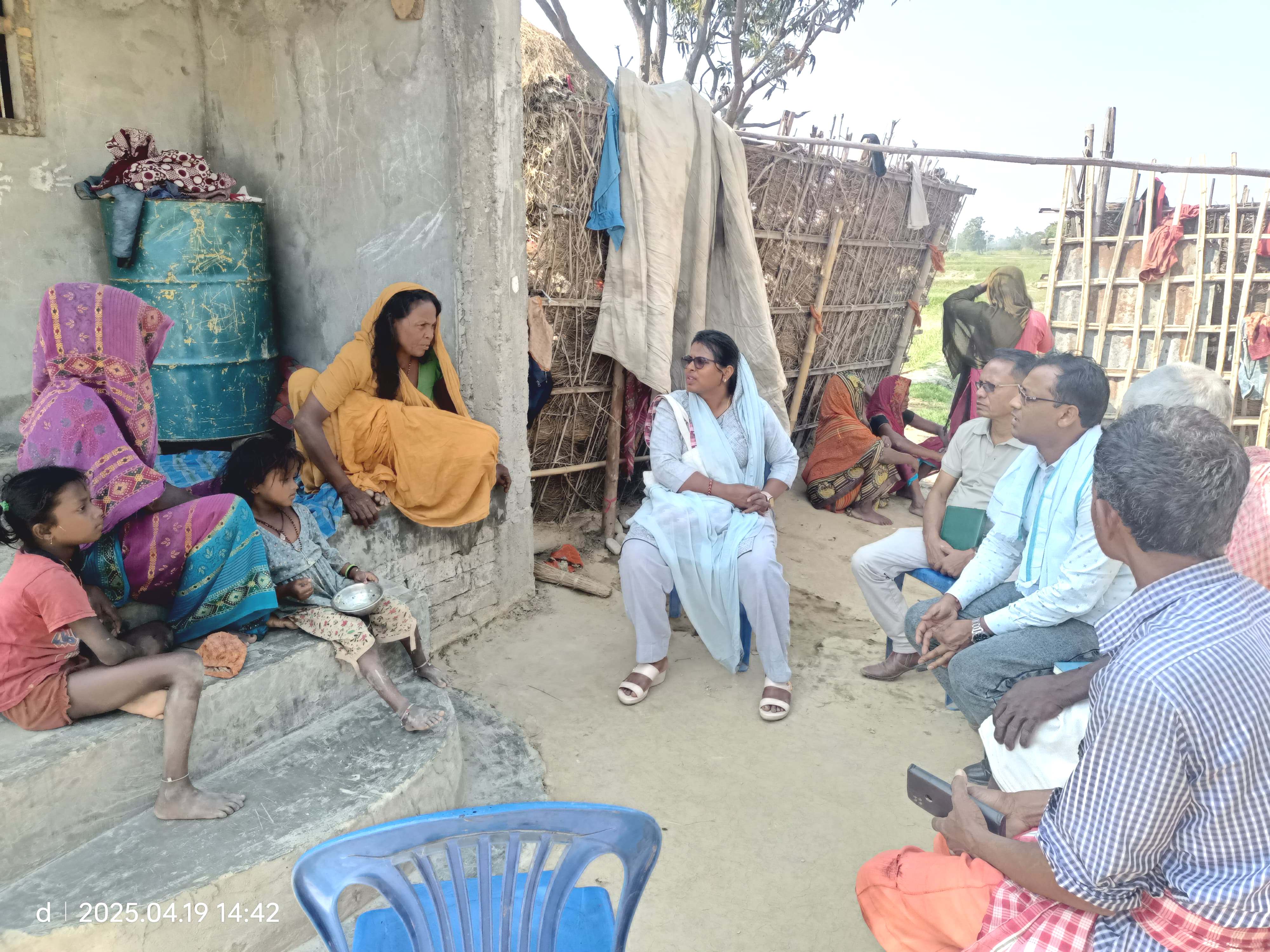
On March 6, during an event at the Municipality, Jogendra informed the leaders of various organizations about the incident and requested their help for justice. Following their intervention, the police registered the case on the same day, but the accused were not arrested. Additionally, the accused party pressured them to take the case back, and due to embarrassment, his daughter committed suicide.
During the monitoring, the team met with Inspector Rabinraj Mainali of the Maheshpur Patar Area Police Office. He mentioned that they were informed about the incident on the evening of December 24 and the victim was sent to the Provincial Hospital in Siraha for a health examination the following morning after completing the necessary procedure. Similarly, Inspector Mainali informed the monitoring team that the health examination report had not arrived and that SP Ramesh Pandit of the District Police Office, Siraha, had ordered the victim’s party to be sent to him for discussion, as the accused party had already met him. He instructed that the complaint could be registered only after this. Due to this, the registration of the complaint was delayed for a few days.
Inspector Mainali further clarified that once the health examination report of the victim arrived, the complaint was registered. However, despite efforts to search for the accused, they remained absconding and they had not been able to arrest them.
According to SP Anantaram Sharma of the District Police Office, Siraha, the police initiated the investigation process immediately after receiving the complaint and conducted the health examination. He further added that the accused could not be arrested as they were absconded to India and assured to bring them back to Nepal following necessary procedure. Likewise, Chairperson of Nawarajpur Rural Municipality, Shivadugar Yadav, stated that incidents of human rights violations have occurred repeatedly in the municipality. He urged the human rights organizations and human rights defenders to conduct awareness-raising programs. INSEC Madhesh Province Coordinator Raju Paswan stated that although the police were informed about the incident in time, they did not register the case and initiate an investigation under the directive of higher authorities. Despite the accused being present in the Rural Municipality, the police failed to arrest them, which led the victim to take her own life. He further mentioned that the police administration has not been responsive in cases involving women from Dalit, poor, and marginalized communities and that their tendency to act only under pressure has contributed to the rise in impunity.
Shyam Kumari Shah of the Women Human Rights Defenders Network stated that cases involving Dalits often become politicized, leading to increased pressure on the police. When the police are unable to handle such pressure, they tend to weaken the cases. She also stated that social attitudes often aim to conceal or settle such incidents informally, which contributes to the rise in sexual violence against women and children. Shah emphasized the need for the police to carry out impartial investigations and ensure that appropriate legal action is taken against the guilty, based on facts and evidence, without being influenced by external pressure.