
Stakeholders have stated that business and human rights (BHR) are complementary concepts, and that businesses carried out without respecting human rights cannot be sustainable or legitimate.
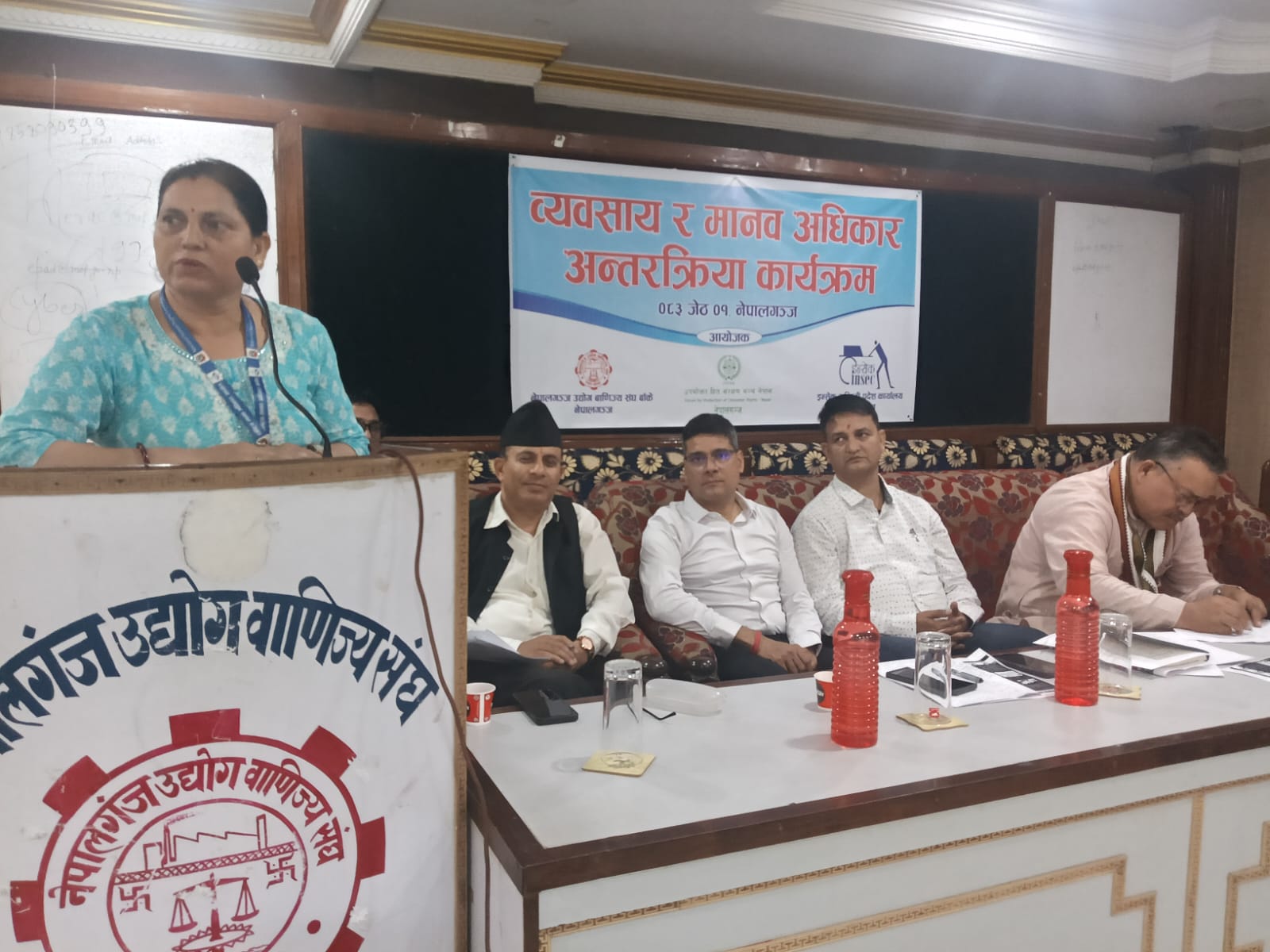
The issue was emphasized during an interaction program on business and human rights held in Nepalgunj on May 15, 2026, jointly organized by the Informal Sector Service Centre (INSEC) Lumbini Province Office, the Consumer Welfare Protection Forum Nepal, and the Nepalgunj Chamber of Commerce and Industry.
INSEC Executive Committee member and advocate Bikash Acharya pointed out that businesses are being made difficult and subjected to fear in the name of regulation, adding that entrepreneurs are facing problems due to the lack of integrated laws.
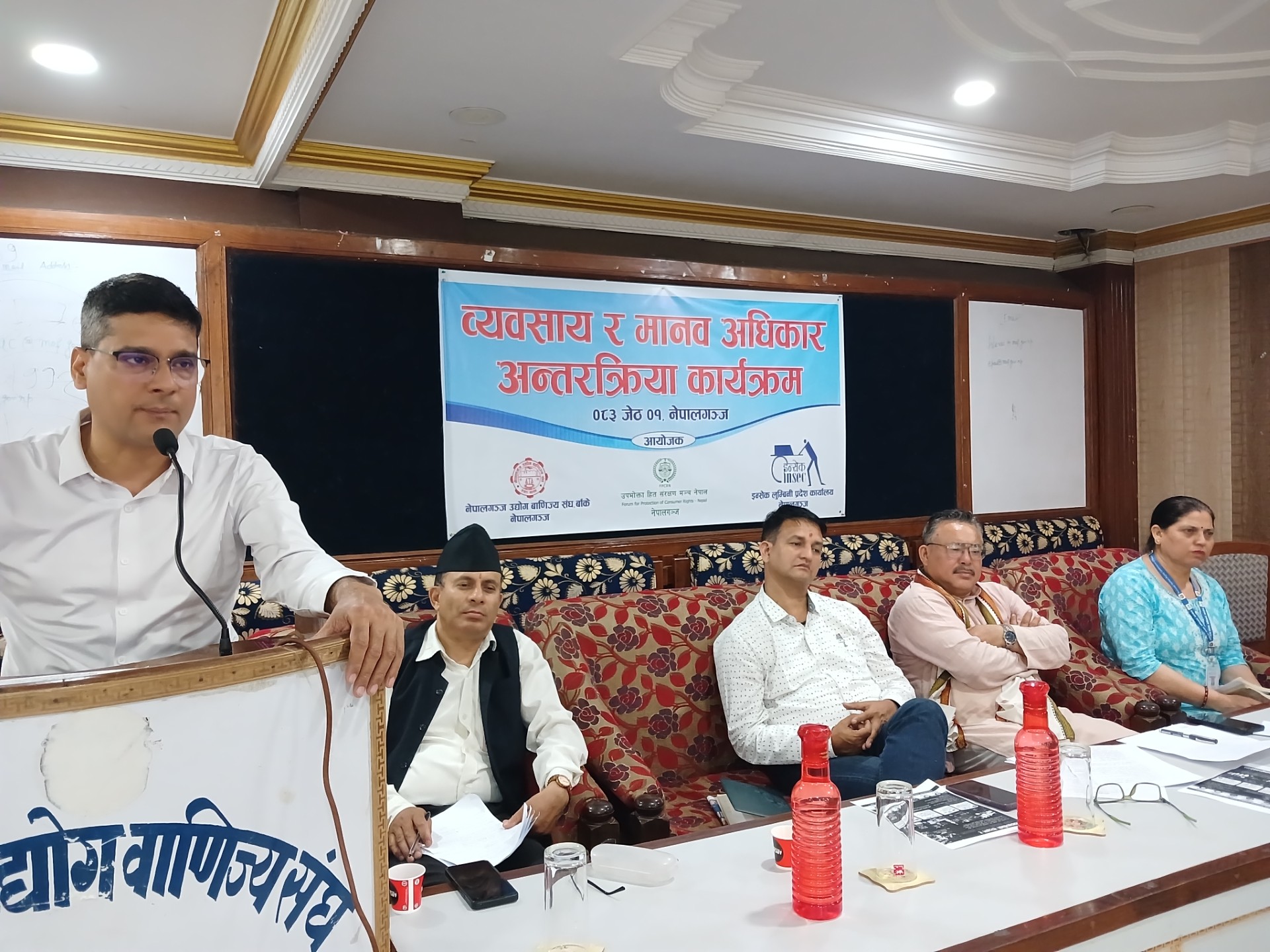
Highlighting the objective of the program, INSEC Lumbini Province Coordinator Bhola Mahat emphasized that business and rights issues should be taken as shared concerns and stressed the need for a common understanding among the state, civil society, and stakeholders to ensure justice.
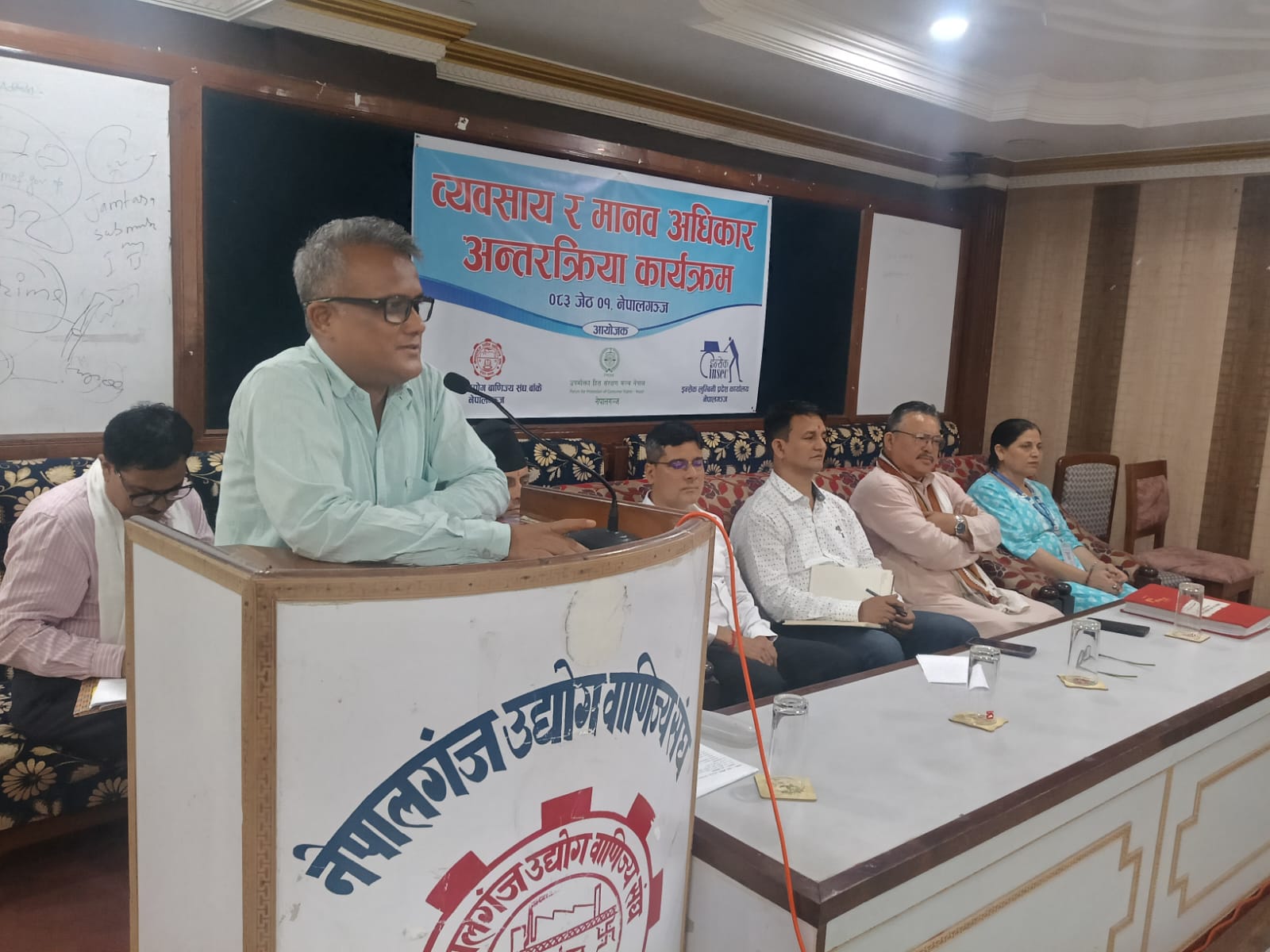
During the program, the central secretary of the Consumer Welfare Protection Forum and advocate Basanta Gautam presented a concept paper on business and human rights, emphasizing that the objective of business should not be limited to earning profits alone, but should also include responsibility towards workers, consumers, communities, and the environment.
Discussing the three pillars of the 2011 United Nations Guiding Principles (UNGPs), Protect, Respect, and Remedy, he reminded participants that Nepal’s Constitution and various laws have safeguarded the rights of workers and consumers.
Advocate Gautam also cited the historic precedent set by the Supreme Court in the Godavari Marble case, where the right to live in a clean environment was given priority over the freedom to operate industries. He stated that the core essence of the concept lies in protection, along with responsibility and accountability.
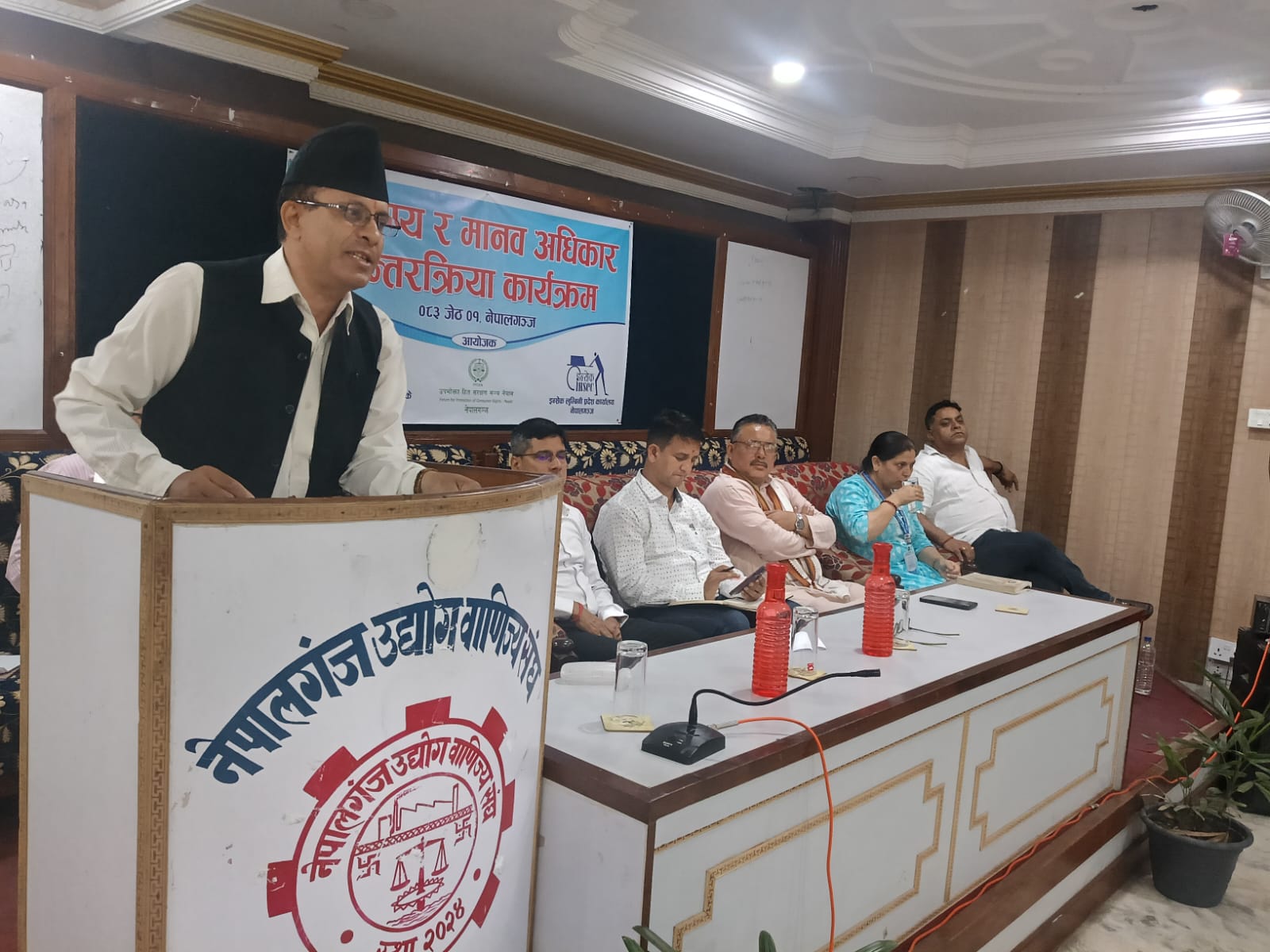
During the program, Chief of the National Human Rights Commission Nepalgunj Office, Dwarika Adhikari, stated that since the issue directly concerns both consumers and businesspersons, it is necessary to revise state policies, rules, and laws in accordance with changing times to remove obstacles in the market.
Businesspersons express anger over ‘fear and humiliation’ in the name of monitoring
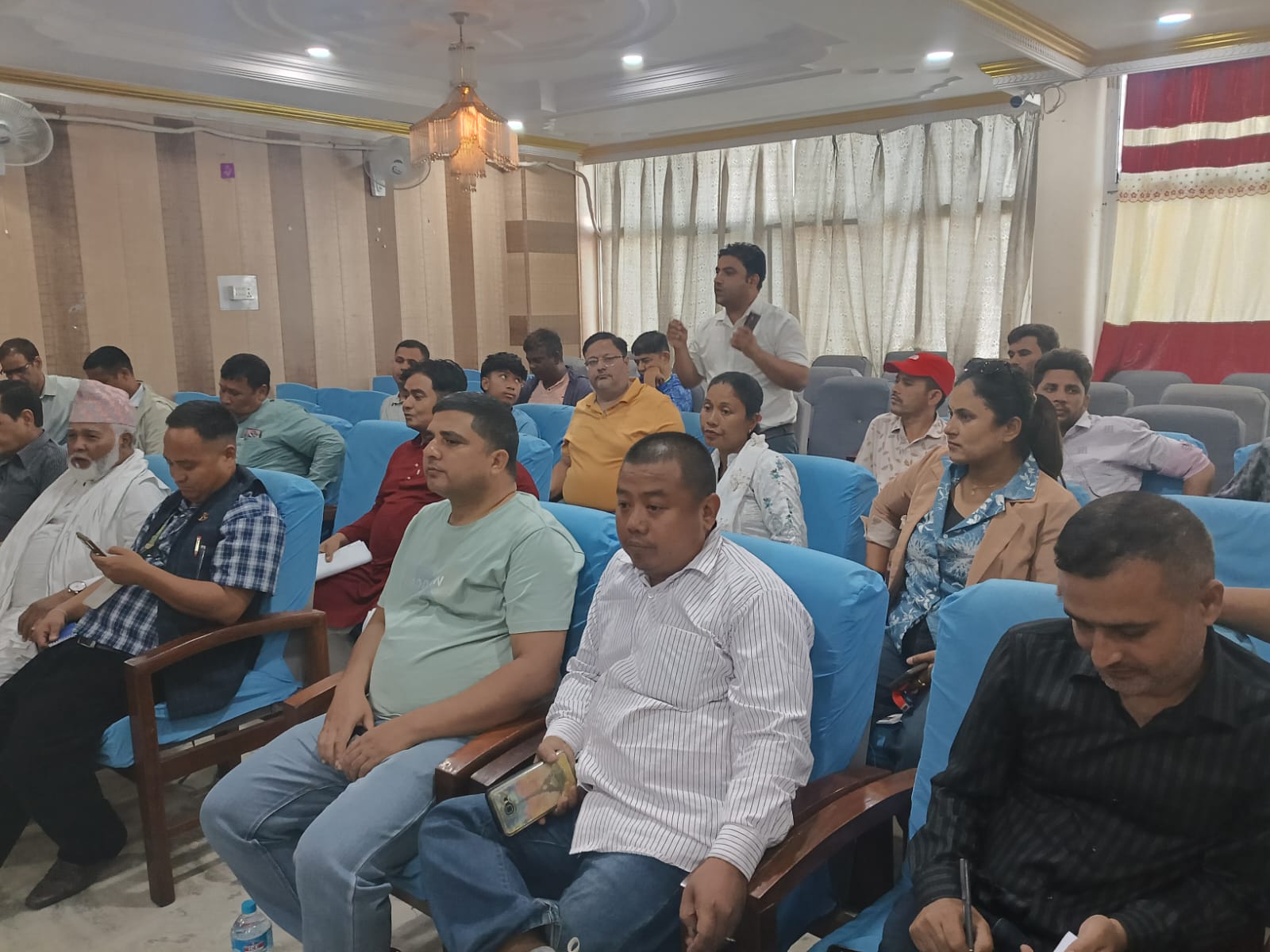
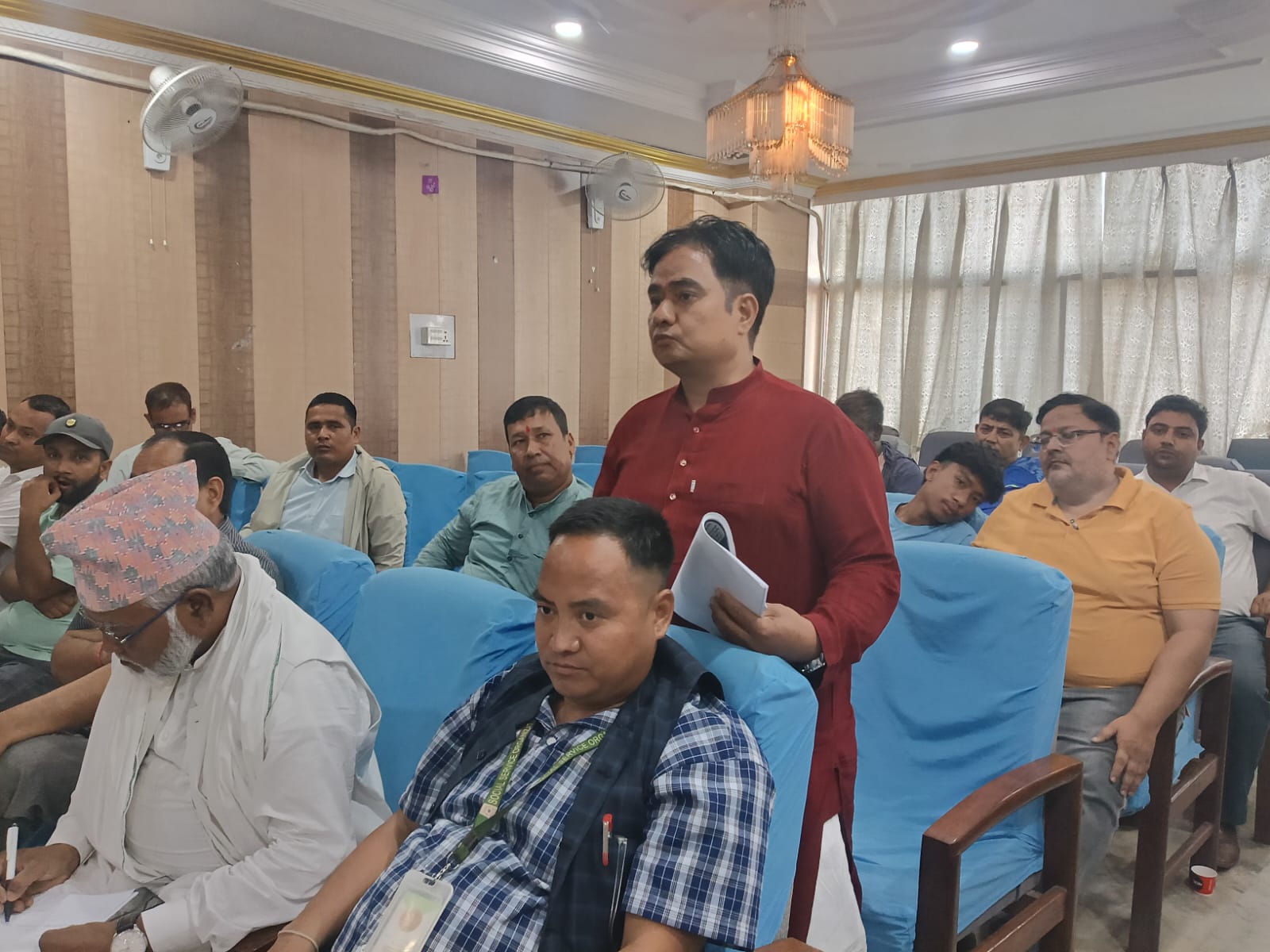
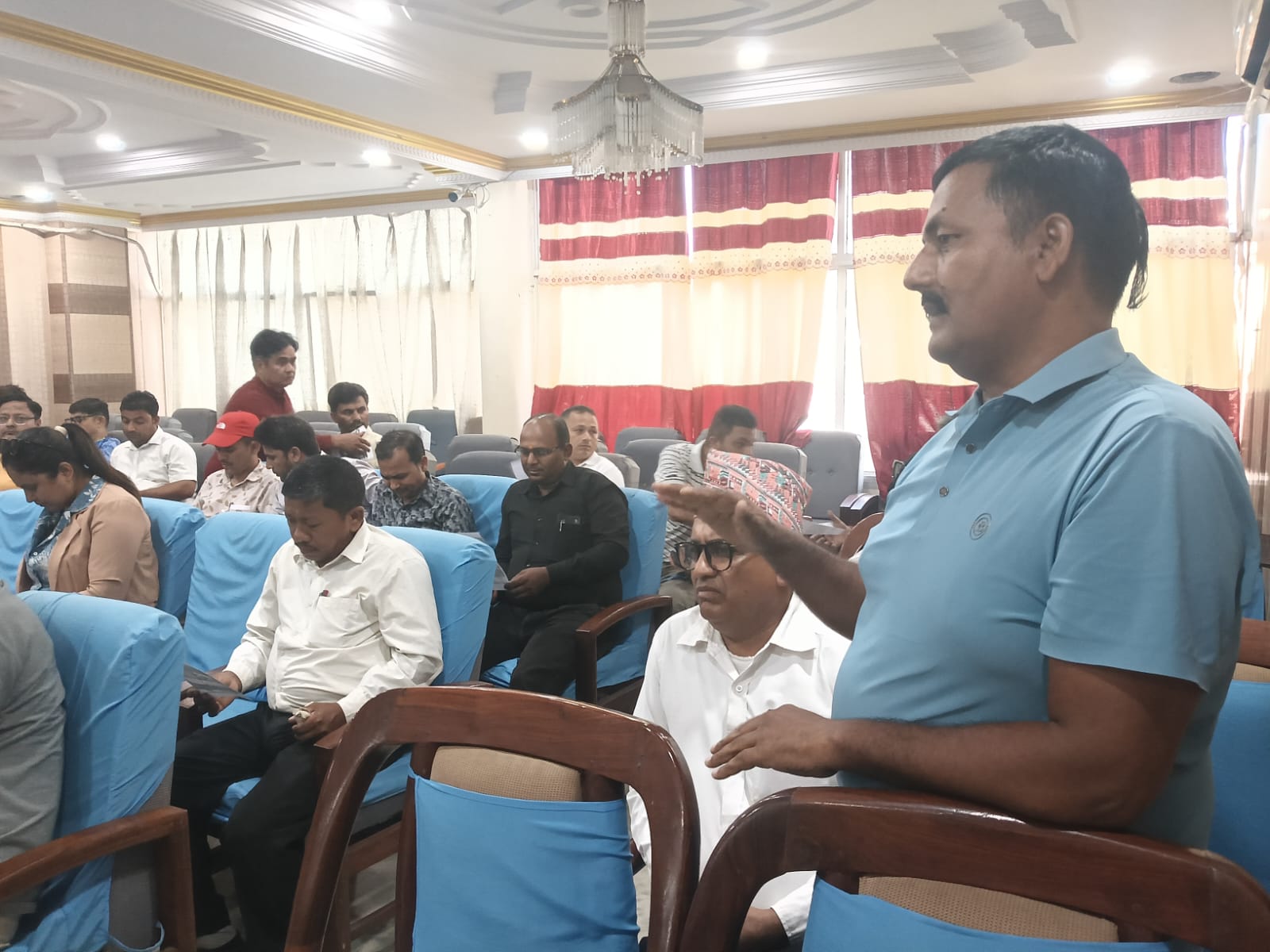
Industrialists and businesspersons participating in the interaction expressed strong dissatisfaction, stating that state and concerned agencies were creating fear and assassinating the character of businesspeople in the name of market monitoring.
Vice-president of the Banke Water Industry Entrepreneurs’ Association, Bed Prakash Gupta, shared the ordeal of an elderly and respectable citizen in Dhambojhi, Nepalgunj, who was allegedly humiliated and threatened with a fine of Rs. 200,000 during a monitoring activity.
Similarly, Banke Chairperson of the Hotel Entrepreneurs’ Association, Bhimlal Kandel, expressed serious dissatisfaction, stating that monitoring teams always view businesspersons with suspicion and often display aggressive behavior on social media. Ready-made garment shop operator Shiva Prasad Dahal said that large monitoring teams arriving in a raid-like manner create fear in shops. He complained that even those unclear about who should determine the Maximum Retail Price (MRP) are involved in monitoring activities.
Senior Vice-President of the Stationery Entrepreneurs’ Association, Tara Prasad Khanal, accused monitoring teams of acting high-handedly without understanding practical aspects such as how shop location and rent affect price differences in the market.
The Chairperson of the Brick Entrepreneurs’ Association complained that journalists only come to take photographs in the name of child labour and demanded regulation regarding price variations from one shop to another. Bicycle shop operator Safik Bagwan argued that due to the state’s lack of responsibility and honesty, Nepalis are being compelled to purchase goods from India.
Emphasis on common understanding and a secure environment
Rights activist Prakash Upadhyay stated that businesspersons contribute to the country by creating employment opportunities and therefore their dignity should be respected instead of assassinating their character in the name of monitoring.
Former President of the Nepalgunj Chamber of Commerce and Industry, Krishna Prasad Shrestha, recalled that the Commission and INSEC had played important roles in addressing the problems of businesspersons even during the conflict period. He expressed hope that such interactions would be fruitful in conveying contemporary issues faced by businesspersons to concerned authorities.
President of the Nepalgunj Chamber of Commerce and Industry, Tanka Bahadur Dhami, stated that since the Black Marketing Act has already been repealed, practical aspects such as differences in MRP according to time, context, and services should be understood. He informed that necessary decisions for the rights and interests of businesspersons would be taken in the association’s upcoming meeting.
A total of 37 participants, including industrialists, businesspersons, civil society representatives, journalists, and consumer rights activists, took part in the program.