
A meeting chaired by Ramhari Dhungana, President of the Human Rights Defenders Network Gandaki Province Network, was held on May 22. The meeting decided to play a more active role in making the state committed and accountable towards the human rights of citizens. The meeting, held in Lekhnath, Kaski, was attended by Nitu Gartaula, Chief Secretary of the National Human Rights Commission, Gandaki Province Office, Gandesh Bhandari, INSEC Gandaki Province Coordinator, network advisor Bishnu Prasad Baral, human rights activists, and journalists.
The meeting also reviewed recent actions taken by local bodies, including Pokhara Metropolitan City, issues relating to the bulldozer operations initiated at the very beginning of the monsoon season, and the protection of citizens’ fundamental rights. During the discussion, concerns were raised regarding the short notice issued by the local government in the Phirke Khola and Pokhara Bus Park areas of Pokhara, where citizens were allegedly given only a three-day deadline in the name of bulldozer operations and eviction. It was highlighted that the affected residents were left struggling even to find rental accommodation within such a limited period, causing significant distress and displacement among the general public.
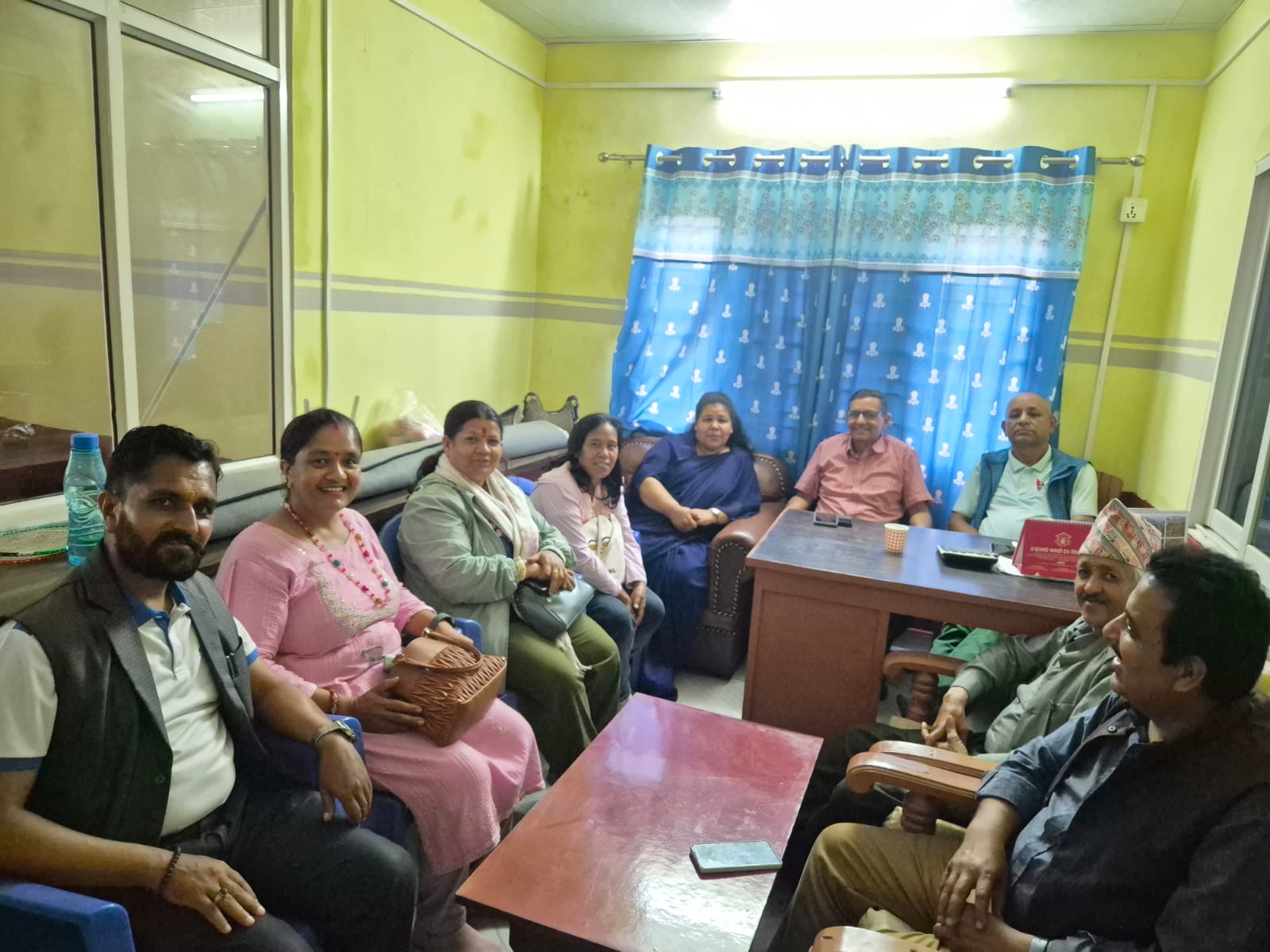
Nitu Gartaula, Chief of the National Human Rights Commission, Gandaki Province Office, stated that their role is not to obstruct standards or hinder the state’s development and construction activities, but rather to monitor and ensure whether the state has protected citizens’ human rights while carrying out bulldozer operations.
During the meeting, advisor Baral stated that the role of civil society and the network has gradually weakened, and that the real voice of citizens is becoming weaker as representatives of civil society increasingly act as mouthpieces for different political parties. He emphasized that the state tends to become authoritarian regarding citizens’ rights and that, especially at a time when the opposition is weak, civil society has an important responsibility in making the state accountable.
INSEC Gandaki Province Coordinator Bhandari stated that human rights defenders, civil society, and the media sector must always play the role of watchdogs by continuously monitoring and questioning the state. He further noted that only if they themselves remain clean and ethical can they effectively point fingers at the government and hold it accountable.
The meeting also discussed that although it may be true that unmanaged settlers and landless squatters are residing in places where settlement is not legally permitted or on land occupied unlawfully, the state must not forget their humanity and their right to life and survival.
Network Co-Coordinator Juna KC, Secretary Sabitri Ghimire, and member Keshu Bhujel pointed out the risk of violation of the minimum human rights of postpartum women, children, senior citizens, and sick individuals who are being displaced in such a way that they cannot even put up temporary tarpaulin shelters during the ongoing rainy and monsoon season.
Journalist Kamal Poudel Athak stated that people should not be afraid to speak the truth due to financial temptations or intimidation from any political party or government. He also raised questions regarding the intentions of the metropolitan city in arbitrarily forming new investigation committees merely to distribute allowances while creating an atmosphere of fear and intimidation among citizens.
The meeting decided to submit a memorandum to the concerned authorities and the provincial government, addressing the major contemporary issues that have recently emerged. It also decided to recommend that the government properly identify genuine landless and squatter communities and provide them with suitable alternative arrangements or, if necessary, dignified rehabilitation at their permanent places of residence.
Furthermore, discussions were held on issuing a press statement today itself, incorporating all these pressing contemporary issues, and, in the coming days, directly meeting major political leaders when they visit Pokhara to exert pressure in a point-by-point manner for the resolution of these issues on behalf of civil society and the network.
Chairperson Dhungana also requested that the network mechanism for the protection of human rights be expanded to other districts of Gandaki Province and asked INSEC to coordinate the process.