

Chairperson of the Informal Sector Service Centre (INSEC), Bijay Raj Gautam, emphasized the need for civil society to build a common understanding on human rights issues.
INSEC Gandaki Province Office stated this during a discussion program held in Pokhara on December 23, 2025, with civil society leaders active in the field of human rights, focusing on the current human rights situation, the upcoming elections, and contemporary issues.
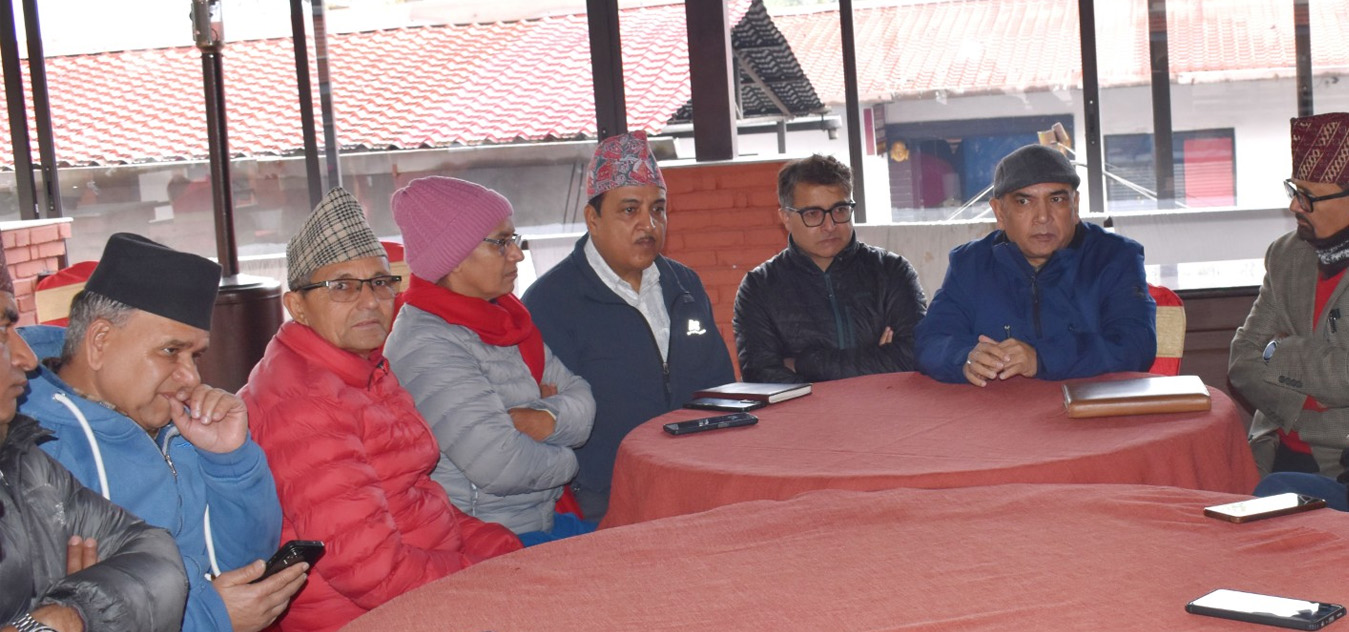
During the discussion, INSEC Chairperson Gautam, who also serves as the Chairperson of the Asia Forum for Human Rights and Development (FORUM-ASIA), shared the view that the role of human rights defenders, civil society, and social organizations has become even more crucial in recent times, and that by building a shared position they can guide the government and political parties onto the right path.
He pointed out that even during difficult times in the past, civil society in Pokhara conveyed positive messages nationwide through civic networks, and emphasized the need for local civil society to become active once again amid the prevailing uncertainty in the country.
Head and Under-Secretary of the National Human Rights Commission, Pokhara Office, Nitu Gartaula, stated that civil society must continuously apply pressure to ensure that political leadership and the Gen-Z generation remain committed to democracy, the Constitution, human rights, and good governance.
Human rights defender Ramprasad Subedi stated that impunity has long been entrenched, and state mechanisms have been weakened, resulting in the killing of young people and human rights violations due to the use of force by security personnel without meeting minimum standards during the Gen-Z movement, as well as significant damage to private property, business establishments, and national assets.
Coordinator of Civil Society, Gandaki Province, Bishnu Prasad Baral, said that the incidents of September 9 and thereafter reflected public frustration that surfaced through the Gen-Z rebellion, stemming from successive governments’ failure to address corruption, ensure good governance, and end impunity.
He noted that the failure to fully implement the fundamental rights enshrined in the Constitution and existing laws and regulations remains a major problem.
He further expressed the view that while elections are indispensable, constitutional amendments are inevitable rather than holding elections merely for the sake of elections.
President of the Federation of Nepali Journalists (FNJ), Gandaki Province, Ramesh Paudel, expressed concern that civil society members and human rights defenders, who should consistently raise their voices in favor of the rule of law, human rights, law, and justice, have become increasingly inactive in recent times.
INSEC Gandaki Province Coordinator Ganesh Bhandari informed that the discussion program, along with an introductory interaction with the INSEC Chairperson, was organised, focusing on the current political situation, elections, and the role of civil society.
Participants in the program, including NGO Federation Central Member and Gandaki Province In-charge Gopal Khadka, President of the High Court Bar, Pokhara, Shalikram Bhattarai, NGO Federation Provincial President Padmaraj Pahari, District President Indira Paudel, Chairperson of Human Rights Alliance Gandaki, Dr. Buddhi Bahadur Thapa, advocate Girdhari Subedi, and Executive Director of Kopila Nepal, Bina Silwal, emphasized the need for human rights defenders and civil society to remain united, build a common understanding, and exert pressure on the government and political parties to promote good governance and build a corruption-free society.