

The operational deficiencies and inadequate conditions at the children’s correctional home in Bhairahawa have raised concerns about the well-being and rights of the children residing there. A joint team comprised of various organizations, including the Informal Sector Service Center (INSEC) Lumbini Province, carried out on-site monitoring to assess the situation.
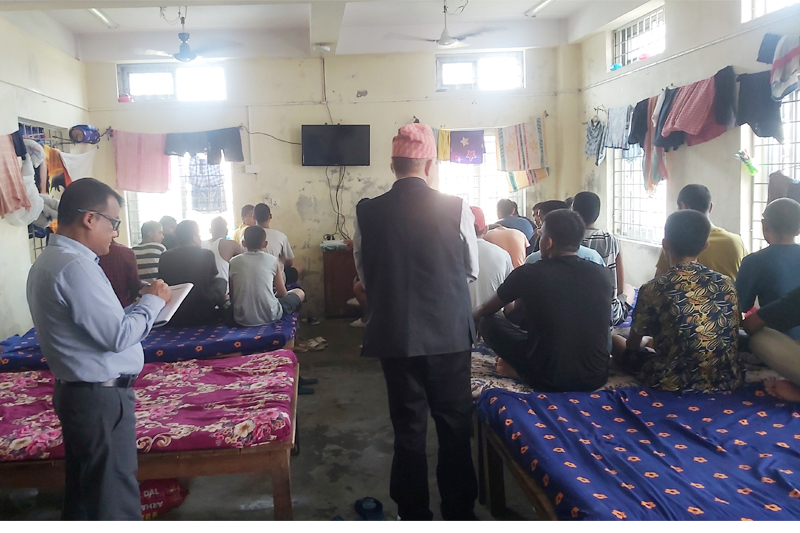
According to Bhola Mahat, the Coordinator of INSEC Lumbini Province, the correctional home, which is meant to accommodate 50 children, currently holds 76 children from 11 districts of Lumbini and Gandaki provinces. The overpopulation has led to difficulties in providing basic necessities and services, such as education and healthcare. The monitoring revealed that the children were not receiving adequate protection for their rights, and they faced challenges due to limited amenities such as toilets, which resulted in them having to wait their turn.
Additionally, the correctional home was operating below the required standards, and its capacity was stretched beyond its intended limits. The staffing was inadequate, with the facility meant for seven employees being managed by only two. The physical structure of the correctional home was found to be limited, lacking sufficient open spaces for recreational activities. The lack of proper educational facilities and teachers further compromised the children’s access to education.
Senior Advocate Sunil Kumar Shrestha, Coordinator of Public Concern Lawyers Group Nepalgunj, expressed concern over the conditions at the correctional home, suggesting that if the government is unable to operate it properly, it might be better to close it altogether. He highlighted that children’s access to education was compromised due to the absence of proper schooling arrangements within the facility.
Advocate Indira Acharya, Lumbini Province Coordinator of Advocacy Forum, emphasized the health and well-being of the children, noting that the overcrowded conditions were resulting in health issues, and the lack of proper ventilation and space affected their physical comfort.
The findings of the on-site monitoring highlight the urgent need for improvements in the children’s correctional home’s conditions and operations to ensure the well-being, education, and rights of the children in its care. Addressing these challenges requires collaborative efforts and a commitment to upholding the rights of children, even in correctional settings.
Inadequate Implementation of Legal Obligation
Children who find themselves entangled in legal matters are entitled to all the rights outlined in national and international child rights laws, except for the right to freedom. However, the children at Balsudhar Home in Bhairahawa seem to be deprived of these basic rights such as education, health, sports, and recreation. This situation raises concerns about the effective implementation of child protection and correctional measures.
Advocate Basant Gautam, Senior Provincial Coordinator of the Advocacy Forum, highlights that the federal government needs to take a more proactive role in ensuring the proper operation of child correctional homes. He emphasizes the need for the construction and operation of state-level facilities that prioritize child-friendly environments.
The current challenges in the functioning of children’s correctional homes can be attributed to a lack of clear policies and effective coordination among different levels of government. In order to address this issue, there should be a clear delineation of responsibilities among federal, state, and local governments for the systematic operation of children’s correctional homes. Moreover, these correctional homes should operate in alignment with legal standards, ensuring that the rights of children in legal disputes are fully upheld.
The proper functioning of children’s correctional homes is not just a legal obligation but also a moral imperative. Upholding the rights of children, even in the context of legal conflicts, is essential for their well-being, development, and future reintegration into society.