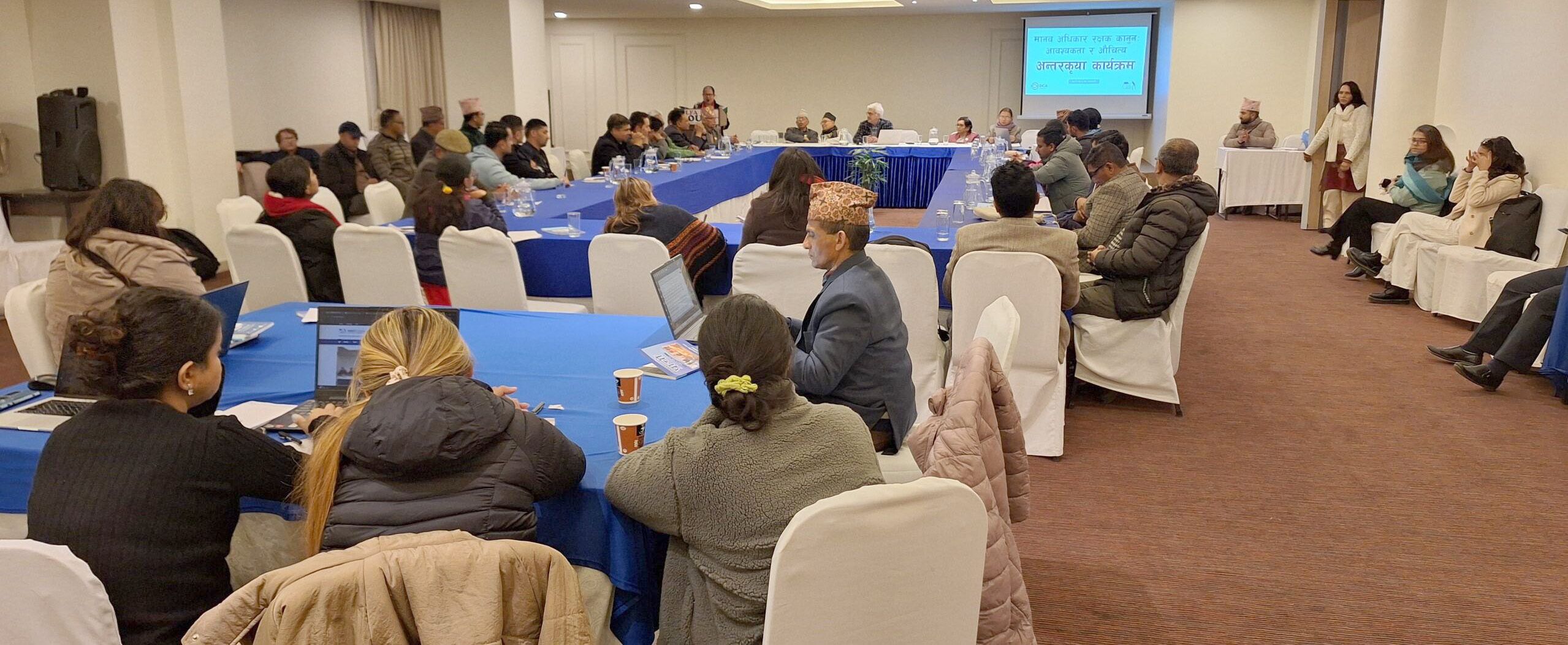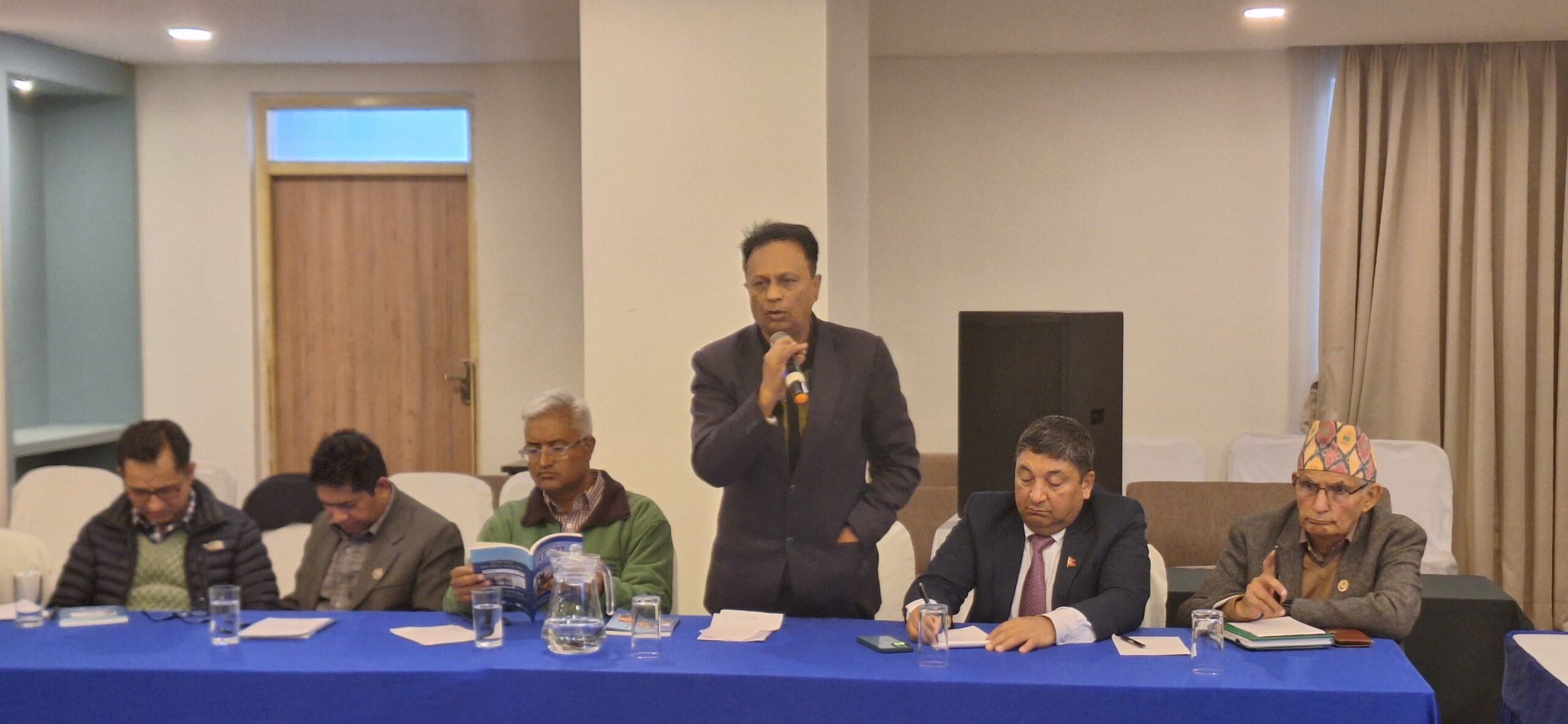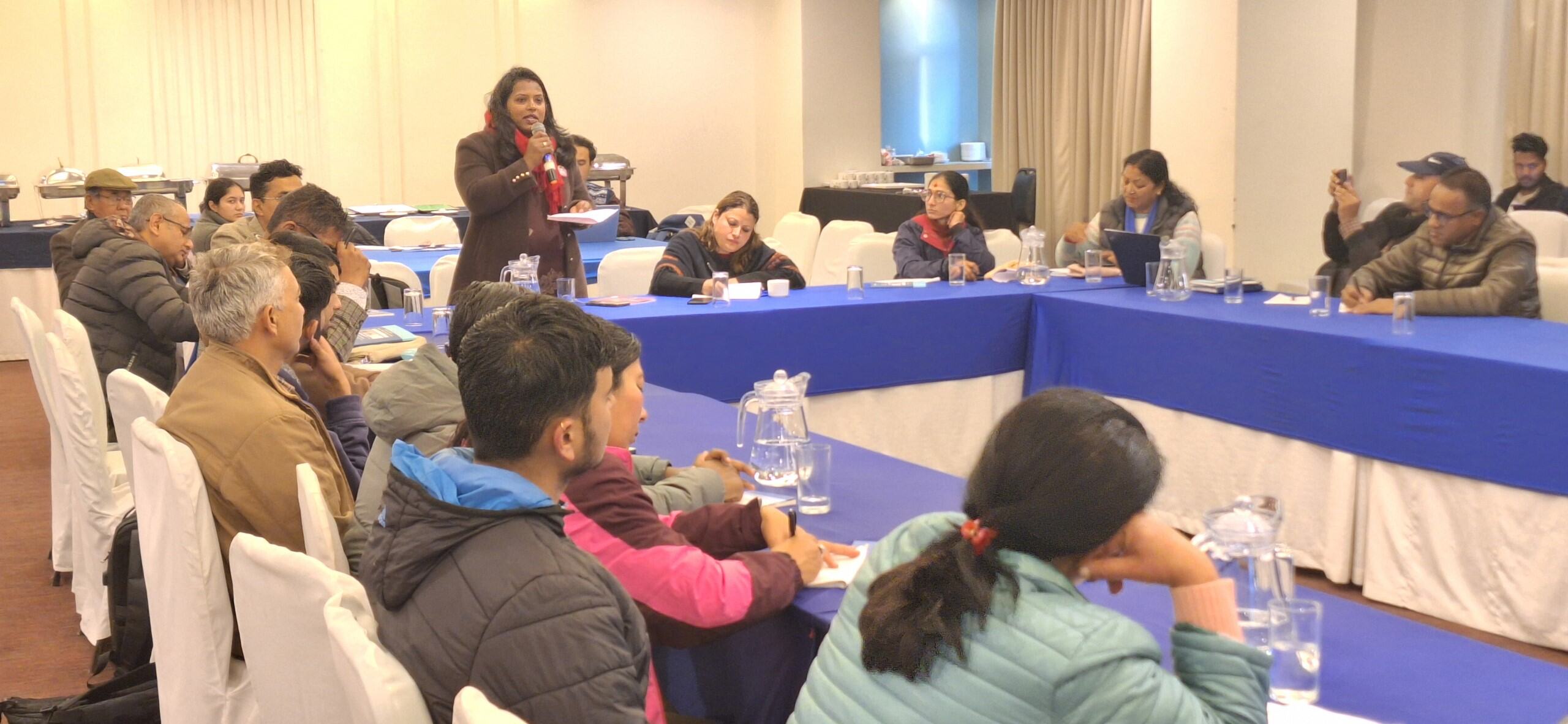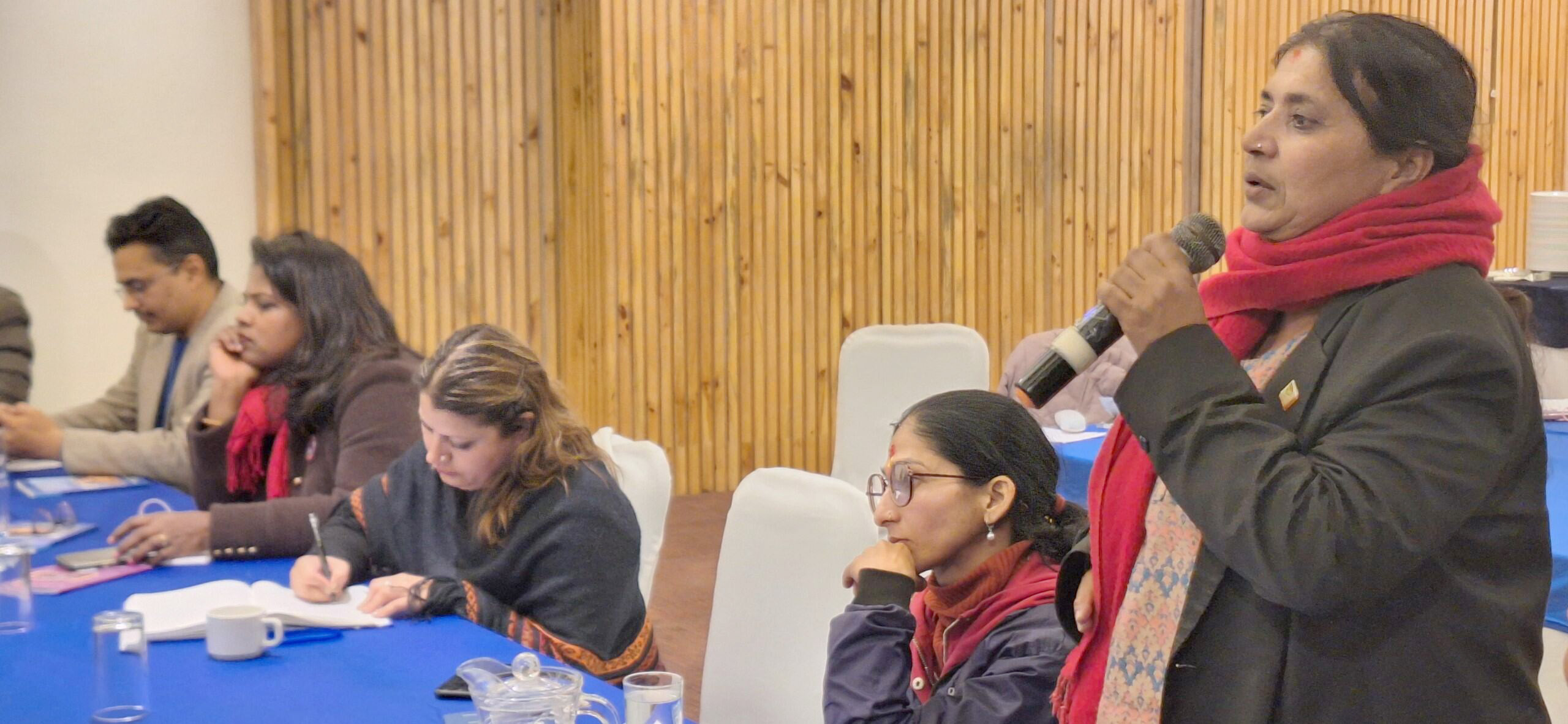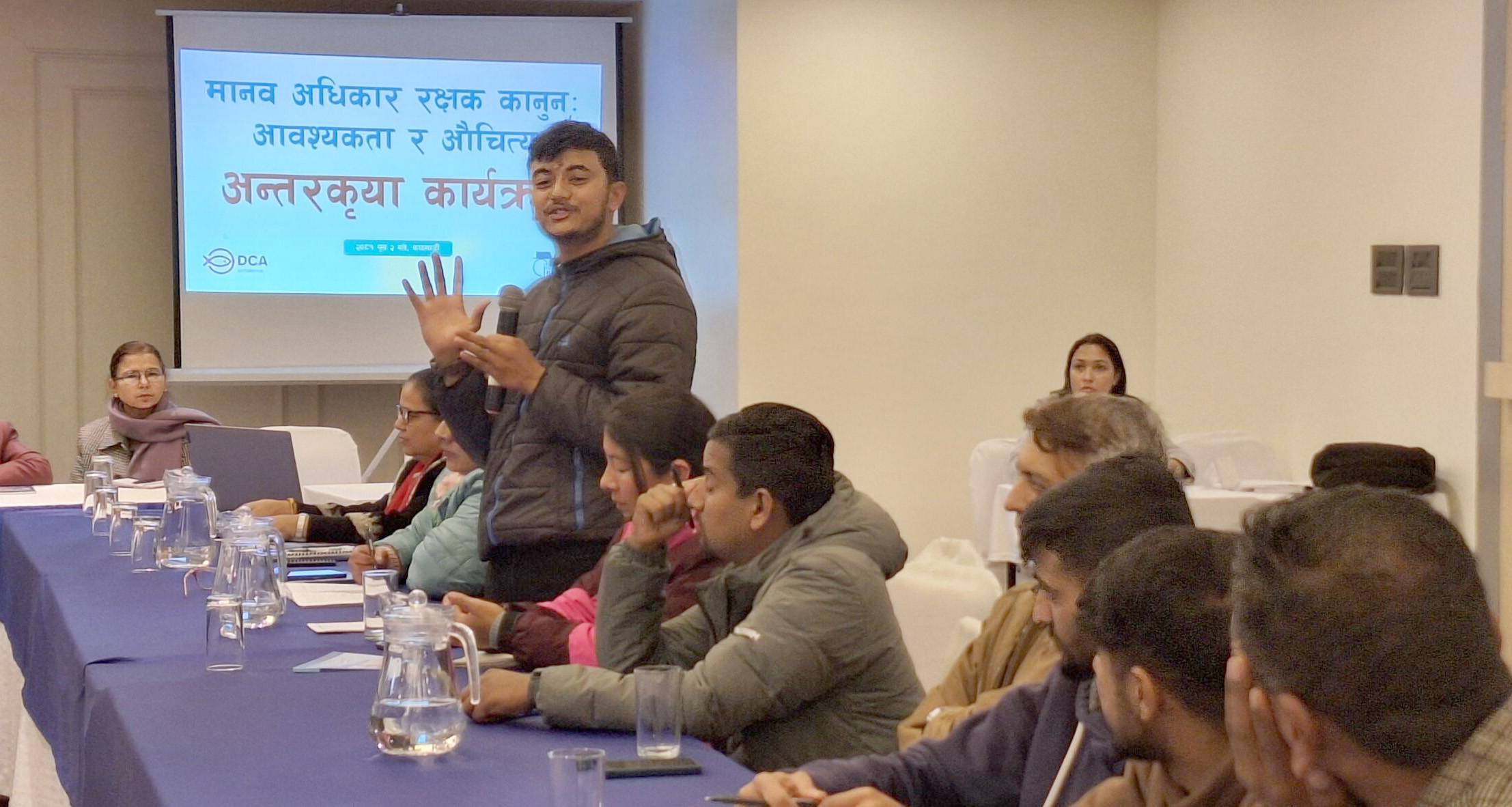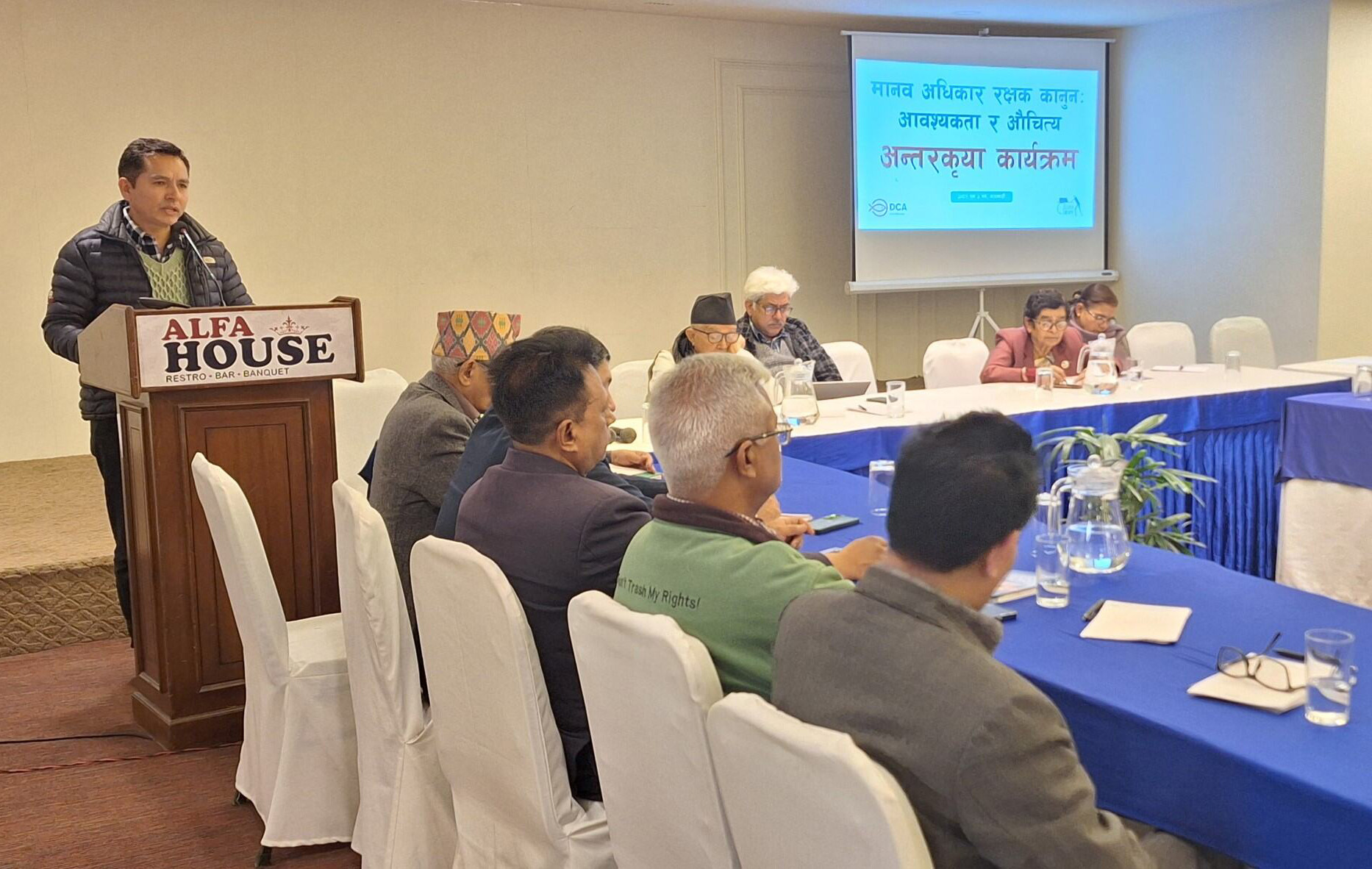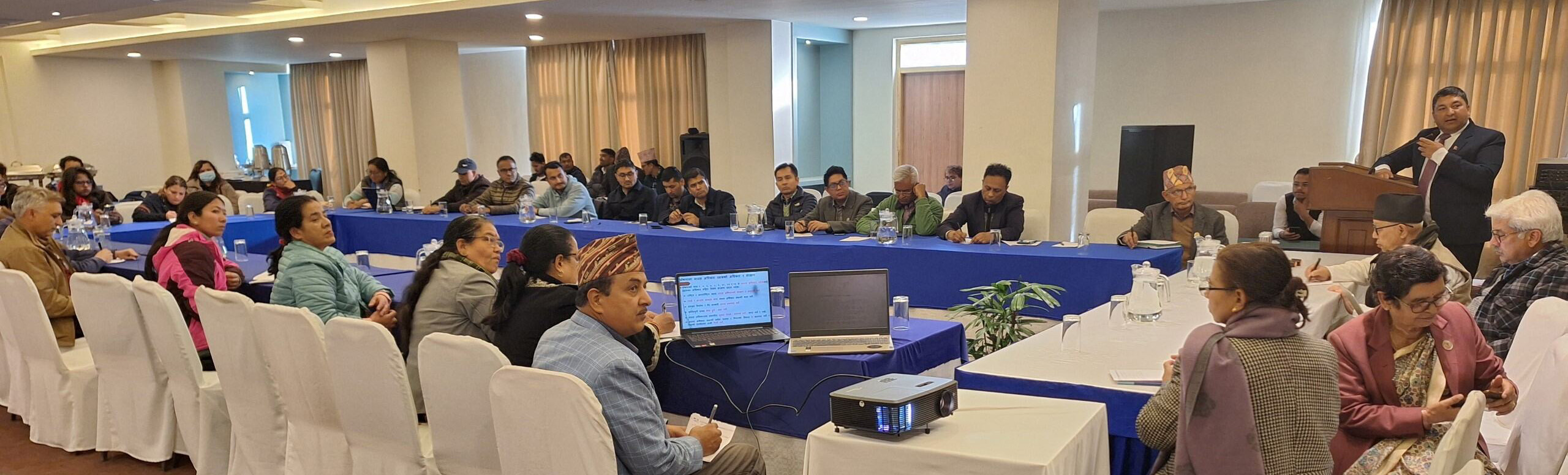

The Informal Sector Service Center (INSEC), in collaboration with DCA, organized an interaction program on “Human Rights Defenders Laws: A Critical Need and Their Justification” in Kathmandu on December 17.
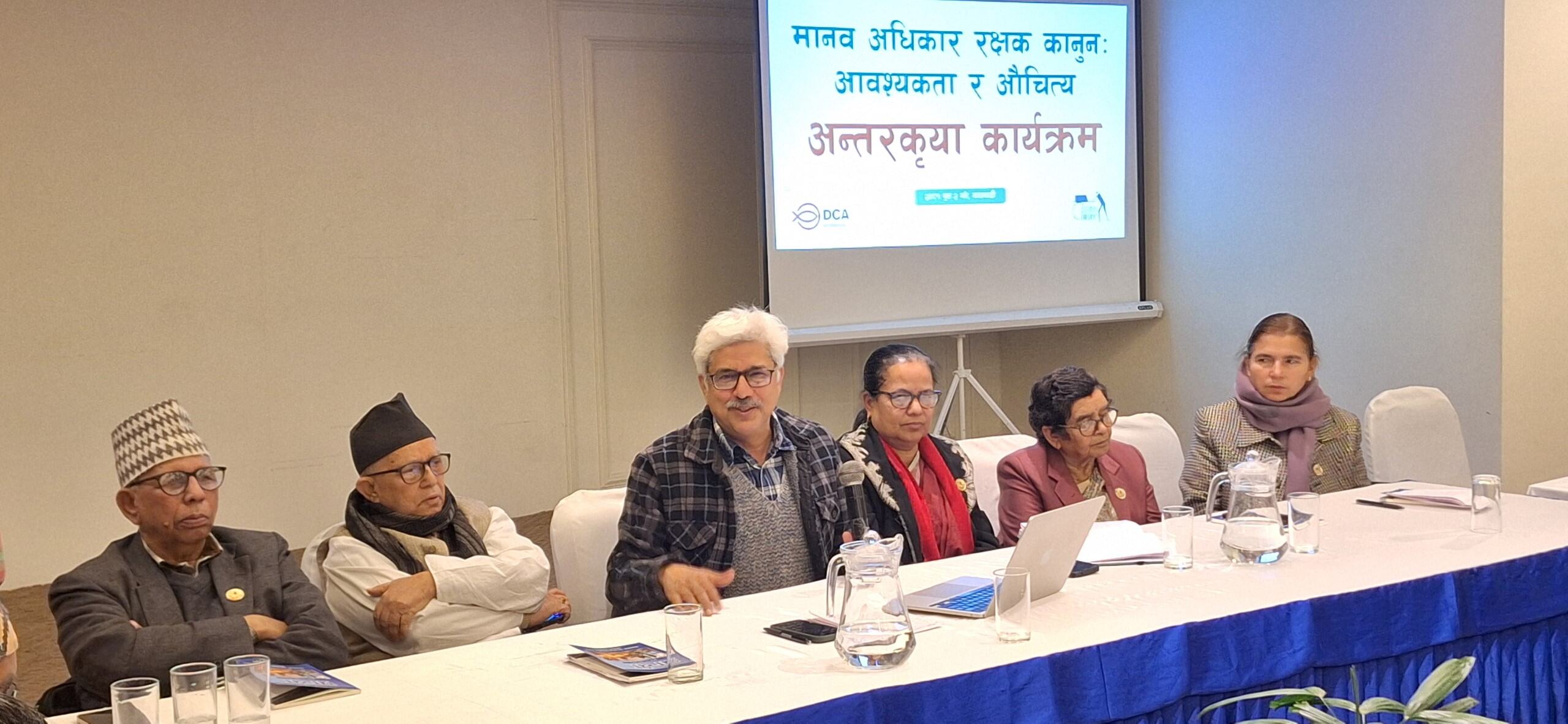
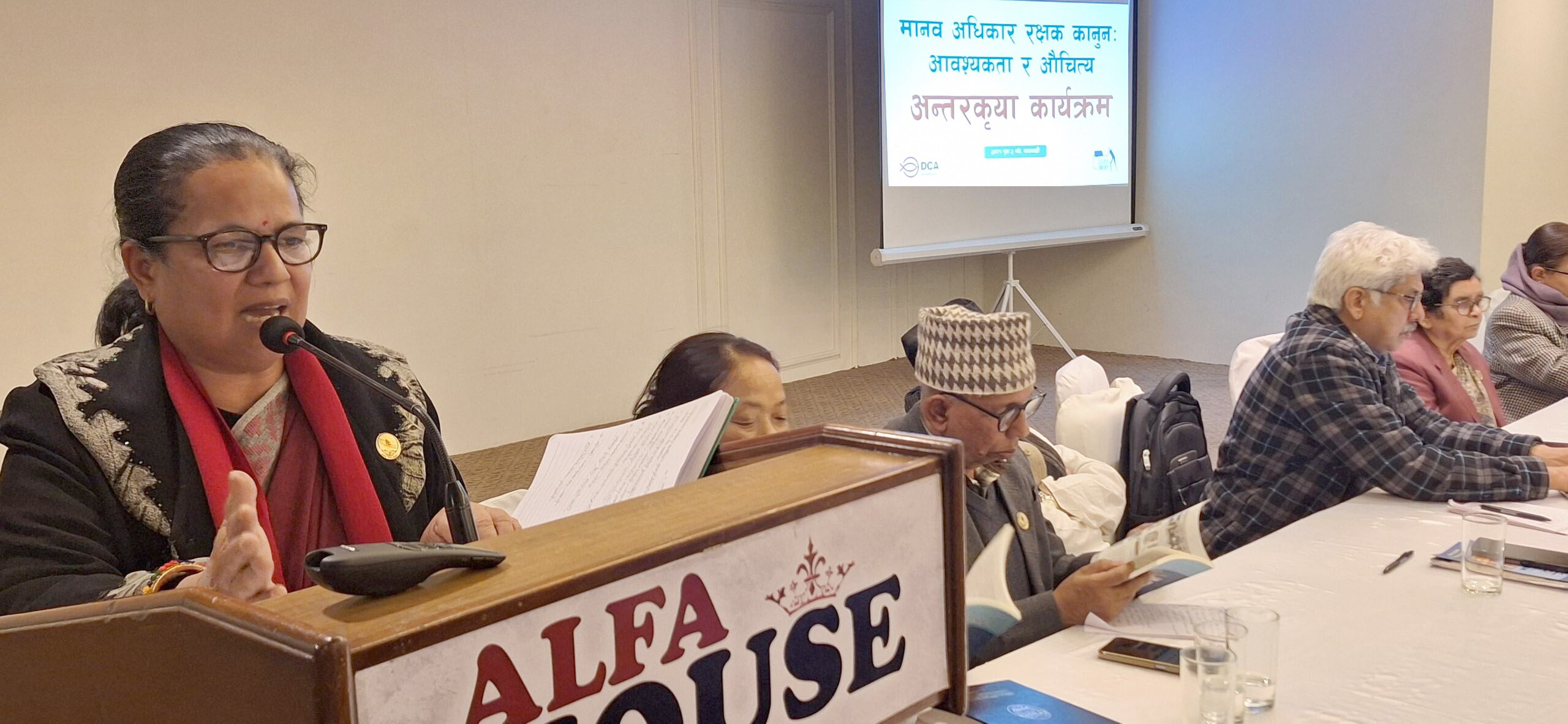
Speaking at the event Tulasakumari Dahal, Chairperson of the Legislative Management Committee of the National Assembly, emphasized the need to develop a law related to the rights of human rights defenders and its implementation while fostering a culture of human rights. She recalled a study conducted in 2023 that identified the Office of the Prime Minister and Council of Ministers as requiring the highest number of laws among the three levels of government. She stated that although 1,150 laws have been enacted so far, there is a need to monitor their implementation. She also suggested that the National Human Rights Commission Prioritize addressing issues concerning human rights defenders.
MP Anand Dhungana emphasized the need to introduce legal provisions ensuring the rights of human rights defenders as a private bill. He also stressed the importance of enacting laws that address the needs of the people. He recalled that, in the past, human rights were not considered essential, and no legal provisions were made. However, laws related to the Human Rights Commission were eventually formulated when their necessity became evident.
MP Beduram Bhusal recalled past incidents where civilians were held in military barracks due to the political system at the time. Highlighting the need to discuss the rights of human rights defenders at the policy-making level, he mentioned that the parliament deliberates on two types of bills, government and private bills with differing processes for their discussion.
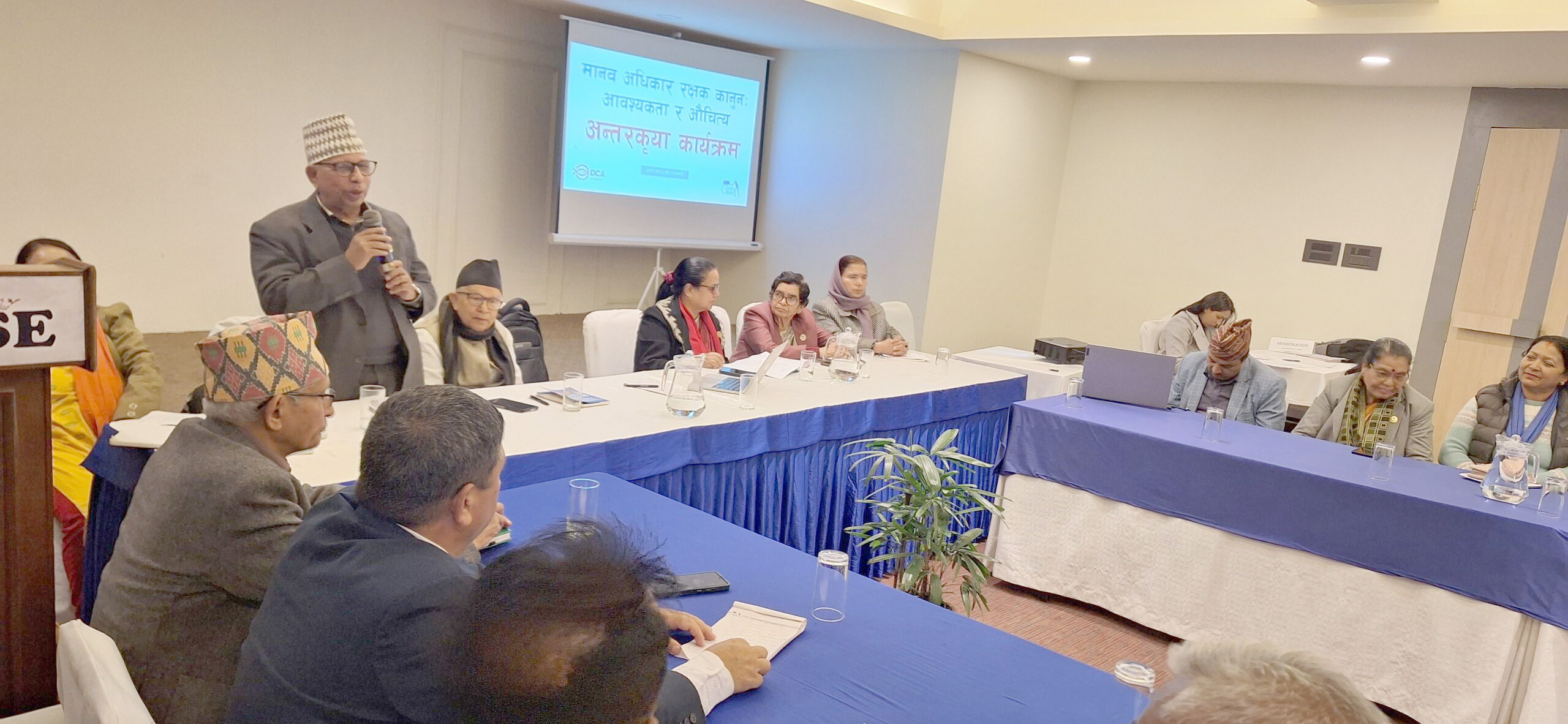
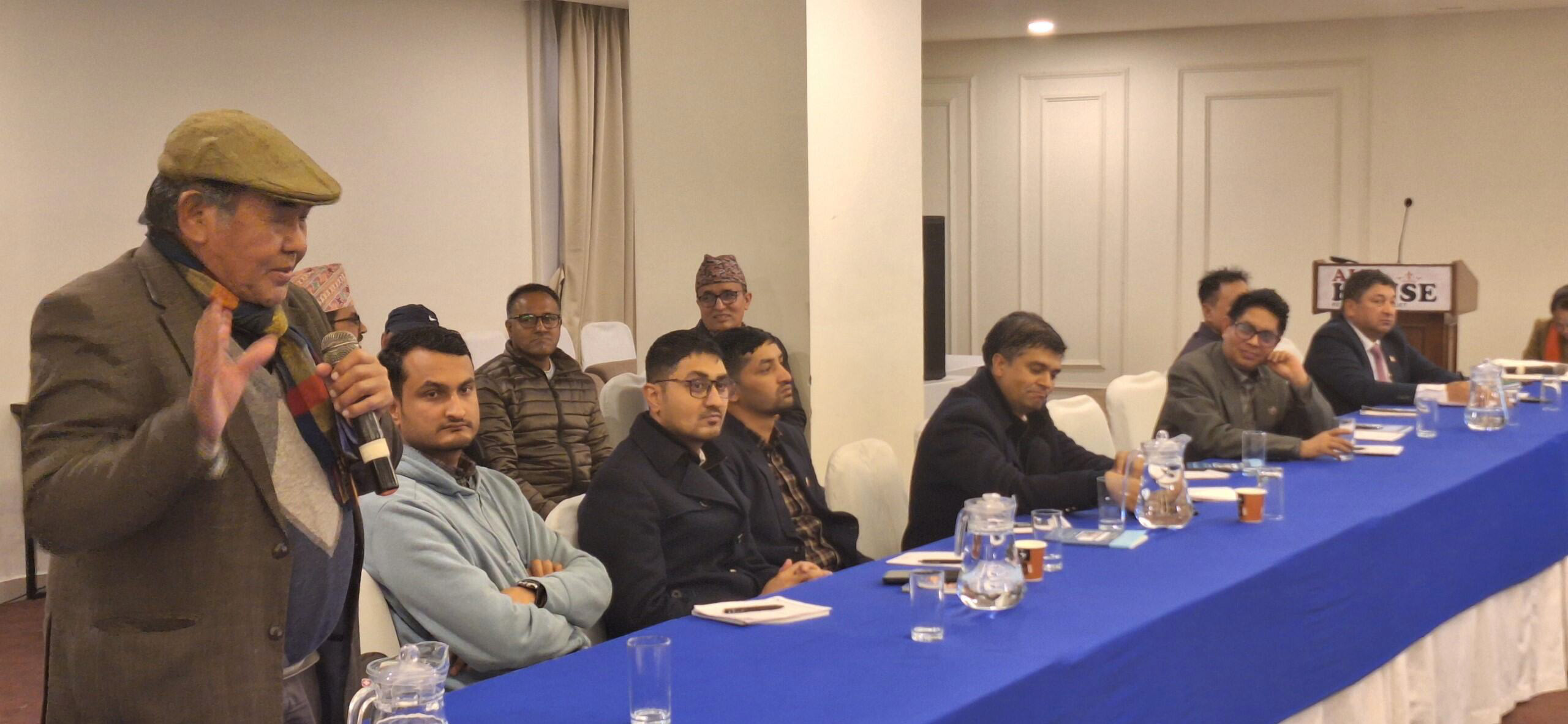
Suresh Ale Magar, Member of the National Assembly recalled that during his 22 months in military detention, he did not meet any human rights defenders. However, after his release, a human rights defender associated with INSEC took the initiative to advocate for his rights. He emphasized the need to clearly define who qualifies as a human rights defender, whether an individual or an organization, in the laws to be drafted. He further stressed the importance of monitoring whether human rights defenders are treated in accordance with their designation and ensuring clarity on this matter.
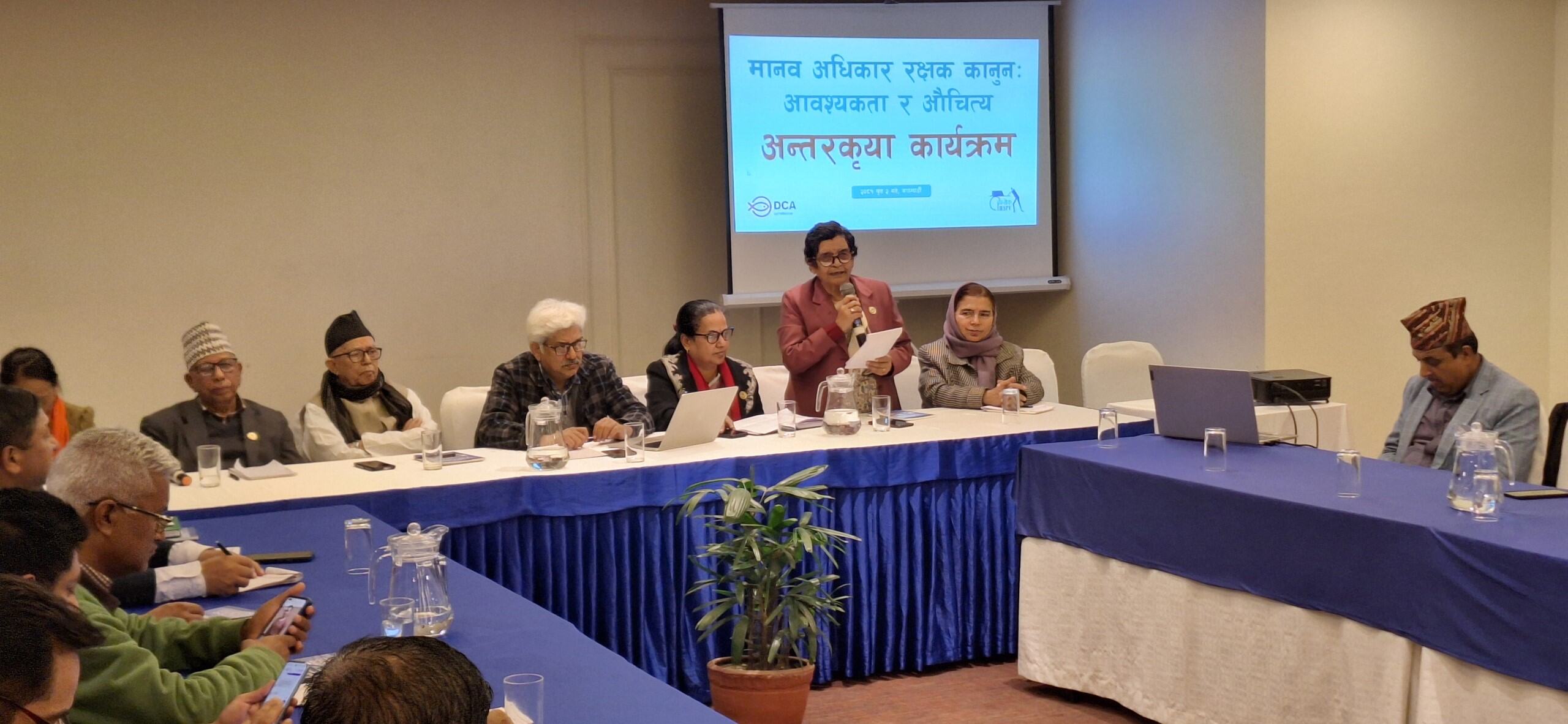
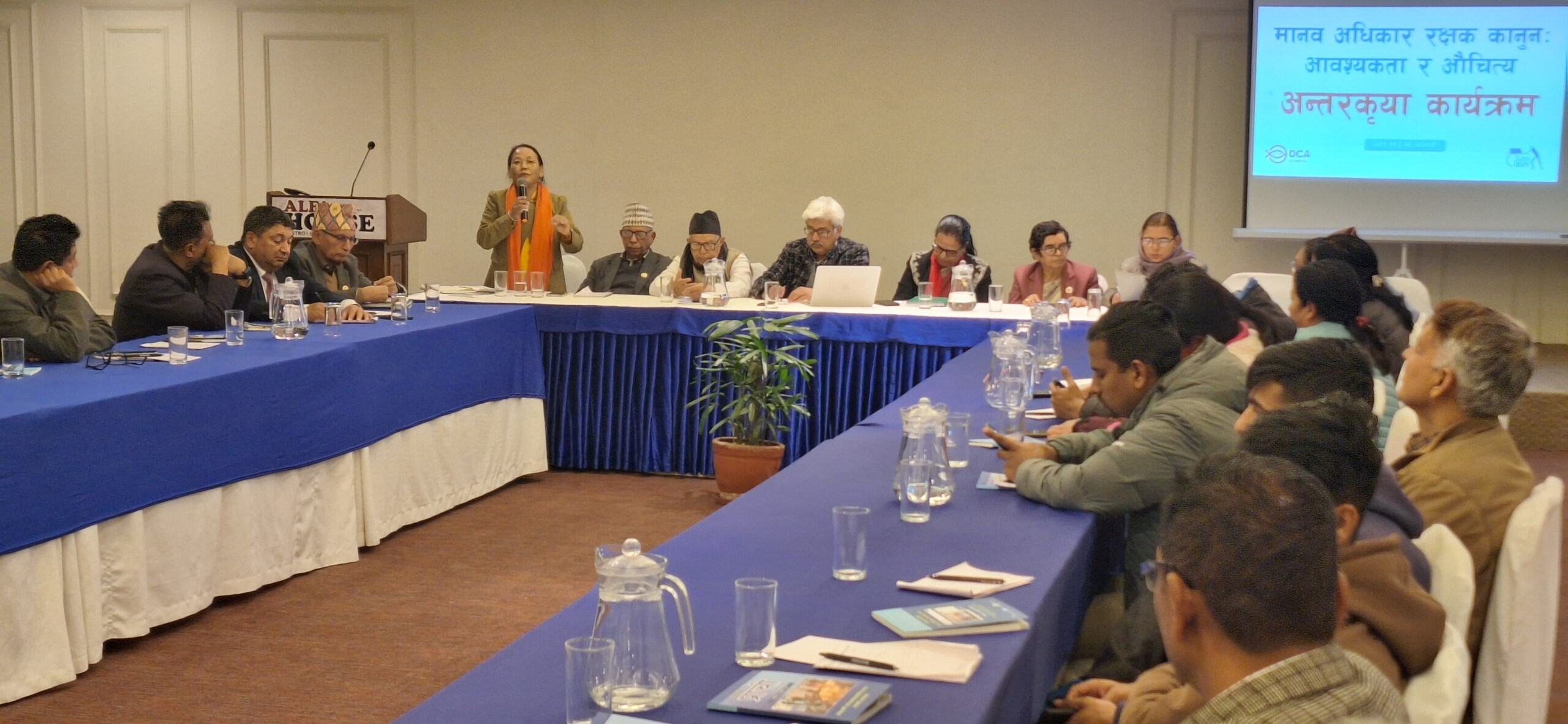
MP Bishnu Devi Pudasaini highlighted the need to incorporate human rights, fundamental rights, and moral education at the school level, emphasizing the necessity of establishing legal provisions to ensure the rights of human rights defenders.
Member of Parliament Ganga Kumari Belbase stated that since human rights are the rights of all, the rights of human rights defenders may not require separate laws if their rights are guaranteed. However, due to the lack of guaranteed rights, there is a need for legal provisions to ensure the rights of human rights defenders.
MP Gopal Bhattarai emphasized that the National Human Rights Commission should make separate provisions regarding the rights of human rights defenders. Likewise, MP Sumitra BC while acknowledging that the Constitution of Nepal guarantees the rights of all citizens under fundamental rights, expressed her commitment to make every possible effort to advocate for a separate law concerning the rights of human rights defenders.
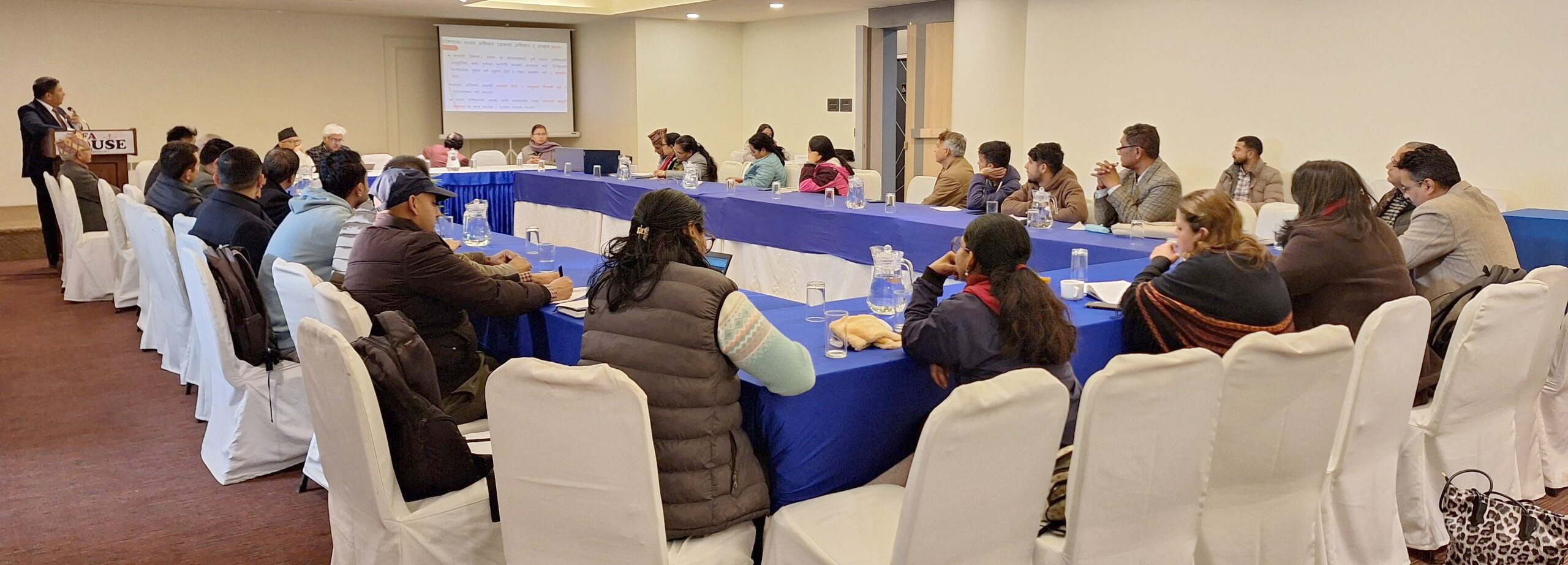
Member of Parliament Jayanti Devi Rai reminded that, due to ongoing human rights violations and abuses in the country, the state’s presence in the onsite monitoring of such incidents has been weak. She further stated that as human rights defenders are working spontaneously on issues related to civil rights, there is a need for legal provisions to ensure their rights.
MP Garima Shah expressed her commitment to take the initiative to create a roster of human rights defenders and make legal provisions to ensure their security and rights.
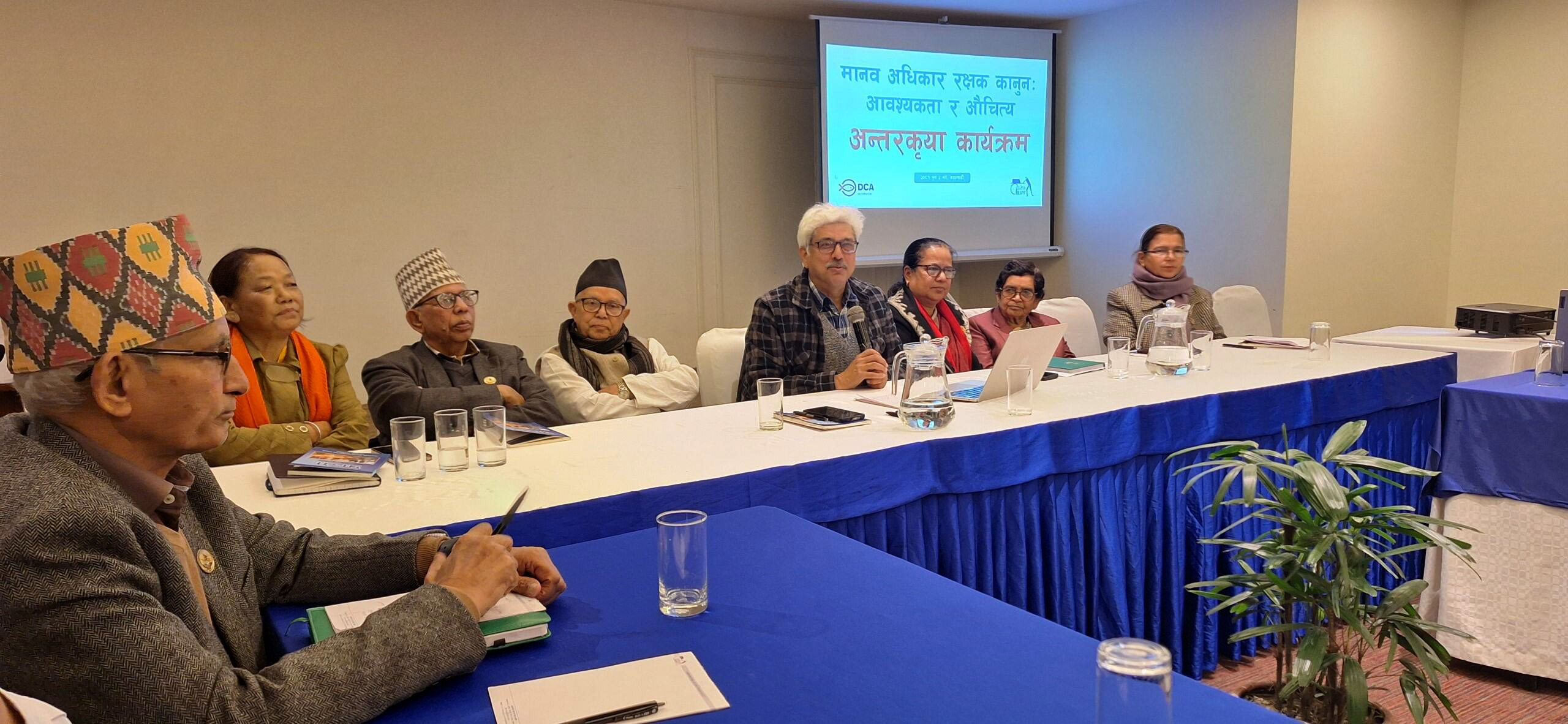
Dr. Kundan Aryal, the Chairperson of INSEC emphasized the need for discussions between citizens and stakeholders for the creation of laws, stressing the importance of clarity regarding the law related to the National Human Rights Commission and the legal issues concerning human rights defenders.
In the program, while presenting the necessity and justification of the human rights defender law, Rajendra Thapa, the Deputy Secretary at the Office of Prime Minister and Council Ministers stated that he has been advocating and working as a human rights defender for a long time. Thapa also mentioned that around 5,000 incidents of human rights violations and abuses occur every year. He emphasized the need for nationwide discussions on the bill related to human rights laws.
In the program, Murariprasad Kharel, Secretary of the National Human Rights Commission, highlighted that if the state actively defends human rights, it would facilitate the process for all. He also highlighted the need for a separate long-term law for human rights defenders.
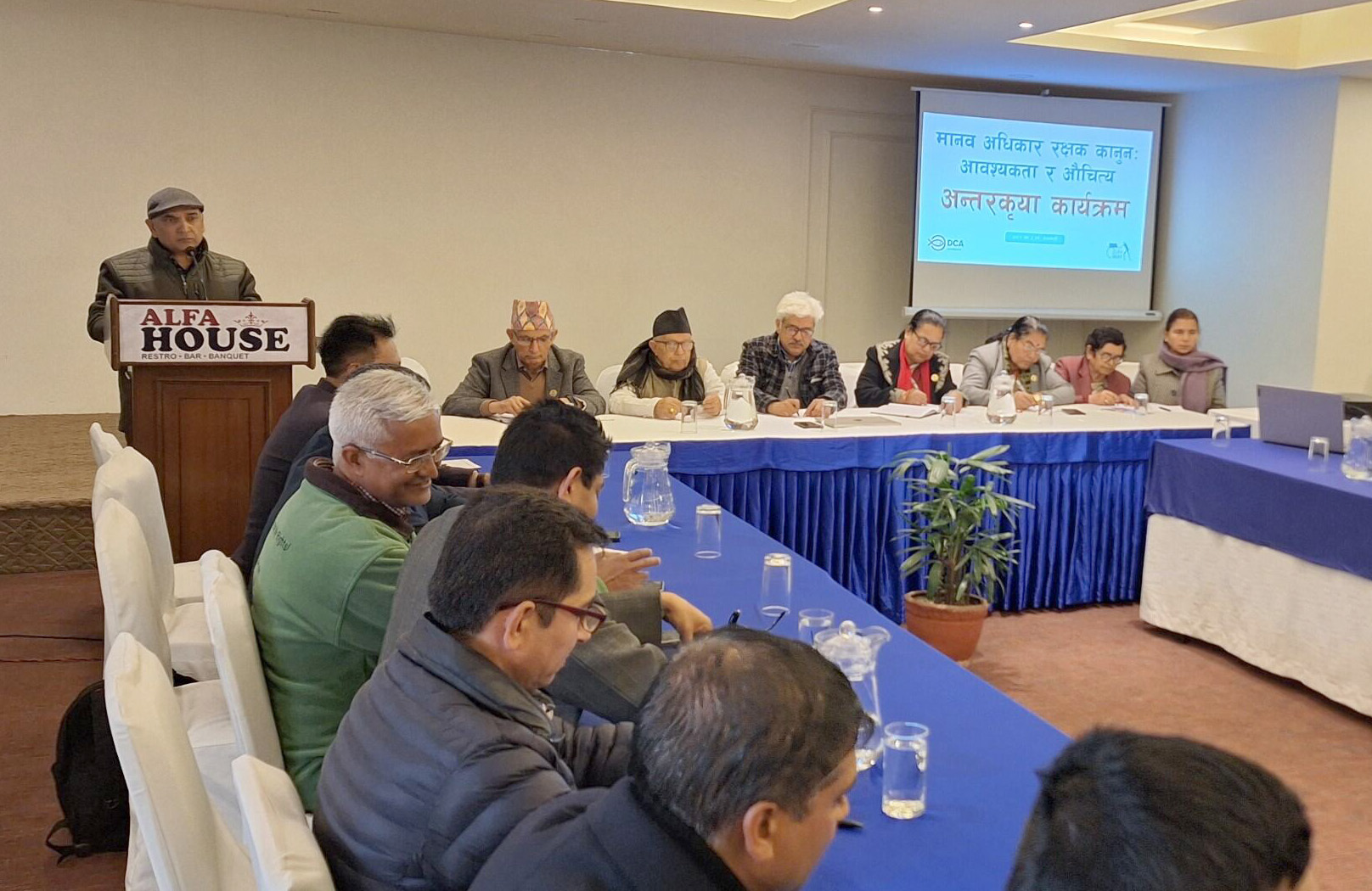
Bijaya Raj Gautam, the Executive Director of INSEC welcomed the participants and highlighted the purpose of the interaction program. He emphasized the urgent need to create a law for the protection and security of human rights defenders. Gautam stated that the commission and human rights activists are the key to pushing the state to ensure human rights. He also mentioned that the draft of the human rights defender bill has been submitted after discussions between the National Human Rights Commission and INSEC, with plans to present it in the Province Assembly.
Similarly, Dipendra Singh, Human Rights Officer emphasized that the state should cooperate in the role and protection of human rights. He stressed the need for security arrangements for individuals who raise their voices on issues such as the role and protection of human rights, caste-based discrimination, and violence against women.