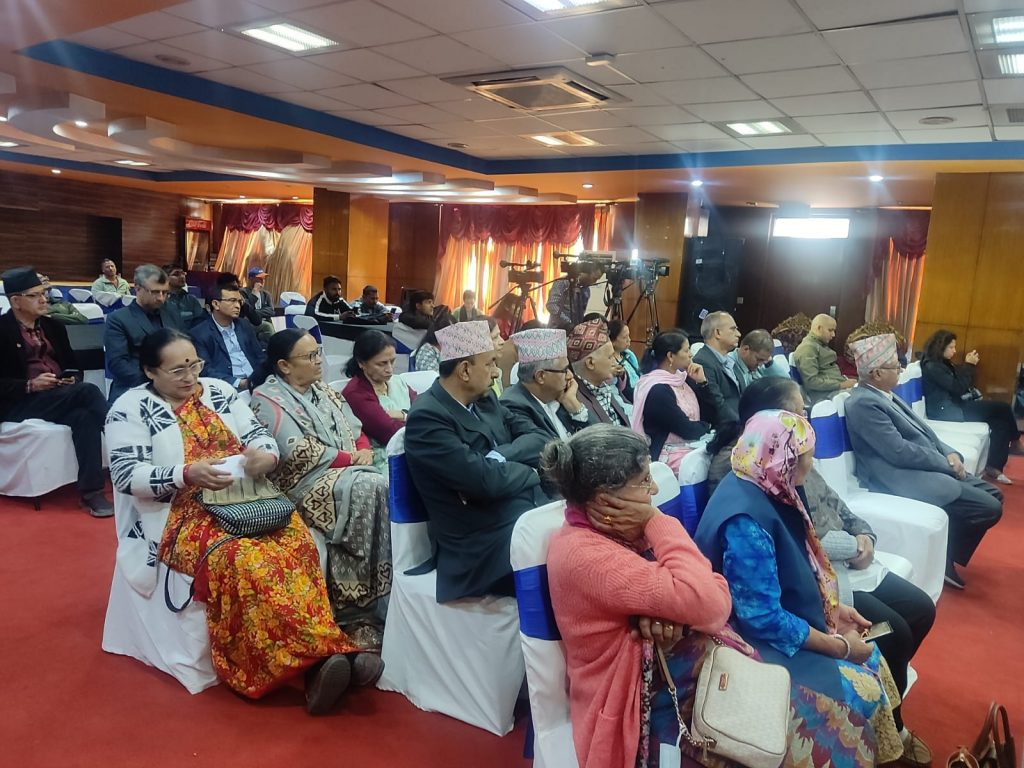

The Speaker of the National Assembly, Ganesh Prasad Timalsina, emphasized that the honest implementation of the Constitution and the laws made under it is necessary for the protection of human rights. Chairperson Timalsina made these remarks during an interactive program on ‘Human Rights in Today’s Context: Constitutional Rights and Practices’ organized by the Informal Sector Service Center (INSEC) in Kathmandu on November 8. Timalsina, who served as the chief guest of the program, emphasized the importance of political parties and all levels of the state being responsible, highlighting the crucial role of their willpower and law enforcement agencies in ensuring the protection of human rights.
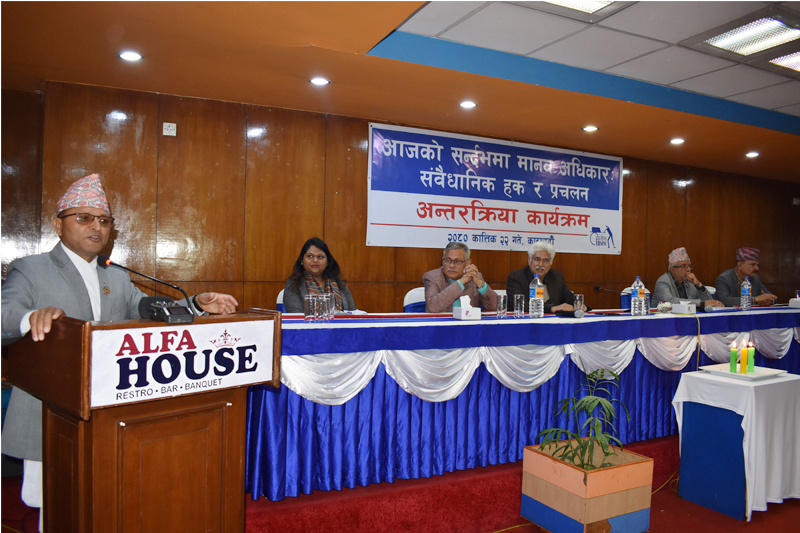
He mentioned that the realization of human rights for the people is possible upon the effective implementation of constitutional provisions through laws and acts.
He stated that “If the basic needs of the citizens are not met, they naturally get angry”. Additionally, the political parties that make the constitution, their leaders and the civil society have an equal responsibility in protecting human rights. He noted the importance of extensive consultations with victims, political parties, and civil society in the context of transitional justice. He expressed his readiness to facilitate discussions on significant public issues in the National Assembly.
Dr. Kundan Aryal, Chairperson of INSEC, while speaking in the program stated the need to swiftly implement fundamental rights mentioned in the constitution through the formulation of laws and acts to protect the human rights of citizens.
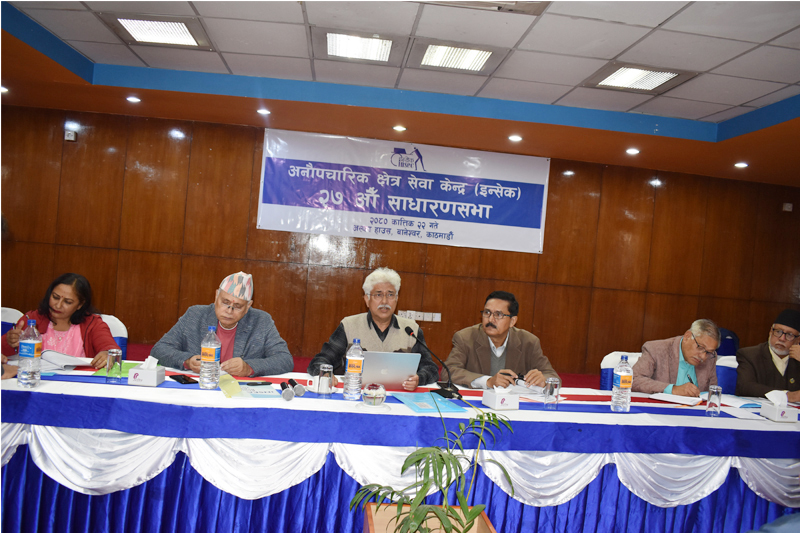
He highlighted the changing context and dynamics of human rights, stressing that future human rights movements should prioritize issues like climate change and the protection of economic and social rights.
He expressed his happiness that the National Human Rights Commission has succeeded in maintaining its ‘A’ category recognition and said that the law related to the Human Rights Commission should be made in accordance with the Constitution of Nepal and the spirit of the Paris Principles.
Chairperson Aryal also mentioned that INSEC is seriously looking at the politicization of humanitarian law violations in the war between Israel and Hamas and impunity and criminalization in the national context.
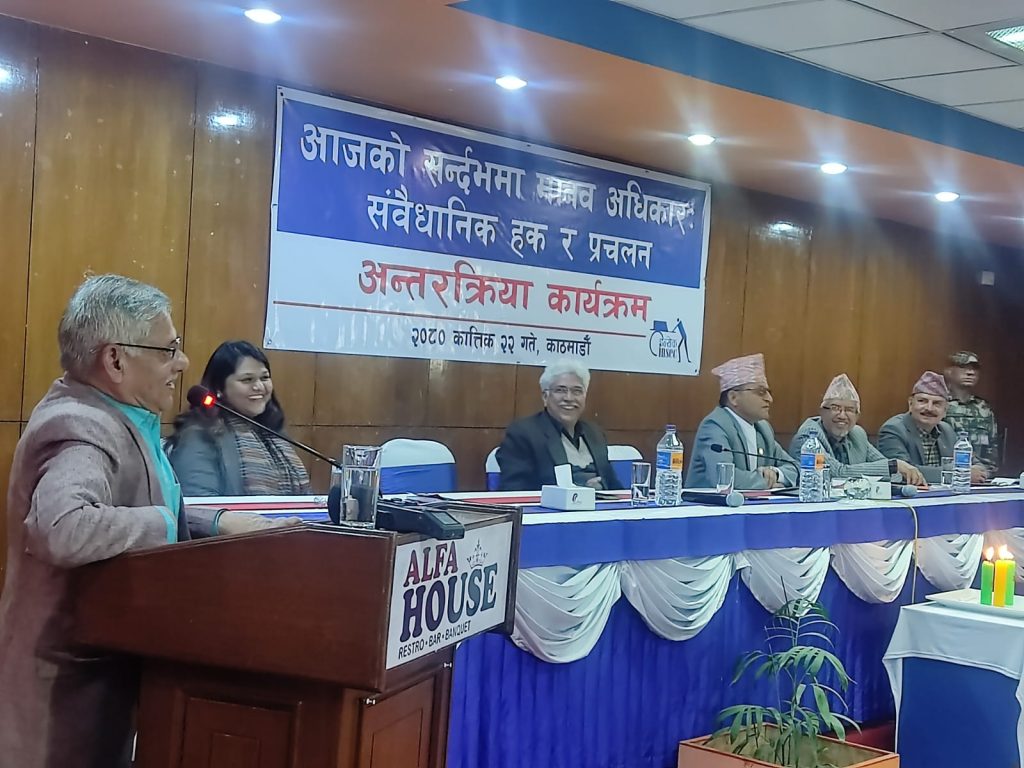
Surya Dhungel, Member of the National Human Rights Commission said that the collective support and initiative of INSEC and other organizations played an important role in keeping the Human Rights Commission of Nepal in the ‘A’ category.
Dhungel affirmed his dedication to engaging in extensive discussions and consultations with civil society representatives on matters related to the formulation of laws concerning the National Human Rights Commission.
Dhungel highlighted the need for expeditious resolution of issues related to transitional justice, the swift enactment of a law on human rights defenders, and the delivery of justice to victims. He underscored the pivotal role that the legislative parliament and the Speaker of the National Assembly should play in the formulation of laws pertaining to the Human Rights Commission.
Sushil Pyakurel, former member of the Human Rights Commission and advisor to INSEC, mentioned that the protection of citizens’ rights cannot be done only by enacting laws and said that effective implementation is necessary. He emphasized that accountability is a central issue in human rights, expressing concern that the government has managed to pass only one law in two years, and there should be accountability for this.
Pyakurel highlighted the challenge of protecting human rights in a democratic republic where the rule of law should prevail, expressing concern about the government’s failure to address the demands for justice by Aarati Shah’s relatives and Bharati Sherpa.
Bhawana Bhatta, the Vice-Chairperson of the non-governmental organization Federation, emphasized the ongoing nature of the transitional justice issue and expressed that the peace process would not feel complete until the victims receive justice
She also pointed out that despite Nepal having one of the best constitutions compared to other countries, weak implementation has hindered the full realization of human rights for common citizens.additionally, despite the change in the system through popular movements, the behavior of leaders from ruling political parties resembles that of the Shahi era kings. This has resulted in perpetrators of serious human rights violations receiving amnesty.
Human rights activist Pradeep Pokharel pointed out that the main weakness of the major political parties lies in their inability to complete the legislation, despite two periodic elections after the constitution. He highlighted the importance of INSEC in Nepal’s human rights movement, stating that reliable statistics on human rights would be insufficient without the organization. He urged INSEC to take the lead in the movement to perfect the law.