

In Humla District, the district that was connected to Nepal’s national road network the latest, patients and pregnant women still often have to be transported on stretchers for medical care. Despite claims of road expansion and infrastructure development, residents of remote settlements continue to face difficulties accessing basic health services.
On May 14, Tinkali Kami, 22, of Simkot Rural Municipality–4 gave birth on the way to the hospital. Police rescued the mother and newborn and transported them to the district hospital. Timely police intervention helped save both lives.
She had left for the hospital at around 5:00 a.m. after going into labor. Residents of her village are required to walk for approximately 55 minutes to reach the district hospital. Before she could arrive, she delivered her baby near Kathechuli Chowk in Ward No. 5 of Simkot Rural Municipality.
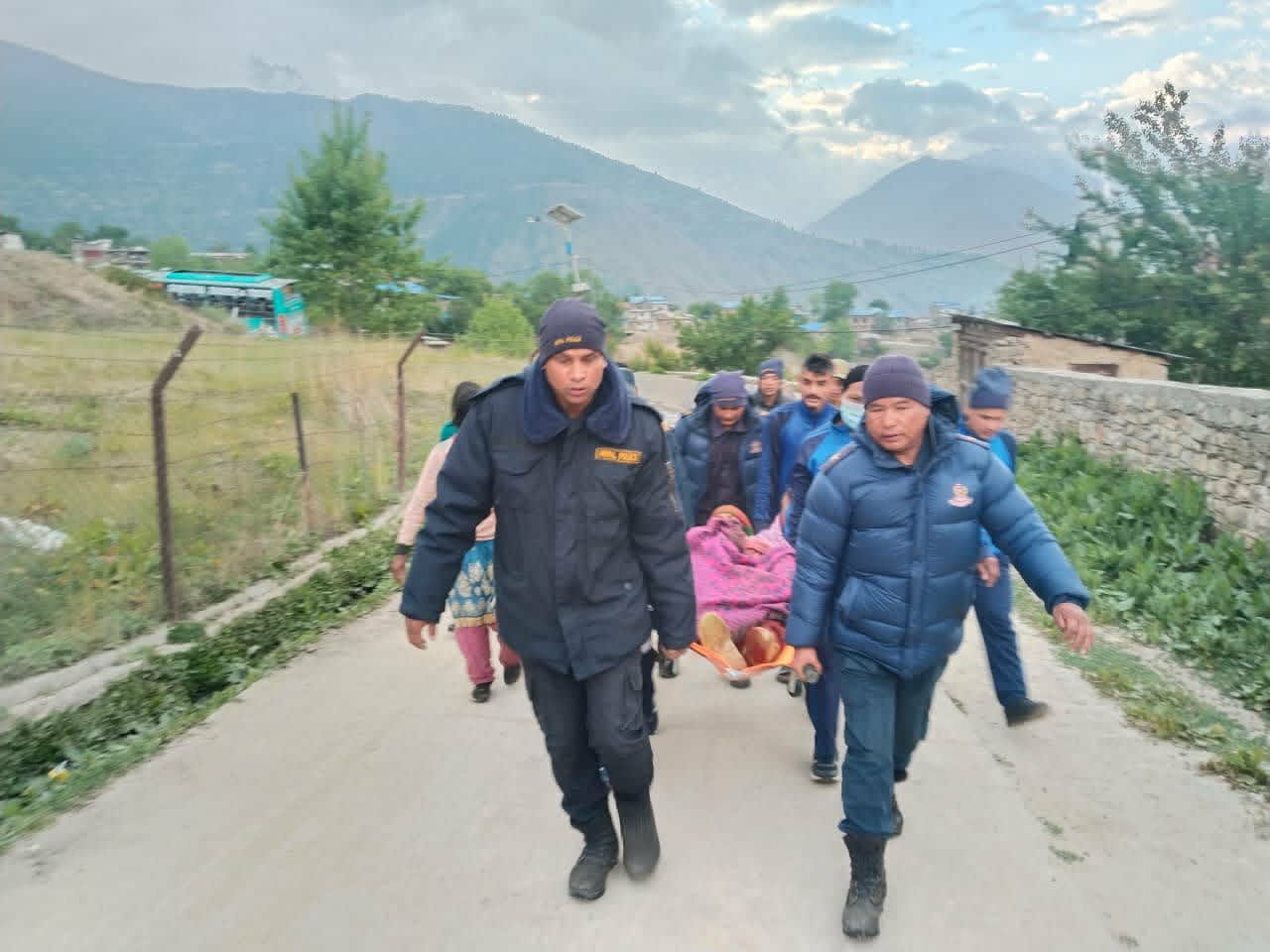
Upon receiving information about the incident, a police team led by Inspector Yubaraj Dhakal from the District Police Office Humla was deployed. According to Deputy Superintendent of Police Shankar Khadka, the team rescued the mother and newborn and transported them safely to Simkot District Hospital.
According to Dr. Bhim Budha of the Health Service Office Humla, most patients and pregnant women in the district still have to be carried to hospitals on stretchers.
The experience of Tinkali Kami is not an isolated case but reflects the reality faced by thousands of women living in Humla’s remote settlements. A lack of quality maternity services, skilled health personnel, and transportation facilities continues to place pregnant women at significant risk.
Health workers say many women still do not undergo regular prenatal checkups, make adequate birth preparations, or seek medical care until labor begins. Financial hardship, difficult terrain, and limited road and transportation access further complicate the situation.
Sarita Bohora, Nursing In-Charge at the district hospital, emphasized that, alongside access to health facilities, awareness within families and communities is equally important. According to her, the tendency to underestimate health risks and delay seeking medical care often has serious consequences for the health of both mothers and newborns.
Dr. Birendra Shahi stated that expanding quality maternal healthcare services, including the deployment of specialist medical personnel, is essential to ensure safe motherhood in remote districts. He noted that unless healthcare services become more accessible, reliable, and effective, women in remote areas will continue to face unnecessary hardships.
Although road connectivity has reached Humla District, safe maternal healthcare remains fraught with risk. For many pregnant women, the journey to the hospital is still a struggle between life and death.