

An interaction program on the draft bill concerning the situation, challenges, and legal protection of Human Rights Defenders (HRDs) was organized by the Informal Sector Service Centre (INSEC) in collaboration with the European Union (EU) on August 13. During the program, participants emphasized the need for greater coordination and unity among civil society organizations to strengthen the protection of HRDs.
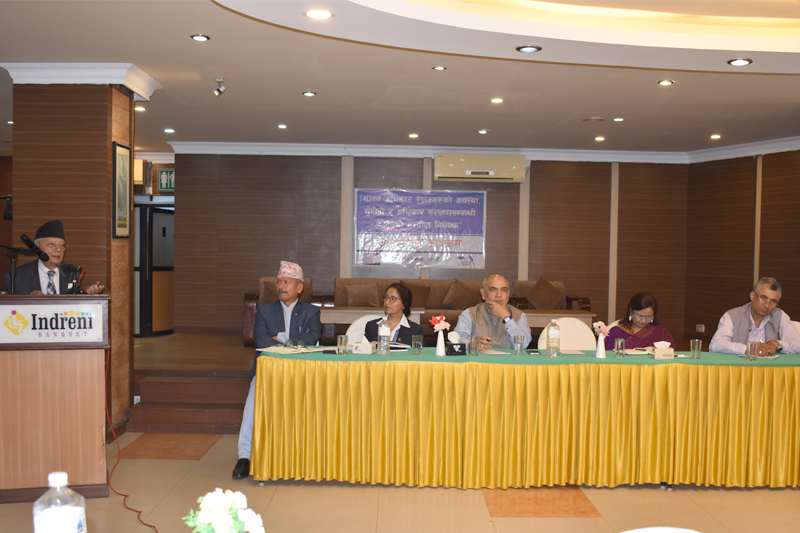
The chief guest of the program, Chairperson Tapa Bahadur Magar of the National Human Rights Commission, informed that the Commission has been conducting monitoring processes on human rights issues and emphasized the need for coordination between the National Human Rights Commission and other commissions to jointly protect and promote human rights. Regarding the enactment of a law on the rights of human rights defenders, he noted that, in collaboration with INSEC, it was observed that, instead of amending the existing National Human Rights Act, a new act would need to be introduced. Accordingly, based on theoretical consensus, a provision concerning the rights of human rights defenders has been included in a chapter of the National Human Rights Act. Chairperson Magar recalled that the process of lawmaking is progressing through the collection of stakeholders’ suggestions and emphasized that the issues raised in the discussion should be incorporated, highlighting the need to play a collective role in ending impunity.
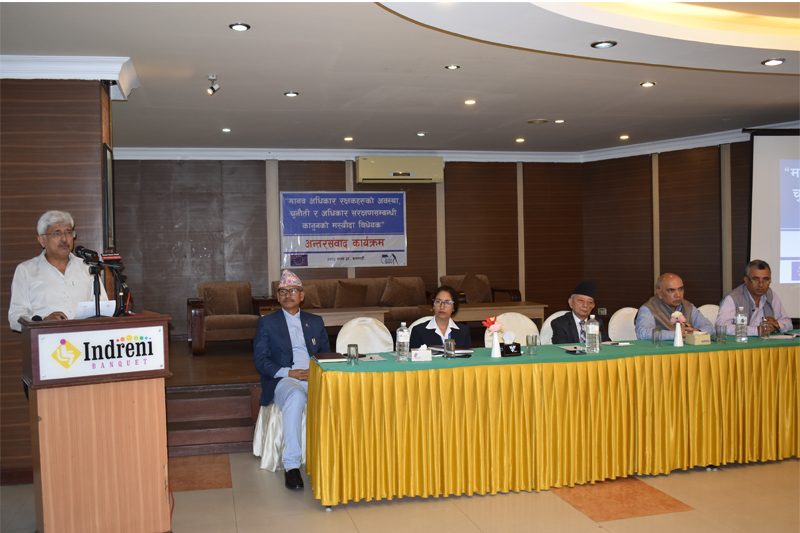
At the program, Dr. Kundan Aryal, Chairperson of INSEC, stated that human rights defenders raise their voices to protect human rights, and opposition from powerful actors, especially the executive, tends to increase conflict. He emphasized that, according to the principle of separation of powers, continuous advocacy should come from civil society. He highlighted the need for coordination and unity within civil society, noting that even if actors are not directly involved in governance, sectors that have a direct impact on society must always raise their voices. Additionally, the human rights defenders need to watch out not just for direct human rights violations, but also for situations where businesses or profit-driven activities harm the environment, which indirectly affects people’s rights.
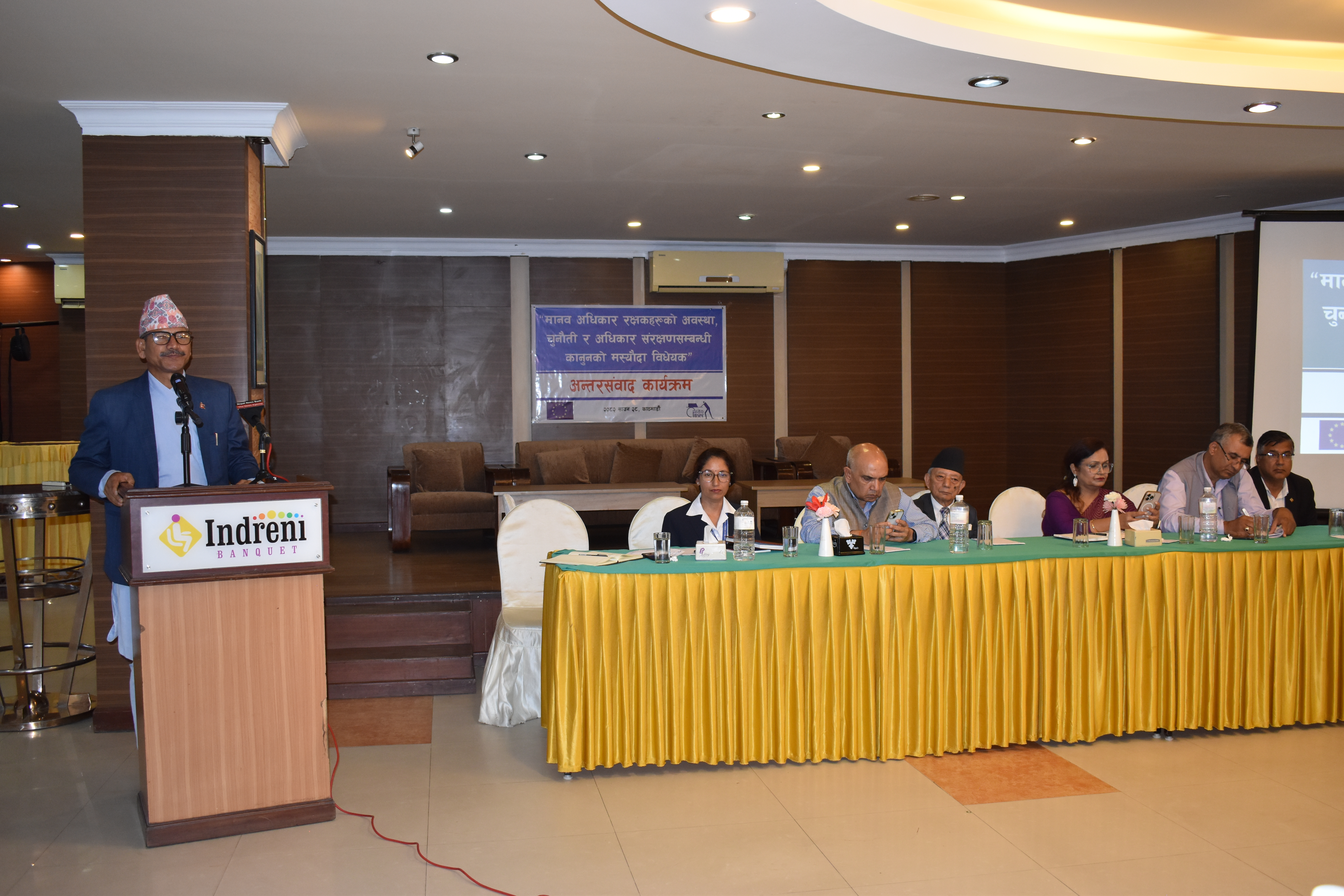
Devraj Bishwakarma, Chairperson of the National Dalit Commission, highlighted the need to establish a council on human rights and noted that INSEC has been assisting the National Human Rights Commission and other stakeholder human rights organizations of Nepal. He stated that the rights of victims must be prioritized over those of the accused. Chairperson Bishwakarma expressed that the state must work committedly for the protection and promotion of human rights.
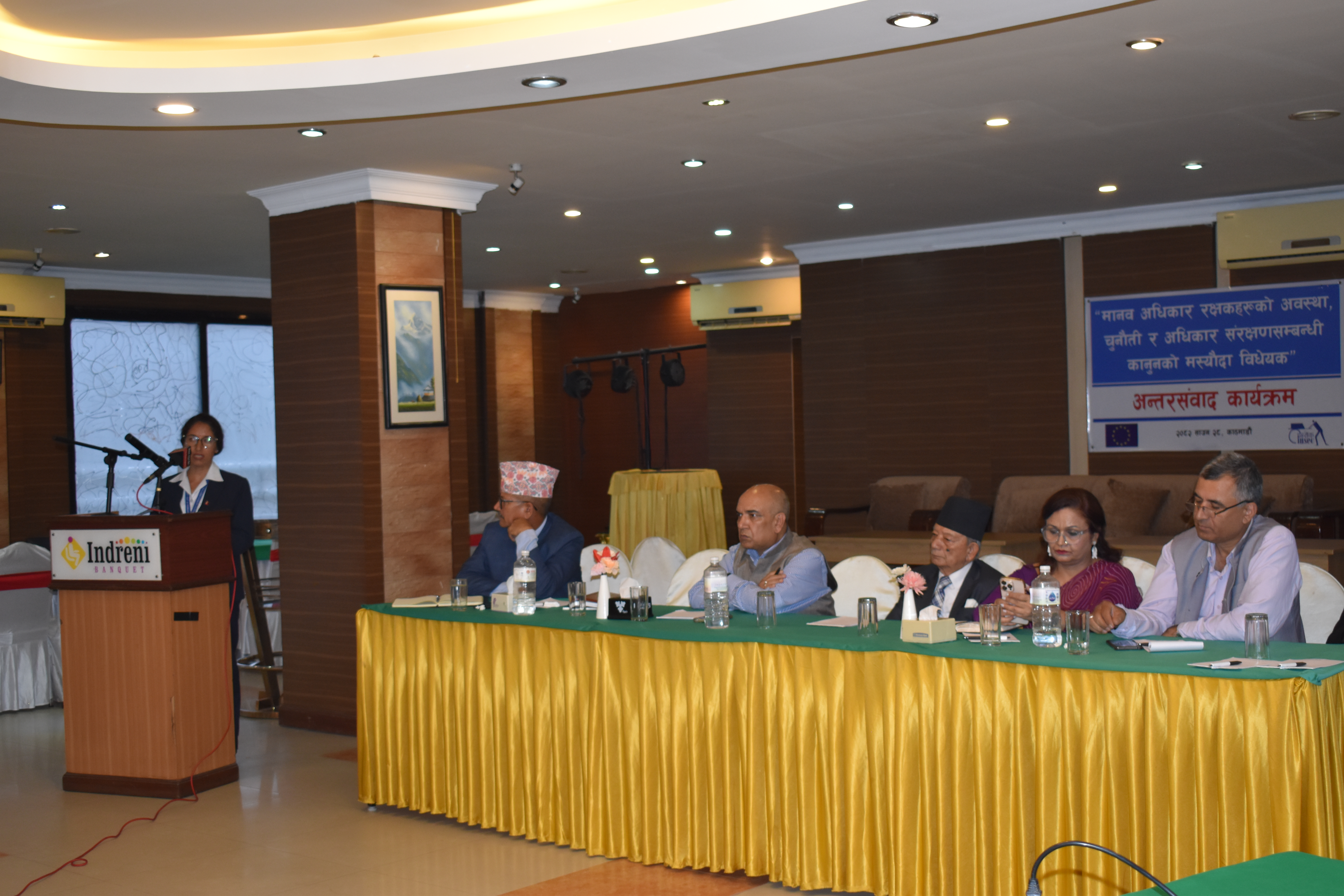 Bimala Paudel, Undersecretary of the Human Rights and International Treaties Division at the Office of the Prime Minister and Council of Ministers, informed that regarding human rights defenders, provisions are being prepared to include their issues as a chapter in the National Human Rights Commission Act, along with the necessary regulations in coordination with the Ministry of Law. She expressed her commitment to present his views to the concerned authorities regarding the issues that need to be included about human rights defenders.
Kedar Koirala, General Secretary of the Nepal Bar Association, questioned how much priority Nepal gives to making a law for human rights defenders and stressed that it must be included, at least as a chapter, in the existing National Human Rights Commission Act. He reminded that there is a difference between journalists and social media users, and pointed out the need for a clear perspective on the issue of human rights defenders.
Nirmala Sharma, President of the Federation of Nepali Journalists, stated that the rights of human rights defenders should be included in the National Human Rights Commission Act. She emphasized that professionals must be clear about their cooperation and their roles. Highlighting the need for collaboration to end impunity, she stressed the importance of active networking from the federal to provincial and district levels, fulfilling official responsibilities, and acting responsibly in their roles.
Bidur Subedi, Chairperson of the Human Rights Alliance, said that we should consider whether to see human rights defenders as individuals or to focus on protecting the institutions that raise their voices for civil liberties. He stressed that government bodies must be well-informed on issues related to human rights defenders.
Shiva Bhandari, a representative of the European Union, said that they are cooperating on human rights defender issues. He raised the question of whether the lack of complaints about self-censorship should be viewed positively or whether incidents of human rights violations should be reported despite security concerns.
Bijayaraj Gautam, Executive Director of INSEC, stated that INSEC has been working on overall human rights issues since 1992 and that the rights of human rights defenders are one of its focus areas. He explained that the program is organized considering the attacks, challenges, and problems faced by defenders protecting the rights of others in Nepal. He said human rights issues across the country should be given priority, and it should be clear which ones to include in the Act.
Shyambabu Kafle, Chief of the Legal Division of the National Human Rights Commission, recalled that discussions have been ongoing between civil society and the Commission regarding the protection and legal needs of human rights defenders. He mentioned that they have held two conferences and, by reviewing international practices, have also prepared a draft law. He recalled that a person actively involved in protecting and implementing human and fundamental rights is considered a human rights defender and emphasized that human rights defenders must respect, protect, and promote human rights within the framework of existing laws. He stated that regarding human rights defenders, the Commission can make recommendations, issue orders, or provide other directives to the government, subordinate bodies, or other parties, as well as ensure their rescue and protection. He also mentioned that the Commission can recommend them for state-awarded medals, honors, and other recognitions.
At the program, Krishna Gautam, Information Officer of INSEC, presented a working paper on the rights of human rights defenders and the areas it covers. He highlighted that common challenges for human rights defenders include environmental human rights violations by business houses, as well as facing intimidation and threats. He discussed that since the Universal Declaration of Human Rights was issued by the United Nations in 1948 and Nepal’s Constitution also guarantees human rights, there are many opportunities for human rights defenders.
Information Officer Gautam explained that INSEC has established a Human Rights Defender Help Desk, which provides protection and legal support for human rights, works on capacity building, and also engages in advocacy at the international level.
Human rights defender Dipendra Singh, in the program, stated that very few complaints have been filed with the National Human Rights Commission regarding violations of human rights defenders’ rights. Soni Sharma, Secretary of the Federation of Nepali Journalists, raised the question regarding the delay in justice in the Tiunkune incident, where employees of the Human Rights Commission were attacked and a journalist was burned alive.
Human rights activist Krishna Thapa questioned who should provide the official identification for human rights defenders and emphasized the need to maintain a record of their statistics. Ashok Khanal of the National Child Friendly Local Governance Forum said that the scope of human rights defenders should be clearly defined.
Lubha Raj Neupane of ROYM urged the National Human Rights Commission’s opinion on whether the issue of human rights defenders should be included in the amended Act or addressed through a separate bill. Human rights activists Purna Sharma, Benumaya Gurung, Anuradha Joshi, and Chamundmaya Khatri highlighted several key issues: making information accessible and physical structures disability-friendly for human rights defenders with disabilities, standardizing the criteria for human rights defenders, clarifying their dignity, emphasizing the importance of organizing defenders, and addressing problems related to citizenship.
Similarly, human rights activist Kalyan Mani Wagle drew attention to the lack of hearings on complaints submitted to government bodies. Inspector Asmita Kapali of the Nepal Police questioned who should be considered a human rights defender and emphasized the need for training to create a unified understanding among security agencies.
Women’s human rights defender Barsha Luitel stressed the need for clarity regarding issues specific to women human rights defenders.