

A workshop on the Performance and role of CSOs during emergencies including pandemic was organized by the Informal Service Centre in Kathmandu on September 24, 2021.
Bijay Raj Gautam, Executive Director of INSEC said that a workshop has been organized to discuss how to work effectively against the challenges faced by the civil society and the general public in times of pandemic and emergencies.
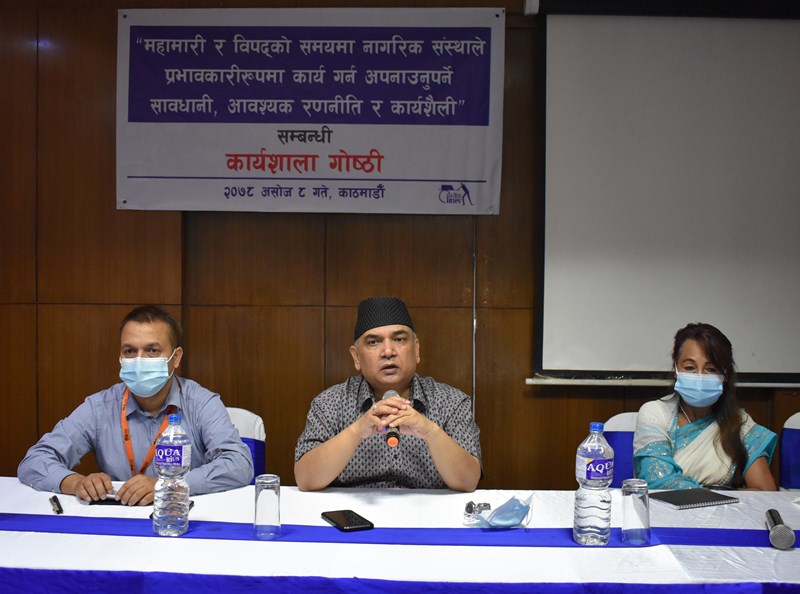
Dr. Indira Shrestha, Chairperson of INSEC said that civil society played an important role in the service of the people although it was in a difficult situation itself during the pandemic of COVID-19.
She further added that civil society should build a strong network to work together during the pandemic. Dr. Shrestha stated that civil society has gained the trust of the people although the state ignored them during the pandemic. During this period, the civil society monitored the functions of the government. She informed that discussions would be held with the concerned bodies by incorporating the suggestions and findings of such interactive programs.

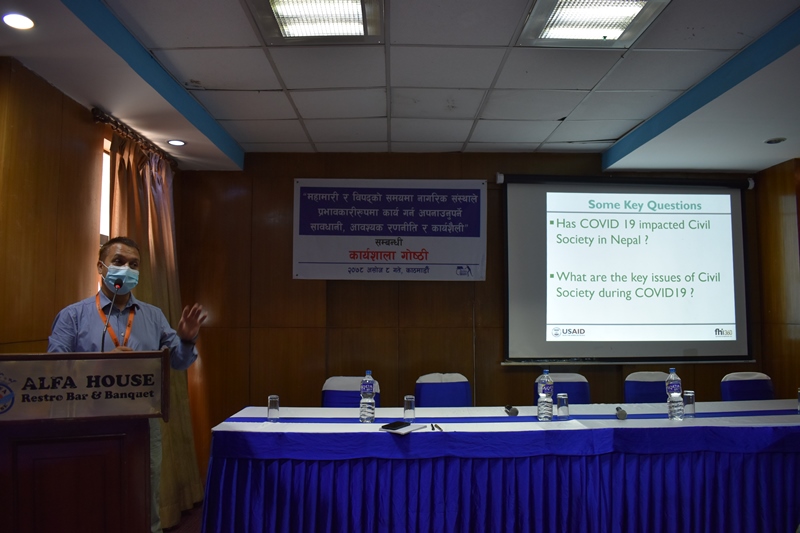
Advocate Tanka Aryal presented a paper on COVID-19 and Issues of Civil Society in Nepal’.
Aryal stated that the civil society had helped people during disasters but this time it was in trouble itself due to the pandemic of COVID-19. He added that the NGOs were not able to work as they wanted due to the government’s prohibition on movement and gathering.
He said that the umbrella organization of the NGOs and the Human Rights Commission failed to draw the attention of the government because of which the civil society and human rights defenders were not given priority for relief and vaccination.
Stating that civil society organizations were in crisis when donors withdrew their hands during the pandemic, he pointed out that the private sector could spend through social organizations for which both the sectors need to cooperate with each other.
Presenting a paper on “Role and Importance of Civil Society Organizations in Protecting Civil Rights in Social and Political Context”, Uttam Uprety said that domestic violence, violation of the rights of migrant workers, sexual abuse within quarantine, intolerance towards community and caste were more prevalent during the pandemic.
He stated that civil society has played a key role in enacting human rights-friendly laws and securing civil rights during disasters.
He stressed the need for civil society to be vigilant to protect the fundamental rights of the people in such a situation as the right of the citizens to live freely would be violated when the state declares a state of emergency.
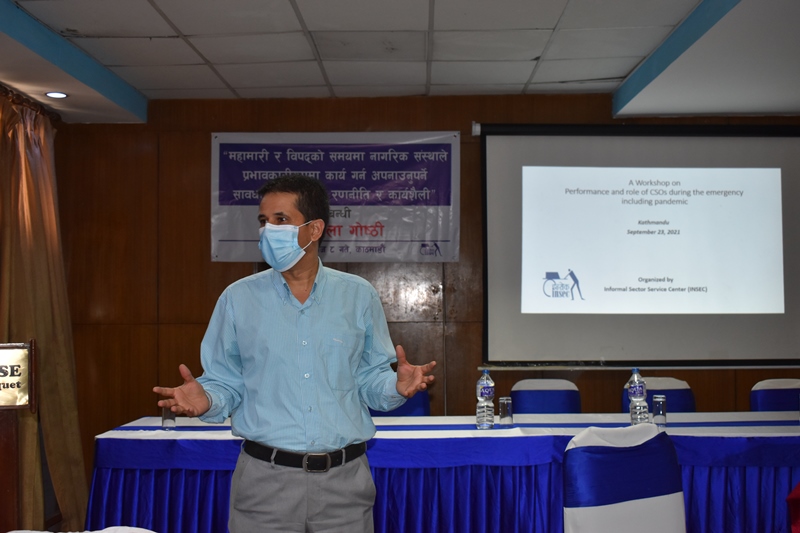
Advocate Sushila Chaudhary said that civil society should move forward unitedly on the common issue of rights as the identity of the civil society was shrunk during the pandemic.
Similarly, Balmaya Bishwakarma, representative of the JuRi Nepal, said that the state has ignored the civil society in making laws through participation policy while making laws in times of disaster.
Sanjay Sharma from the Blue Diamond Society said that 23 people belonging to the sexual minorities had committed suicide during the period of the pandemic of COVID-19 in Nepal. He lamented that they were discriminated against by the state bodies on the basis of gender identity.
Pradeep Dangol, Chairperson of the NGO Federation Kathmandu, said that the civil society should warn the state as people with connections in the health institutions get quick access to the vaccination and the general public has to wait for months.