
INSEC Online

INSEC Conducts Monitoring of Kaski District Jail

A joint team led by the Informal Sector Service Centre (INSEC) Gandaki Province Office, Pokhara, conducted a monitoring visit to Kaski District Jail on May 12, 2026.

The monitoring team included INSEC Gandaki Province Coordinator Ganesh Bhandari, Civil Society Network Gandaki Province Coordinator Bishnu Prasad Baral, human rights activist and journalist Madhu Panthi, social activist Milan Dumre, and engineer Ganesh Adhikari. The District Administration Office granted permission for the visit under the condition that no photos or videos would be taken inside the prison, ensuring coordination in line with regulations.

During the inspection, the team observed the prison’s physical infrastructure, living conditions of inmates, as well as health, sanitation, and management systems, and also held discussions with prisoners. Inmates were found engaged in skill-based activities such as making stools and preparing coffee. The jail also provides basic sports facilities, newspapers, and television access, along with a citizens’ charter within the facility.
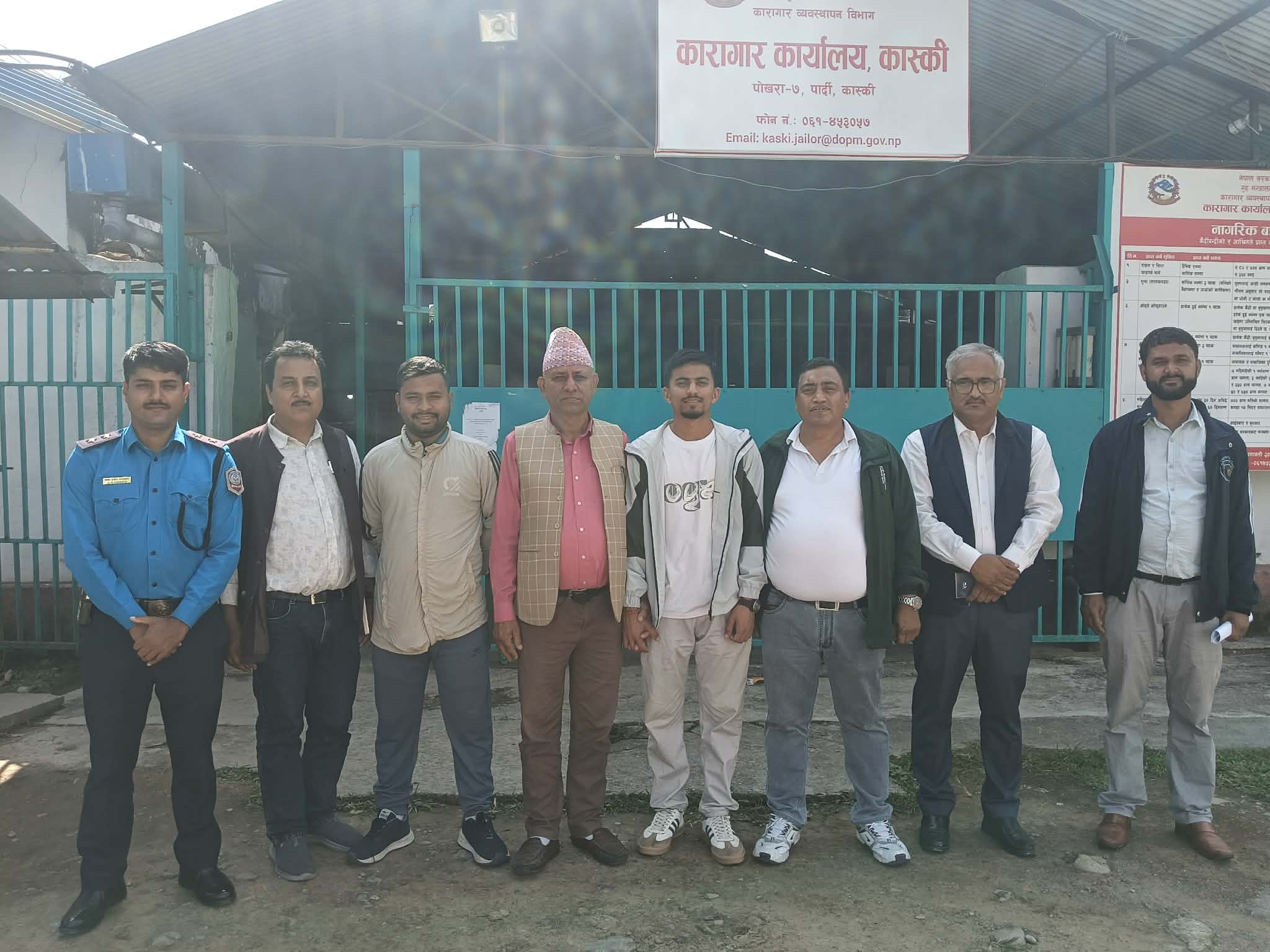
According to the monitoring team, the drainage system at Kaski District Prison has emerged as the most serious problem. The jail’s condition has remained unimproved for years due to its old infrastructure, excessive overcrowding, and limited resources.

Although the prison has a capacity of 420 inmates, 20 women, and 400 men, it is currently holding nearly double its capacity. According to prison administration data, out of 773 detainees, 128 are outside the facility, while 25 women, one dependent child, and 668 men are currently inside the prison. Among women inmates, 11 are under trial, and 14 are convicts, while among men, 271 are under trial and 397 are convicts.

Jail Chief Rajendra Paudel stated that managing the facility has become extremely challenging due to the need to accommodate four to five times more inmates than its intended capacity. He added that the prison buildings are old and in a dilapidated condition. While the drinking water problem has been partially addressed, he noted that the drainage issue remains severe.

Civil Society Network Gandaki Province Coordinator and senior human rights activist Bishnu Prasad Baral stated that jails in Nepal have not yet been transformed into true reformative institutions. He emphasized that prisons should not only serve as places of punishment but should also function as centres for rehabilitation and reintegration.

INSEC Gandaki Province Coordinator Ganesh Bhattarai stated that such monitoring visits help promote prisons as reform centres and create pressure on the state to ensure the basic rights of inmates. The team held discussions with prisoners, prison officials, security personnel, and administration representatives on issues of management, human rights conditions, and necessary reforms.

Earlier, a team from the District Administration Office had also inspected the prison and instructed authorities to improve physical infrastructure, security conditions, administrative performance, inmate concerns, and overall management. Stakeholders have stressed the need to operate jails in line with the reformative justice approach, ensuring humane treatment of inmates, updated legal frameworks, and adequate resources.

Gandaki Province Office

Related Topic

Video