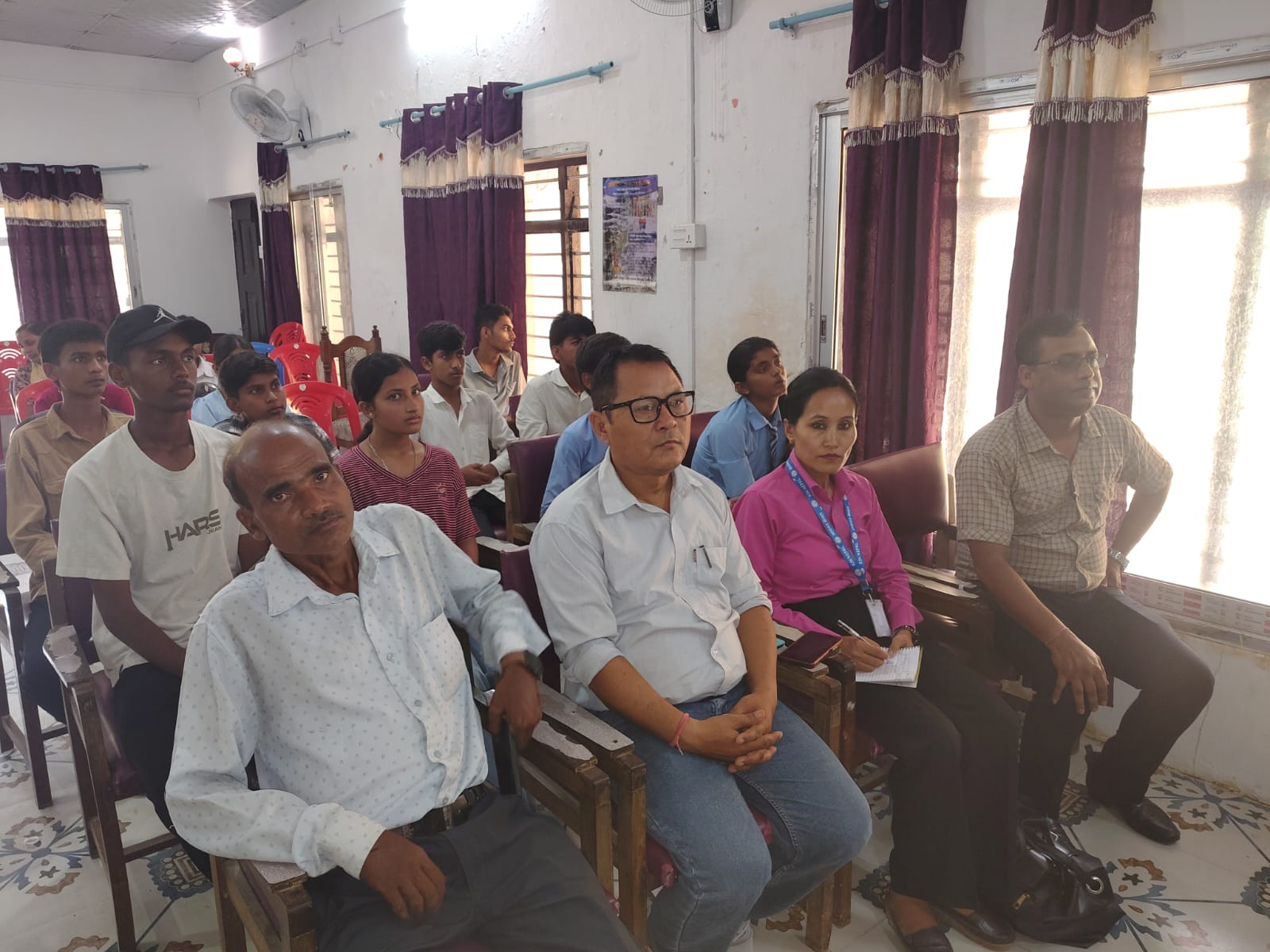

With the main slogan “Let us ensure children’s participation, let us build a child-friendly society,” a program was held in Janakpur on June 22 under the joint organization of the District Coordination Committee, Dhanusha; Informal Sector Service Centre (INSEC); Sabal Nepal; Life Nepal; JAWAS; Asman Nepal; CFW; and the Dalit Women’s Association, Dhanusha.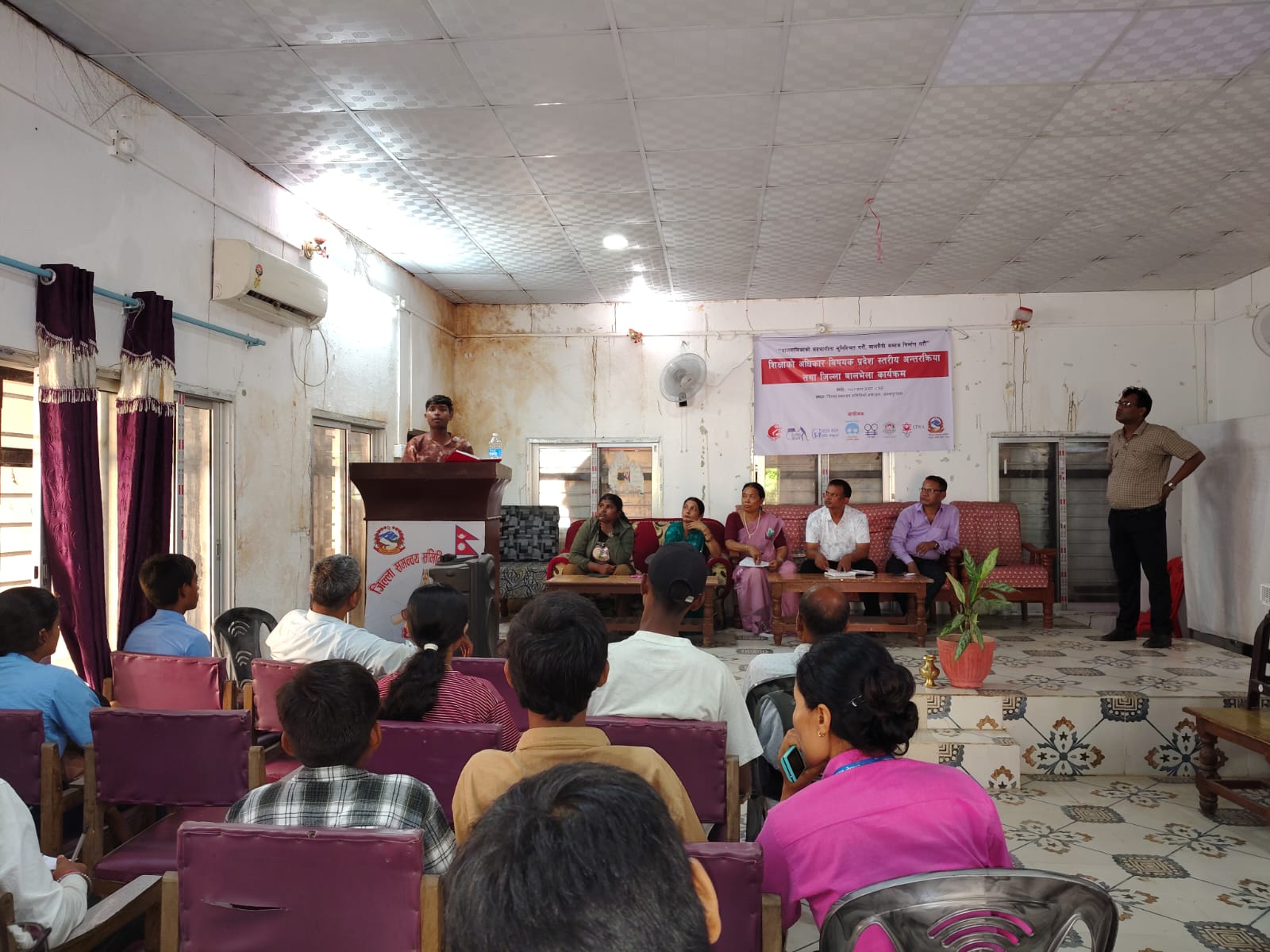
In the provincial-level interaction on the right to education and the district-level children’s assembly, the chief guest, Rajanandan Mandal, Head of the District Coordination Committee, stated that protecting children is the state’s primary responsibility. He emphasized that while the state must play the role of a true guardian, parents and society must also be aware of and fulfill their own responsibilities.
The Deputy Chief, Sangita Thakur, stated that since children are the future responsible citizens of the nation, if they are properly nurtured and managed with adequate care, they can contribute significantly to national development.
Similarly, Human Rights Officer Raj Abhishek Ranjan from the Madhesh Province Office of the National Human Rights Commission noted that the Constitution of Nepal guarantees children’s rights as fundamental rights. He added that institutions such as the National Human Rights Commission and the National Child Rights Council are responsible for monitoring their implementation. He further stated that although the legal framework for child rights in Nepal is quite strong, significant practical challenges still remain.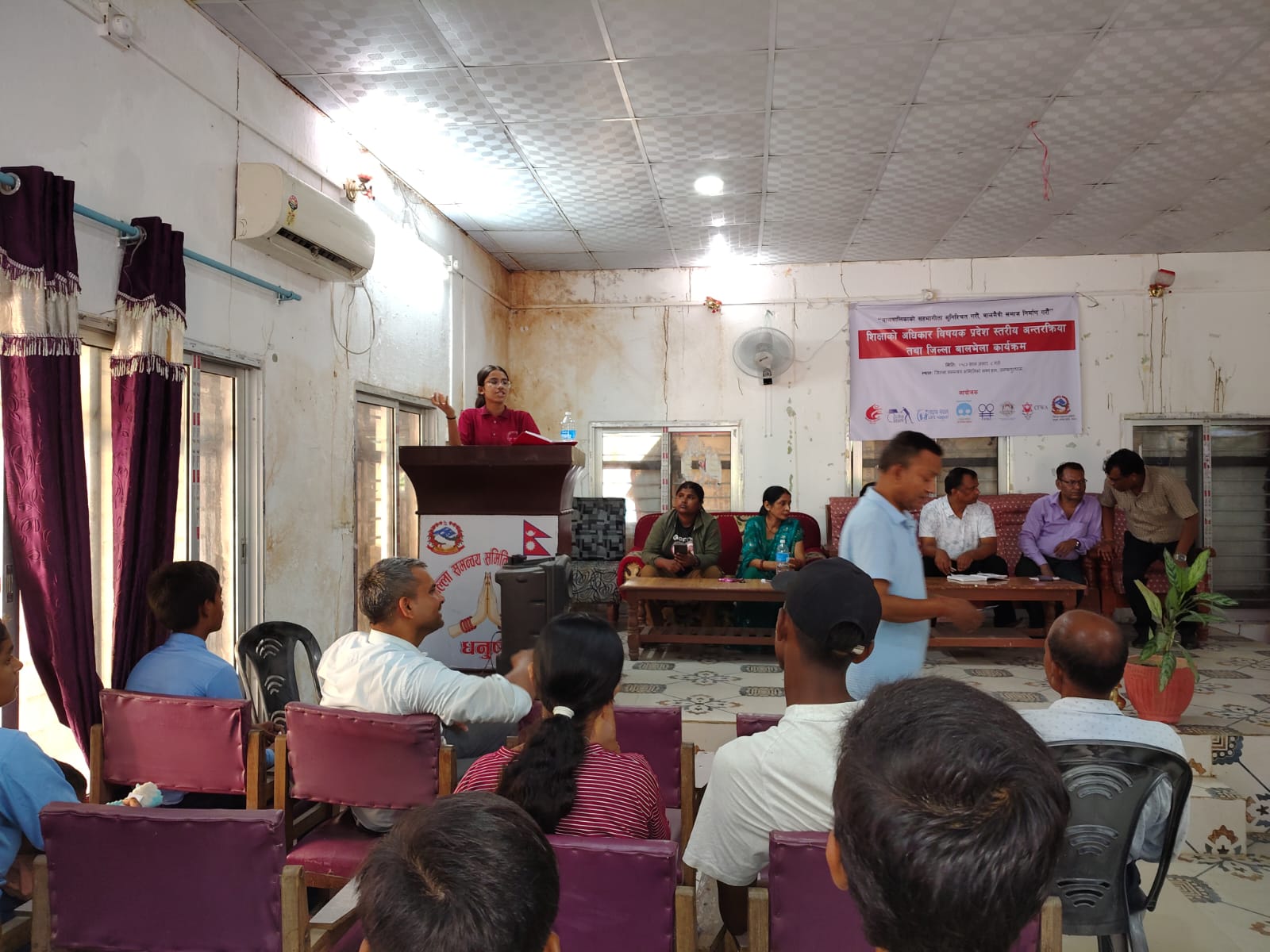 The Madhesh Province Coordinator of the Informal Sector Service Centre (INSEC), Raju Paswan, stated that although laws have been enacted to ensure children’s rights to survival, protection, development, and participation, many children are still compelled to be deprived of their basic rights due to poverty, illiteracy, and lack of awareness. He further noted that although the Children’s Act, 2018, and the International Convention on the Rights of the Child, 1989, guarantee these rights, their implementation in practice has not been effectively observed.
Similarly, Program Coordinator of the Dalit Women’s Association, Dhanusha Sijendra Sada, stated that the right to live with dignity is a fundamental right of every human being. However, since children are dependent on others and are physically smaller, weaker, and less mature, they require special care, which is why separate child rights provisions have been established. He emphasized that ensuring these rights requires collective effort and monitoring from all stakeholders.
Likewise, Central Committee Member of the Federation of Nepali Journalists, Rajesh Karna, stated that human beings should be able to enjoy child rights from the stage of conception until adulthood. He added that children should have the right to proper care, nutritious food, and a safe living environment.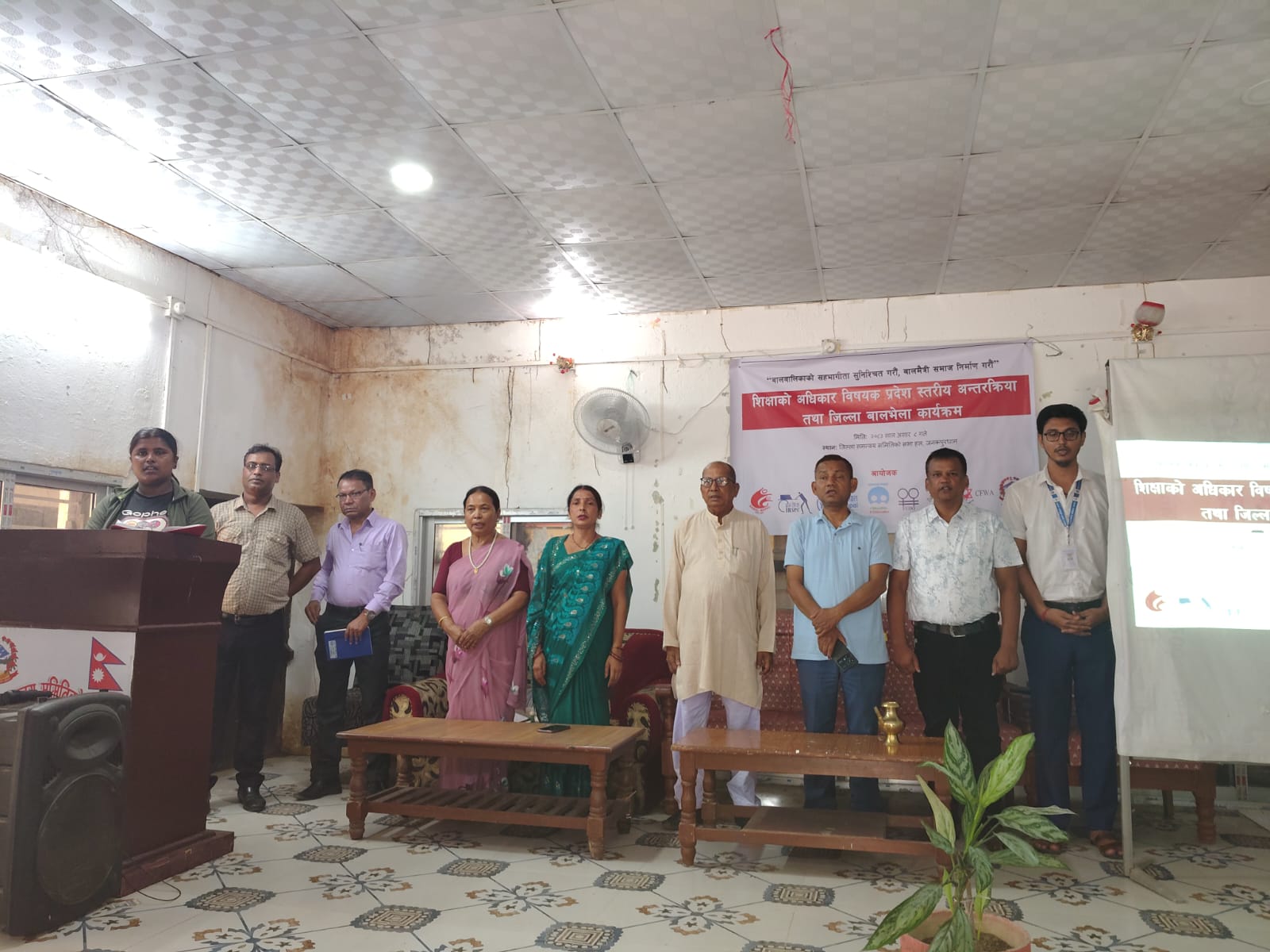
Similarly, Kailash Das, Chairperson of the Dalit Journalist Association, Madhesh Province, stated that the right to work is a human right for adults, whereas children have the right to be protected from child labour. He further emphasized that children’s involvement in child clubs plays an important role in reducing child marriage and improving school management, and therefore, child participation should be prioritized by all stakeholders.
Likewise, the Province Coordinator of Sabal Nepal, Nira Bahadur Ale, presented the education-related programs included in the Madhesh Province policy and planning for the fiscal year 2083/2084 under the right to education. He also highlighted major plans, achievements, and challenges in the education sector. In addition, he provided information on the principles of the Convention on the Rights of the Child, the components of child rights, and the Child Participation Guidelines 2078. He further oriented participants on what a child club network is, why it is necessary, and the process of its formation.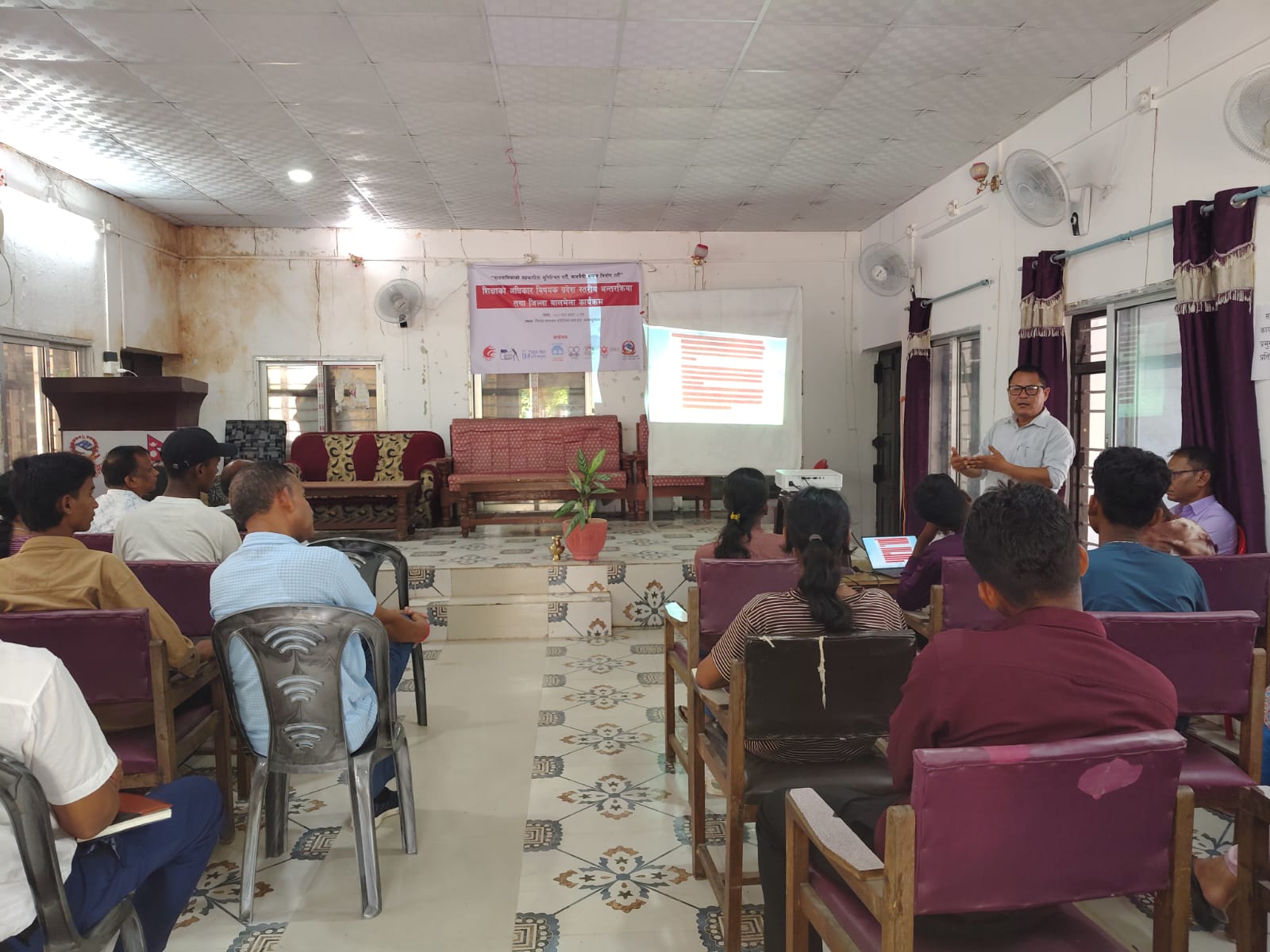
Similarly, children who participated from various local levels of Dhanusha district expressed concerns that schools lack proper infrastructure such as adequate classrooms, toilets, and drinking water facilities. They also complained that school buildings are not disability-friendly and that laboratories are not in operation.
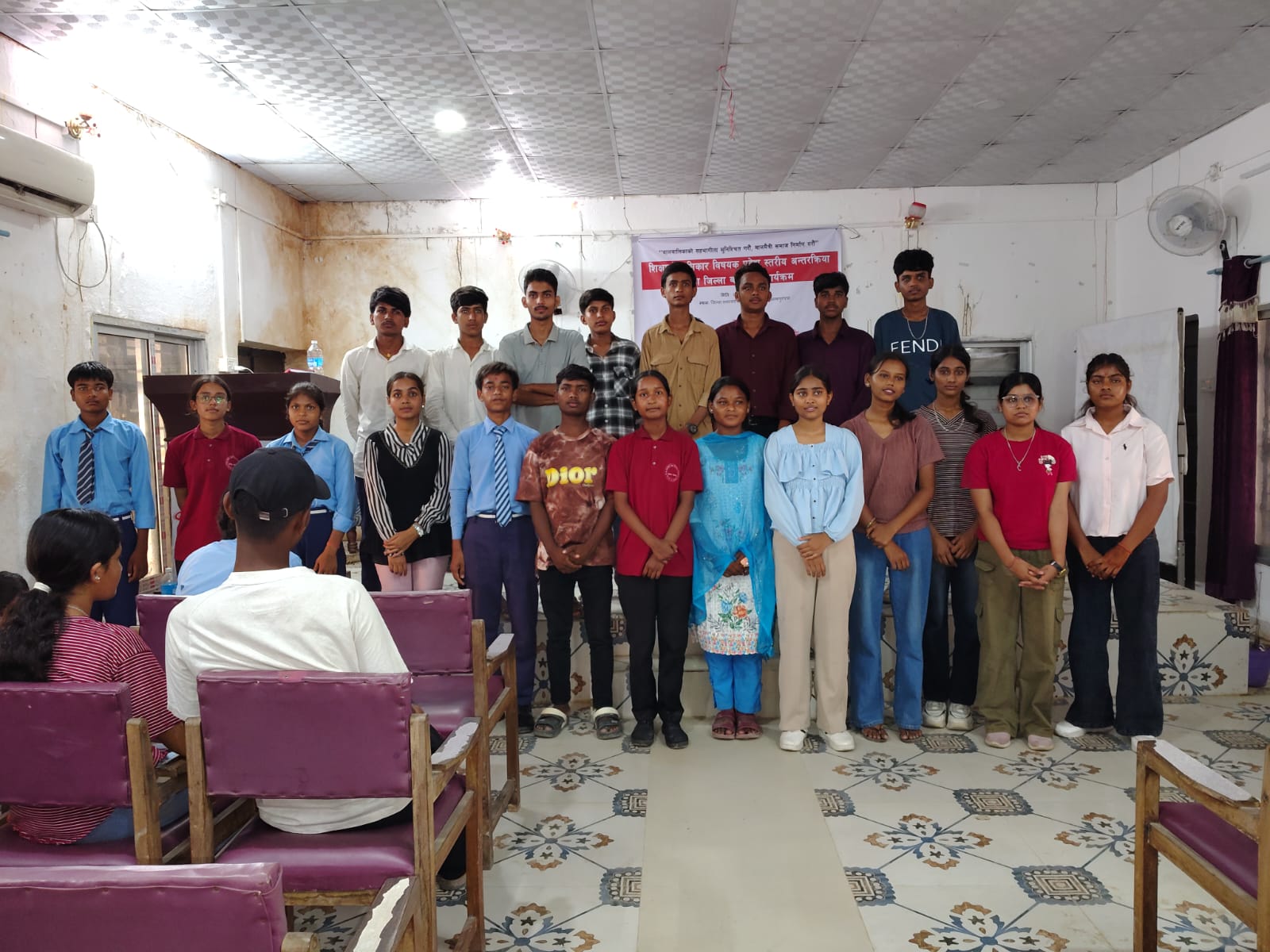
The children’s assembly formed a 21-member District Child Network. Shiva Kumar Sada was elected as Chairperson, Aakash Pathak as Vice-Chairperson, Nandani Sah as Secretary, and Laxmi Kumari as Joint Secretary, along with other members.
The interaction program and children’s assembly were attended by representatives of various organizations, as well as teachers and students from different schools.