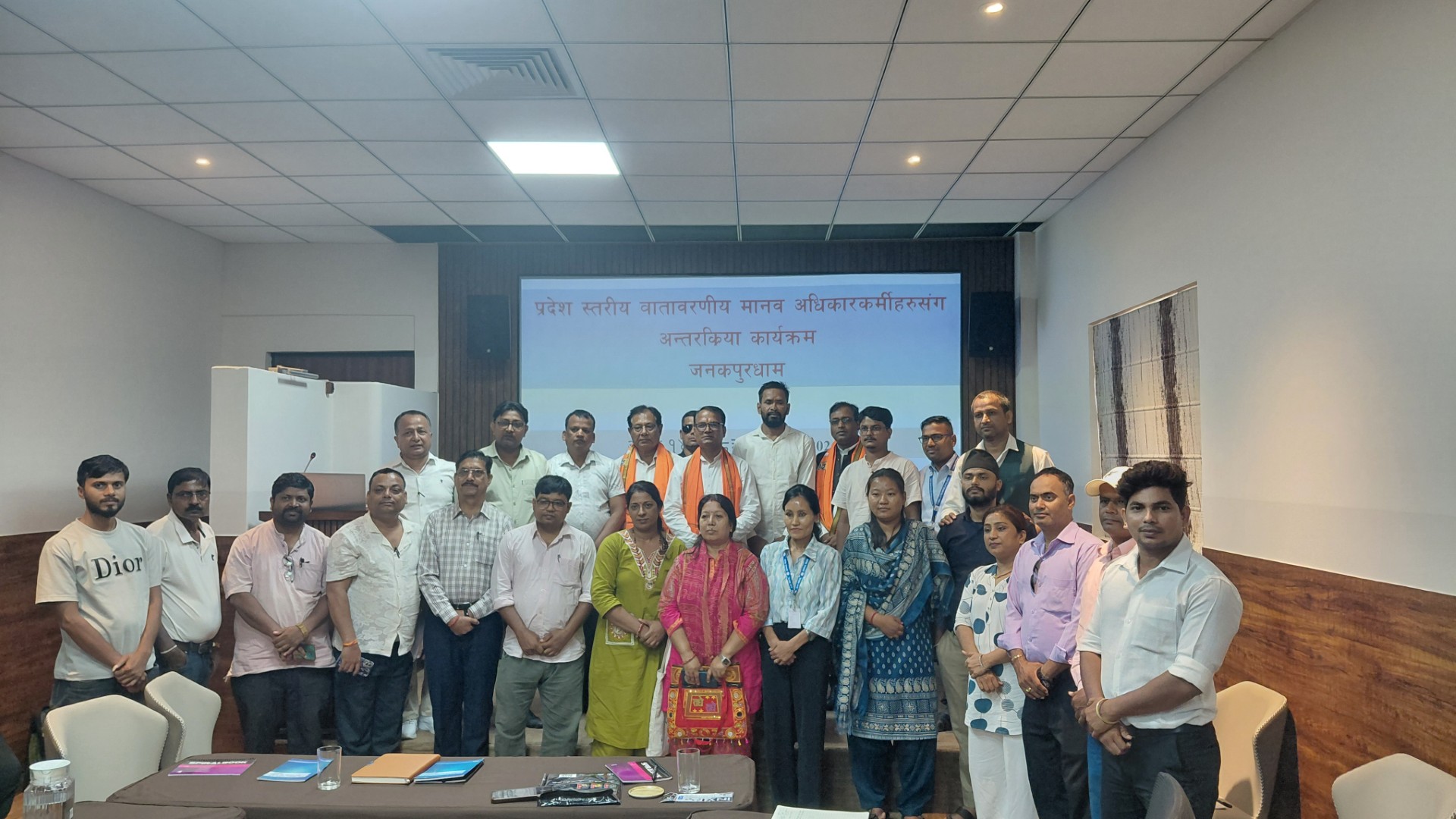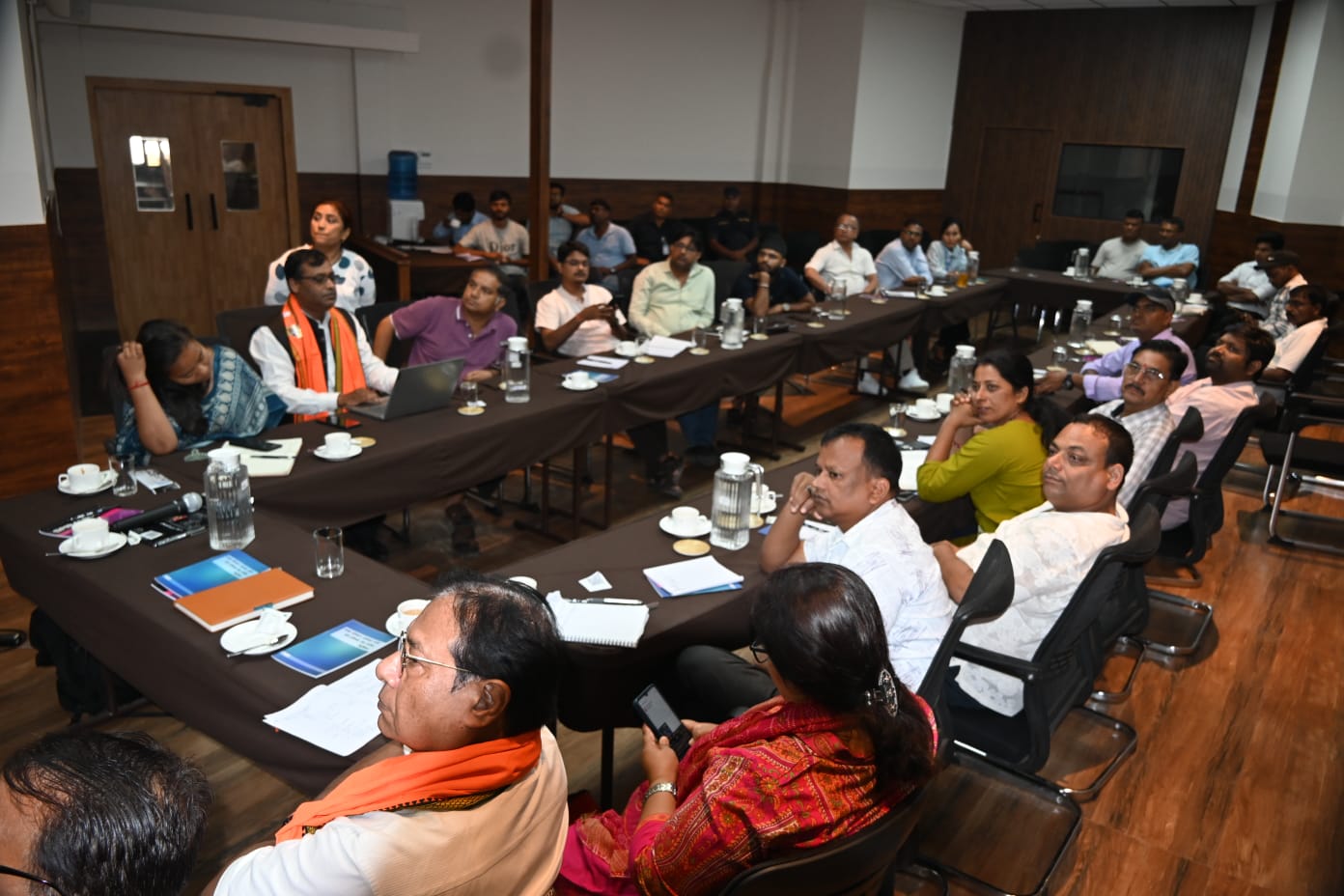
The interaction program with environmental human rights defenders at the Madhesh Province level was held in Janakpurdham on June 28, 2026, organized with the financial support of DCA and the Informal Sector Service Centre (INSEC) Madhesh Province Office.
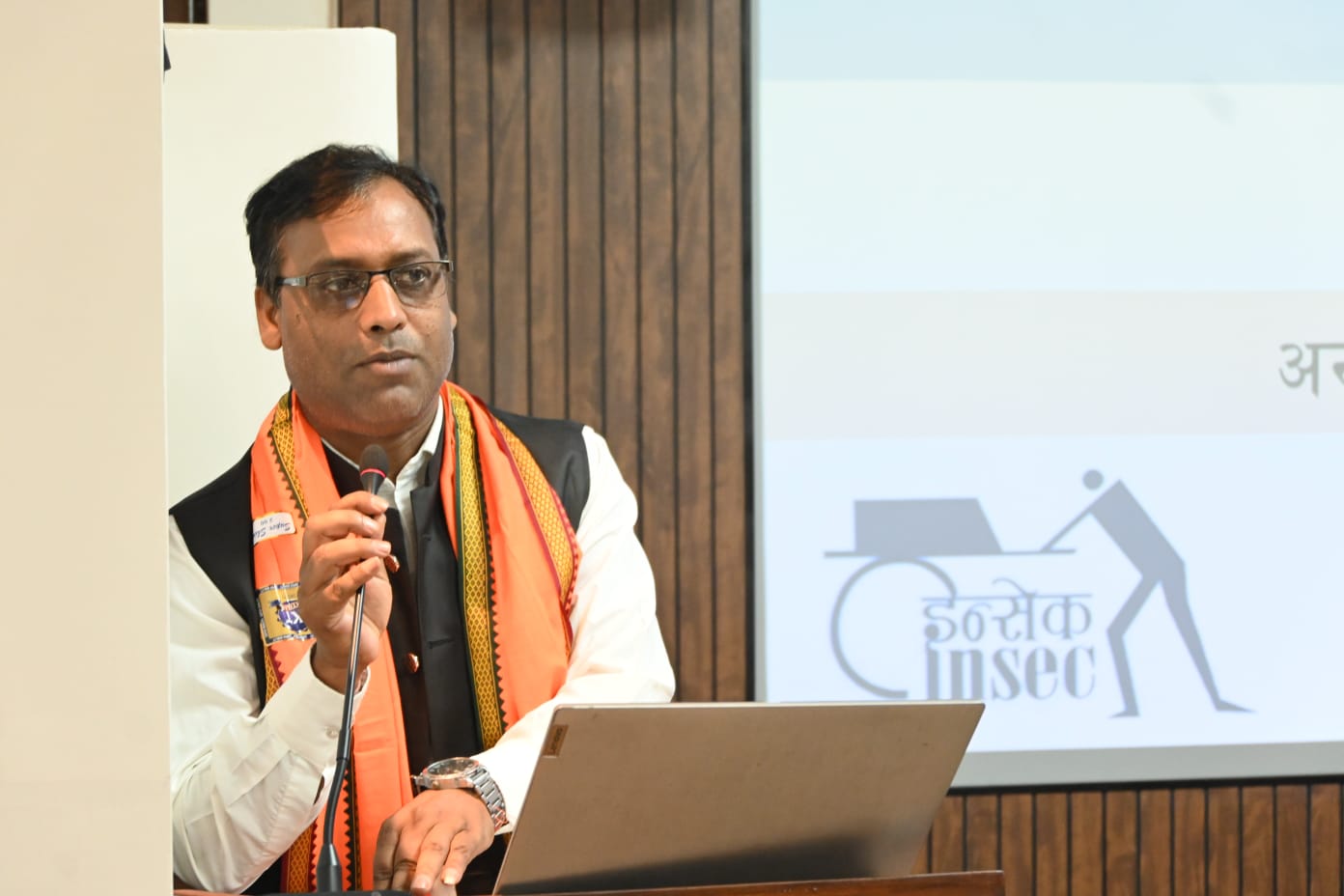
The program, chaired by INSEC Madhesh Province Coordinator Raju Paswan, was attended by Speaker of the Madhesh Provincial Assembly Ram Ashish Yadav as the chief guest, who facilitated a session on the role of human rights defenders in environmental protection. He highlighted that the Constitution of Nepal guarantees the fundamental right to live in a clean and healthy environment. He stated that coordination and collaboration among the government, civil society, human rights defenders, and the general public are essential for environmental protection. He further noted that Article 30 of the Constitution guarantees every citizen the right to live in a clean and healthy environment, while Article 51 clearly outlines the state’s policies regarding the conservation of natural resources, forests, and the environment.
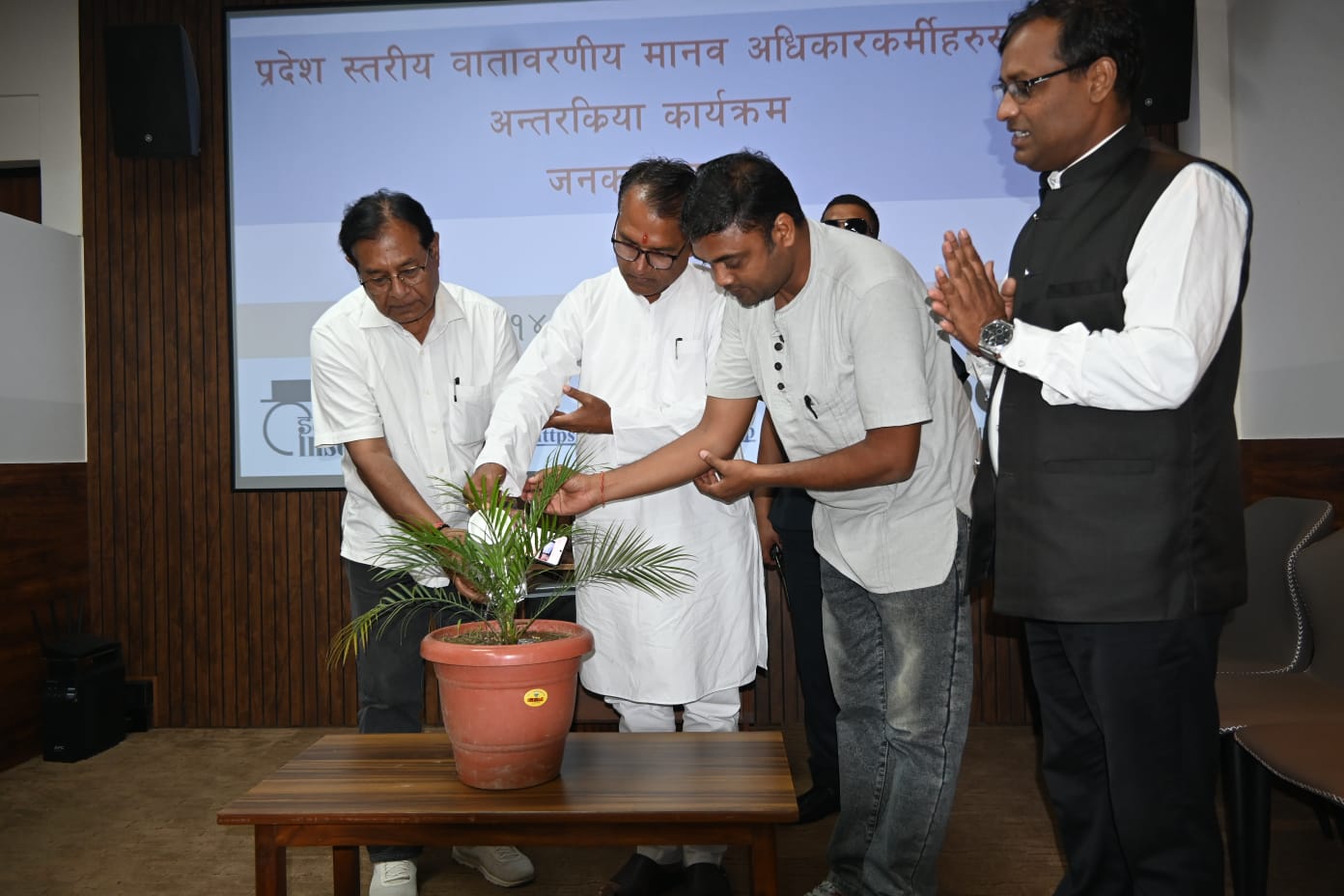
He stated that effective coordination among the local, provincial, and federal governments is essential for the protection of environmental rights. He emphasized that special attention should be given to the conservation of the Chure region, sustainable forest management, the protection of water resources, and the promotion of biodiversity.
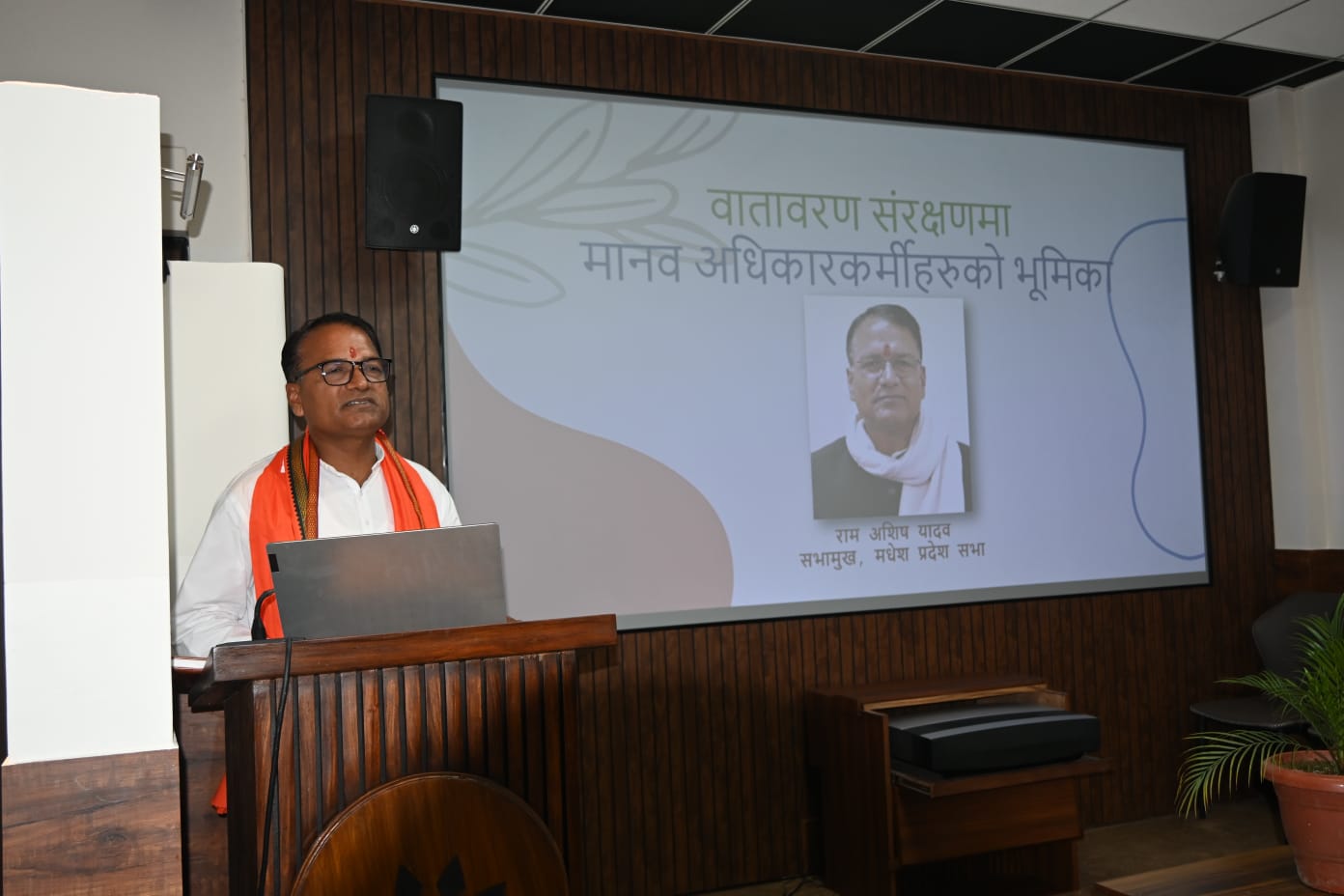
Speaker Yadav stated that water, air, soil, and noise pollution have serious impacts on human health. He noted that the lack of access to safe drinking water and increasing water pollution have heightened the risk of various serious diseases. He emphasized the need for all stakeholders to unite and conduct campaigns against environmental pollution.
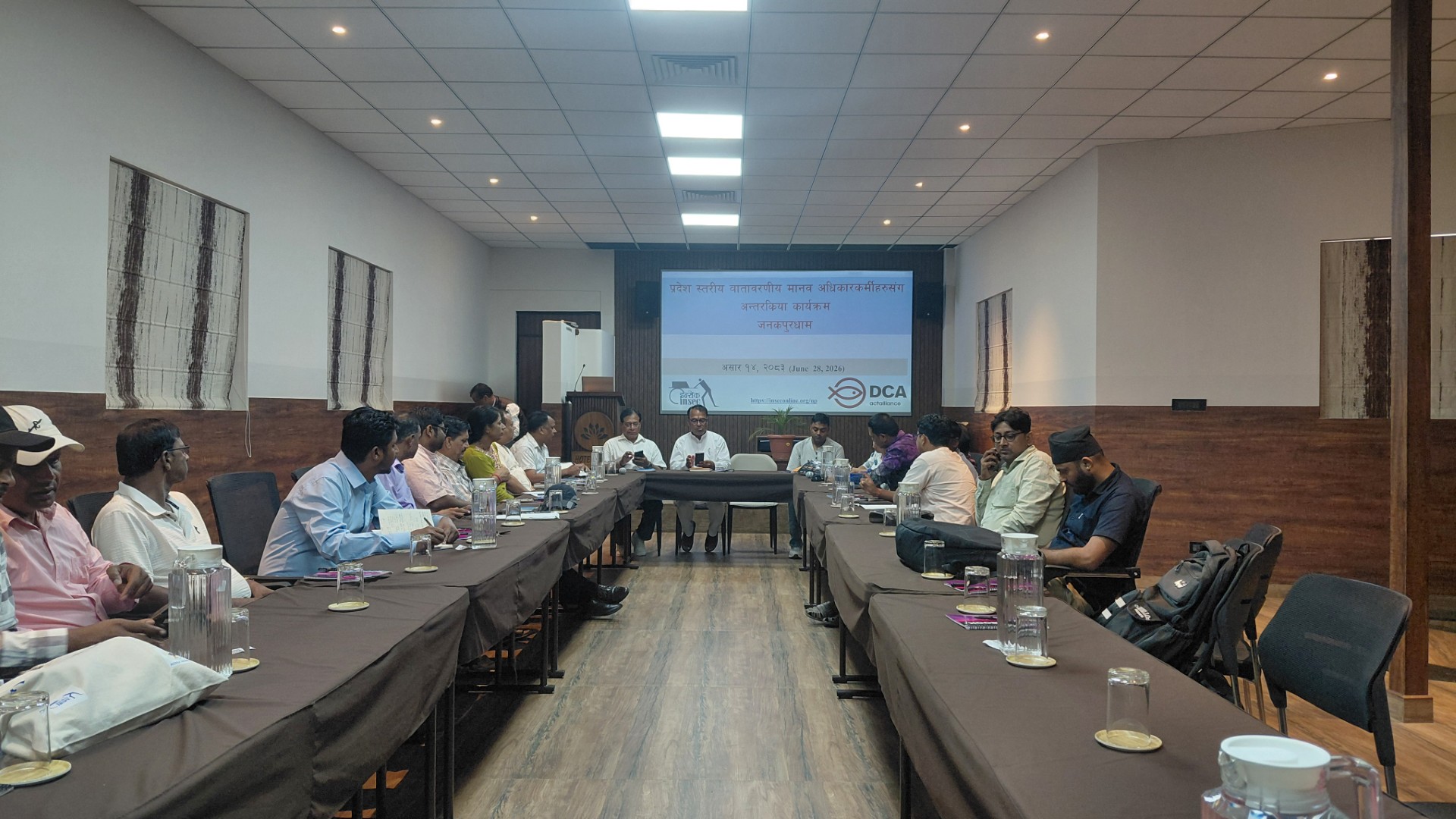
Deepu Thakur, President of the Earth Clean Green Foundation and a member of the Provincial Environmental Human Rights Defenders Network, stated that although various campaigns have been launched to protect the environment, waste management has yet to become effective. He stressed that the state should adopt clear policies, allocate adequate budgets, and ensure effective implementation to achieve a long-term solution.
Dhiraj Sah, President of the Provincial Environmental Human Rights Defenders Network, stated that a large number of trees are being cut down in the name of expanding roads, buildings, and other infrastructure during development projects. He emphasized the need to ensure mandatory tree plantation and effective conservation measures as compensation for such loss. He added that the provincial government should adopt policies that maintain a balance between development and environmental conservation and implement the concept of green development in practice.

Social worker and engineer Ratneshwar Lal Karn stated that environmental protection is directly linked to human rights and emphasized that the conservation of the Chure region should be made a national priority. He said that access to safe drinking water is a fundamental right of every citizen and stressed the need to protect water sources and control pollution. He also noted that the excessive and unbalanced use of chemical fertilizers in agriculture has negative impacts on soil, water, and human health, and emphasized the importance of their safe and balanced use. Highlighting the need to address the risks posed by climate change and environmental disasters, he called on the government to establish an environmental emergency fund and stressed that all efforts to protect the environment should be advanced as an integral part of human rights.

Environmental expert Ajit Srivastava facilitated a session on the impacts of climate change on the environment and the role of environmental human rights defenders in environmental protection. He stated that climate change has led to rising global temperatures, irregular rainfall, droughts, floods, and an increasing number of natural disasters worldwide. He noted that excessive greenhouse gas emissions are the primary cause of global warming and the rise in the Earth’s average temperature. He emphasized that environmental impact assessments should be effectively implemented before the commencement of development projects, as this would help mitigate potential negative impacts on the environment. He further stated that building sustainable cities requires the promotion of green infrastructure, clean energy, effective waste management, the protection of open spaces, and the expansion of greenery to reduce the impacts of climate change.
INSEC Madhesh Province Coordinator Raju Paswan stated that the provincial government should prioritize environmental rights as an integral part of human rights, from policy formulation to implementation. He emphasized that collaboration among the government, civil society, environmental human rights defenders, and local communities is essential to address the challenges of climate change. He also stressed the need for joint efforts by all stakeholders to raise public awareness of environmental rights and develop effective environmental policies.

Environmental activist Dev Narayan Mandal stated that ensuring a clean, safe, and sustainable environment is one of the state’s primary responsibilities. He also emphasized that all stakeholders should play an equally active role in protecting environmental rights.
The program was attended by National Human Rights Commission Madhesh Province Office Human Rights Officer Kiran Ghimire; President of the Madhesh Province Human Rights Defenders Network and advocate Raj Kumar Mahaseth; former Acting Chairperson of the Media Council and President of the Nepal Dalit Journalists Association, Madhesh Province, Kailash Das; Secretary of the Chure Conservation and Tourism Promotion Foundation, Mahottari, Ajay Sah; environmental human rights defender Sunil Yadav; members of the Environmental Human Rights Defenders Network Jamuna Bhujel, Binod Mahara, Amit Mishra, Balram Sah, and Purushottam Yadav; President of MidOne Dipika Lama; Naya Patrika Mahottari correspondent Ranjan Bhandari; Dhanusha Coordinator of Aafanta Nepal Diwani Ghimire; Sirish Online journalist Babu Prem Yadubansi; INSEC representatives from all eight districts of Madhesh Province; as well as representatives from civil society, the media, and security agencies.