

Judge Basanta Joshi of the Surkhet District Court has emphasized the need to expand paid legal aid and pro bono (free) legal services to the grassroots level to ensure easy access to justice for victims and marginalized communities.
Speaking at an interaction program on victims’ access to justice organized by INSEC Karnali Province Office and CCR Karnali Province in Surkhet on June 20, Judge Joshi stated that providing legal assistance to economically disadvantaged individuals, victims
of violence and discrimination, and citizens who lack knowledge of legal procedures is a shared responsibility of the state and concerned stakeholders.
He stressed that the legal aid system should be made more effective and that access to justice services must be extended to communities at the local level, including remote villages. Judge Joshi noted that many people are still unable to seek legal remedies due to financial constraints, lack of awareness, and geographical barriers, underscoring the importance of strengthening legal support mechanisms for vulnerable groups.
He further emphasized that ensuring meaningful access to justice requires coordinated efforts among government agencies, legal professionals, civil society organizations, and human rights defenders so that no individual is deprived of their right to legal protection and fair treatment under the law.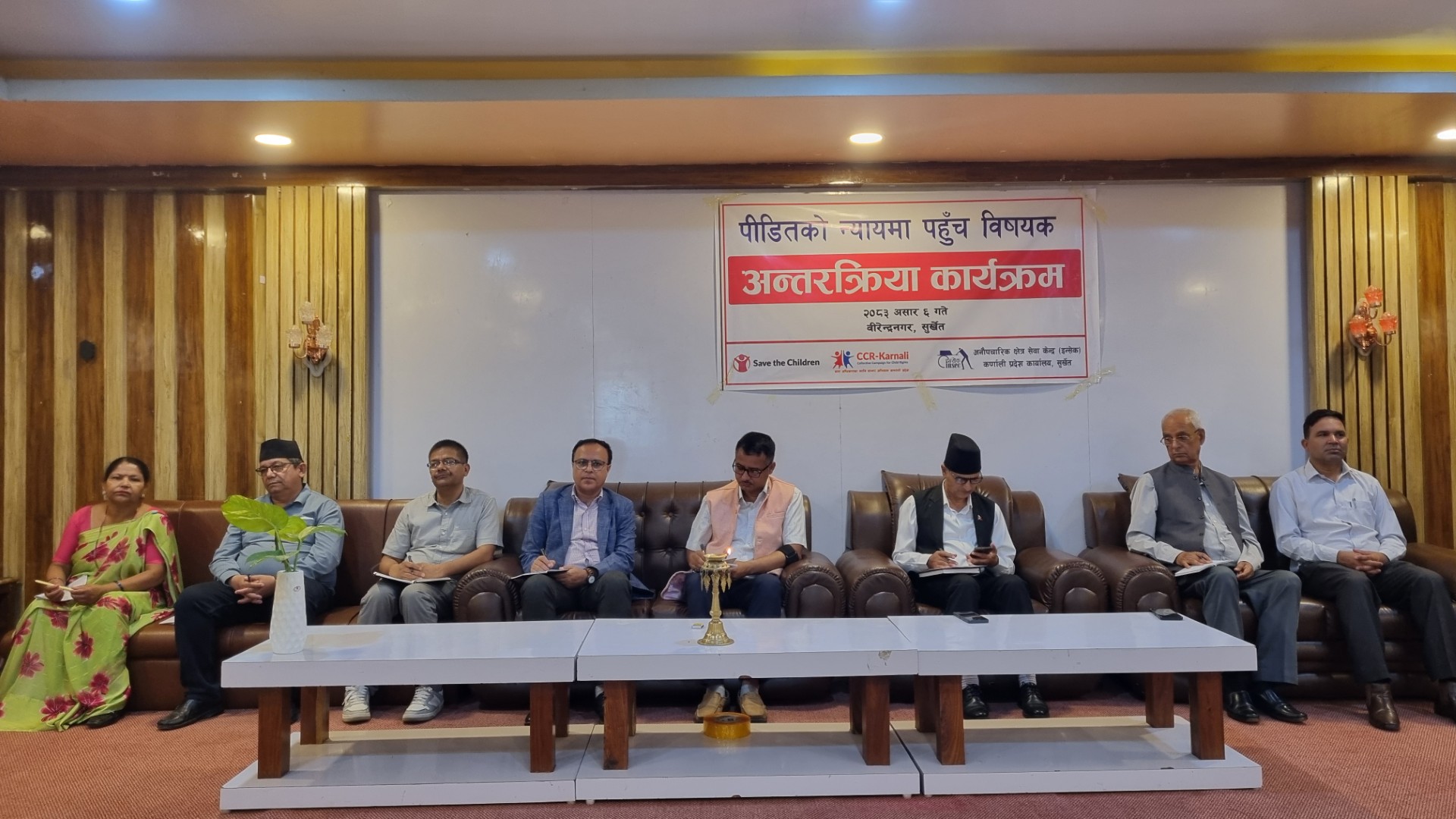 At the program, Matrika Prasad Khanal, a member of the Nepal Bar Council, stated that paid and free legal aid services have been playing an important role in helping economically disadvantaged citizens access justice. He emphasized that stronger coordination among legal professionals, courts, and relevant institutions is necessary to make legal aid services more effective and accessible.
Hari Gopal Gyawali, Registrar of the Surkhet District Court, highlighted the need to enhance information dissemination and facilitation regarding legal aid services for court users. He noted that many citizens have benefited from judicial processes through the support of court-appointed legal aid lawyers.
Gyawali also stressed that individuals should not be deprived of free legal services due to the absence of a recommendation letter from their ward office. He expressed his commitment to facilitating such services by providing the necessary recommendations himself, ensuring that eligible individuals are not denied access to legal assistance because of procedural barriers.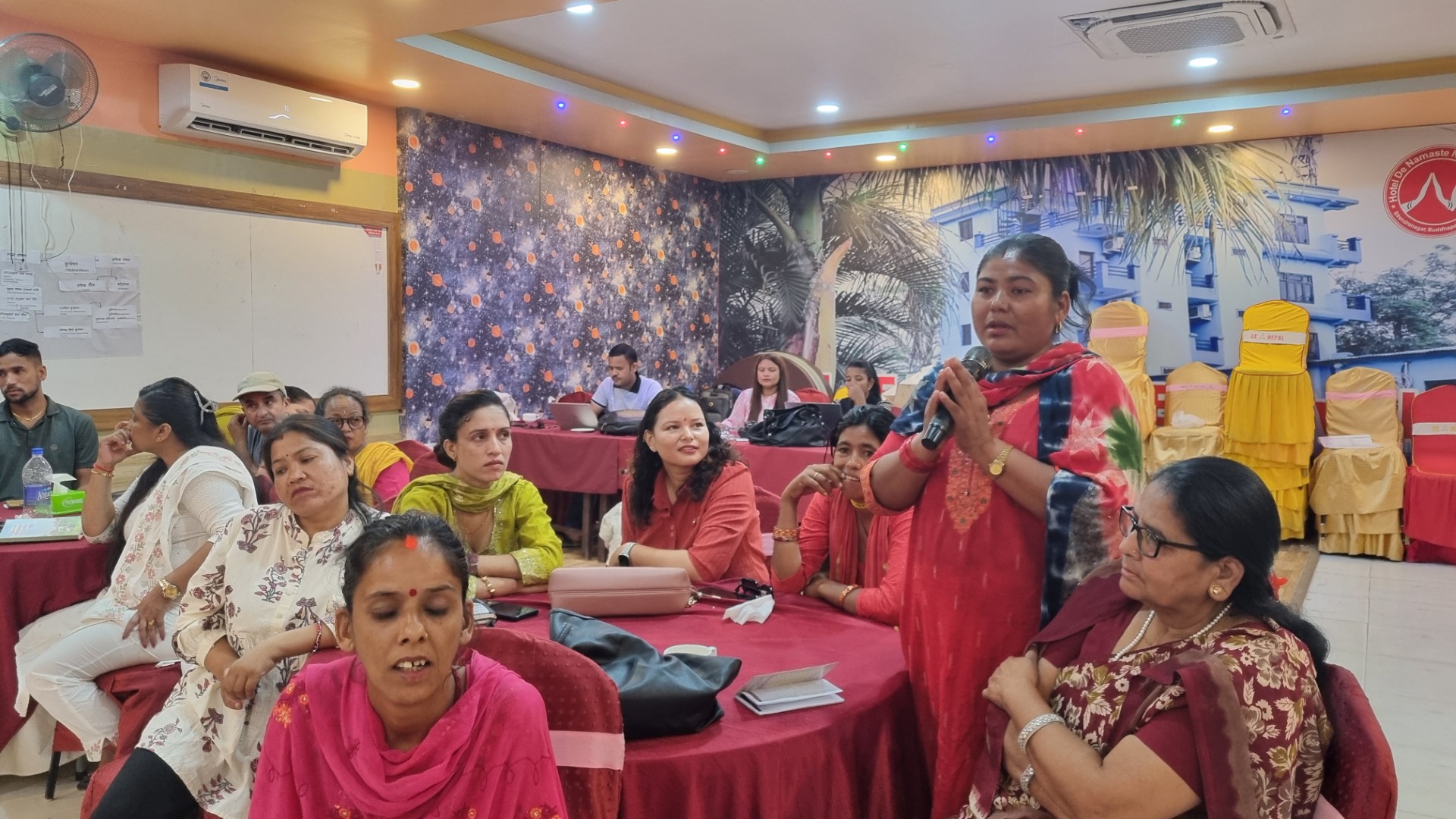 High Court Bar Association Surkhet President Himalaya Jung Shahi stated that access to justice is a fundamental right of every citizen and emphasized the need to further expand the scope of pro bono legal services. He expressed the view that legal professionals should broaden the provision of free legal aid as part of their social responsibility.
Bijayalaxmi Aryal, a court-appointed lawyer at the High Court, highlighted the serious challenges arising from the absence of a juvenile correction home in Karnali Province. She noted that children from economically disadvantaged backgrounds are often involved in cases carrying fines and, when unable to pay those fines, are compelled to serve prison sentences instead.
Sabita Shah, a court-appointed lawyer at the Surkhet District Court, said that although legal aid services are intended to support women, children, Dalits, persons with disabilities, and survivors of violence in accessing justice, many members of these groups remain beyond the reach of such services. She stressed the need to raise public awareness to ensure that legal aid reaches marginalized communities.
“People are largely unaware that we are here to provide free legal services on behalf of the state,” Shah said. “Sometimes, even financially well-off individuals come with recommendations from ward offices. Once they have such recommendations, we are obliged to provide the service.”
Advocate Ganesh Wali emphasized that legal aid services should be expanded to the local level to make the legal assistance system more effective. Likewise, Nisa Paudel, a representative of Aawaj Institution, stressed the importance of institutional collaboration to ensure legal assistance for survivors of gender-based violence and other forms of social discrimination.
Speaking about the objectives of the program, Tikaram Acharya, President of CCR Karnali Province, stated that stronger cooperation among civil society organizations, legal professionals, and government agencies is necessary to extend legal services to communities with limited access to justice.
Narayan Subedi, Coordinator of INSEC Karnali Province Office, emphasized that legal aid services play a crucial role in protecting human rights and ensuring access to justice for all citizens. He noted that strengthening legal assistance mechanisms is essential for safeguarding the rights of vulnerable and marginalized groups.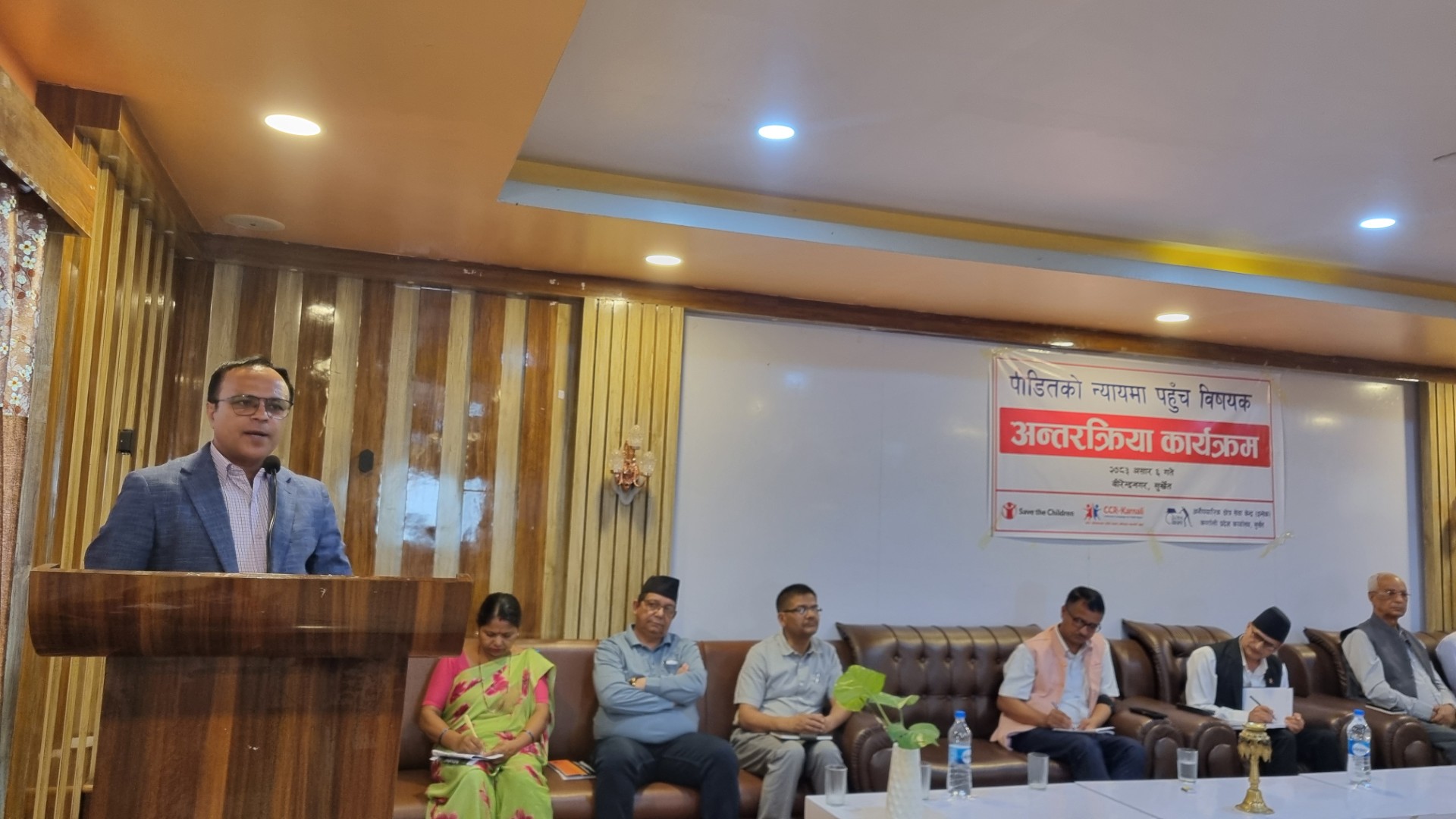 Speaking on behalf of victims, Padmakanya Chaulagain shared her experience that legal aid services provided by organizations such as INSEC had been a significant source of support in her pursuit of justice. She said that while the services have been effective, greater efforts are needed to ensure that more citizens are informed about and able to access them. Victims of violence also expressed concerns that many survivors are unable to obtain justice due to a lack of legal awareness.
Menaka Chaulagain from Jumla recounted that, as a person with a congenital disability, she had faced neglect and discrimination from both her family and relatives. She said that her lack of knowledge about available legal assistance initially forced her to struggle and seek help from multiple places before receiving the support she needed.
Participants in the program concluded that paid and pro bono legal services should be made more effective, accessible, and people-centered so that they can reach communities that are still deprived of justice. They particularly emphasized the need to expand and strengthen legal aid services for rural populations, women, Dalits, persons with disabilities, senior citizens, and survivors of violence. They also stressed that increasing legal awareness and improving access to support mechanisms are essential for ensuring equal access to justice for all.