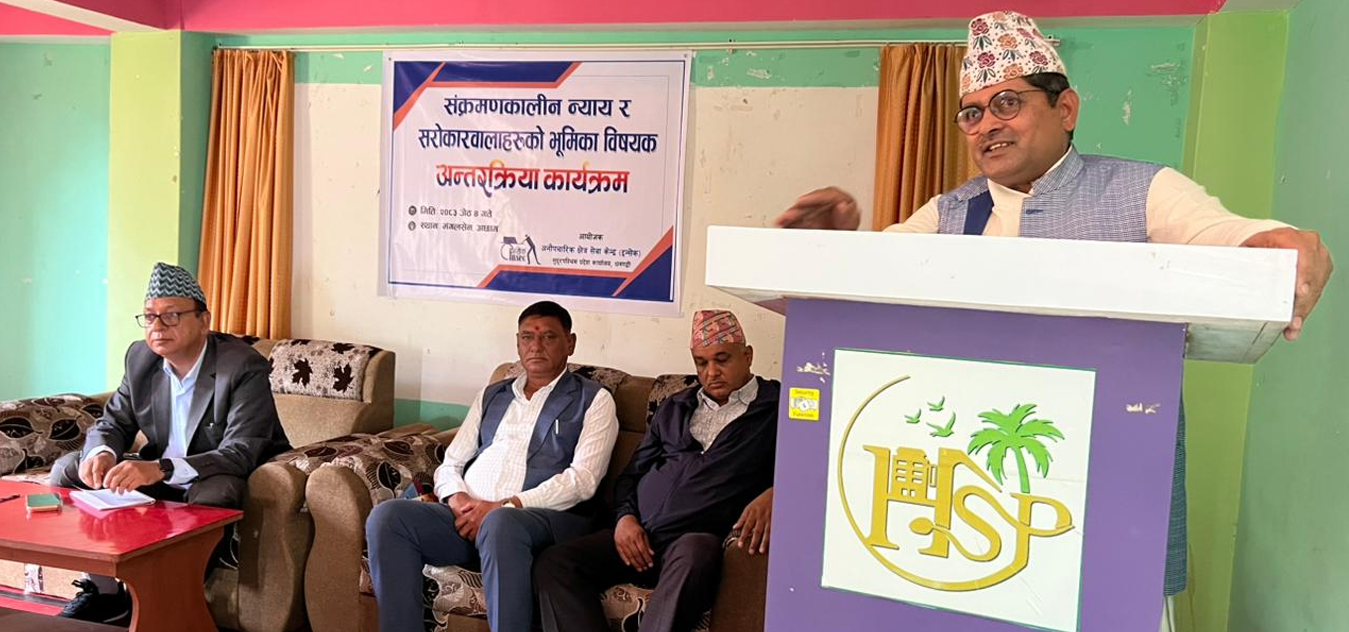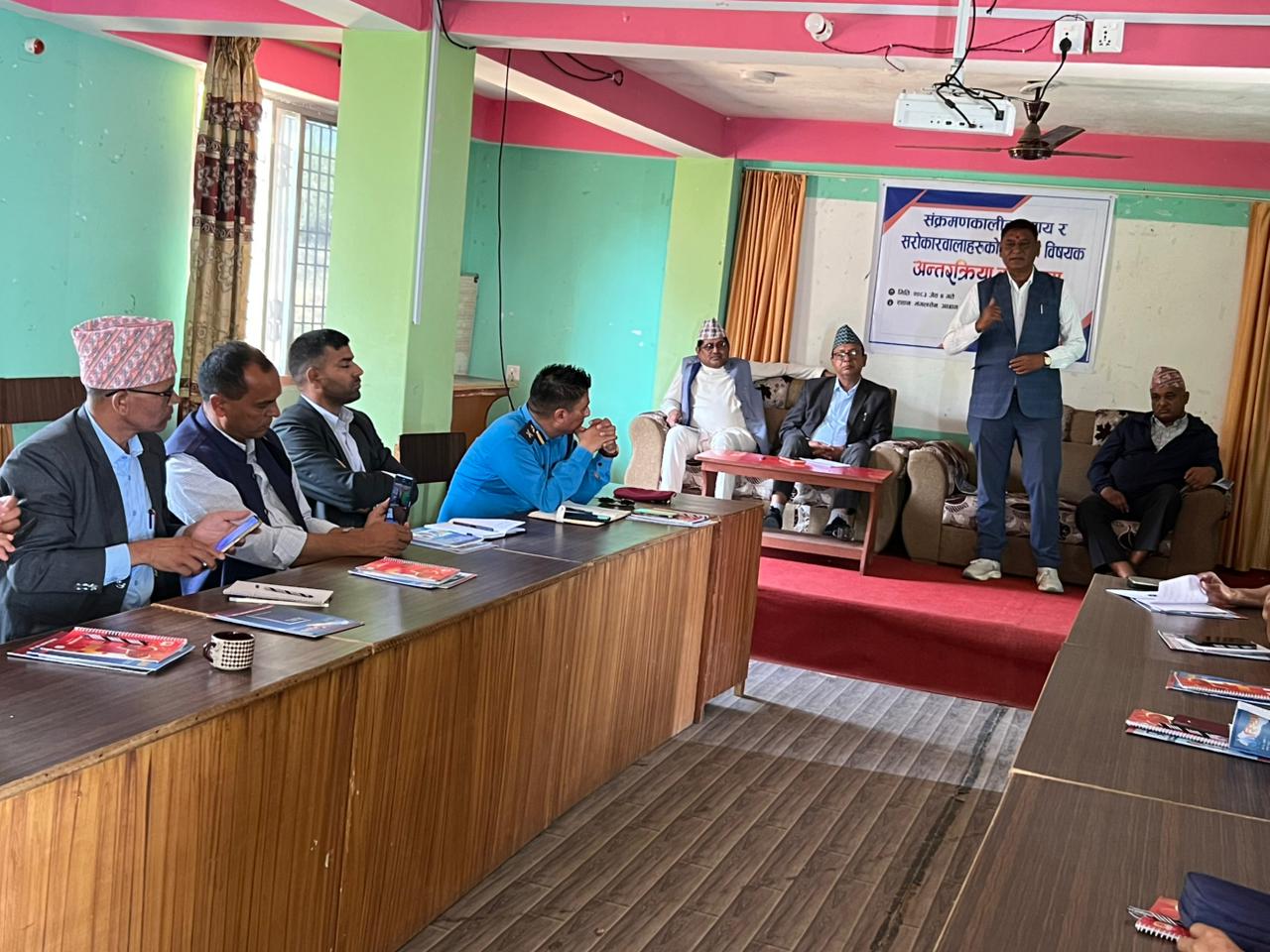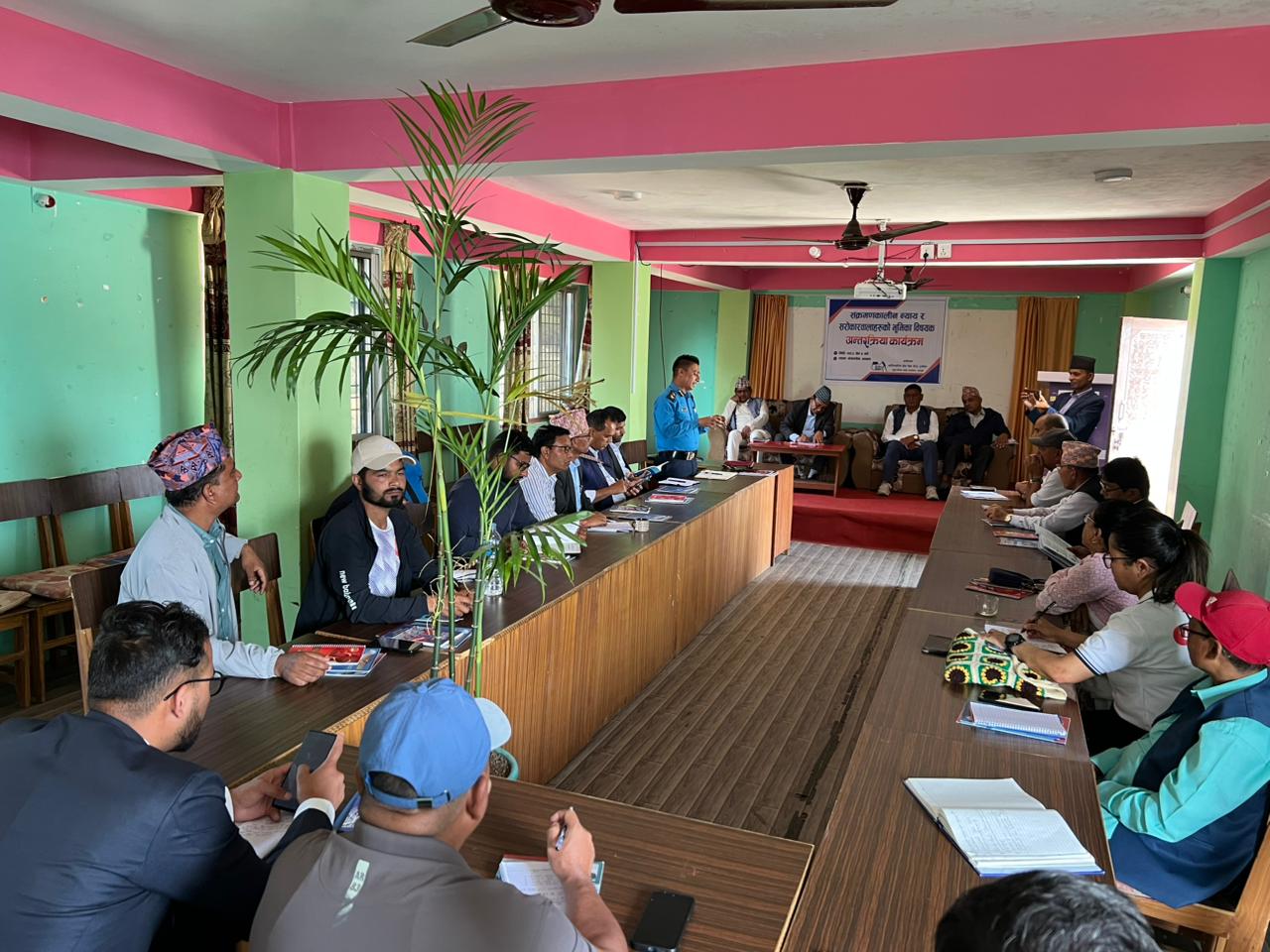

An interaction program on transitional justice and the role of stakeholders, organized by the INSEC Sudurpaschim Province Office, Dhangadhi, was held on May 18, 2026, in the district headquarters of Mangalsen.
INSEC Sudurpaschim Province Coordinator Khadka Raj Joshi stated that due to the unresolved status of transitional justice, the judicial rights of conflict victims have remained overshadowed. He further said that the interaction program was organized with district-level stakeholders to make transitional justice more effective.
He also noted that although nearly 20 years have passed since the formal end of the armed conflict in Nepal, families of conflict victims are still unable to obtain justice.
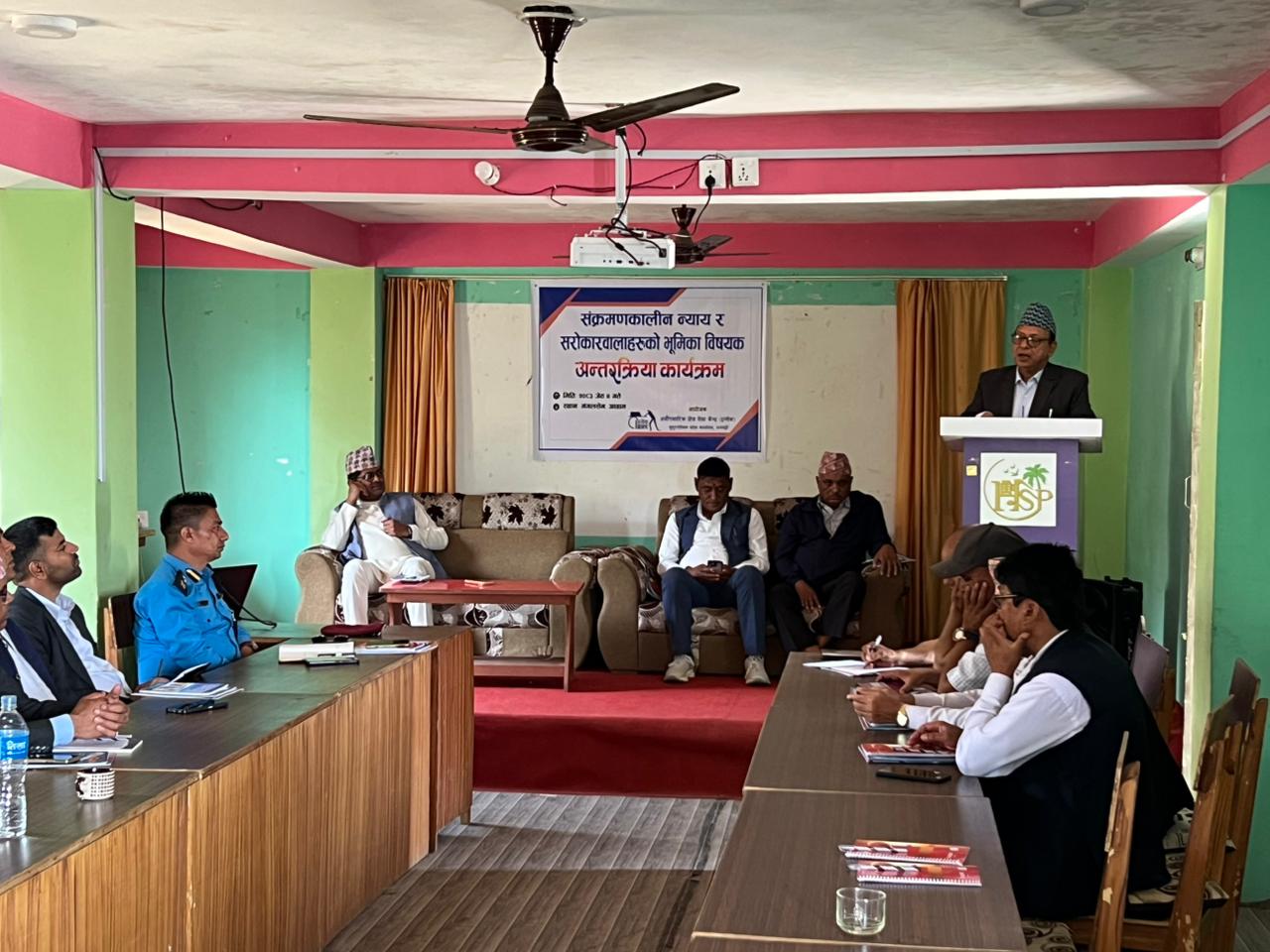 He also stated that difficulties in working arise due to inconsistencies in the data of conflict victims, lack of legal clarity, and the absence of concrete state efforts for the resettlement of those displaced during the conflict. He further noted that although Achham is one of the most conflict-affected districts in Sudurpaschim Province, the number of cases related to conflict-era issues registered there remains negligible. He emphasized that in the coming days, local governments must take greater responsibility in ensuring justice for victims.