

Ganga Ram Sunar, Chief of the District Coordination Committee, Surkhet, stated that ensuring justice for conflict victims and bringing the transitional justice process to a conclusion is the State’s historic responsibility. Speaking at an intergenerational dialogue on “Nepal’s Transitional Justice and the Current Situation,” organized by INSEC Karnali Province Office and the Human Rights for Single Women Group in Birendranagar on June 18, he emphasized that the transitional justice process must be concluded in a manner that guarantees truth, justice, reparation, and respect for victims.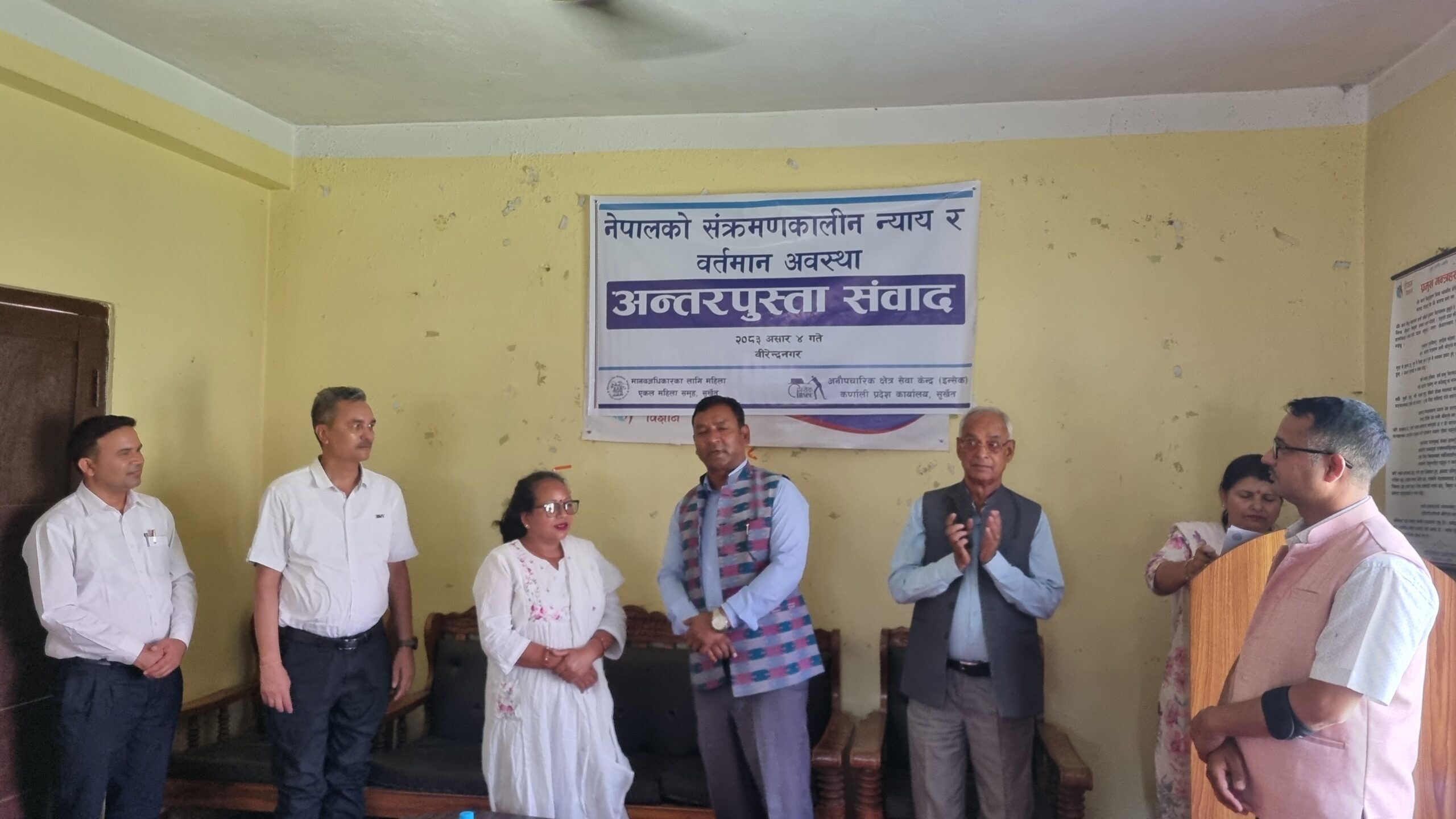 He noted that citizens who became victims during the armed conflict have been waiting for justice for a long time and stressed that the State must fulfill its responsibility through victim-friendly laws and their effective implementation. “For sustainable peace and social reconciliation, the revelation of truth, respect for victims, and the assurance of justice are indispensable,” he said.
Speaking at the program, Pitambar Dhakal, Coordinator of the Human Rights Defenders Network, Karnali Province, stated that the transitional justice process must rise above political interests and remain victim-centered. Emphasizing the need to strengthen truth-seeking and judicial processes in order to gain the trust of victim communities, he also noted that the younger generation should be informed about incidents that occurred during the conflict period. He expressed concern that the government has not given adequate priority to the issues of conflict victims.
Bibash Basnet, Central Vice President of the Nepal Bar Association, stated that the transitional justice process should move forward in accordance with international human rights standards. He emphasized the need to further strengthen legal frameworks and institutional mechanisms to ensure victims’ right to justice.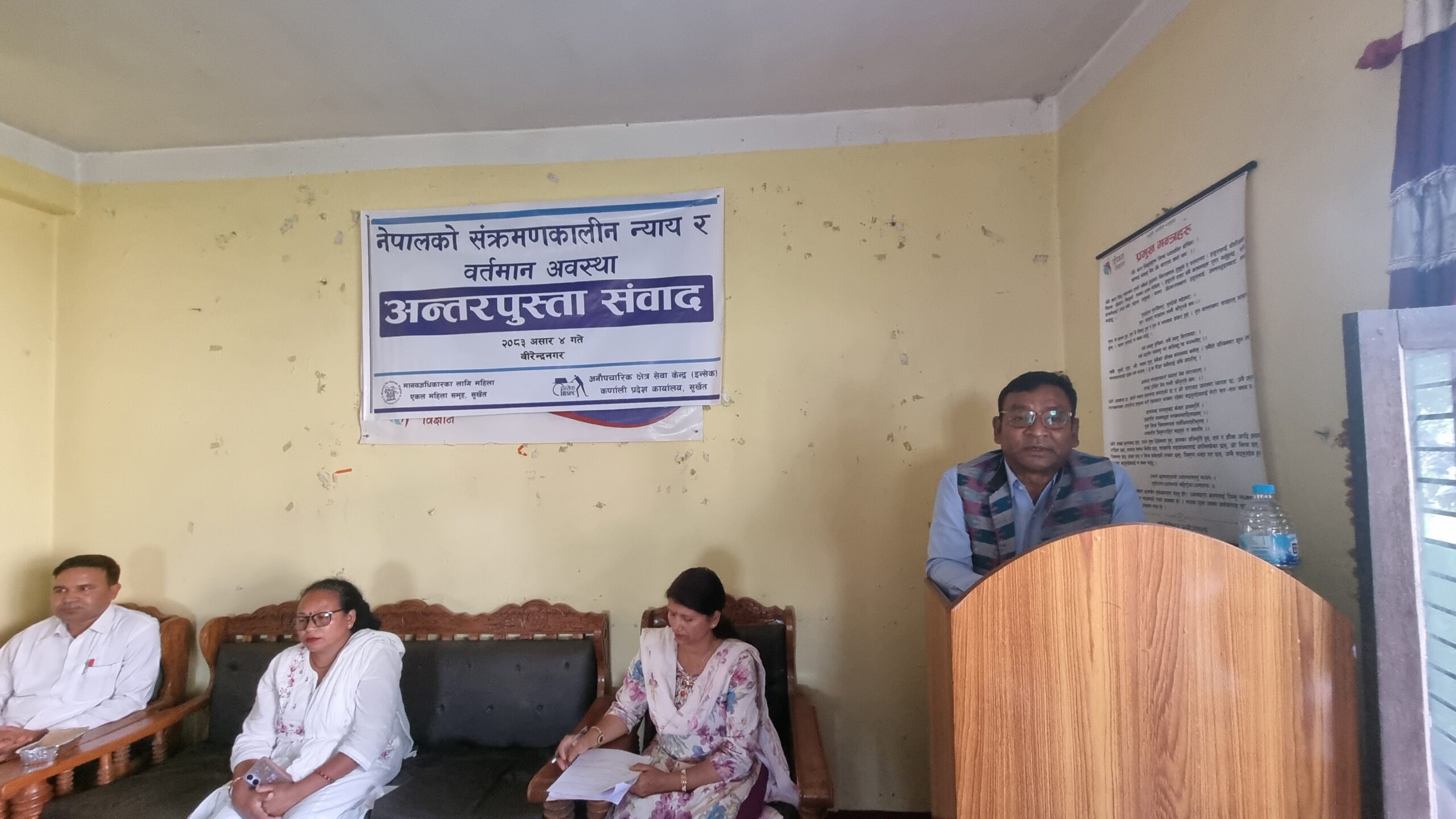 Nagendra Upadhyaya, Central Committee Member of the Nepal Journalists Association, stated that the media has an important role to play in the transitional justice process. He emphasized that journalism must continue to provide fact-based information and bring the voices of victims into public discourse. According to him, informing the younger generation about conflict-related incidents can create an impact that reaches from the streets to Parliament.
Narayan Subedi, Coordinator of INSEC Karnali Province Office, presented a working paper on the current status of transitional justice, recent legal developments, and the challenges that remain. He stated that the process needs to be made more effective in line with the expectations of conflict victims.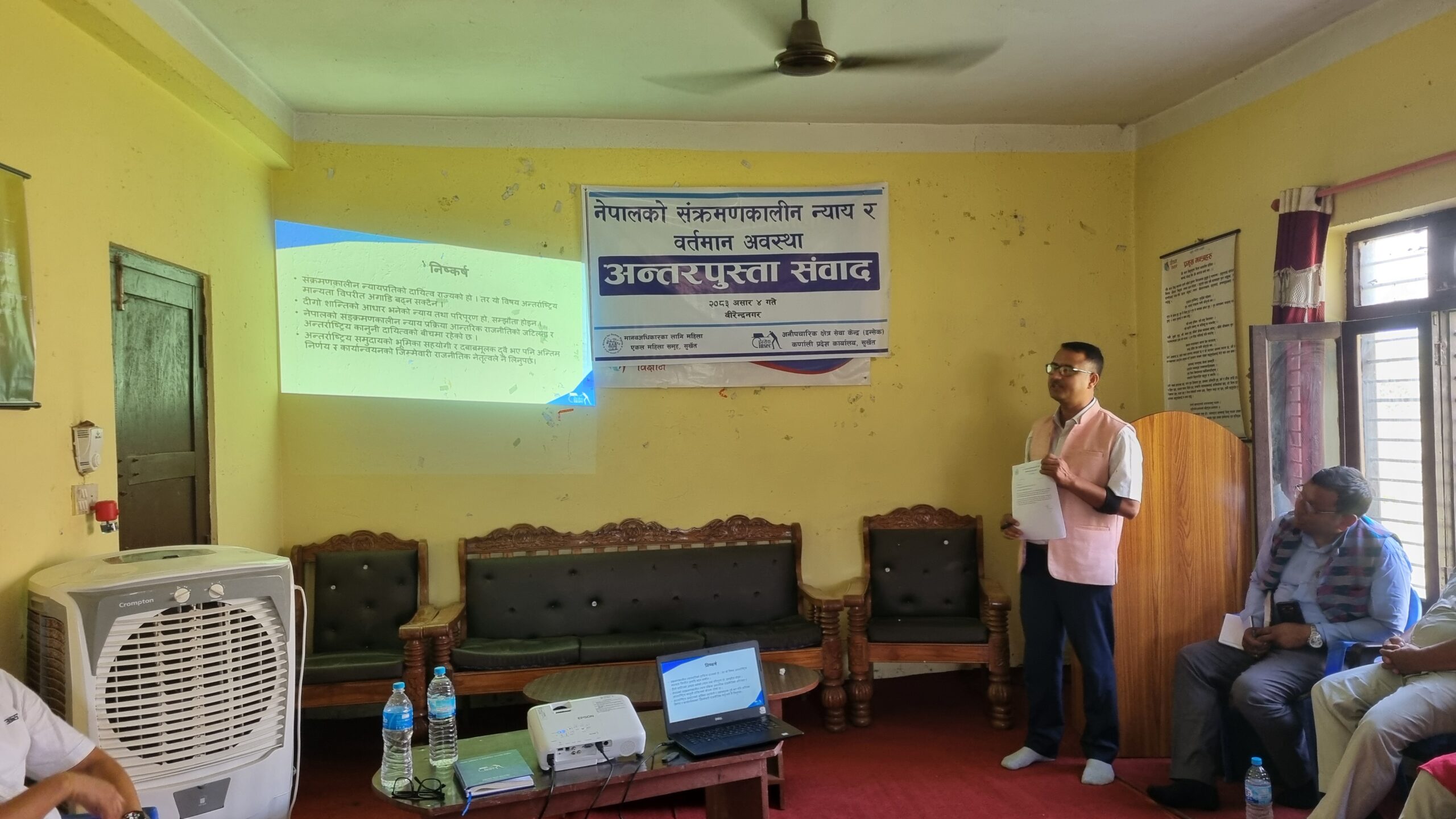 Rajendra Neupane, Information Officer at the Karnali Province Office of the National Human Rights Commission, informed participants that the Commission has been continuously monitoring and advocating for the protection of the rights of conflict victims and the promotion of human rights.
Ramkumari Thapa, Central Committee Member of the Human Rights for Single Women Group, stated that the suffering of women, single women, and family members affected by the conflict has yet to be adequately addressed. She urged the concerned authorities to ensure justice and reparations for those affected.
Prakash Saru, President of the NGO Federation of Nepal, emphasized that the successful implementation of transitional justice is essential for completing the peace process and strengthening democracy.
Ram Lal Acharya, Chairperson of the Nepal Red Cross Society, noted that the effects of the conflict continue to persist in society and stressed the need for an approach based on reconciliation and humanity.
Mamata Nagal, President of the Human Rights for Single Women Group, Surkhet, stated that dialogue programs of this nature are effective in bringing the voices of conflict victims to the policy-making level.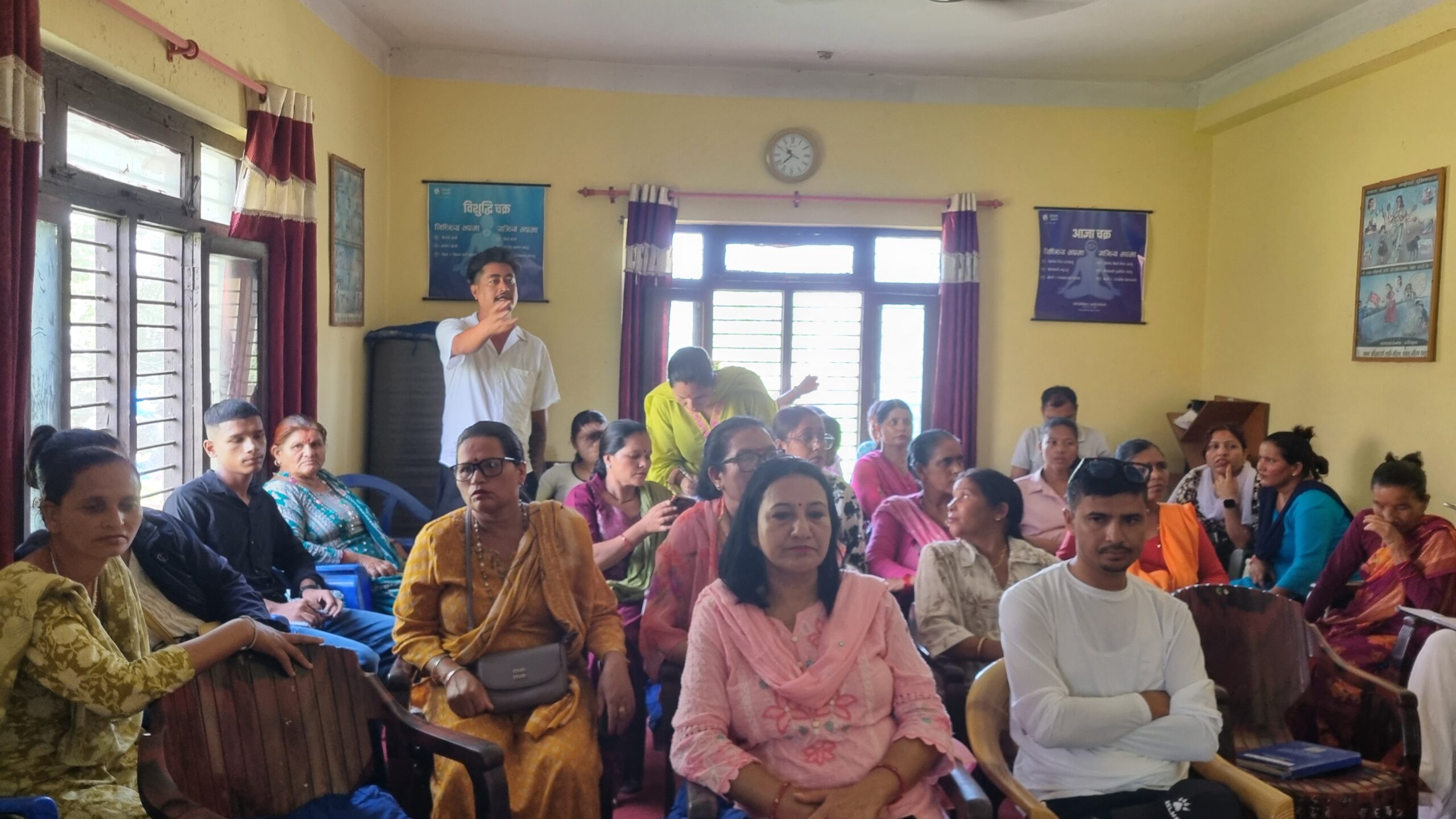 During the program, conflict victims Purna Prasad Paudel, Rishi Giri, and Bijaysara Shahi shared their experiences of waiting for justice for many years. They urged the State to ensure victims’ right to know the truth about conflict-era incidents, hold those responsible accountable, and provide appropriate reparations. They also stated that the younger generation’s lack of knowledge about past conflict-related incidents reflects the government’s failure to prioritize the concerns of conflict victims.
Participants in the program emphasized that the transitional justice process should be victim-centered, transparent, and credible, and should be based on truth, justice, reparations, and reconciliation.