
Participants of the interaction program held in Nepalgunj emphasized the need for unity and collaboration to ensure the safety and protection of human rights defenders. The program, held on December 9, 2025 in Nepalgunj to mark International Human Rights Defenders Day under the slogan “Human Rights are the Inalienable Foundation for All of Us,” was chaired by Chitrabahadur Shahi, President of the Nepalgunj High Bar Association, with Dwarka Adhikari, Chief of the Human Rights Commission Office in Nepalgunj, as the chief guest.
The interaction on the risks, challenges, and security sensitivities faced by human rights defenders in changing circumstances was organized with the participation of representatives from INSEC, Advocacy Forum, High Bar Association, Public Interest Lawyers’ Group Nepalgunj, Federation of Journalists, NGO Federation, Hope Training and Resource Center Nepal, Human Rights Network Nepalgunj, Human Rights Alliance, CIVIL, IHRC, Madhesh Right Home, SAC Nepal, Purntara Foundation, Fatima Foundation, and the Nationwide Network of Conflict-Affected Women, among others.
INSEC Lumbini Province Coordinator Bhola Mahat stated that human rights defenders face challenges such as corruption, torture, and pressure while amplifying the voices of victims. He highlighted that even while observing the 16-Day Campaign against Women Violence and Human Rights Day on 9 December, the question of how sensitive the state and local authorities are toward human rights defenders remains equally important. He stressed the need for clear policies to prevent the recurrence of risks faced by police, journalists, and rights activists during the recent Gen Z movement. He also informed that, so far, 101 human rights defenders have been victimized, with journalists constituting the highest number at 47, followed by teachers.
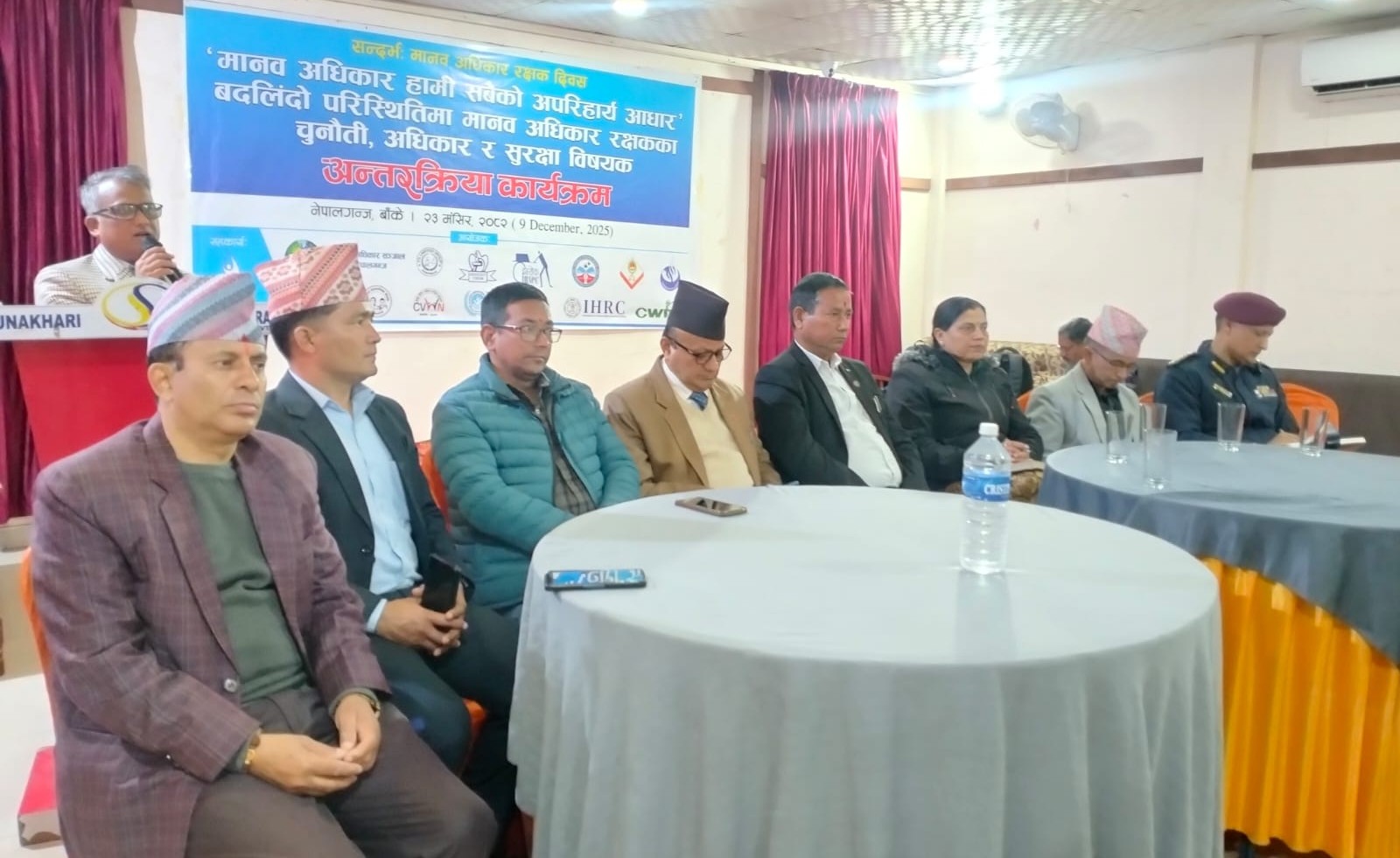 Chitrabahadur Shahi, President of the Nepalgunj High Bar Association, emphasized that one can advocate for the rights of others only when personally secure, and the guarantee of protection for human rights defenders depends on strengthening the state mechanisms. Therefore, he stressed that leaders must fortify political structures, and rights activists should move forward in a united manner.
Basant Gautam, Coordinator of Advocacy Forum Lumbini, expressed concern over the increasingly unsafe conditions for human rights defenders. He noted that it is a serious matter that the very defenders who contribute to assisting victims and ensuring justice, through the collection, monitoring, and publication of human rights information, awareness raising, discipline, and advocacy to hold state bodies accountable, are themselves at risk. Gautam highlighted that despite ongoing efforts to establish good governance and end impunity in the state, the security of rights activists has become challenging. He recommended that rights defenders move forward collectively and that relevant authorities take the issue seriously to mitigate this situation.
Dwarka Adhikari, Chief of the National Human Rights Commission Office in Nepalgunj, expressed concern over the insecurity faced by human rights defenders while raising their voices. He emphasized the need for coordination, cooperation, and unified action to ensure the rights and protection of defenders. He further stated that both state and non-state actors must take the matter seriously, with the shared objective of protecting and promoting human rights.
Prahlad Bahadur Karki, former President of the Nepal Bar Association, noted that the law never intends to harm human rights defenders or anyone else and that society must learn what is appropriate and inappropriate to do. He also suggested that honoring someone who has become wealthy overnight promotes corruption, and society has the responsibility to investigate and question such individuals if they suddenly acquire wealth.
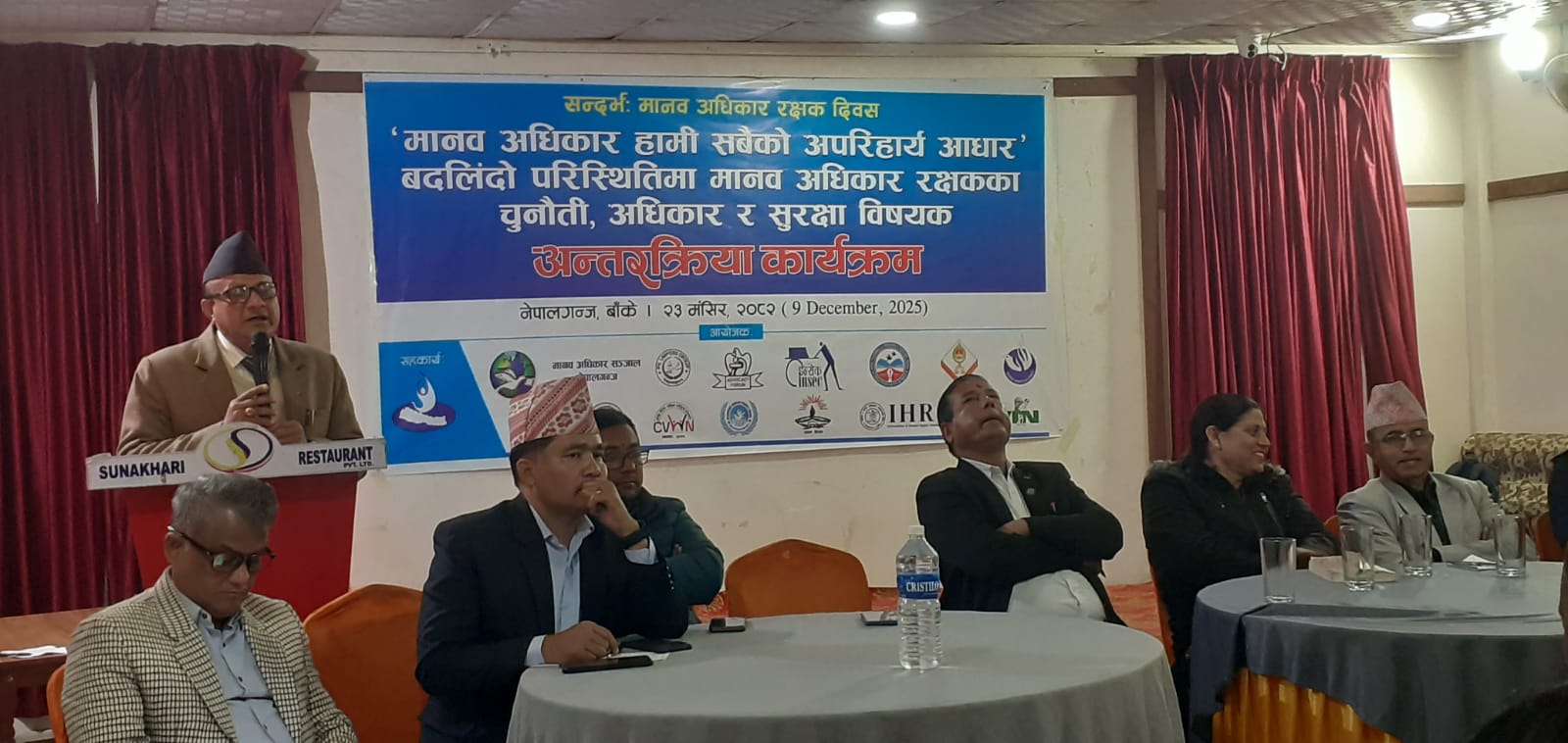 Mahesh Kumar Gurung, Acting Chief District Officer of the District Administration Office, Banke, stated that raising one’s voice whenever any individual’s rights are violated in the implementation of the fundamental rights and provisions enshrined in the Constitution of Nepal 2015 is the duty of all rights activists. He emphasised the need to remain continuously active to ensure the lives, rights, and security of human rights defenders and expressed his commitment to this cause.
Angur GC, Chief Superintendent of Police at the District Police Office, Banke, expressed the police’s commitment to remain continuously active in ensuring victims’ rights, delivering justice, and arresting and punishing offenders according to the law.
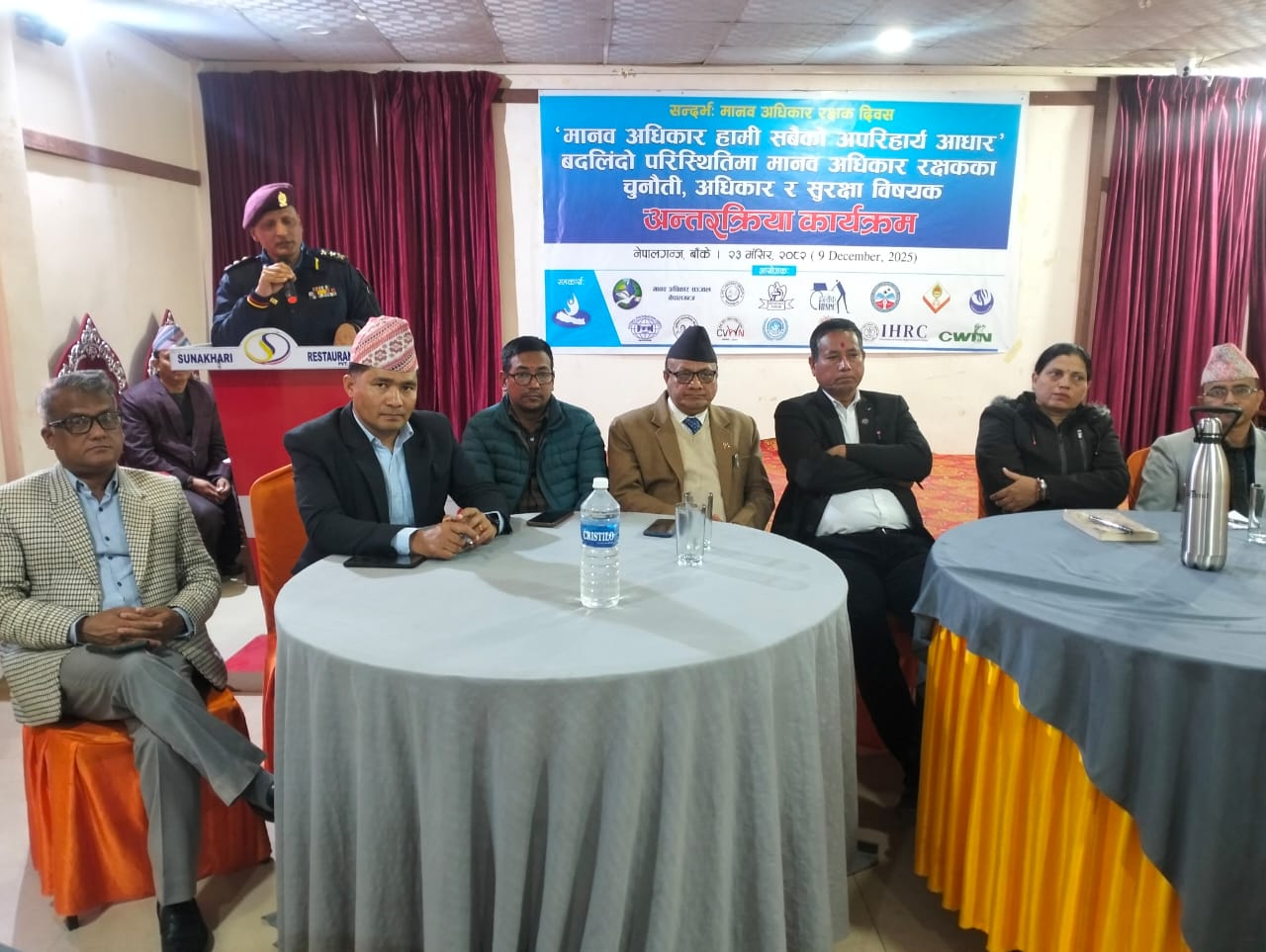 Shukrreshi Chaulagain, President of the Federation of Journalists, Lumbini Province, highlighted that journalists face increasing risks globally due to the aggressiveness of cyberattacks and political pressure. He expressed concern that challenges faced by human rights defenders and legal professionals have become more complex due to impunity.
Nabin Giri, President of the Federation of Journalists, Banke, emphasized that human rights defenders must continuously engage in self-review and self-assessment while noting the declining sensitivity in society. He stressed that impartiality, neutrality, integrity, and professional maturity are essential when working in the field of human rights. Highlighting the concerning situation in which defenders become personally insecure while advocating for others’ rights, Giri urged them to fulfill their responsibilities within ethical and value-based boundaries.
Social worker and human rights activist Krishna Shrestha stated that Human Rights Defenders Day provides an important opportunity to review past activities and improvements. He emphasized the need to prioritize the safety of human rights defenders, noting that Banke, as a hub of 22 districts, is recognized for its high risk of accidents.
Parina Chaudhary, Project Head of West Tara Nepal, pointed out that the rights of sexual and gender minority communities guaranteed by the Constitution have not been effectively ensured in practice. She added that insecurity increases when citizenship identification is unclear and suggested that journalists should coordinate carefully before editing news stories.
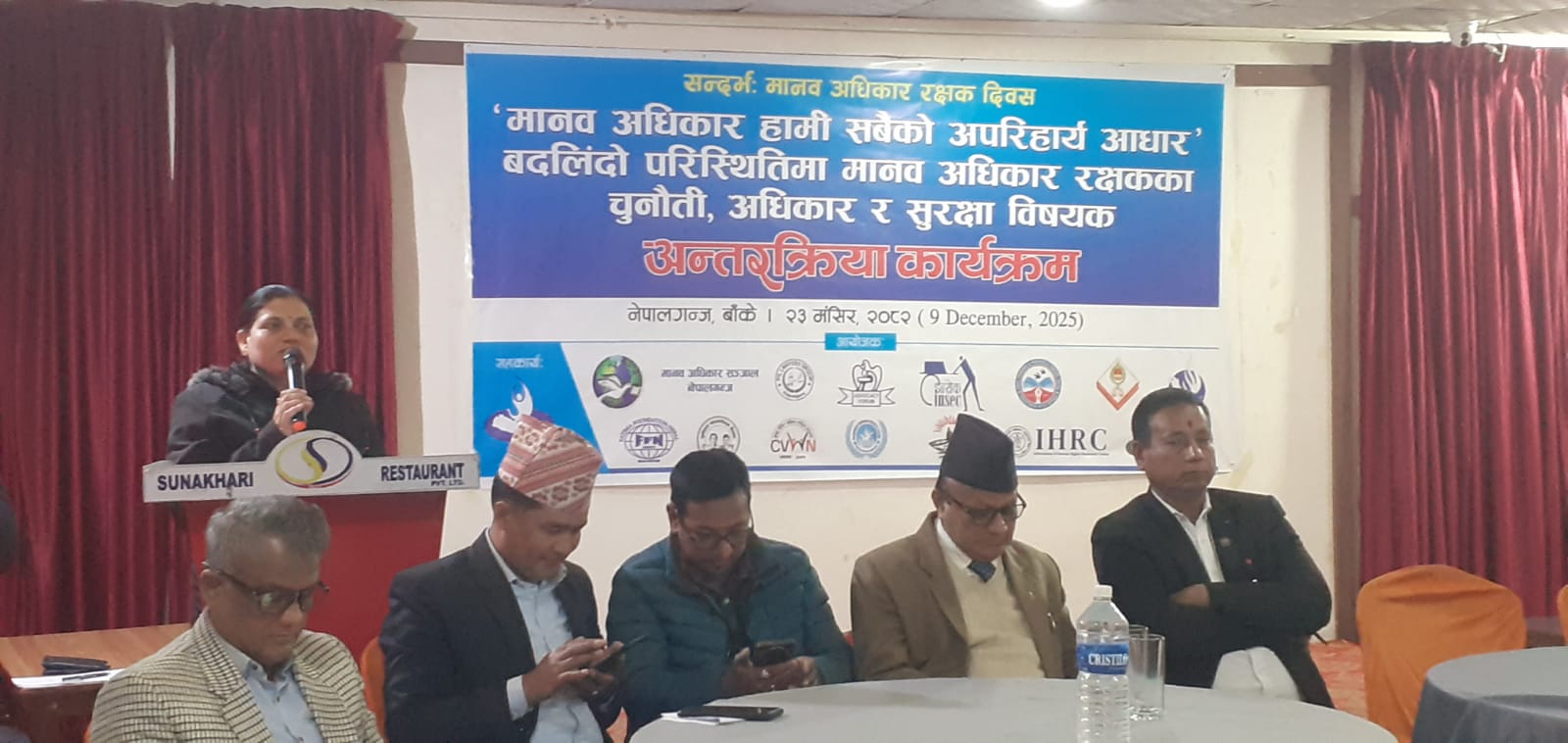 Nirmala Sunar, President of Fedo Nepal, highlighted that Dalit women rights activists work daily under risk and stressed the need for the state to formulate effective policies to ensure their safety.
Chandrakala Upreti, Secretary of the National Network of Conflict-Affected Women, recalled the tragic incident on December 9, 2003 when her husband, Upendra Upreti, was arrested and disappeared by the Nepalese Army, noting that the lack of truth determination continues to deepen the suffering of the victim’s family.
Binod Thapa of the Social Service Organisation Nepal pointed out that persons with disabilities face challenges from all sides due to the lack of equal opportunities.
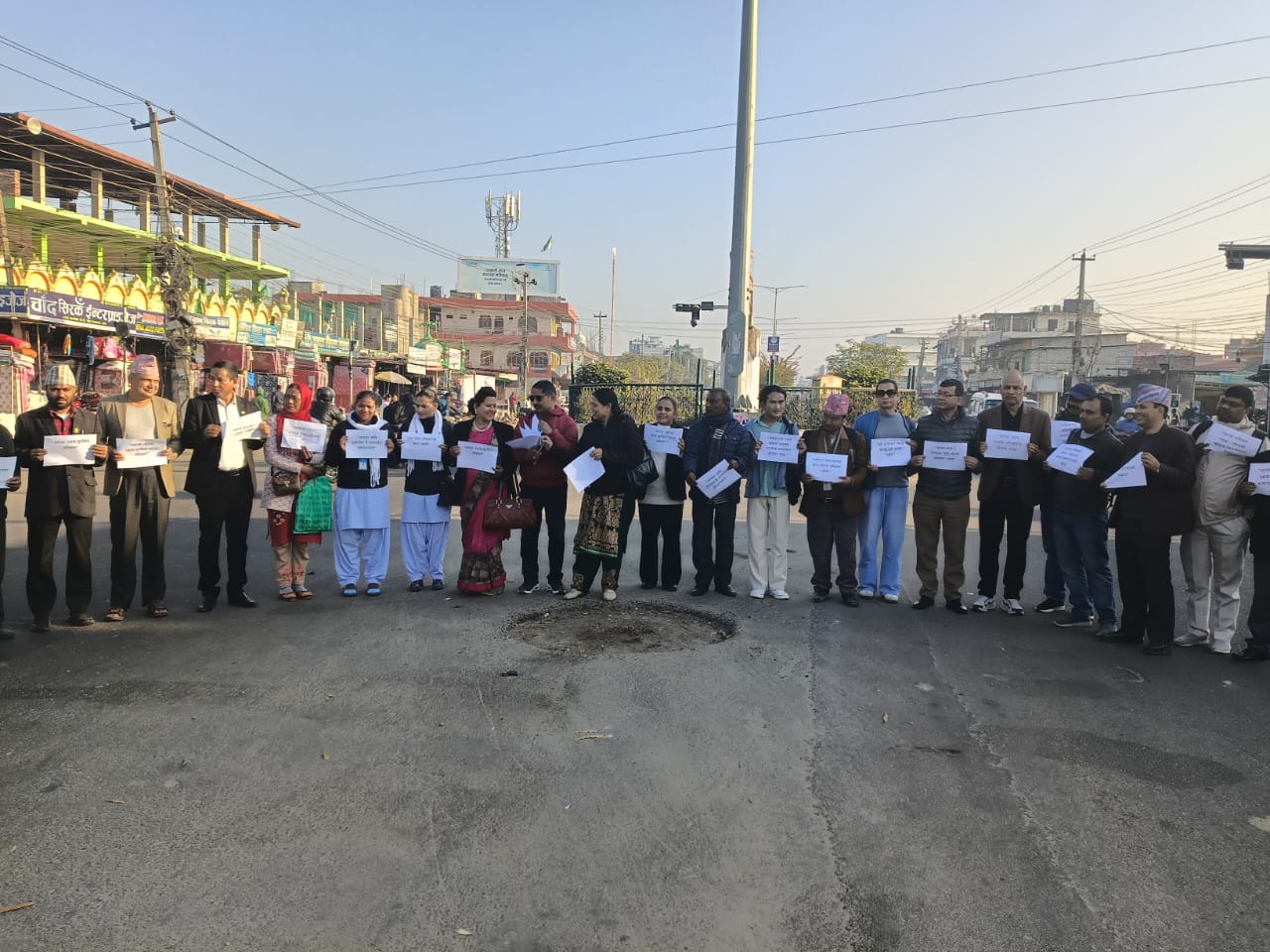
Before the interaction, rights activists silently stood at BP Chowk holding awareness-raising placards. The program saw the active participation of 59 human rights defenders.