

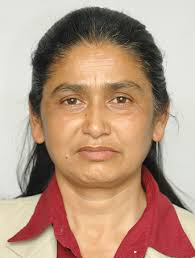
In Nepal, municipal elections were held for the first time on May 22, 1947, but women were not allowed to vote. Almost two months later, the Nepal Women’s Association was formed as a political organization. A delegation from this association approached Prime Minister Padma Shamsher Rana to demand voting rights, and they received a positive response. Six months later, the first constitution was promulgated, effective from April 13, 1948, which included a provision allowing all citizens aged 21 and above to vote, thereby granting voting rights to Nepali women. The practical exercise of this right, however, occurred during the second municipal elections in August 1953, where Sadhana Pradhan became Nepal’s first female elected representative.
From February 18, 1959, during the first general election, Dwarikadevi Thakurani became the first female member of parliament and later also served as a minister. However, unfortunately, from December 15, 1960, political parties were banned, the democratically elected government was dismissed, and parliament was dissolved.
During the Panchayat era, some women were also members of the National Panchayat and became ministers. Constitutionally, the 1990 Constitution mandated that at least five percent of candidates be women. After that, women’s participation and the raising of women’s issues in parliament gradually gained momentum. Following the 2006–2007 People’s Movement, with the reinstated parliament and the participation of the Communist Party of Nepal (Maoist), women’s representation in the interim legislature from January 2007 reached 17 percent. With the constitutional provision in the Constituent Assembly elections requiring each party to nominate at least one-third women candidates, women’s participation increased significantly. After the 1997 amendment making it mandatory to have at least one female ward member, the number of female representatives at the local level rose to around 40 percent. However, according to fundamental rights, the state has still not enacted laws ensuring proportional participation of women in all state bodies, and the practice of nominating women accordingly has not yet been fully implemented.
Background
According to Eastern philosophy, considered one of the oldest in the world, during the Vedic era, the governance of a republic (gan) involved selecting chiefs, kings, and nobles based on the area under administration. Chiefs were either appointed by the king or elected from among the members of the republic, while nobles were appointed by the chief or king. Settlements at that time, based on clans, were called “Vish”, and those who exercised political power were called “Vishapati.” Over time, moving into the medieval period, a monarchical system emerged where succession to power was determined by birth, and its general character was despotic.
The era of governance by elected representatives is believed to have begun in the 13th century in England. In 1295, King Edward I of England formally organized a representative institution, creating the “King’s Council”, which included representatives of village landowners and the wealthy. This institution came to be known as the “House of Commons”, which later became the foundation for the world’s parliamentary system.
Voices gradually increased against the narrow circle of selecting representatives to exercise political power. As a result of growing dissatisfaction with the excessive powers concentrated in the pope and king, the “Magna Carta” was declared in 1315 in England as a document of people’s rights. This brought the monarchy under the law and ensured citizens’ rights. The Magna Carta thus became a significant document for modern democracy and the basis for institutionalizing citizens’ rights.
Due to the French Revolution of 1789, the principle that ordinary citizens should have voting rights was established. Revolutionary philosopher Thomas Paine, in 1791, published “The Rights of Man”, urging ordinary citizens to speak up for their rights. Observing the awakening and fervor among the French working and middle classes, Britain began to suppress such movements, but the suppression ultimately proved counterproductive.
Once the public awakened, it confirmed that the demand of time could not be stopped. The British people, therefore, compelled the government in 1832 to amend election laws. By reorganizing constituencies in a new way, all men who owned land or engaged in farming or business and paid taxes to the state were granted voting rights in local elections.
In June 1836, through the initiative of William Lovett, the London Working Men’s Association was formed, demanding that the landless working class also receive civic rights. The movement was formalised into a “Charter of Demand”, which called for voting rights for all citizens, secret ballots, annual parliamentary elections, equal representation, payment for members of parliament, and the abolition of property ownership requirements for candidates. The movement became world-famous as the Chartist Movement.
Affirming the saying, “The working people change the world,” the Chartist Movement ultimately succeeded. The working class could now participate in selecting representatives who would govern them. However, women from that class were not accepted.
Women’s Suffrage Movement and Its Achievement
On one hand, even though the Chartist Movement succeeded, women were still unable to gain the right to vote. On the other hand, with industrial development, women began to be employed in factories in cheap and less valued labor sectors. In that context, in February 1848, Karl Marx and Friedrich Engels published the Communist Manifesto, highlighting that for women to achieve liberation, they must participate in economic production, become self-reliant, and receive fair compensation for their labor. The inclusion of such ideas in a major ideological document encouraged women to be more assertive.
Earlier, in 1840, based on their feminist thinking, Elizabeth Cady Stanton and Lucretia Mott were denied participation in the World Anti-Slavery Convention held in England. In response, women began seeking alternative avenues for advocacy. During this period, on July 19–20, 1848, under the leadership of Elizabeth Cady Stanton, American women convened a women’s convention in Seneca Falls, where they passed a resolution demanding women’s right to vote. This event became widely known as the Seneca Falls Convention.
As part of the broader campaign for equal rights, in 1865, women in England submitted a petitioned bill on equal rights, including the demand for suffrage, to Parliament through MP John Stuart Mill (Parliamentary Archives, 1866). This marked the first organized presentation of such demands to the state by the women’s movement globally, with the long-term goal of ending all forms of patriarchal discrimination and establishing equality between men and women. In this context, Mill’s 1869 book, “The Subjection of Women”, helped organize and mobilize women in support of equality.
Meanwhile, a self-proclaimed socialist leader, Lassalle Fernandez, argued that “a woman’s place is in the home, and they should not participate in public life.” In response, in 1878, August Bebel published Women and Socialism, and in 1883, Friedrich Engels published The Family, Private Property and the Origin of the State, both of which clearly advanced public opinion in favor of women’s equal rights. Finally, in 1892, the German Social Democratic Party adopted a policy in support of gender equality, ending this debate. Particularly in industrialized nations, issues such as equal suffrage, education, employment opportunities, and property rights for women gained greater importance. The equality movement gradually achieved milestones across countries.
In 1893, New Zealand became the first country in the world to grant women the right to vote. In the United Kingdom, women achieved the right to vote from 1918, provided they were at least 30 years old. In the United States, women gained suffrage in 1920.
In Asia, Sri Lanka became the first country to grant women the right to vote in 1931. Later, in 1960, Sirimavo Bandaranaike was elected as the country’s head of government, becoming the world’s first female prime minister elected by popular vote.
Women in Parliamentary Politics in Nepal
In Nepal, the first municipal election in Kathmandu was held on June 11, 1947 (Election Commission, 2073, p. 151). Since women were not allowed to vote in that election, a women’s representative delegation went to demand voting rights. As a result, the Nepal Government Act (Section 4), implemented from April 13, 1948, granted equal voting rights to all citizens aged 21 and above. The first exercise of this right took place during the municipal election held on September 2, 1953, where Sadhana Pradhan became the first female representative as the ward chairperson of Kathmandu Municipality (ibid., p. 157).
The first parliamentary election in Nepal started on February 18, 1959 and concluded on April 3, 1959, in which Dwarikadevi Thakurani (Nepali Congress) was elected from Dadeldhura, becoming the first female Member of Parliament and later an assistant minister. However, on December 15, 1960, King Mahendra dismissed the democratically elected government, dissolved parliament, and imposed the Panchayat system. During the Panchayat regime, some women were nominated to the National Panchayat and were even made ministers. The election of representatives through adult suffrage was first conducted in May 2, 1981, where two women, Nanimaiya Dahal (Kathmandu) and Bhadrakumari Ghale (Sindhuli)—were elected. In the second election held in April 1986, three women, Sharda Malla (Dhanusha), Laxmi Singh (Sarlahi), and Chanda Shah (Bara), were elected (Election Commission, 2073).
Elections after the Restoration of Multiparty Democracy
Through the People’s Movement of 1990 AD, the three-decade-long non-partisan Panchayat system ended. The fragmented leftist parties came together under the United Left Front, and Sadhana Pradhan was made the unanimously accepted chairperson. With the success of the movement and the restoration of the multiparty system, doors for women in politics opened slightly. Sadhana Pradhan became a member of the interim cabinet.
The Constitution of 1990 BS required that in general elections, each political party must nominate at least five percent women candidates. As a result, during the multiparty period, in the three general elections (1991, 1994, and 1999 BS), all political parties nominated the required number of women candidates. In the first (1991 AD) and second (1994 AD) elections, 3.4% of women were elected, and in the third (1999 AD) election, 5.8% of women were elected. In the National Assembly, as per the law, three seats out of 60 were reserved for women.
With the start of the multiparty system, Nepal’s parliamentary international relations expanded. In this context, Nepalese representatives began participating in various programs as members of the Inter-Parliamentary Union (IPU). The IPU conducted a study in 2000 on increasing women’s participation in parliamentary politics and on developing cooperation and consensus among parties on gender equality. The study, conducted among approximately 200 representatives from 165 countries, concluded that establishing an inter-party mechanism for women MPs would facilitate the development of women’s leadership in parliament and mainstream gender equality issues. On this basis, the IPU recommended that member nations’ parliaments establish a formal mechanism for women MPs, and the recommendation was unanimously adopted. Nepal’s parliament, as an IPU member state, was also ready to implement this recommendation.
In the context of implementing this recommendation, in October 2001, the parliament passed the regulations for the Women MPs’ Group (Women’s Caucus), forming the caucus under the chairpersonship of Hon. Maiyadevi Shrestha, a member of the National Assembly. Having a formal mechanism for women MPs through the Women’s Caucus made it easier to identify and advance common issues related to gender equality. The long-demanded National Women’s Commission was formed on March 7, 2002 . The 11th amendment of the Muluki Ain was passed on March 15, 2002. However, after the parliament was dissolved in May 2002, the Women’s Caucus, which included only three women in the National Assembly, became largely inactive.
During the multiparty period, the first election of 3,995 Village Development Committees and 36 municipalities was held in May 2002. Each VDC had 9 wards and municipalities had up to 35 wards, resulting in the election of 44,539 representatives (Election Commission, 2073, p. 230). Without a legal quota for women, the number of women elected nationwide remained negligible. The message of this election result was that, without a legally mandatory provision, political parties were not motivated to promote formal female participation, and debate on the ‘women’s quota’ began.
Before the second local election, an ordinance was issued on April 4, 1997, adding four members to each ward, with one female member required by law. According to this ordinance, the elections held in two phases on 17 May and 5 June 1997 resulted in more than 40,000 women being elected to the country’s basic governance bodies, including 20 chairpersons, 14 vice-chairpersons, and 240 ward chairs (Election Commission, 2073). In addition, Jayanti Rai from Bhojpur was elected as the vice-chairperson of a District Development Committee, becoming the only woman in that position.
The presence of women in grassroots-level governance not only increased overall political participation but also had a positive impact on social transformation. Subsequently, women’s participation in political campaigns and movements gradually increased.
Joint Mechanism of Women Parliamentarians
From the election of the Second Constituent Assembly to the promulgation of the Constitution, a joint mechanism among women could not be established—or was not established. As a result, even reversing the principle of indivisibility established by the First Constituent Assembly, a provision for gender-based distinction in citizenship was included in the Constitution. Certain provisions, including reproductive rights, were drafted using weak language, altering the spirit and intent of the law.
However, after the promulgation of Nepal’s Constitution on September 20, 2015, the transformed legislative parliament elected women to two of the highest state positions: the President and the Speaker. Subsequently, various bills were discussed in Parliament. It became necessary for women parliamentarians to come together and form a shared perspective. This necessity led to the informal formation of the Women Parliamentarians Coordination Committee in December 2016. Having a woman as Speaker made this task easier.
As a result of this joint mechanism, two constitutional provisions that could not be included in the Constitution were successfully incorporated into law. The first concerns women’s participation in political parties. In this context, Section 15, Subsection (3) of the Political Parties Registration Act, 2017, states that while conducting elections, nominations, or appointments as per the Constitution, the party must ensure participation in such committees based on the principle of proportional and inclusive representation, reflecting Nepal’s social diversity among its members. Subsection (4) further requires that at least one-third of members of all levels of party committees must be women.
The second relates to local level elections. Section 17, Subsection (4) of the Local Level Election Act, 2016, provides that while submitting nominations, the party must ensure that fifty percent of candidates for the positions of Chairperson and Vice-Chairperson, Mayor and Deputy Mayor, as well as Chief and Deputy Chief of District Coordination Committees, are women. However, if the party submits only one candidacy, this provision will not apply.
Similarly, this mechanism had a significant role during the drafting of the Civil Code. In the draft of the Muluki Civil Code Act, 2017, a proposal was made to implement the inheritance system (Will System) regarding parental property rights. The Women Parliamentarians Coordination Committee opposed this. The Constitution had already established equal rights to parental property for all children. It was raised that daughters could not be denied property rights to fit into a Will System. Since both the President and Speaker were women, they agreed with the principle. Ultimately, the Civil Code was rewritten, and provisions ensuring equal rights to parental property, in line with the Constitution, were sent back to the committee from the Speaker’s office.
Subsequently, the section regarding the Will System was removed, and in Section 205 on shares of property, it was stipulated that for the purpose of distributing property shares, husband, wife, father, mother, son, and daughter shall be considered co-sharers under this and other related sections. This language addressed long-standing concerns regarding gender and sexual minority rights.
At that time, a few members of the subcommittee expressed that the main reason behind altering the unanimous proposal they drafted was that the President and Speaker were women. They noted that in the future, serious consideration should be given to electing women to any top positions. This is a vivid example of how even individuals raised in male-dominated cultures, who may appear to support equality on the surface, can be deeply misogynistic and biased in practice.
Currently, the strategic impact of this statement can be analysed to understand why women are rarely elected or given opportunities for top positions. These past experiences indicate that only by identifying common issues of women’s movements and pursuing broad unity and solidarity can the protection of existing achievements and the attainment of further progress be effectively pursued. For equality advocates, the key lesson is that unless leadership thinking and perspectives change at every level, simply presenting arguments for public consumption will not bring real change in practice.
Federal Democratic Republic and Women in Elections
With the promulgation of the Constitution, Nepal’s previously centralized political system was transformed into a federal system. The Constitution of Nepal, 2015 formally established the Federal Democratic Republic of Nepal. Under this new system, elections have so far been conducted at all three levels twice, first in 2017 and then in 2022.
The first local elections were held in three phases. In that election, the Nepali Congress and CPN (Maoist Centre) coordinated at the national level. CPN (UML) and other parties, including JSP, formed local-level alliances in some areas. In the elections of 2017 across all three tiers, 41.1 percent of elected representatives were women. However, due to a lack of nominations under the constitutional quota for Dalit women, 175 positions remained vacant.
Similarly, elections for the House of Representatives at the federal level and the Provincial Assemblies were held in two phases on 26 November and December 7, 2017. In these elections, the alliance between CPN (UML) and CPN (Maoist Centre) presented joint candidates across the country under a single manifesto. Other parties, including the Nepali Congress, formed local-level alliances in some areas but mostly participated individually.
The second election under the federal system, held in 2079, was conducted in a single phase. Local elections were held nationwide on May 12, 2022, while elections for the House of Representatives and Provincial Assemblies took place on November 20. In these elections, the ruling coalition (Nepali Congress, CPN–Maoist Centre, CPN–S, Rastriya Janamorcha, and JSP) contested together, while CPN (UML) and other parties ran independently. For the federal and provincial elections, the ruling coalition also included the Rastriya Janata Party, whereas JSP left this coalition to form a local-level alliance with CPN (UML). In some areas, alliances differed depending on local circumstances.
In the 2022 elections, Dalit women could not be nominated for 123 positions, and women could not be nominated for one position, leaving a total of 124 vacant positions. Although constitutional provisions and the Sustainable Development Goals (2015–30) aimed at increasing women’s participation, only 40.93 percent of elected representatives were women.
Recently, despite a legal provision requiring that in local elections at least one of the chairperson or deputy chairperson positions of a municipality be a woman, political parties exploited a loophole in Section 17–4, where the provision does not apply if a party nominates only one candidate for the positions. As a result, fewer women contested for chairperson/deputy chairperson posts, and in 163 municipalities, both positions were won only by men. Political parties also did not respect constitutional provisions or commitments to the Sustainable Development Goals in the federal and provincial elections. The tendency to legislate or make commitments but ignore implementation continues to raise questions nationally and internationally.
In both the 2017 and 2022 elections, very few women were nominated for directly elected positions such as municipality chairperson, ward chairperson, and representatives for the provincial and federal assemblies. This indicates that despite stated intentions, women are still considered supportive rather than leadership participants at policy-making levels. This mindset has been reflected in election results and continues to influence other social institutions, including families. If this trend is not corrected in time, it will become the greatest obstacle to achieving the national goal of a “prosperous Nepal and happy and content Nepali people.”
Generally, after a change in the political system and generational transition in leadership, the spirit and intent of a transformed system could have been absorbed more smoothly. However, Nepal’s political environment did not allow for this. Three decades of multiparty rule and one and a half decades of federal democratic republic governance have been limited to leadership that has held positions for four to five decades. This makes it difficult to instill the idea that every citizen is equal. Centralized leadership has not allowed for the redistribution of power as required by federalism, hindering its effective implementation.
Overall, society has begun to feel that the country cannot be run according to the transformed system established by the movement, nor according to its spirit, intent, and demands, unless new leadership is brought in. To implement the transformation process effectively, generational renewal in leadership across all state institutions appears unavoidable.
Election results at all three levels indicate that political parties still do not fully accept women and marginalized communities as political leaders. As a result, whether in party leadership, government, or executive positions in representative institutions, the perspectives and behaviors of party leaders regarding the promotion of women and Dalit representatives have not changed. Even within party structures, while progressive interpretations of Section 15–4 of the Party Registration Act were used to establish mechanisms to ensure that at least one-third of each executive committee are women, the legal provisions of the state were not implemented. Similarly, legal provisions requiring proportional participation of marginalized communities (Section 15–3) were neither raised by the communities themselves nor enforced by the Election Commission. Without pressure, parties never reach a stage to consider these measures seriously, because Nepali parties do not act unless pushed by popular movements. Hence, strengthening the rule of law and ensuring good governance for citizens is hindered by weak internal democracy and persistent indifference within parties, rather than generosity or openness to implementing state laws.
This tendency must be addressed as a challenge. Political parties must take the constitutional spirit, the demands of the times, and internal structural reforms seriously, not as an option but as an obligation. Otherwise, the system established through popular movements may face increasing challenges to the democratic republic. The relevance of parties that led movements to establish civil rights cannot be easily diminished.
Author: Binda Pandey (PhD)
Member of the Constituent Assembly (2064) and House of Representatives (2074)