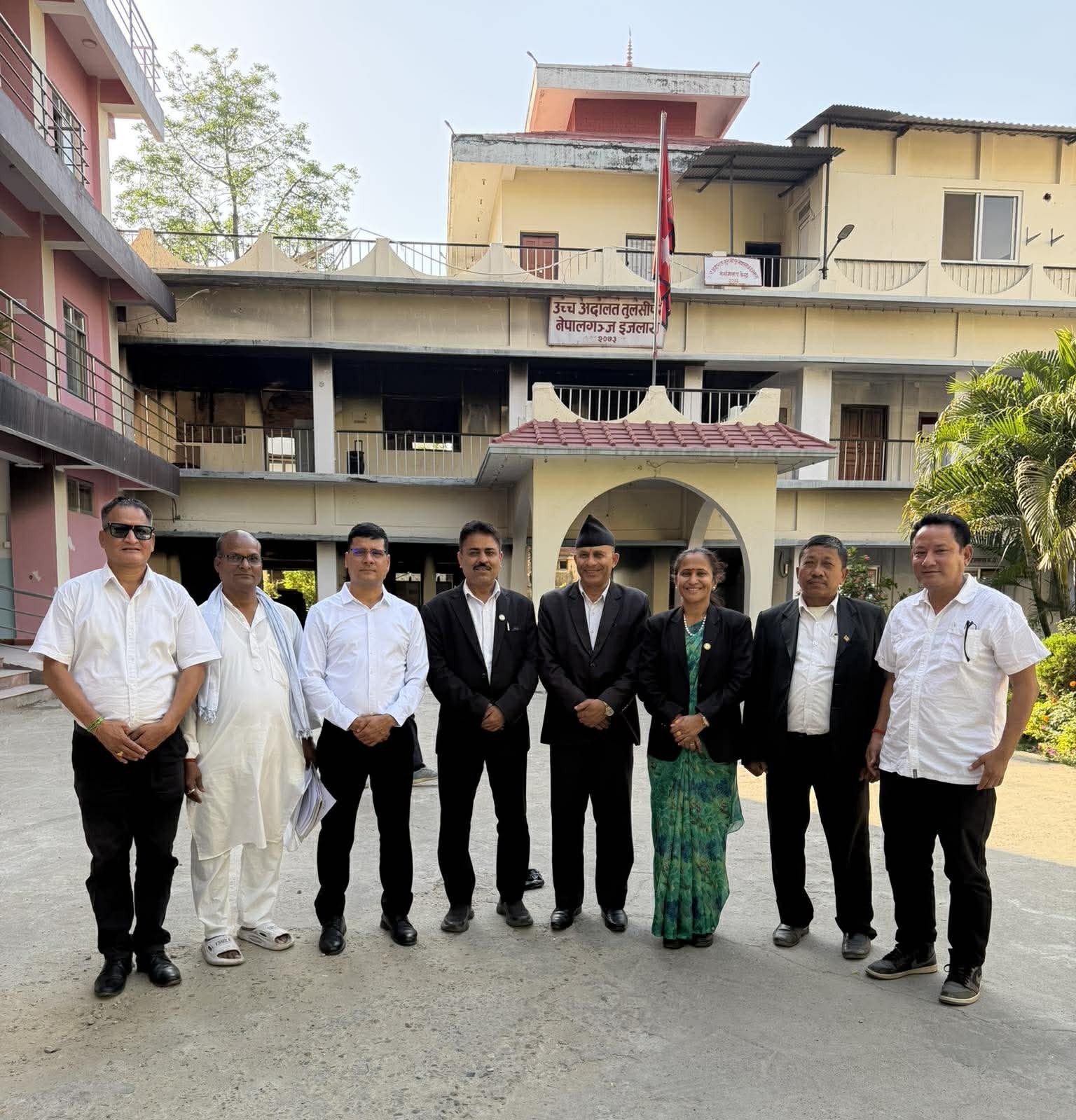

Emphasizing the legal provision requiring the confidentiality of the identity of children accused of criminal offenses, the High Court Tulsipur, Nepalgunj Bench, has issued an interim order directing that the name, photograph, or video of children taken into custody during investigation must not be made public.
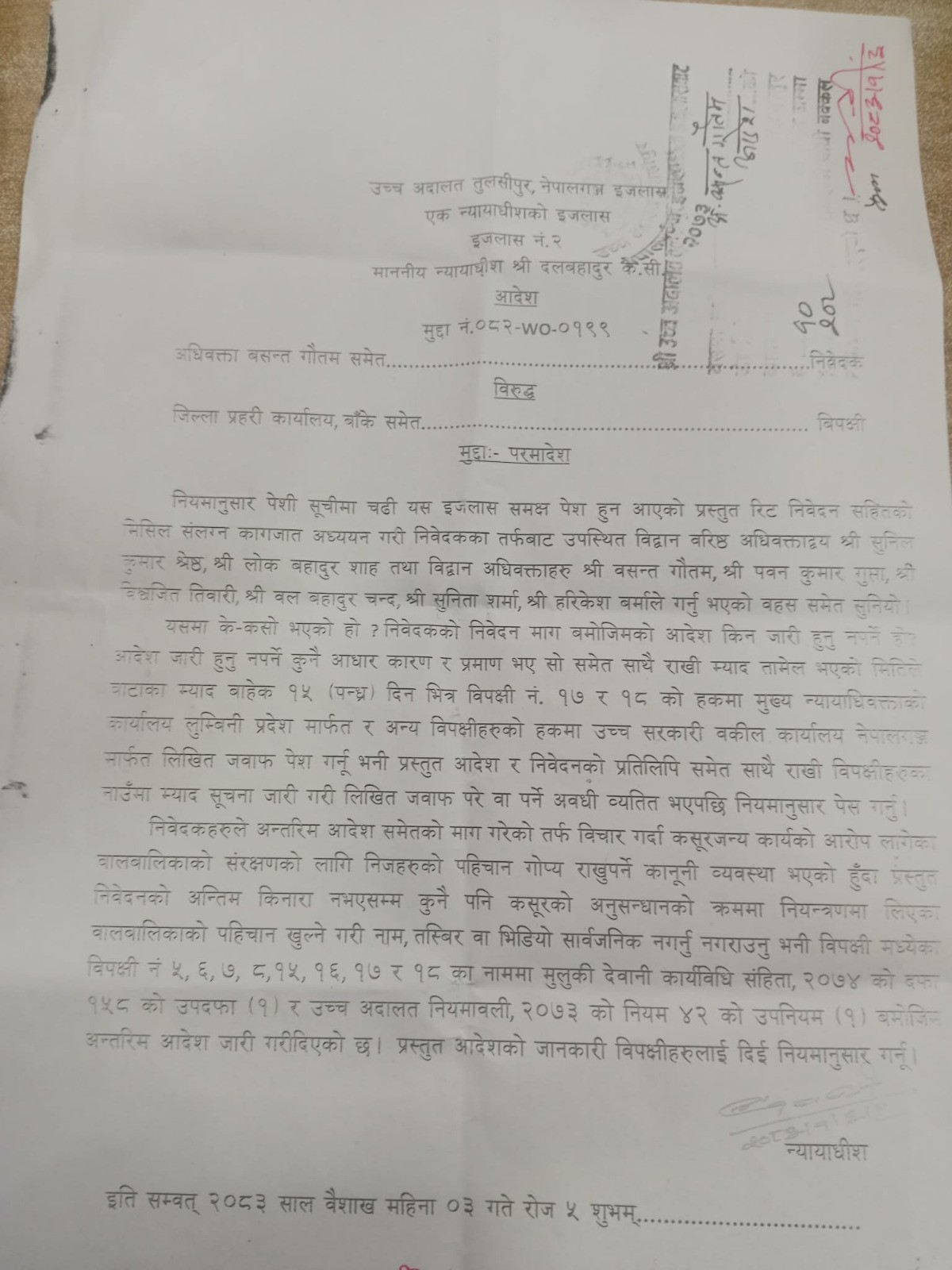
The bench of Honorable Judge Dal Bahadur KC issued the order pursuant to Section 158(1) of the Muluki Civil Procedure Code, 2017, and Rule 42(1) of the High Court Regulations, 2016, instructing the concerned police offices and other respondent bodies to implement it immediately, according to Advocate Basanta Gautam.
Following a preliminary hearing, the court has also issued a show-cause order to the respondents, asking them to present any grounds, reasons, or evidence as to why the order sought by the petitioner should not be issued. As per the order, the respondents must submit their written response within 15 days from the date of service of notice, excluding travel time.
The order was issued in the context of a public interest litigation related to the right to a fair hearing, effective implementation of juvenile justice, the right to privacy, and the protection of detainees’ rights. The writ petition was filed on Baisakh 2 by the Public Interest Law Practitioners’ Group.
During the preliminary hearing held on April 16, the court reviewed the documents attached to the case file and heard arguments from Senior Advocates Sunil Kumar Shrestha and Lok Bahadur Shah, as well as Advocates Basanta Gautam, Bal Bahadur Chand, Bishwajit Tiwari, Bikash Acharya, Sunita Sharma, Pawan Kumar Gupta, and Harikesh Barma.
 Among the writ petitioners were Advocate Bikash Acharya, member of INSEC’s Executive Committee; Advocate Basanta Gautam, Lumbini Province Coordinator of Advocacy Forum; Bhola Mahat, INSEC Lumbini Province Coordinator; Advocate Bal Bahadur Chand; Advocate Bishwajit Tiwari; Advocate Sunita Sharma; Advocate Suresh Kumar Gautam; Advocate Kebal Singh Tharu; and human rights activist Shailendra Kumar Baishya. The writ has named the District Administration Offices of Banke and Bardiya, the District Police Offices of Banke and Bardiya, various quasi-judicial bodies, and the concerned ministries of the Government of Nepal as respondents.