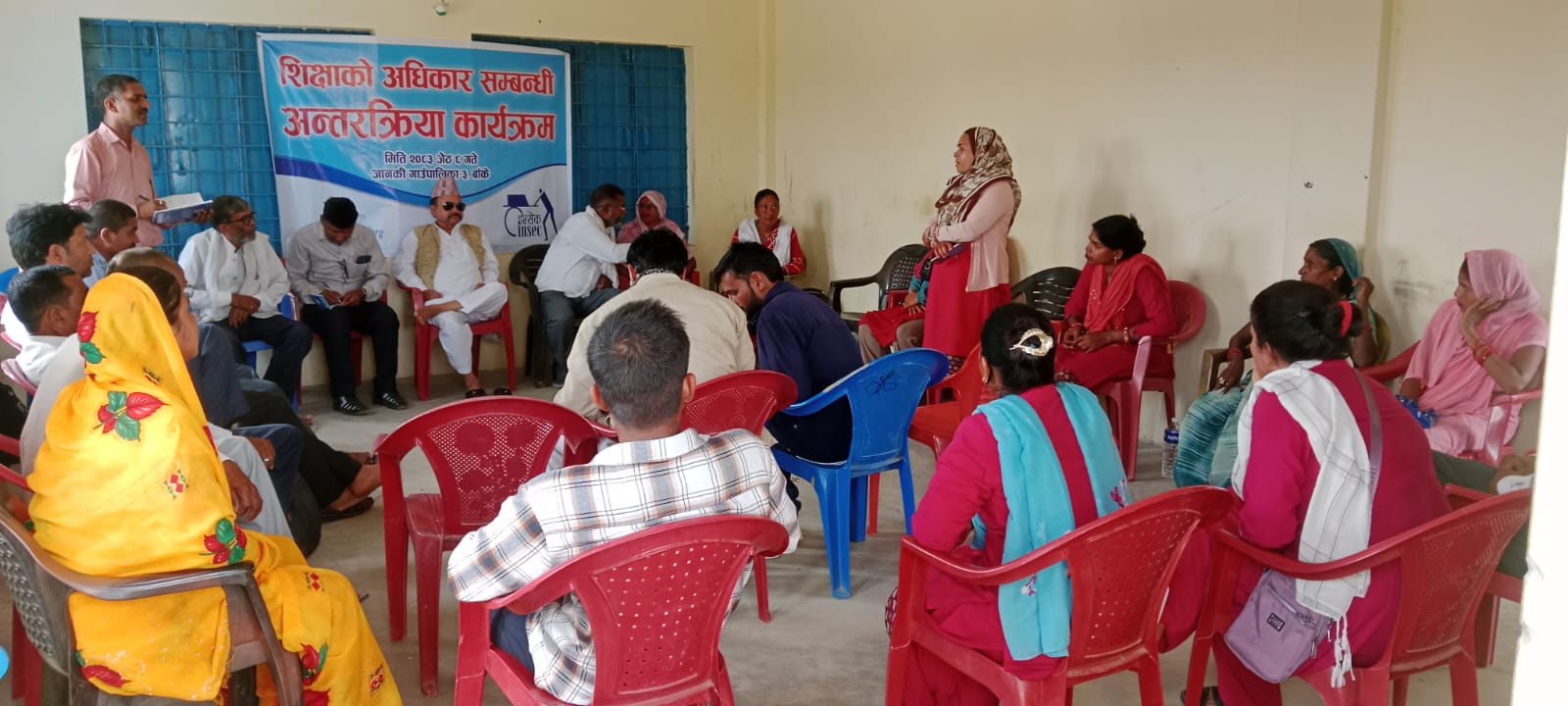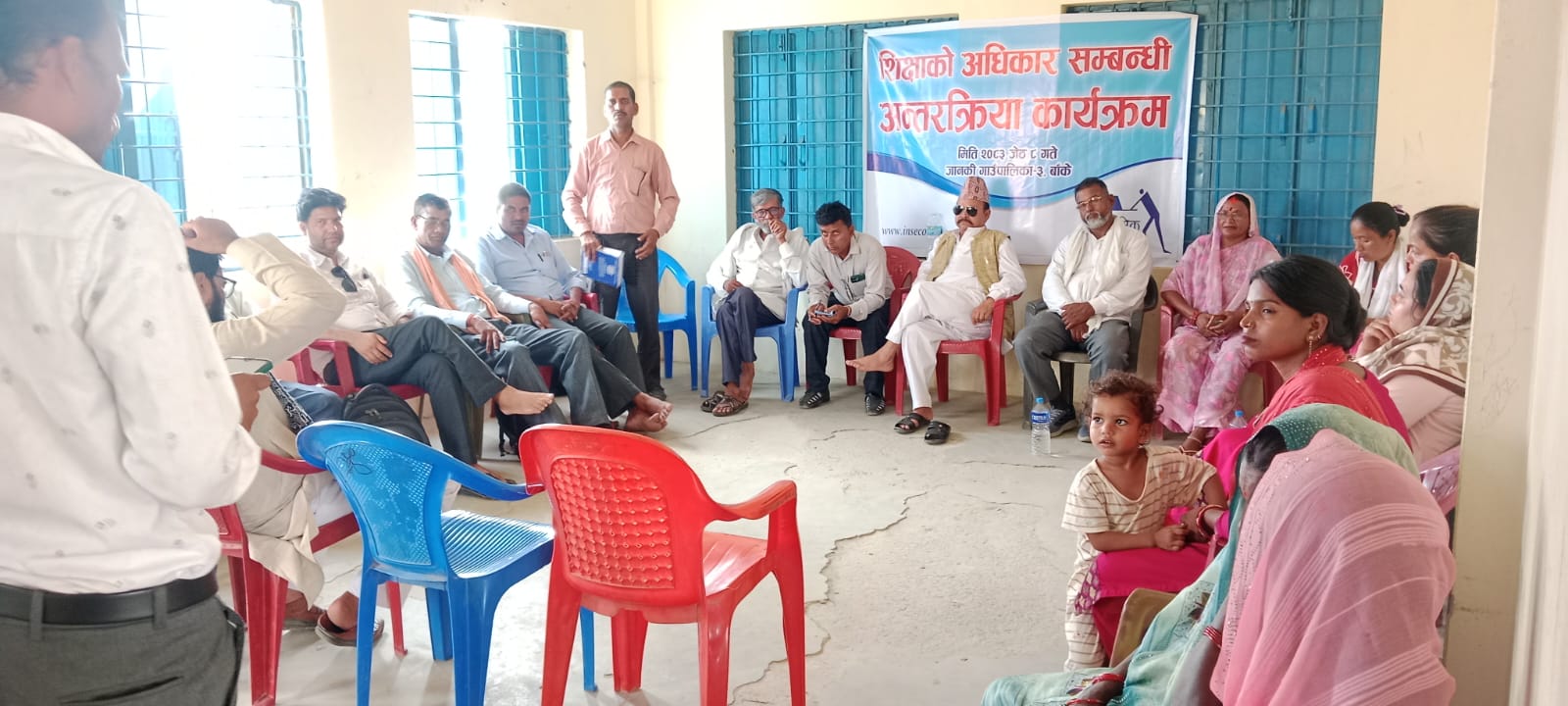

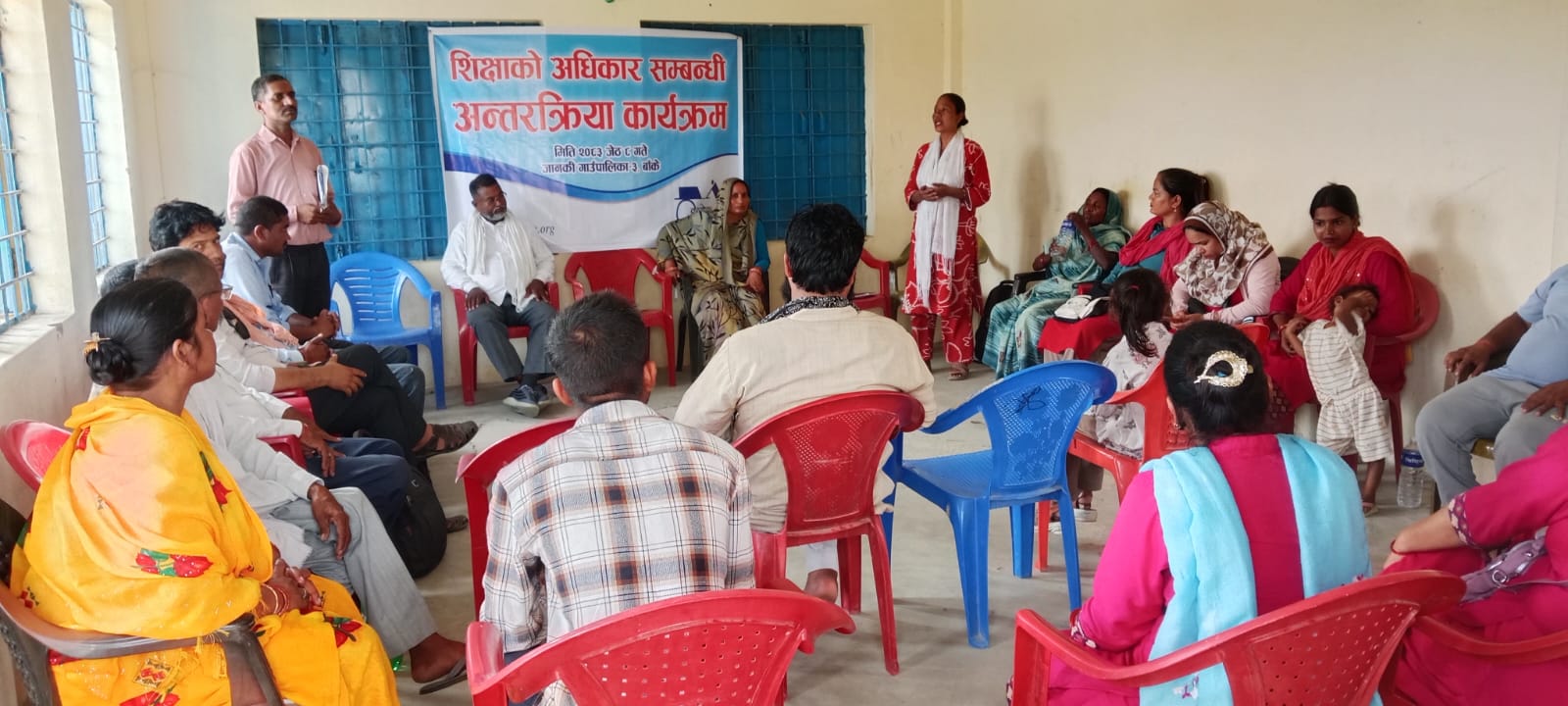
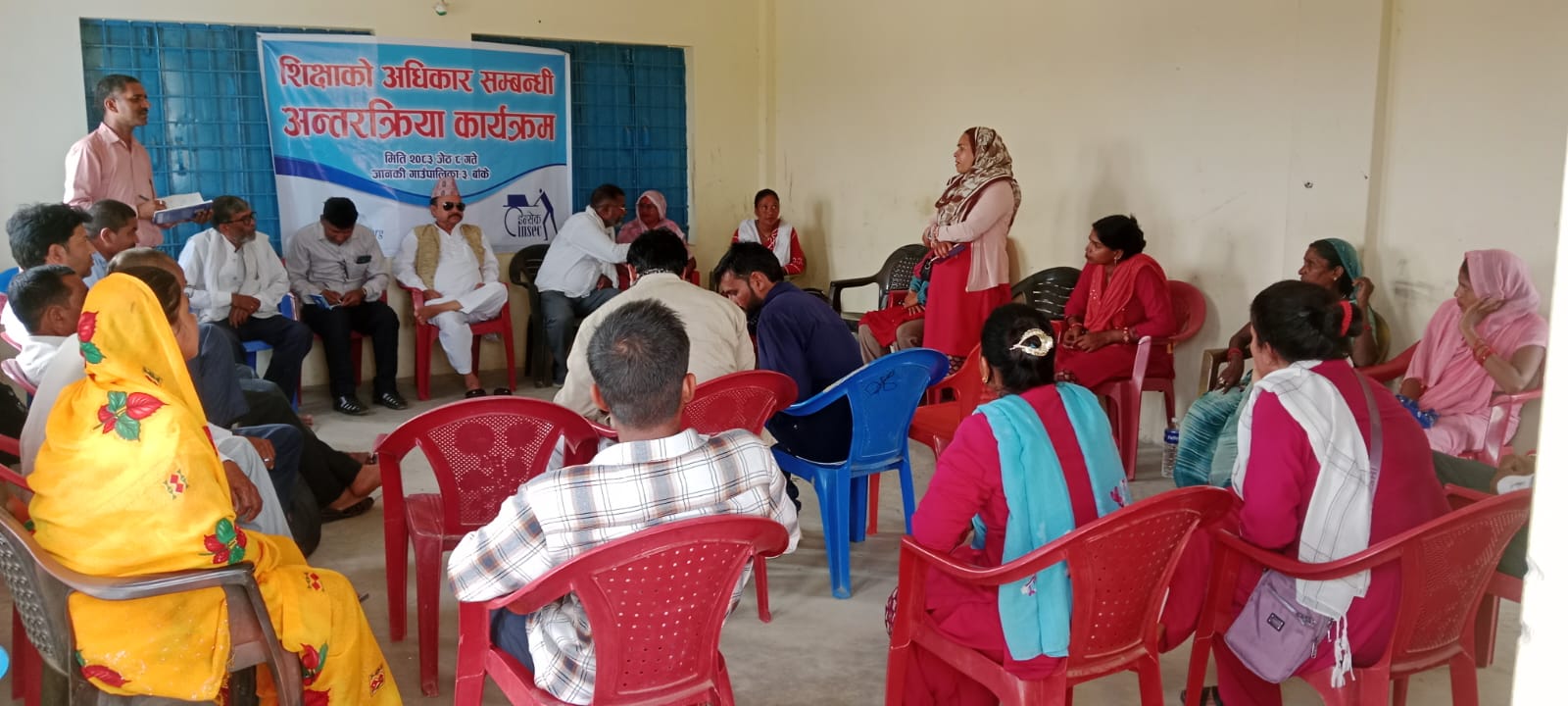
An interaction program on the right to education was held on May 22, at Nepal Rastriya Kanya Secondary School, located in Manpur, Ward No. 3 of Janaki Rural Municipality, jointly organized by the Informal Sector Service Centre (INSEC) and a Human Rights Group.
The program was attended by teachers, head teachers, madrasa representatives, and elected representatives from various schools within the municipality.
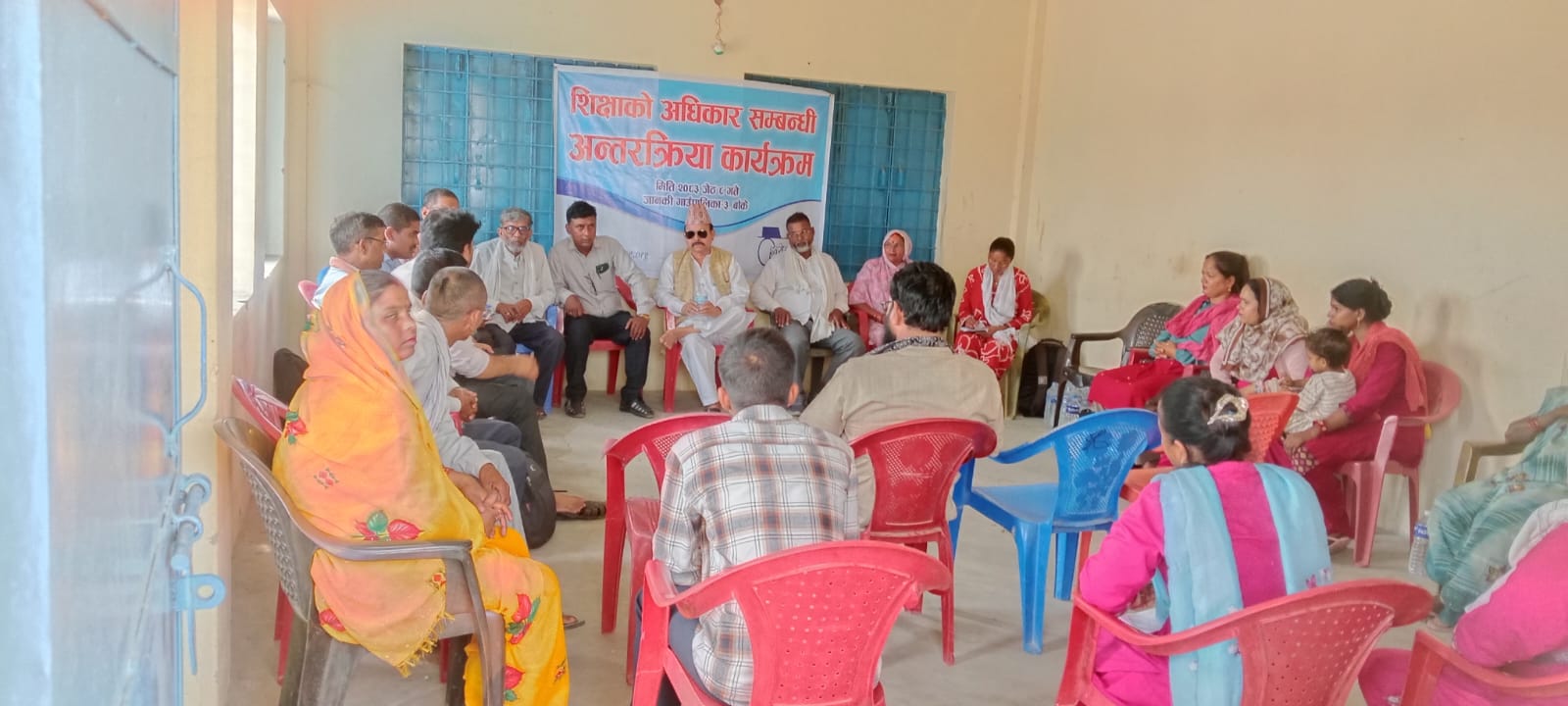
The discussion focused on the effective implementation of the right to education, particularly issues related to school infrastructure, shortage of subject teachers, sanitation facilities, drinking water, and the management of educational materials. Participants emphasized that these challenges could be addressed through the formulation of plans and allocation of budget in the upcoming fiscal year 2026/27.
Highlighting the purpose of the program, INSEC focal person Laxmi Tharu stated that children should have access to easy and quality education. She noted that improvements in the education sector are being achieved through regular monitoring of schools, effective teaching, learning practices, and collaboration between the Rural Municipality and INSEC in addressing infrastructure and resource gaps.
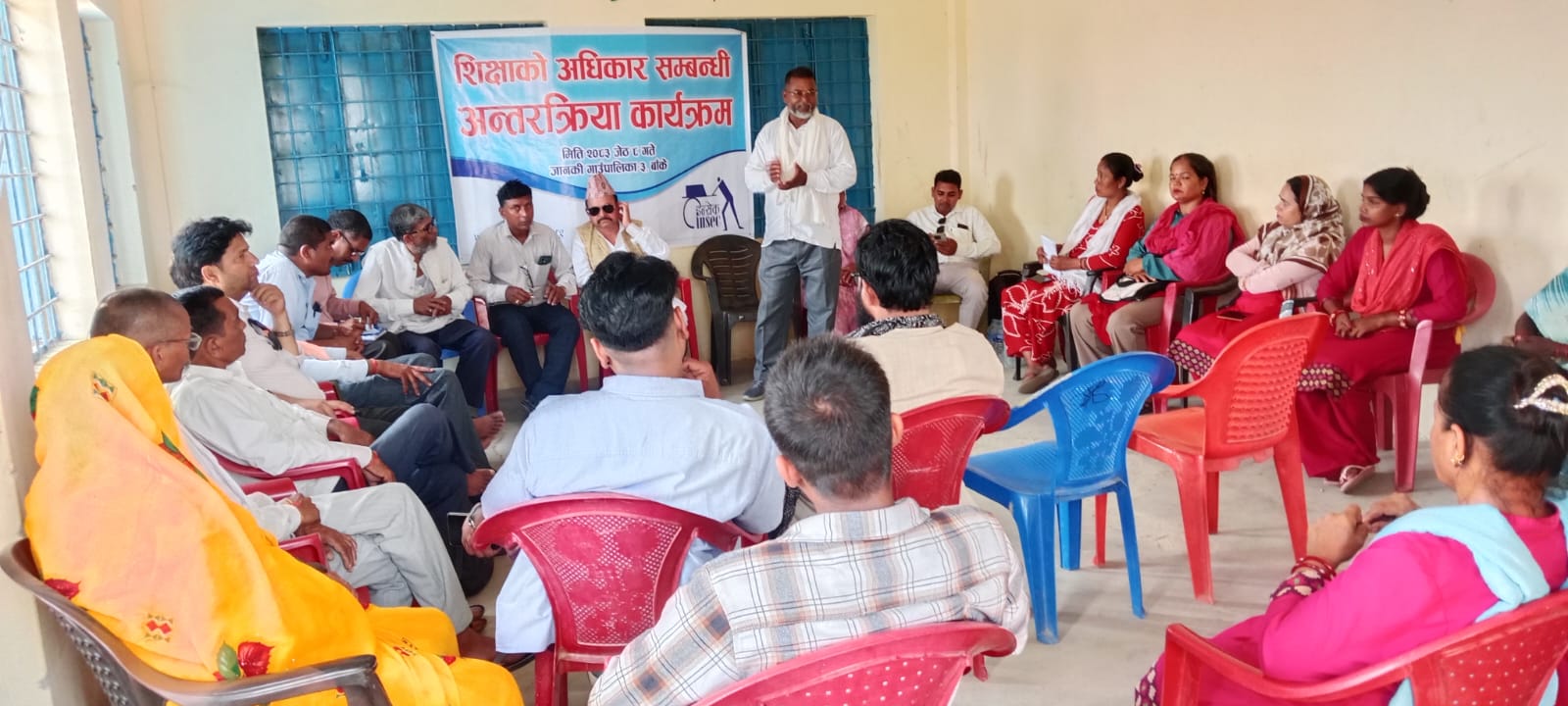 Madarsa teacher and education committee member Rasid Ahmed Rai expressed concern over the lack of uniformity in teacher salaries across madrasas, stating that there is a perceived sense of discrimination from the state. According to him, although each madrasa receives Rs. 300,000 in grants from the federal government, the NPR 52,000 previously provided by the provincial government and local level has been cut this year.
He further noted that financial constraints are affecting the operation of administrative expenses, auditing, School Improvement Plan (SIP) preparation, and register management, among other institutional activities.
The Head Teacher of Nepal Rastriya Basic School, Kapasi, Krishna Gopal Pal, stated that although the school operates up to Grade 6, the number of teaching staff is extremely limited. He noted that currently only three teachers are responsible for all classes, and the lack of educational materials is making it difficult to ensure quality education.
Similarly, Head Teacher of Janasewa Basic School, Gijara, Narayan Lamichhane, reported that the school building and toilets are in a dilapidated condition, creating challenges in school management. He highlighted the need for a new building, a five-room toilet facility, and a mathematics teacher. He further added that improving the infrastructure of community schools could help increase student enrollment amid the growing influence of private schools.
The Head Teacher of Panchpokhara School, Prem Bhandari, highlighted the need for adequate health facilities, drinking water, and gender- and disability-friendly toilets in the school. He emphasized the importance of coordinating with the community for land management to support infrastructure development. He also stressed the need to conduct parental awareness programs to address the issue of irregular student attendance.
Coordinator of the Social Development Section, Ram Achal Dhobi, expressed commitment to initiating efforts for the construction of a school building and playground at Gijara School. He stated that the Rural Municipality has been providing support in areas such as drinking water, sanitation facilities, teacher allocation, and classroom management. He also mentioned that madrasas have received support for educational materials and classroom management through the SDF organization and urged for its effective utilization.
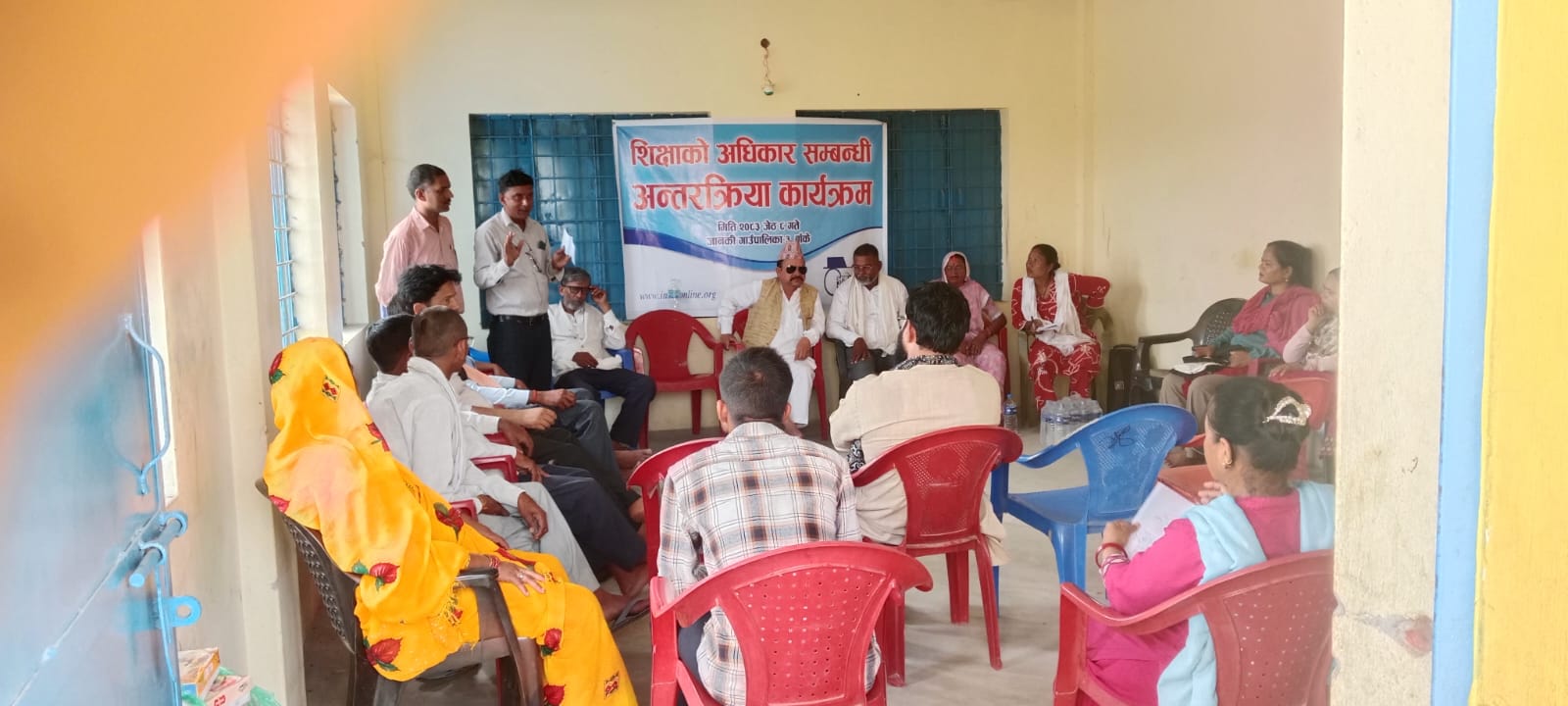
The program was attended by District Coordination Committee member Julfey Ali Manihar, Janaki Rural Municipality Vice-Chairperson Rampyari Yadav, and other participants.
Chairperson of the Human Rights Group, Md. Jahir Sheikh, expressed commitment to continued collaboration for the protection of child rights and the promotion of quality education.