

Members of the marginalized Kirat Athpahariya community in the district have demanded that they be listed under the National Foundation for Development of Indigenous Nationalities.
They have submitted a memorandum to the Prime Minister through the District Administration Office, demanding their inclusion in the indigenous nationalities list.
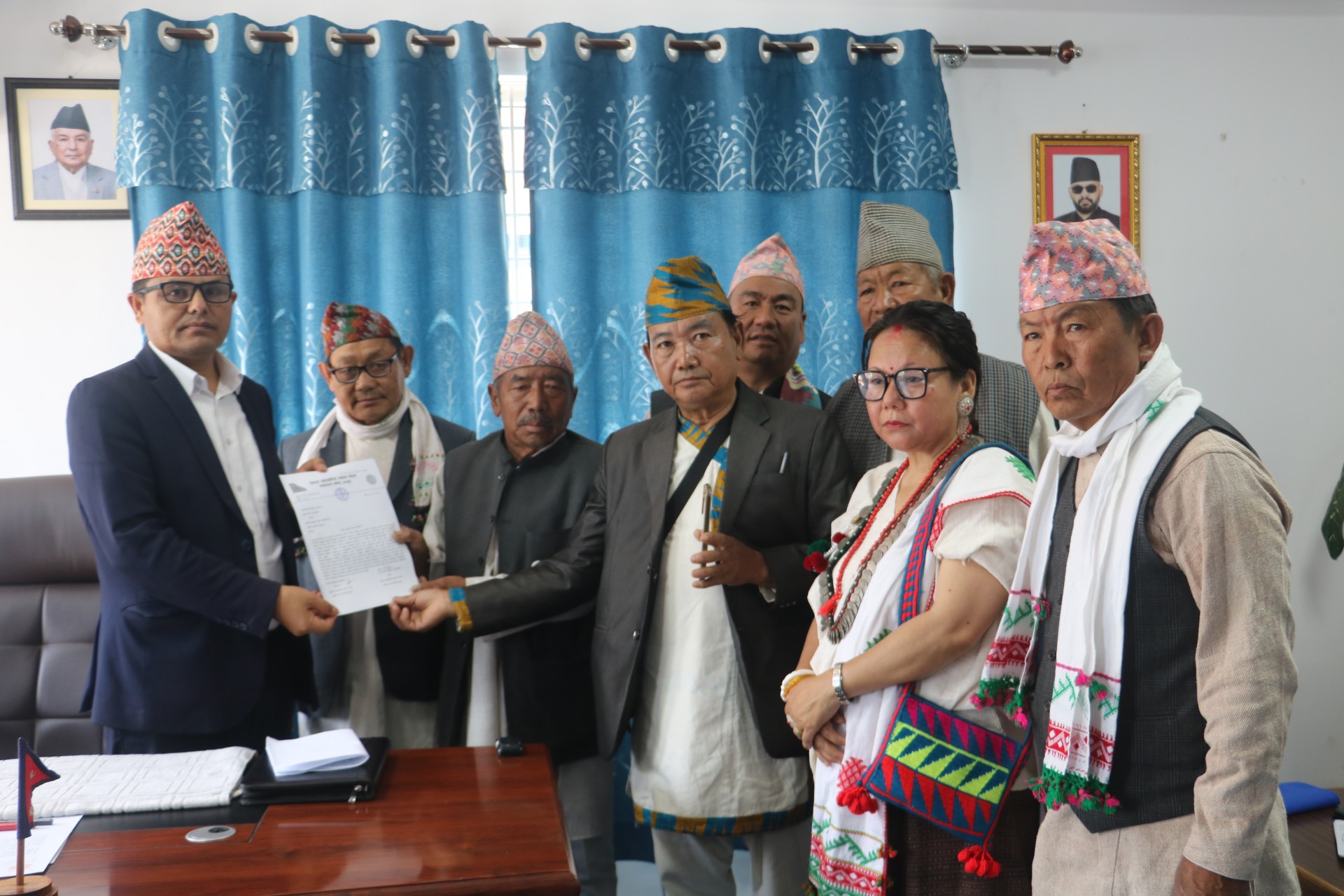 The Kirat Athpahariya Society Central Committee submitted a memorandum to the Office of the Prime Minister on April 28, through Chief District Officer Binod Kumar Khadka, demanding that the Kirat Athpahariya be listed as an indigenous nationality.
Central Chairperson Ashta Bahadur Athpahariya stated that despite having verified documents of their own language, attire, culture, traditions, and script, the state has not granted them official recognition, prompting the submission of the memorandum through the Chief District Officer.
Founding Chairperson of the Kirat Athpahariya Society, Dhruva Chhara, said that the Athpahariya community has been residing in the Dhankuta region since the unification of Nepal, yet the state has neglected them by not including them in the official list. He added that the historical geography of the Athpahariya under the ‘Kipat’ system extends across all wards of present-day Dhankuta Municipality.
Asba Bahadur Athpahariya stated that since the Athpahariya are a distinct ethnic group, their demand is to be listed separately rather than being grouped with others.
There are 19 clans within the Athpahariya community, including Chhara, Hombarak, Kimdahang, Lengsuwa, and Pangsung.
Central General Secretary Komal Athpahariya said that although the state claims to practice inclusive policies, some communities remain excluded in practice. He emphasized that their demand is not new but a matter of historical justice. The memorandum submitted to the Prime Minister focuses on the need for the state to formally recognize its identity without further delay.
The Kirat Athpahariya Society, Central Committee, Dhankuta, stated that the community has been deprived of various state programs related to social, educational, and economic upliftment due to the lack of official listing as an indigenous nationality.
Article 2 of the International Covenant on Economic, Social and Cultural Rights, to which Nepal is a party, guarantees the enjoyment of rights without discrimination based on race, caste, sex, language, religion, political or other opinion, national or social origin, property, birth, or other status.