INSEC Online

Civil Society Urges Adherence to Election Code

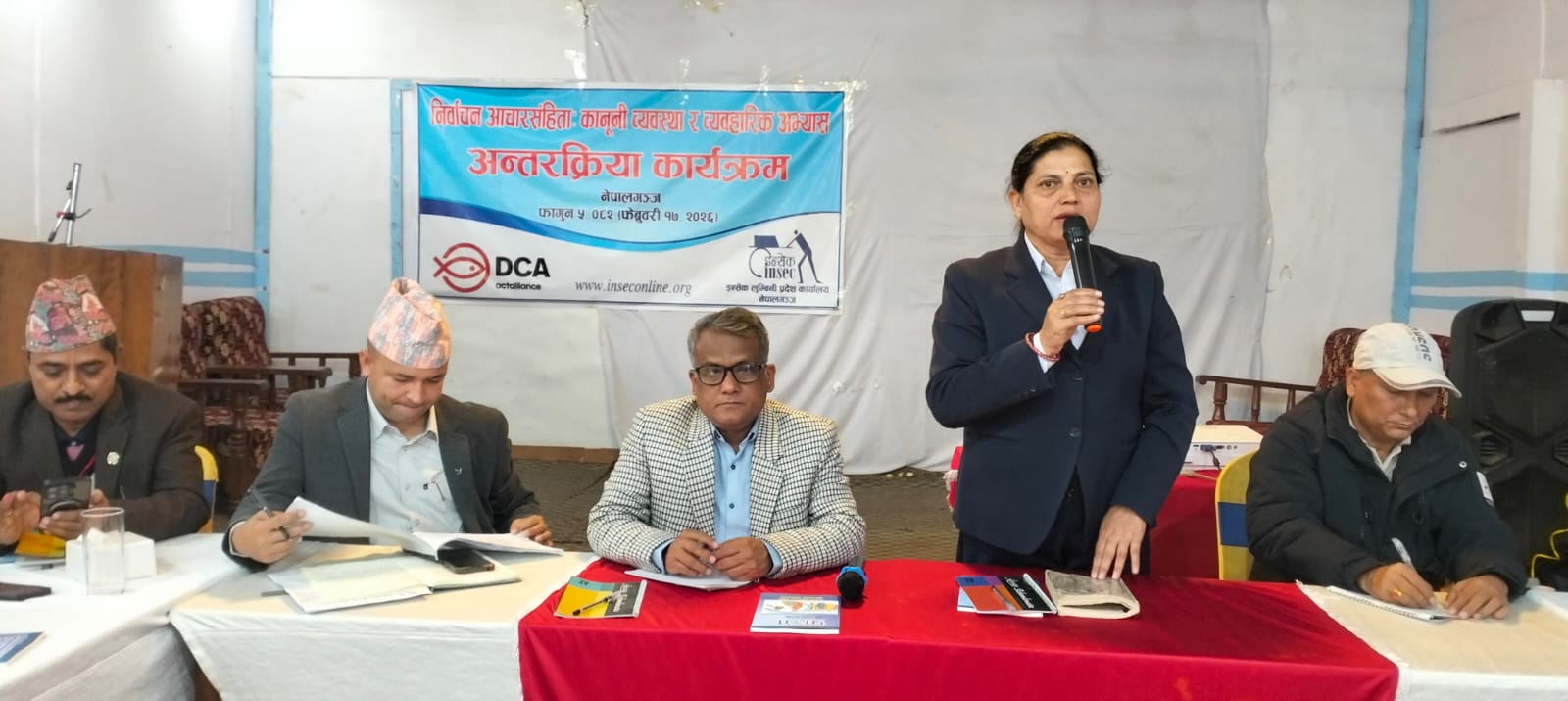
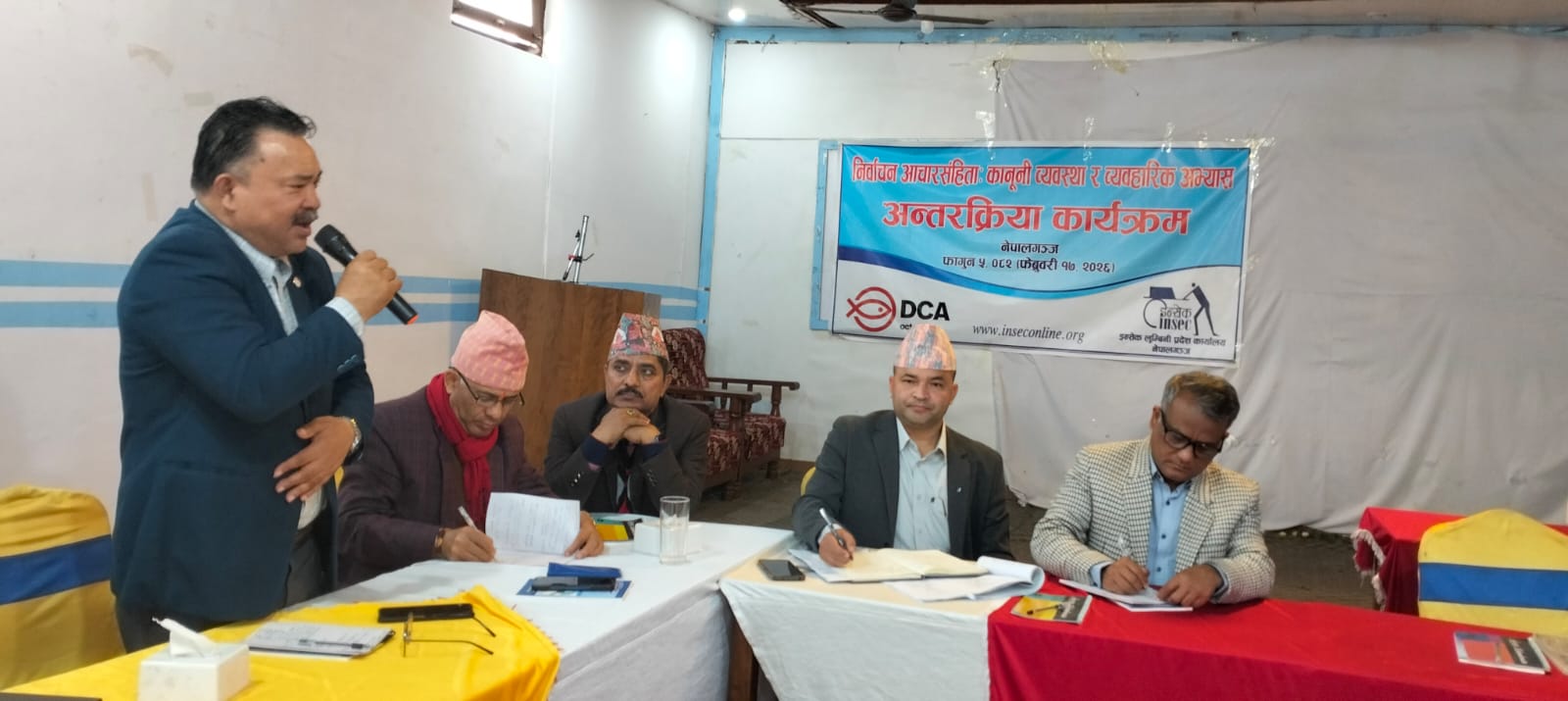
Rights activists have provided suggestions to concerned authorities to ensure that the upcoming House of Representatives election, to be held on March 5, 2026, is conducted in a clean, fair, and fraud-free manner. The remarks were made during an interaction program on “Election Code of Conduct: Legal Provisions and Practical Implementation,” organized in Nepalgunj on February 17 in collaboration with DCA Nepal and Informal Sector Service Centre (INSEC).

The program was conducted under the chief guestship of Election Code of Conduct Monitoring Officer and Assistant Chief District Officer Purna Bahadur Khatri and was chaired by INSEC Lumbini Province Coordinator Bhola Mahat.

Chief District Officer Purna Bahadur Khatri urged everyone to implement and comply with the election code of conduct, stating that conducting a clean and fear-free election is the shared responsibility of all institutions and citizens. He emphasized the need to raise public awareness about the policies, rules, and legal provisions that must be followed while implementing the code of conduct. He further stated that political parties, civil society, journalists, and security agencies all share responsibility in ensuring that elections are conducted in a clean, fair, and transparent manner. Therefore, all stakeholders should monitor whether the election code of conduct is being violated.

He also mentioned that party candidates and those involved in campaign activities have been monitored and instructed to correct instances of hate speech. Furthermore, he urged everyone to remain alert against rumors, misinformation, and confusion spread through social media.
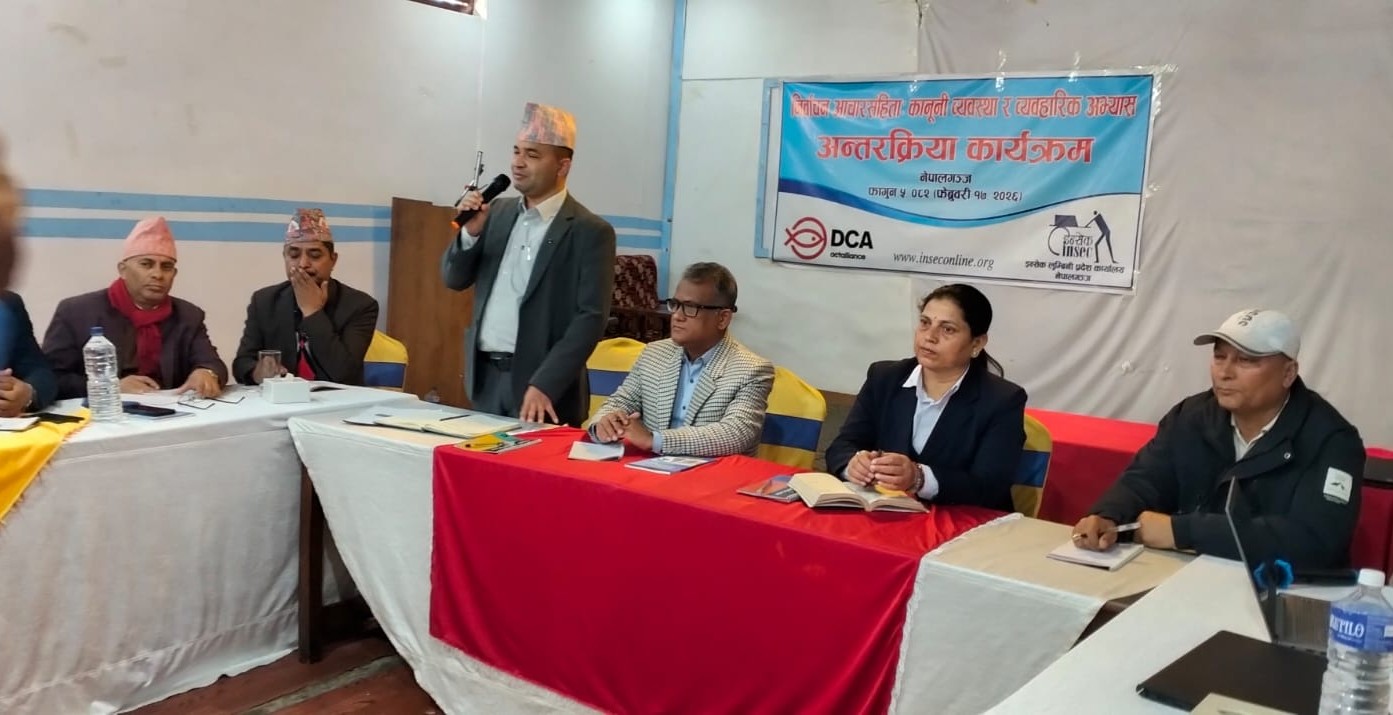
Highlighting the importance of the upcoming election, INSEC Lumbini Province Coordinator Bhola Mahat, while delivering the welcome remarks and outlining the objectives of the program, emphasized that the effective implementation of the Election Code of Conduct prepared by the Election Commission is essential to ensure that the election is conducted in a clean, fear-free, and impartial environment.
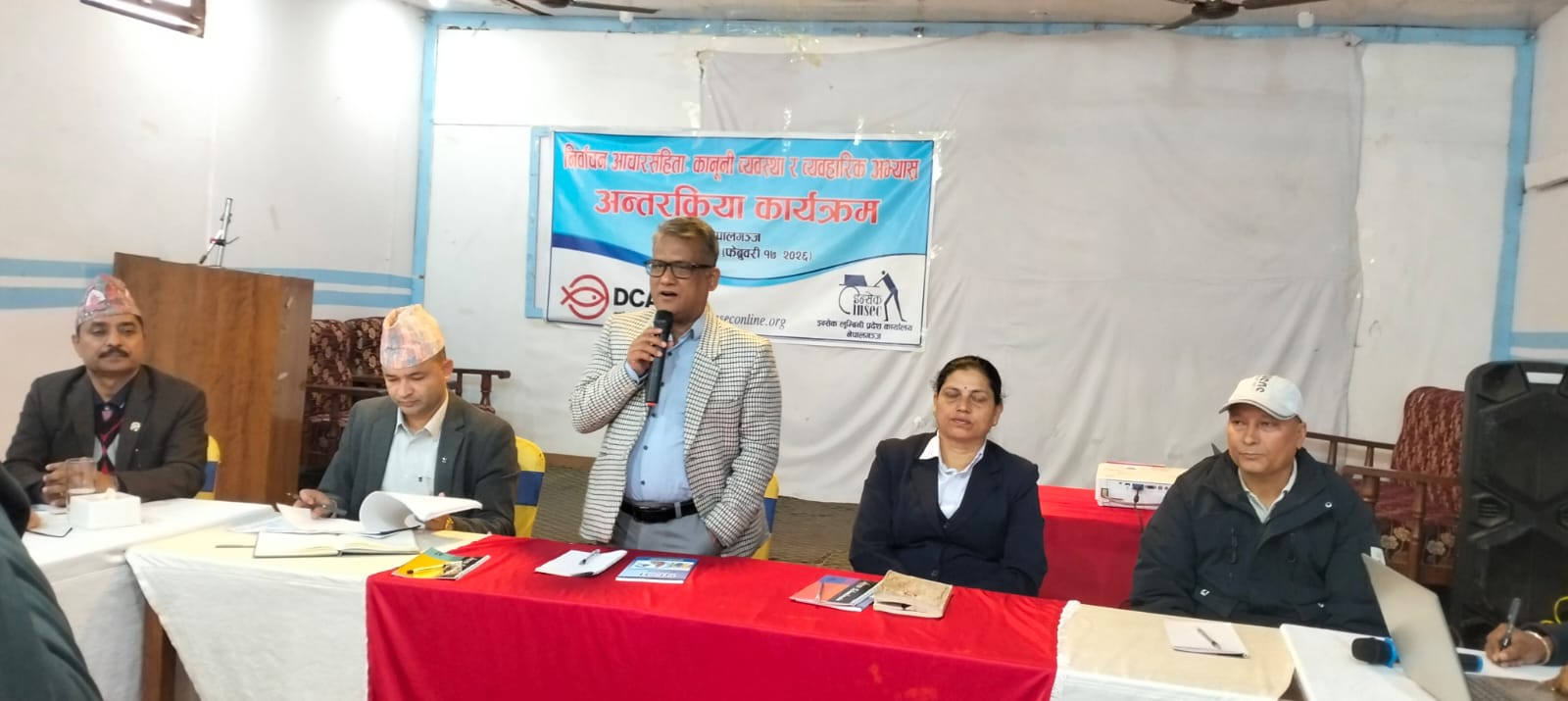
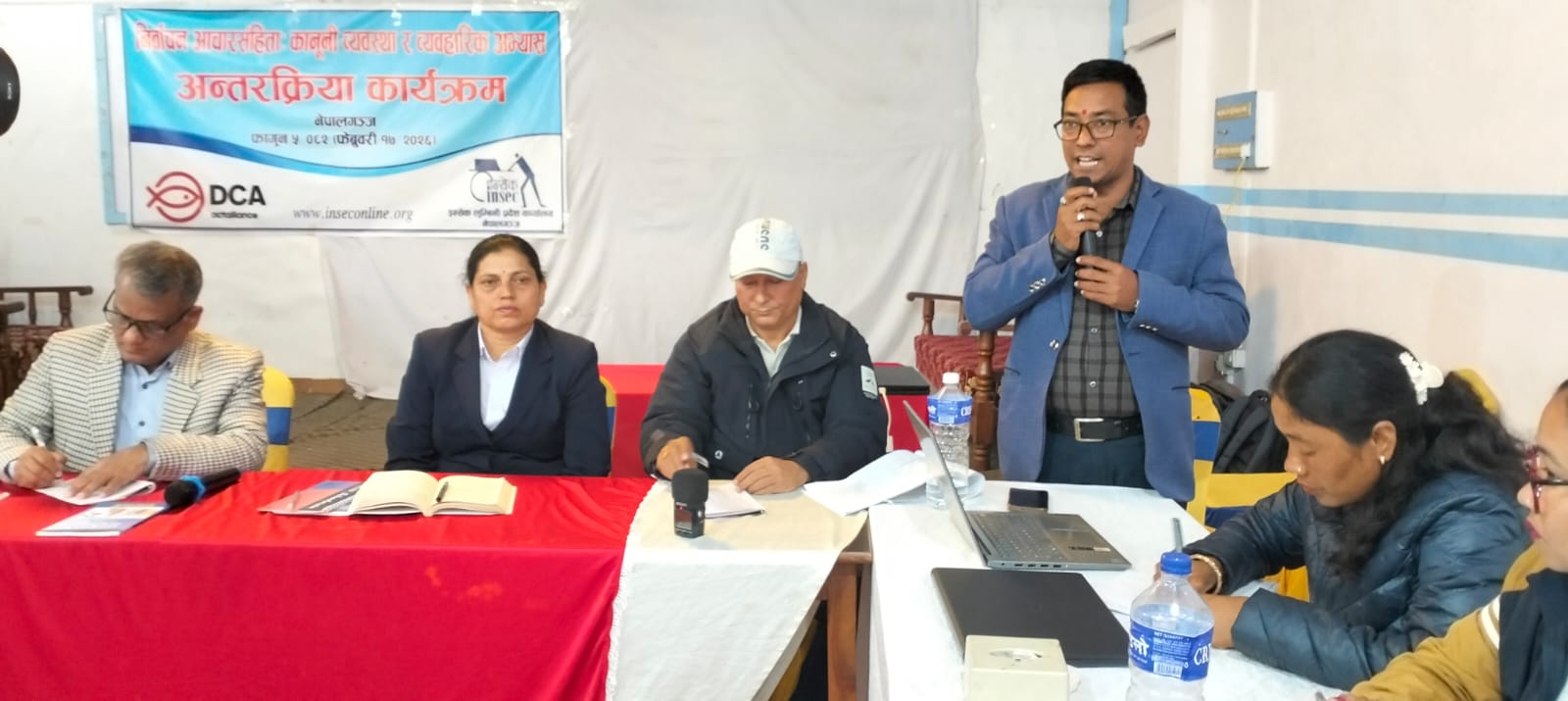
He stated that not only voters but also political parties and candidates must comply with the code of conduct. He further stressed that the role of stakeholders in ensuring effective implementation is crucial. Reflecting on past lessons and mistakes, he underlined the importance of working more effectively to avoid repeating previous shortcomings and to ensure better enforcement of the code of conduct in the upcoming election.

Chief of the District Election Office, Banke, Tek Bahadur Shahi, delivered a presentation on the Election Code of Conduct and the standards of behavior that must be followed by all concerned. He informed the participants about the code of conduct to be observed by political parties, candidates, party sister organizations, observers, monitoring organizations, employees, and media personnel.

Dwarika Adhikari, Chief of the National Human Rights Commission, Nepalgunj, stated that in accordance with the responsibilities assigned to the Commission, internal reporting is being carried out to help ensure that the election is conducted in a fair, dispute-free, clean, fear-free, and peaceful manner.

She emphasized the need for everyone to comply with the election code of conduct and stressed the importance of working more effectively by learning from past experiences and avoiding the repetition of previous mistakes.

Participants drew attention to several important concerns. They stated that conducting voter awareness programs only just before the election does not effectively increase voter awareness; therefore, such programs should be implemented promptly. Since incidents may occur during the election period, all concerned authorities should remain on high alert.

They emphasized that opinion polls and the issue of voter confidentiality are highly sensitive during elections, and misleading or false news disseminated through the media should be controlled. Reports have also surfaced that local government employees are involved in campaigning for candidates, which calls for caution and corrective measures. Questions have been raised regarding the impartiality of personnel assigned to voter education, and attention must be paid to this matter.

Participants further suggested that arrangements should be made to allow senior citizens to vote without having to stand in long queues. Polling stations should be equipped with basic facilities such as toilets and drinking water. Depending on the need, health workers and ambulances should also be arranged at polling centers.

They also pointed out that the use of children in election campaigning is still being observed and must be controlled. Overall, they stressed the need to make voter education programs more effective.

At the program, various speakers from civil society and related sectors shared their views, including Krishna Prasad Shrestha from civil society; Lumbini Province Coordinator of the Commission and observer Advocate Basant Gautam; Prabhat Kumar Thakuri from Human Rights Alliance; human rights activist Prakash Upadhyaya; Advocate Bhim Bahadur Shahi; journalist Bijay Malla; Binod Thapa and Maimun Siddiqui from civil society; civil society leader Professor Ravindra Karna; and Babita Singh, Chairperson of SYAC Nepal.

The program was facilitated by Laxmi Tharu.

Dhruv Raj Sharma

Related Topic

Video