

The Freed Harawa–Charawa Rights Forum organized simultaneous demonstrations across all 18 local levels of Saptari District on June 19, 2026, demanding the protection of labor rights, dignified employment, equal pay for equal work, and respectful rehabilitation of the freed Harawa–Charawa community.
The protest was held under the slogan, “End the Hawara-Charawa system, establish just labor relations.” Members of the freed Harawa-Charawa community, civil society representatives, human rights defenders, and other stakeholders participated in the demonstrations. According to the Forum’s Central General Secretary, Lagindra Sada, more than 10,000 members of the Harawa-Charawa community took part in programs organized throughout the district.
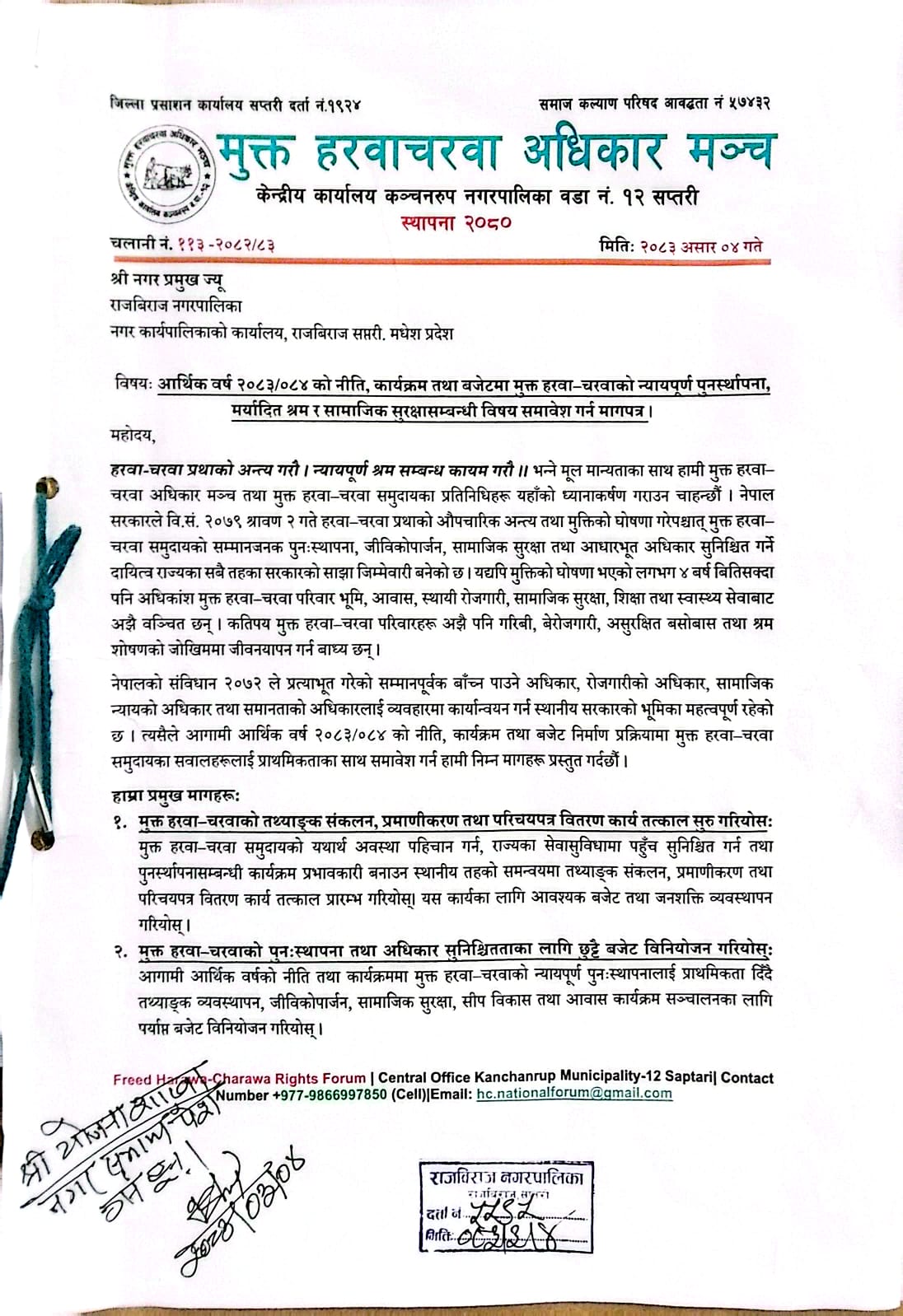
The demonstrations were held simultaneously in the municipalities of Rajbiraj, Hanumannagar Kankalini, Kanchanrup, Khadak, Dakneshwari, Saptakoshi, Surunga, Shambhunath, and Bodebarsain, as well as in Agnisair Krishnasavaran, Balan-Bihul, Rajgadh, Bishnupur, Chhinnamasta, Mahadeva, Rupani, Tilathi Koiladi, and Tirhut rural municipalities. Following the rallies, participants gathered for corner assemblies. At the conclusion of the programs, a seven-point memorandum was submitted to the heads of the respective local governments, Sada informed.
Through the memorandum, the Forum demanded the immediate initiation of data collection, verification, and identity card distribution for freed Harawa–Charawa individuals. It also called for the allocation of a separate budget for rehabilitation and rights protection, the implementation of skill development, entrepreneurship, agriculture, and livelihood programs, and the guarantee of dignified housing, land ownership, and the right to secure settlement.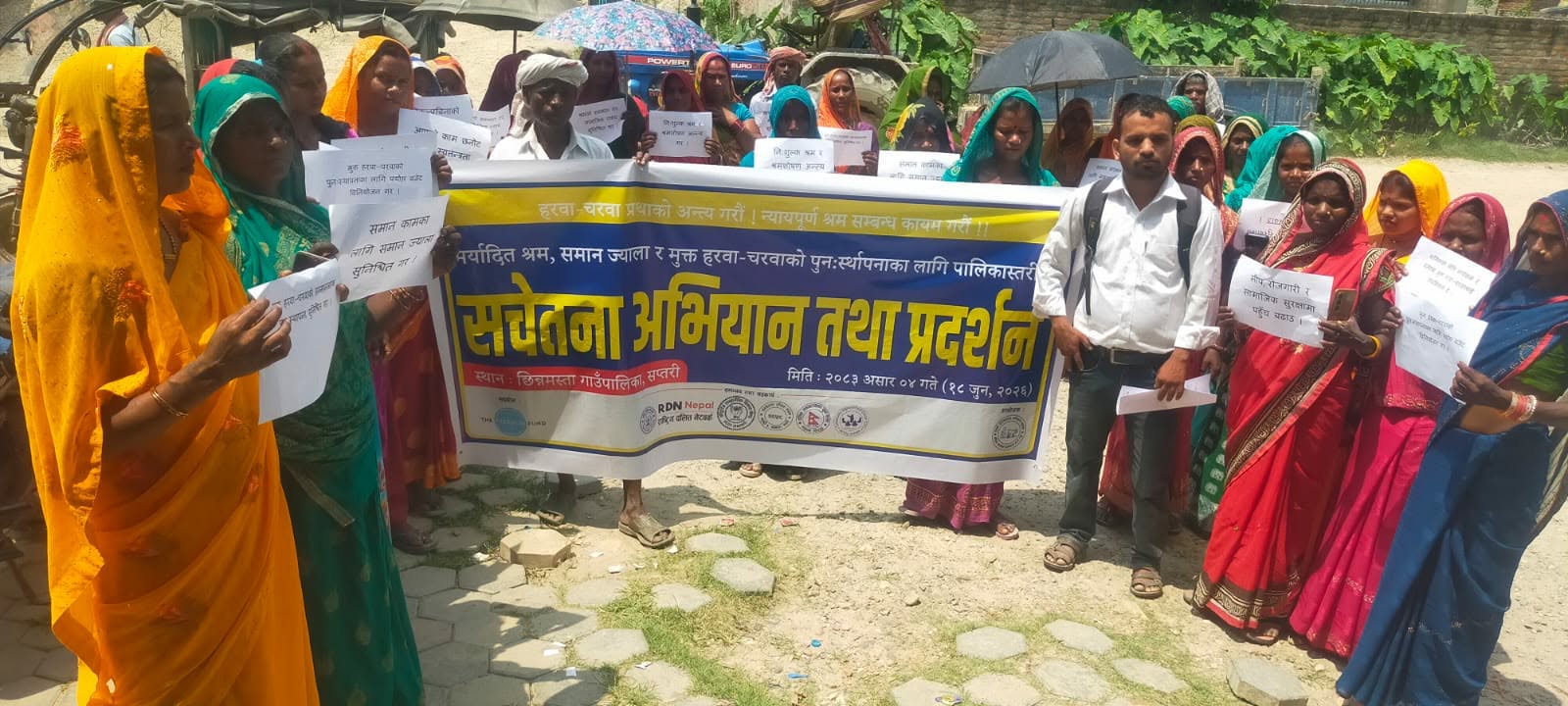 The memorandum also urged local governments to prioritize the freed Harawa-Charawa community in their policies, programs, and budgets, and to implement special initiatives related to social security, education, healthcare, and labor rights.
Dasharath Lal Mandal, Central Chairperson of the Freed Harawa–Charawa Rights Forum, stated that the government should immediately begin the process of data management and identity card distribution to accurately identify members of the freed Harawa–Charawa community and ensure their access to state services and opportunities. He further emphasized the need for adequate budget allocation in the upcoming fiscal year’s policies and programs for rehabilitation, livelihood support, social security, skill development, and housing initiatives.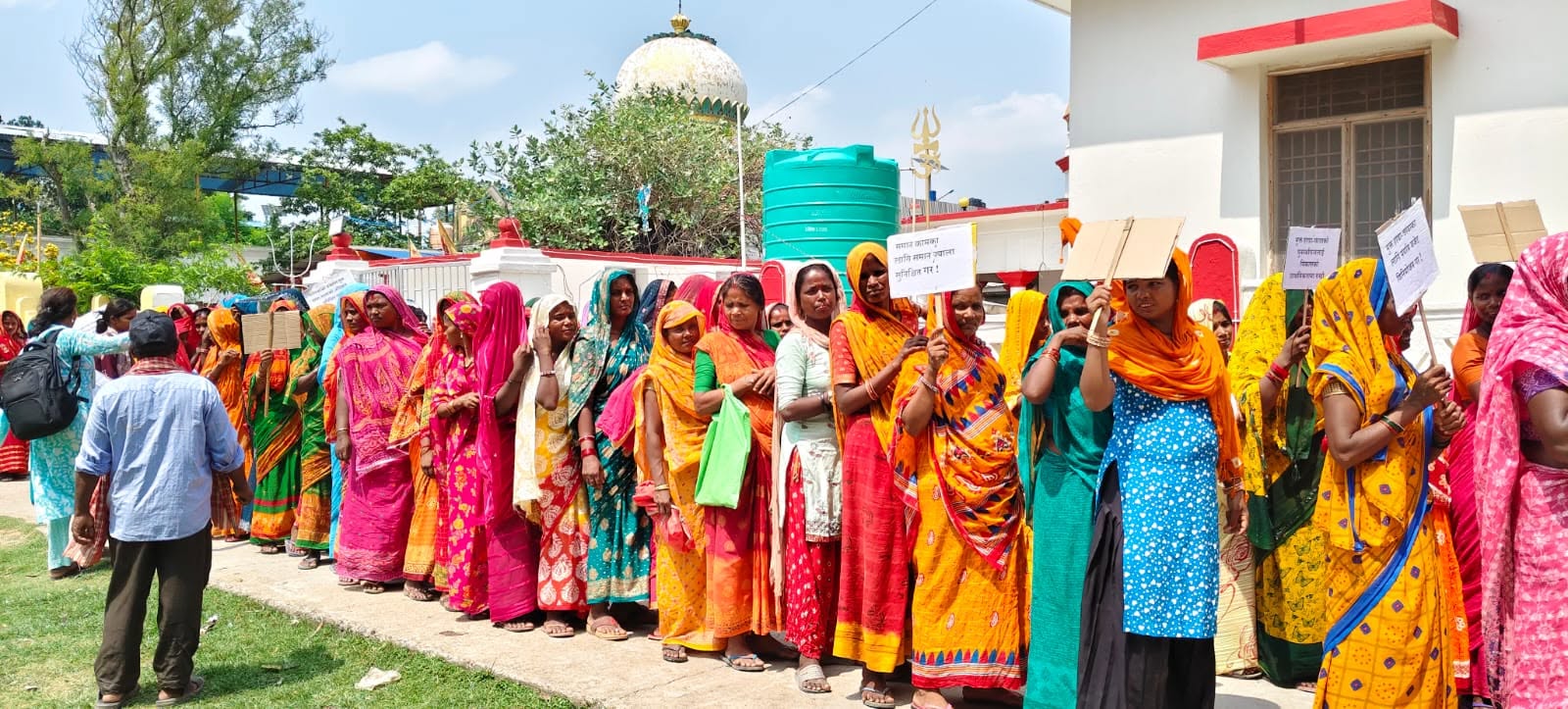 Balaram Bhattarai, Advocacy Advisor at The Freedom Fund, expressed the view that priority should be given to vocational training, support for agriculture and livestock farming, self-employment opportunities, and social entrepreneurship programs to promote the economic empowerment of freed Harawa–Charawa families. He stated that effective coordination between local governments and relevant agencies is necessary to ensure access to land and secure housing for landless and homeless families.
Similarly, Hukum Sarki, Executive Director of the National Dalit Network (RDN) Nepal, stressed the need to ensure the meaningful participation and priority access of the freed Harawa–Charawa community in all programs related to poverty reduction, education, healthcare, employment, social security, and inclusive development. He emphasized the importance of implementing targeted programs to expand access to education, scholarships, health insurance, nutrition services, and social protection for children from economically disadvantaged families.
Following the Government of Nepal’s formal declaration on July 18, 2022, abolishing the Harawa-Charawa system and freeing those subjected to it, the responsibility to ensure the dignified rehabilitation, livelihood, and social security of the freed community has fallen upon all levels of government. However, according to the Forum, nearly four years after the declaration, the rehabilitation process has not progressed effectively for more than 100,000 free Harawa-Charawa people living across eight districts of the Madhesh Province. As a result, most families continue to be deprived of land, housing, stable employment, education, healthcare, and social security.