

Amnesty International Nepal has reported that security personnel used lethal weapons unlawfully while controlling the Gen-Z protest.
The report, released on December 7, 2025, concluded that both national and international standards were violated during the protest.
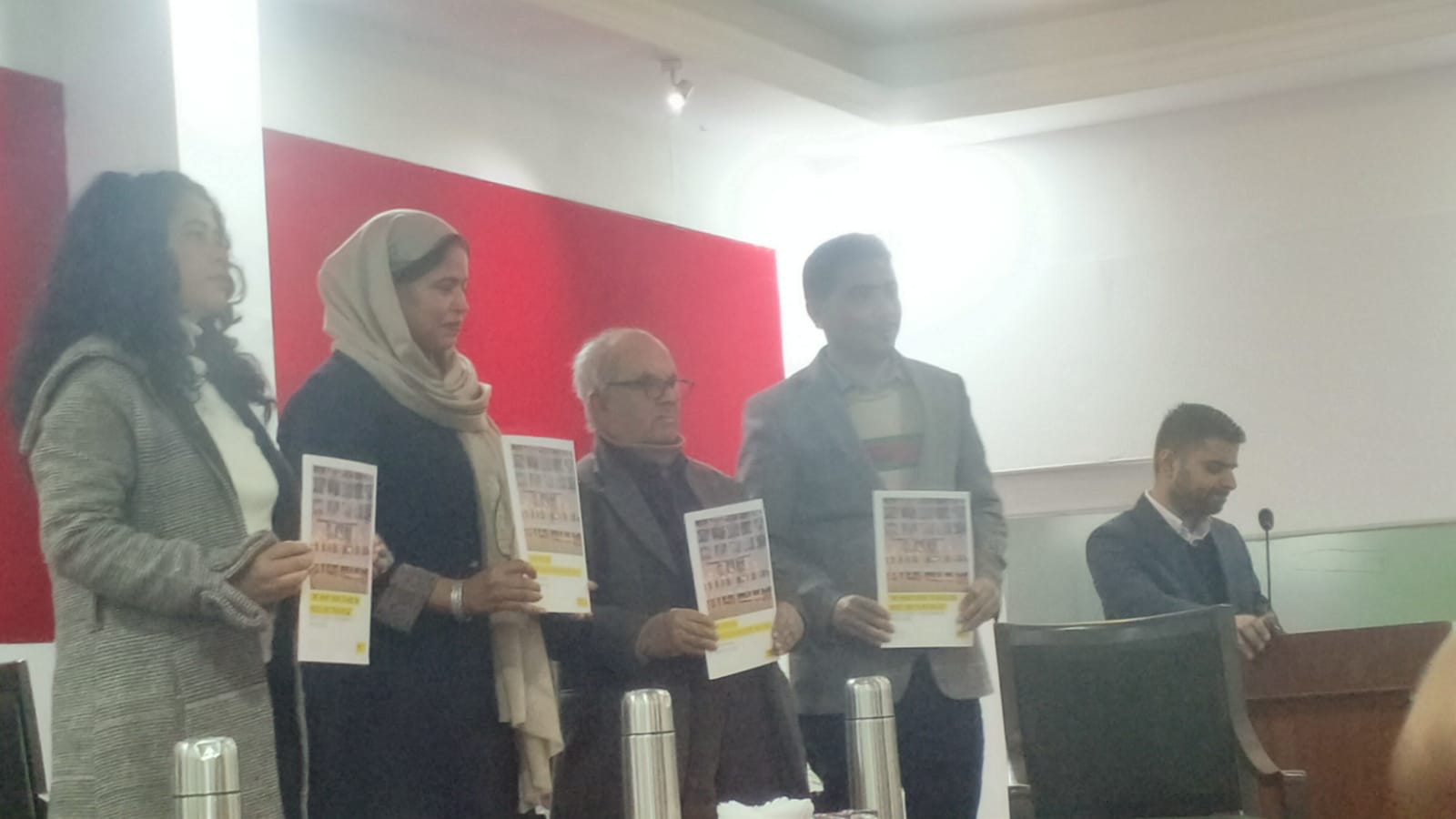
Details of the study report, prepared by Informal Sector Service Center (INSEC), Jury Nepal, Amnesty International Nepal, Advocacy Forum, and other human rights organizations, were made public by Amnesty International Nepal Director Nirajan Thapaliya, who stated, “During protest control, security personnel not only misused less-lethal weapons but also unlawfully used lethal weapons.”
The report described the shooting near the Parliament building in Baneshwor symbolically as an “extrajudicial and arbitrary killing.” It concluded that the police used force instead of adopting multiple measures to disperse the protest.
Quoting an analysis from a former security officer, the report stated, “When the crowd became aggressive, the armed or Nepal Police may have used whatever was available out of panic.”
A protester injured by more than half a dozen rubber bullets stated that they had come for a peaceful demonstration and had no anticipation of being fired upon.
“We had gone there to raise our voice, not to be killed. Either the state’s security is weak, or it is cruel in a way that shocks everyone,” they told the research team. “In both cases, the state must take responsibility for failing to protect its citizens.”
Amnesty cited these three injured individuals, highlighting their statement, “We had gone there to raise our voice, not to be killed,” as the headline of the report.
According to UN Basic Principles on the Use of Force and Firearms by Law Enforcement Officials, guns should not be used even when assemblies turn violent. Especially in situations where there is no risk to life, such use of force is not justified.
However, during the Gen-Z movement, the police used a large number of metal bullets, even though they claimed only “blank fire” was used. Amnesty stated in the report that lethal force should not be used even when critical infrastructure is at risk. “Evidence was found that the police used lethal force even when there was no risk of death or serious injury from protesters, arbitrarily depriving them of their right to life.”
Amnesty described the bullets fired by security personnel on September 9 as reckless and lethal. Quoting a witness, the report states, “The situation seemed chaotic, and gunfire was coming from multiple locations simultaneously.” Some of these photos were also included in the report.
Amnesty International concluded that most of the injured and deceased were shot in the head, neck, chest, or upper abdominal region. All fatalities were shot above the waist.
Quoting a doctor, the report states, “Many patients were suffering from heavy bleeding, and stopping it was the most difficult task. Around 2 PM, the condition in the emergency room was horrifying, blood everywhere, patients collapsing, doctors and nurses running around non-stop.”
According to a doctor who had witnessed large-scale protests during the 2006 People’s Movement, this time metal bullets were suddenly used, which he interpreted as an abrupt increase in the use of force.
He questioned the use of “kinetic impact projectiles (KIP), i.e., metal bullets,” instead of water cannons and tear gas, which are supposed to be used to disperse protesters.
Nepal, during the periodic review of its human rights commitments in 2021, had pledged to prevent interference in peaceful assemblies and to refrain from excessive use of force against protesters. Amnesty drew the government’s attention to the need to adhere to that commitment.