

At the initiative of the Informal Sector Service Centre (INSEC), Gandaki Province, and the Human Rights Defenders Network, Gandaki Province, an informal discussion was held on June 17 between the Chief District Officer of Kaski, Kumansingh Gurung, and representatives of civil society and various organizations on the contemporary situation of human rights, good governance, and peace and security in the district.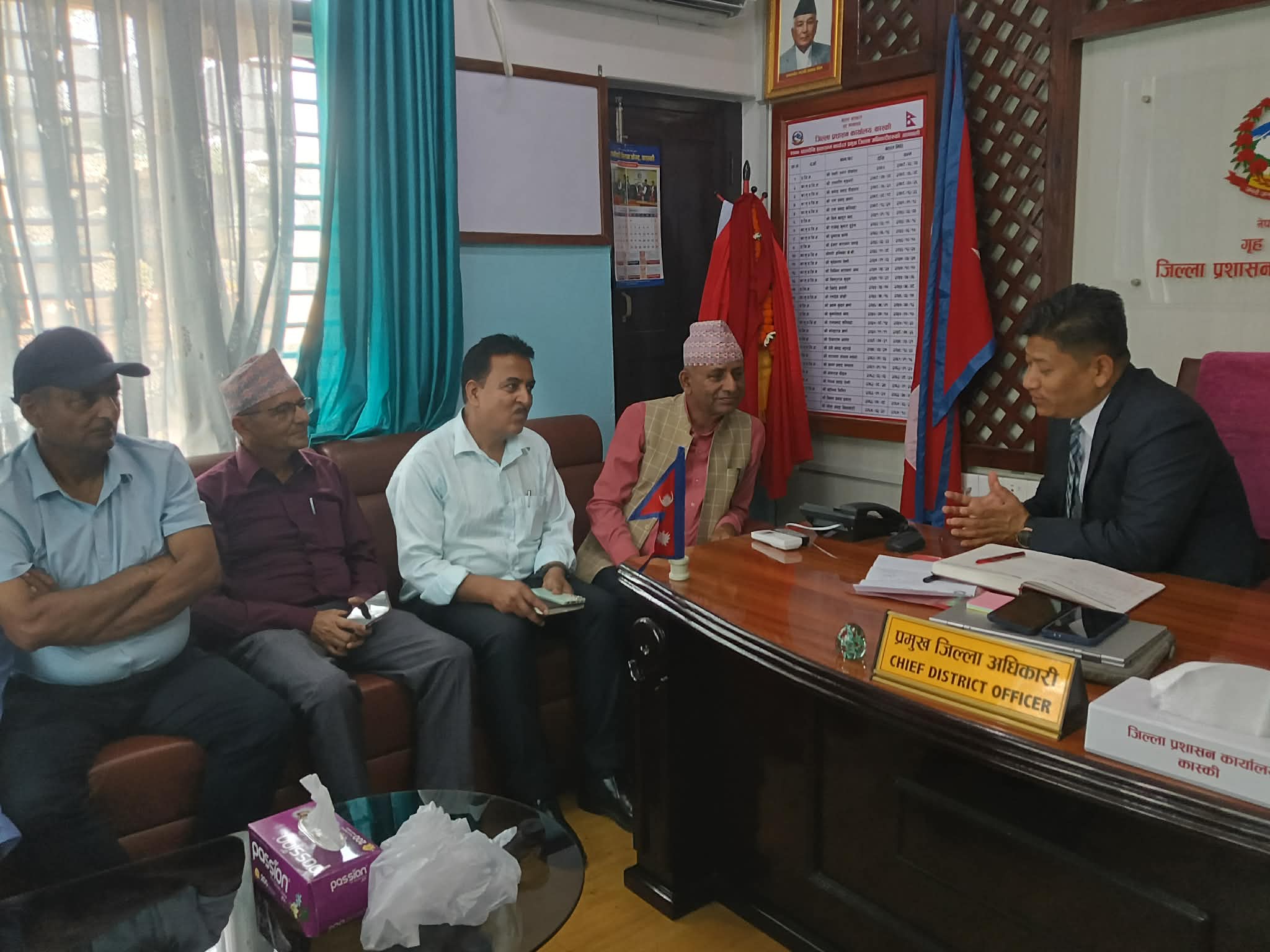 The said discussion held in the office of the Chief District Officer drew the attention of the local administration toward resolving problems arising from actions taken to remove the transport sector syndicate in Pokhara, drug abuse, and encroachment that has been taking place in an unregulated manner.
During the discussion, civil society leader Bishnu Prasad Baral clarified that civil society is not a registered institution but a forum that raises the voice of the voiceless. He stressed that the administration should take concrete steps for good governance, transparency, and the protection of human rights. He stated that a transport syndicate still exists in Pokhara’s city buses and taxi businesses, and that at night, drug abuse and criminal activities by youths have made the market unsafe.
Similarly, INSEC Gandaki Province Coordinator Ganesh Bhandari demanded the representation of civil society in important policy-level meetings held by the District Administration and other concerned bodies. Welcoming the removal of encroachment on public land and squatter settlements in Pokhara under the direction of the federal government, he suggested that proper employment and housing guarantees should be ensured for displaced dependent groups. He also drew the administration’s attention to the poor quality control in development works, noting that roads sink due to negligence in construction activities carried out in the name of road and drainage digging.
During the discussion, Human Rights Defenders Network Gandaki Province Coordinator Ramhari Dhungana expressed concern over continuous human casualties caused by tipper truck accidents in Pokhara and demanded a complete restriction on tipper operations during school and government office opening and closing hours. He also highlighted that due to the absence of a well-managed slaughterhouse in Pokhara, livestock are being slaughtered openly and irregularly, and that distortions are increasing even around religious sites.
After listening to the views of civil society representatives, Chief District Officer Kumansingh Gurung informed that a meeting of concerned stakeholders regarding squatter settlement management would be held within a day or two. He acknowledged the challenges related to traffic and parking management and stated that the issues of good governance and human rights raised by civil society were highly valid. He also suggested that civil society submit their concerns in a written, point-wise form. He further committed that, based on written suggestions, the local administration would coordinate with relevant agencies and gradually take immediate corrective measures.
The discussion was attended by members of the Human Rights Defenders Network and representatives of civil society.