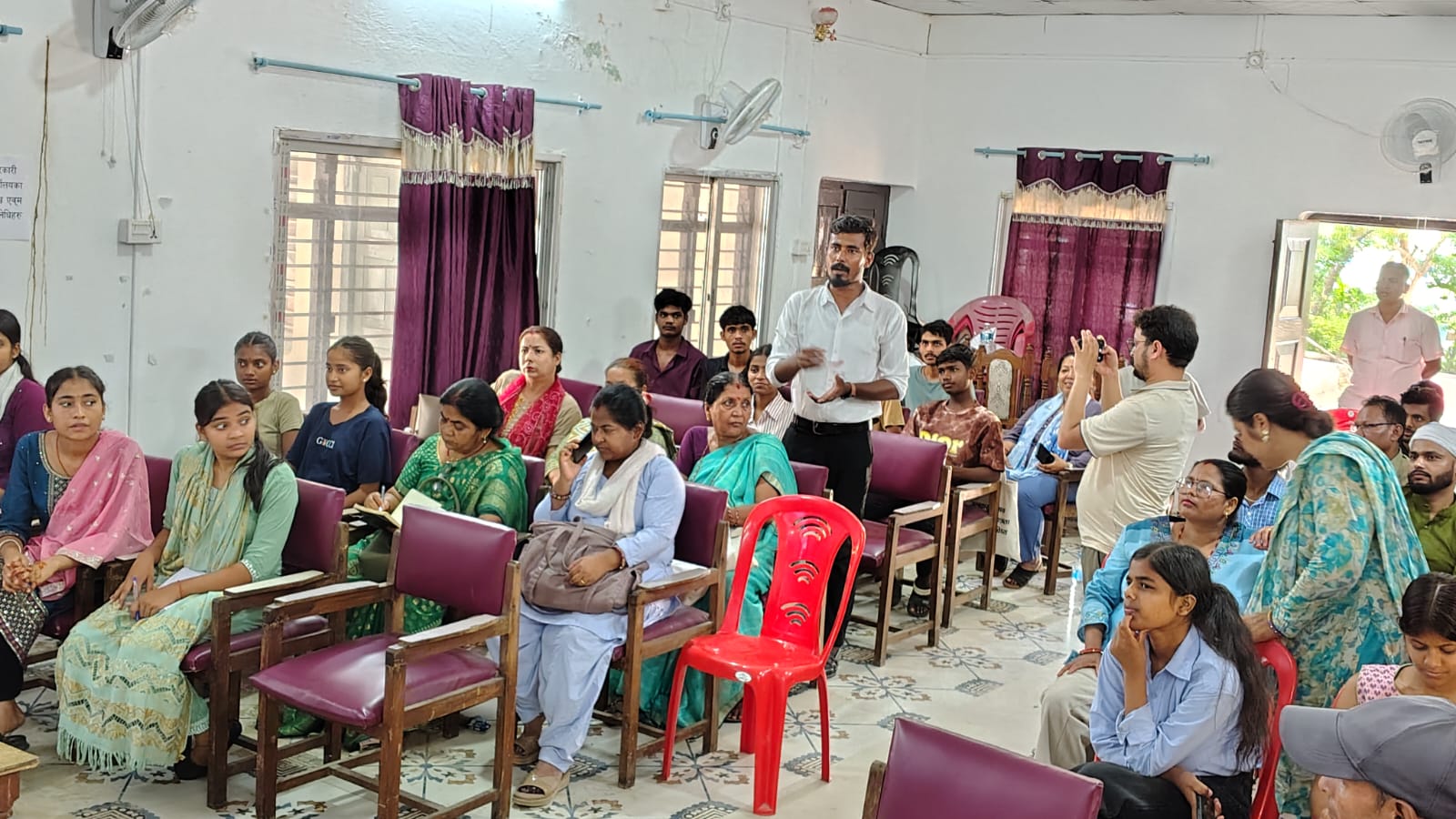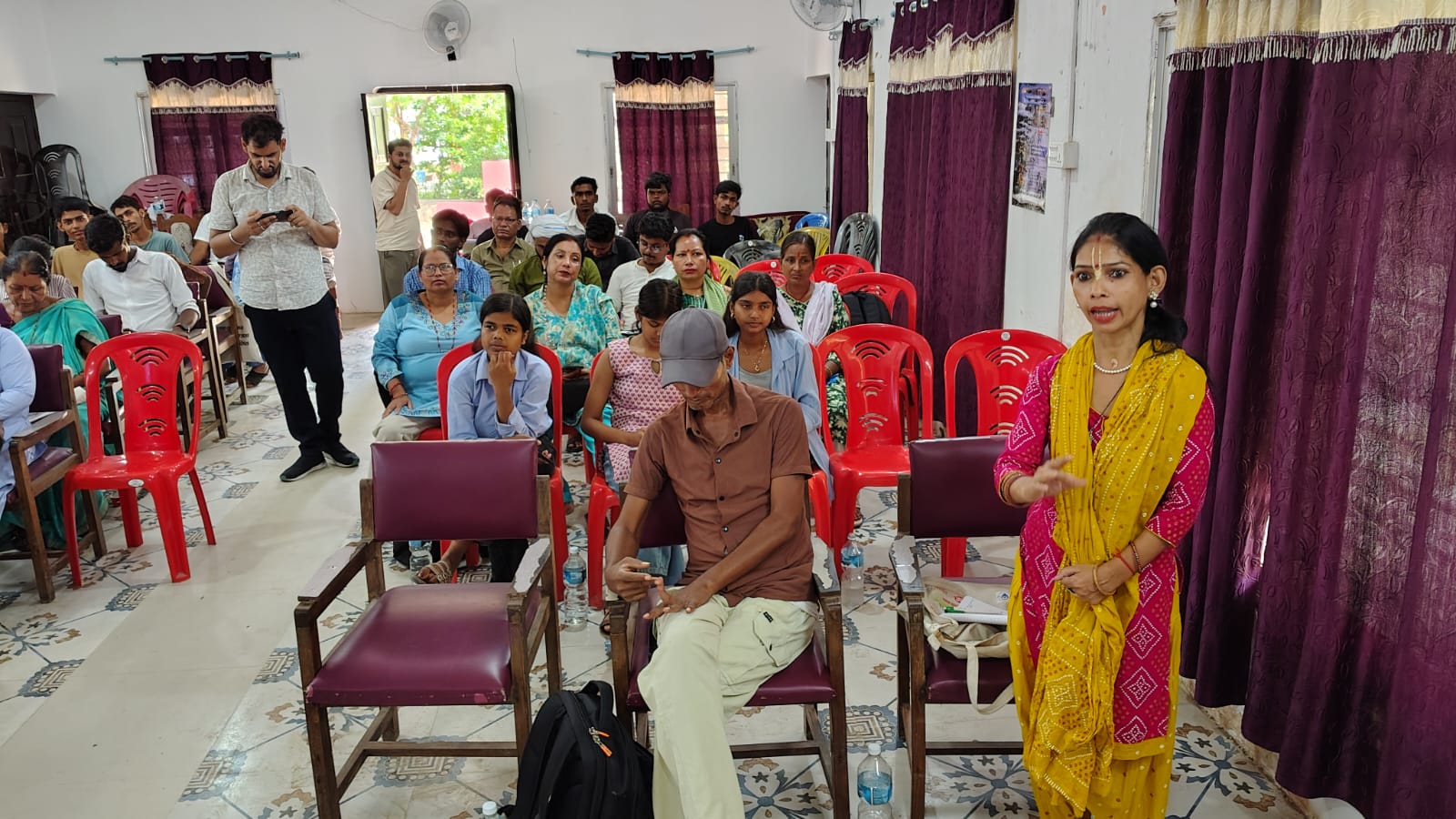

On the occasion of World Environment Day, Shankar Prasad Chaudhary, Minister for Forests and Environment of the Madhesh Provincial Government, stated that planting trees alone is not sufficient for environmental conservation and that ensuring their protection is equally important and a shared responsibility of all. He made these remarks while addressing an Interaction Program on Environmental Rights held in Janakpurdham on June 5, 2026, jointly organized by INSEC, Kayapalat, Sabal Nepal, Amnesty International Nepal, and the Single Women Group for Human Rights.
Minister Chaudhary noted that, in the past, tree plantation activities were carried out through user groups and various committees with allocated budgets, but the protection of planted saplings was often ineffective. To address this issue, responsibility for both plantation and conservation has now been assigned directly to ministry staff, who are required to ensure the survival and protection of the trees they plant.
He emphasized that environmental protection is not solely the responsibility of provincial or local governments but a duty shared by all citizens. Highlighting the adverse impacts of deforestation, exploitation of the Chure region, and degradation of natural resources, he stressed the need to make tree plantation mandatory alongside infrastructure development and urban expansion.
Stating that the Chure region is the lifeline of Madhesh, Minister Chaudhary underscored the importance of collaborative efforts among government agencies, civil society organizations, media professionals, and local communities for its conservation. He also acknowledged that limited budget allocations have posed challenges to effective implementation of environmental programs. According to him, many climate change-related problems could be mitigated through the protection and conservation of rivers, streams, and other water resources.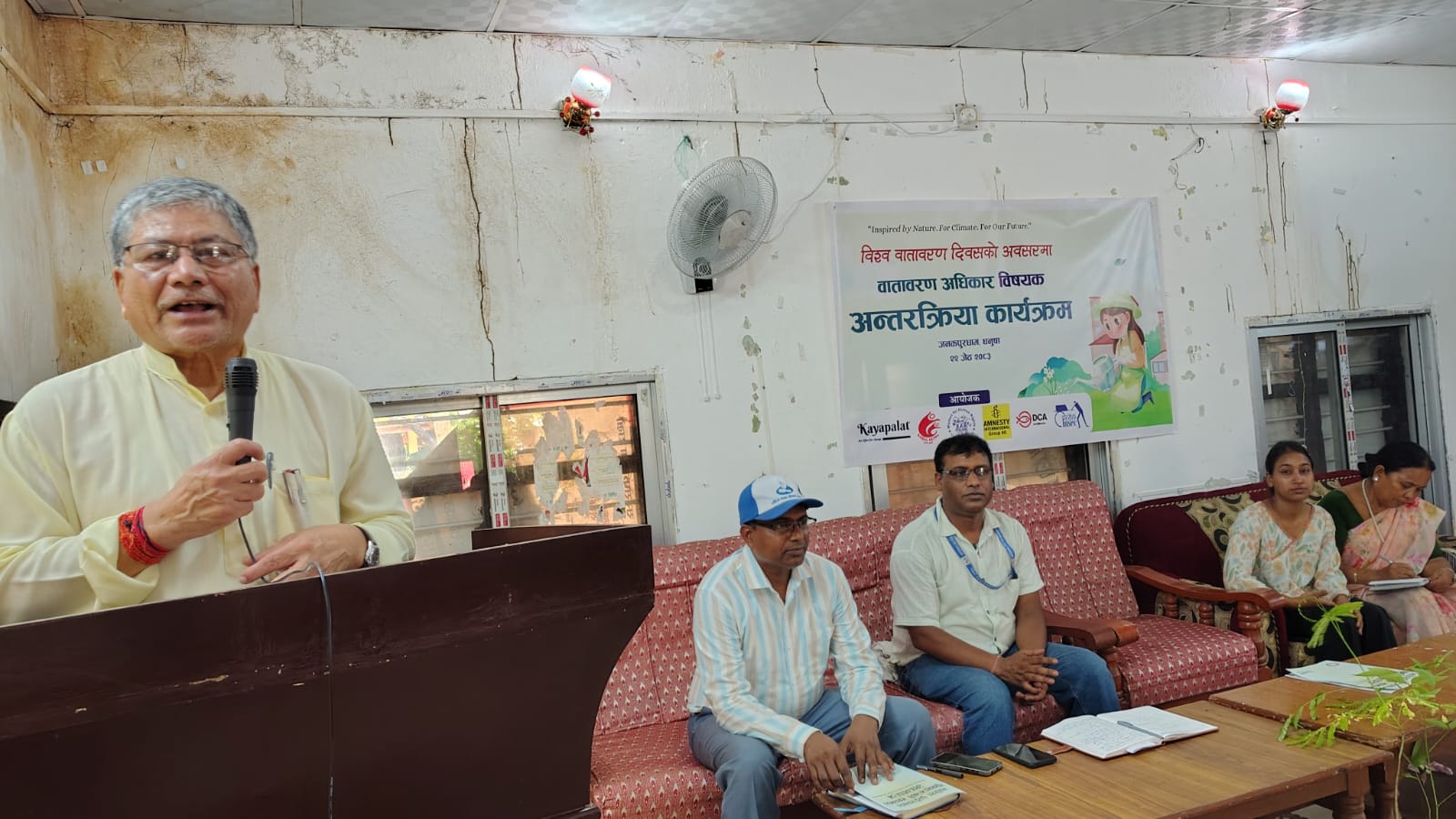 The Chief Guest of the program, Buddhanarayan Sahani, Chief of the National Human Rights Commission, Madhesh Province Office, stated that a clean and healthy environment is a fundamental right of every citizen, and therefore every individual should be able to fully enjoy this right. He emphasized that the entire responsibility of waste management should not be placed solely on local governments or the state, and that citizens must also remain aware of their own responsibilities.
He further stated that environmental protection should begin from positive practices at home, schools, communities, and public places. He added that effective solutions to environmental challenges are possible through enhanced coordination and cooperation among the government, civil society, the private sector, and local communities.
Similarly, INSEC Madhesh Province Coordinator Raju Paswan, who chaired the program, highlighted that human rights defenders advocating for environmental and human rights issues often face various threats and insecurity. He stated that a separate legal provision is necessary to ensure the protection of human rights defenders.
He also urged provincial ministers and policymakers to prioritize the passage of a Human Rights Defenders Protection Act.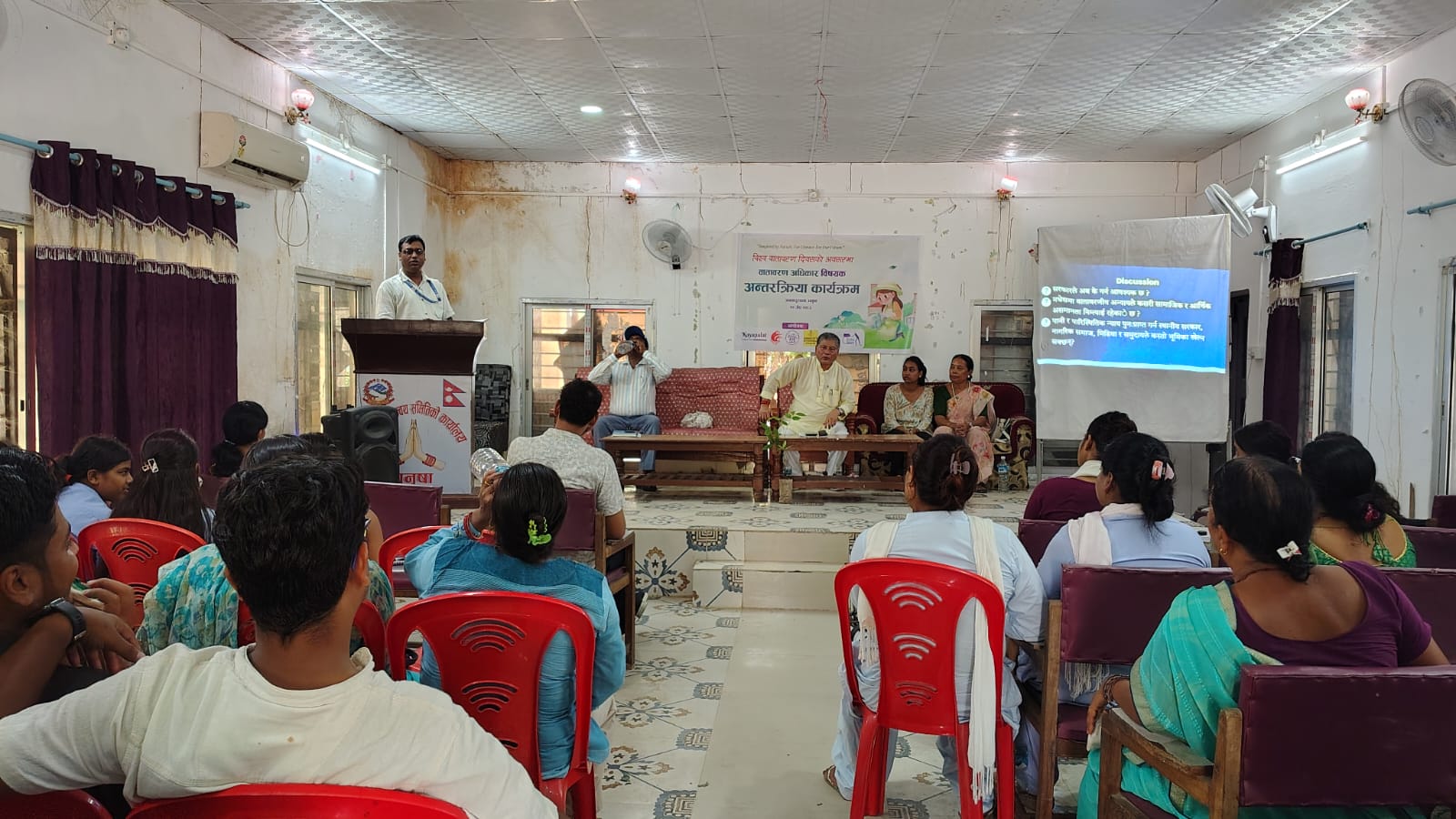 Human rights activist Jyoti Thakur stated that environmental pollution, extreme heat, and the lack of access to clean drinking water are directly affecting public health. She particularly highlighted that school-going children are facing shortages of safe drinking water and a healthy environment, which is adversely impacting both their health and their right to education.
Coordinator of the Environmental Rights Network, Madhesh Province, Dhiraj Shah, stated that being deprived of a clean environment is equivalent to being deprived of human rights. He urged the government to adopt a participatory approach in formulating policies and programs related to the environment, forests, and natural resources by consulting youth, local communities, and other stakeholders. He emphasized that ensuring meaningful participation of youth in policy processes would make environmental protection initiatives more effective.
Divakar Upreti, Founder of Kayapalat, presented on the key causes of climate change, highlighting rising temperatures in Madhesh Province, heatwaves, destruction of the Chure region, water resource crises, and plastic pollution as major challenges. He noted that climate change is not only an environmental issue but also exacerbates social and economic inequalities, stressing the need to include the voices of affected communities in policy-making processes. He further emphasized that the provincial government should introduce effective plans for plastic pollution control, green development promotion, water resource conservation, and the long-term protection of the Chure region.
During the program, Kayapalat submitted a joint memorandum of demands from the youth of Madhesh Province to Minister Chaudhary and the Chief of the Commission, Sahani. Similarly, INSEC Province Coordinator Paswan presented saplings as gifts to the chief guest and special guest on the occasion of World Environment Day.
The program was attended by representatives from various organizations including Kayapalat, DCA, INSEC, as well as human rights defenders, environmental activists, youth, and stakeholders from different sectors.