
Victims and patients with hemophilia staged a sit-in protest at the Ministry of Health of the Koshi Provincial Government, alleging that treatment support for hemophilia patients had been reduced. The protest was held on June 22, 2026, under the leadership of Nabin Dhungel, president of the National Federation of the Disabled Nepal, Koshi Province chapter. The protesters said they were compelled to demonstrate after the Koshi Provincial Government cut the budget that had previously been allocated for the treatment of people living with hemophilia.
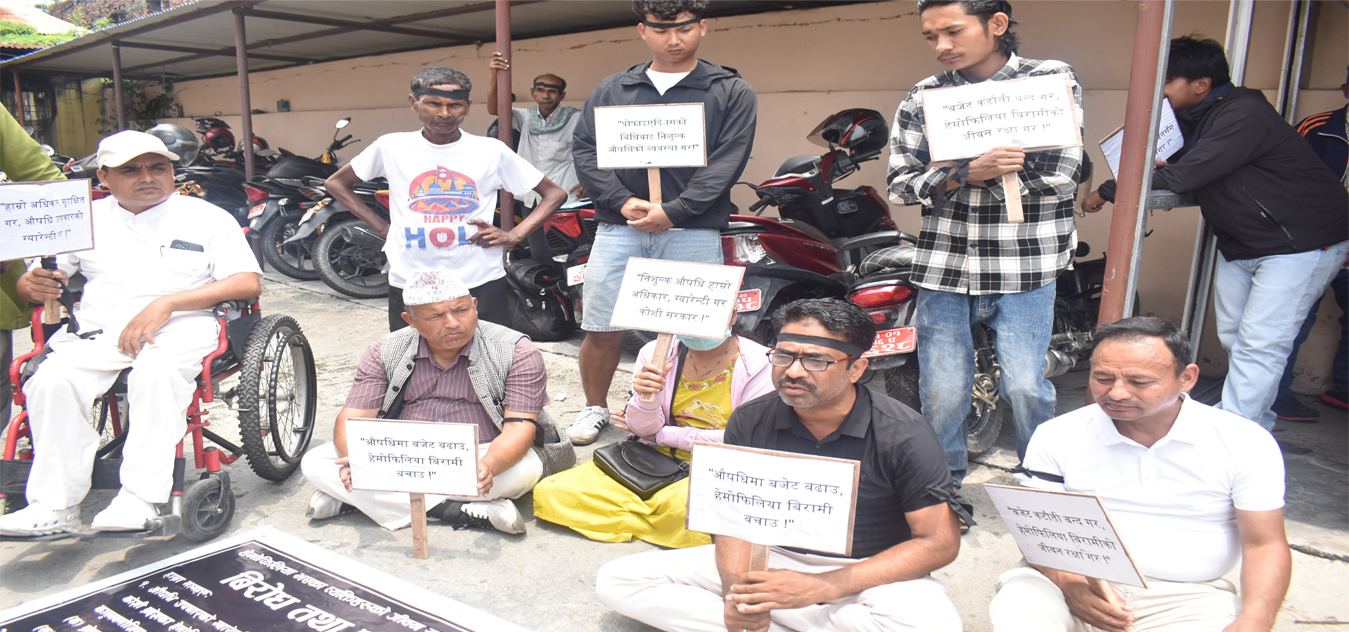
Participants in the sit-in protest urged the government to immediately restore and increase the budget necessary to save the lives of people living with hemophilia. They also warned that they would intensify their movement if their demands were not addressed.
Navin Dhungel, president of the National Federation of the Disabled Nepal, Koshi Province chapter, said that hemophilia is a serious congenital bleeding disorder. According to him, a lack of timely treatment can result in permanent disability. He explained that people with hemophilia experience both internal and external bleeding, and that a single dose of the medication required to control bleeding costs between Rs. 45,000 and Rs. 150,000. Since patients are unable to purchase the medicine directly from the market, he said the government must allocate sufficient funds to ensure treatment.
Dhungel stated that the Koshi Provincial Government had allocated Rs. 10 million annually for hemophilia treatment over the past six years, when there were around 90 patients in the province. However, although the number of patients has now risen to 155, the government has reduced this year’s allocation to only Rs. 3 million, prompting dissatisfaction among protesters.
“We had repeatedly requested the government to increase the budget, but instead it was cut. The government must decide whether it wants us to live or die,” Dhungel said.
According to Dhungel, Koshi Province requires Rs. 50–60 million annually for primary treatment and at least Rs. 20 million for emergency treatment of hemophilia patients. The Hemophilia Society reports that around 1,000 patients nationwide are affiliated with the organization, while the national census recorded 4,937 people living with hemophilia across Nepal, he added.