

The Badi community is one of the most marginalized Dalit communities in Nepal, regarded as untouchable, oppressed, and a minority community subjected to severe exploitation. Despite having a respected and proud history, over time this community has been socially, economically, educationally, culturally, and politically marginalized due to various forms of social and ethnic discrimination, stigma, coercive sexual exploitation, and the negative and derogatory attitudes of the state and society. Additionally, exclusion from opportunities, engagement in exploitative labor, lack of access to means of production, poverty, unemployment, landlessness, migration, and a nomadic lifestyle have left the community in a state of statelessness. Despite these challenges, the community has gradually been moving forward in society. Nevertheless, because some unmarried women (approximately 5 percent) have been involved in coercive sexual exploitation, the entire Badi community has been stigmatized by society as a community engaged in prostitution, leading to discriminatory and derogatory treatment that has further marginalized them.
It is estimated that the Badi community came to Nepal from the Vaishali region of India (Majgaiya 1999). According to their accounts, the Lichchhavis fled to Nepal after being defeated by the powerful Magadh state, and by the 14th century, they settled in the Salyan district of Nepal. They spread across different regions of the country to entertain the kings through music and dance, and through settlement, established themselves in various areas. According to the 2068 census, the population of the Badi community was 38,603, which decreased to only 11,470 in the 2021 census. This indicates that the community has not been given much importance and that errors or discrimination occurred even during census collection. The estimated population of this community is between 70,000 and 80,000, and although it is spread across 73 districts of the country, its population density is higher in districts of Lumbini, Karnali, and Sudurpashchim provinces (Survey by Commit Nepal, 2019).
The respected and proud history of the Badi community
It is said that history is written only by the victors. This shows that history is biased, as it primarily records the actions and achievements of the powerful and ruling classes. Since the Badi community has always been oppressed, marginalized, and stateless, its respected and proud history was never recorded, despite their contributions. According to various accounts, it was believed that if a Badi girl did not dance during marriage ceremonies, festivals, and religious rituals, it would bring good fortune, and if she did not dance before the wedding procession, it would determine an auspicious time. During the reign of the Baise-Chaubise Bhure Takure kings, Badi women were made to perform for entertainment in royal courts, which shows that the Badi community’s skill in music and dance was highly valued and respected.
The term “Badi” is said to be related to musical instruments. Because they crafted, played, and produced melodious sounds from instruments, the word “Badi” came to be associated with them. This community is uniquely and exceptionally skilled in Kathak, Kajri, Qawali, Thumri, Mujra, Dwari-Chaar-Gath, and various Raslilas (collective and love dances), as well as Dhota-Maruni dance, which are very famous. Although some Badi men and women received gifts and rewards from the kings for their performances, the rich cultural contributions and inventions in music and dance by the Badi community were never recorded in history, because this community has always been neglected by society and the state.
The beginning of coercive sexual exploitation and marginalization
According to surveys conducted by Commit Nepal in 2019 and other research reports, until 1950 AD, Badi women performed music and dance at the homes of kings, Bhure Takure, Jimmwal, and local chieftains to entertain them and earn a living. During this period, the community was treated with respect, and these young women were honored with names such as Devi, Durga, Menka, and Urvashi. Until 1950 AD, a small number of unmarried Badi women were secretly taken by the rulers, chieftains, Jimmwals, and alleged feudal exploiters as concubines under the pretext of dancing and singing, initiating sexual exploitation. This process was highly secretive. Since then, the community has faced the beginning of sexual exploitation, humiliation, discrimination, and stigma. Some unmarried women were forced into sexual acts, marking the start of sexual exploitation in the community. According to this study, from 1950 AD to 1993 AD, sexual exploitation in the community spread extensively. It began with the practice of keeping concubines, and the period from 1973 AD to 1993 AD is considered a dark era for this community. During this time, about 5 percent of unmarried Badi women were forcibly involved in sexual exploitation. Because of this involvement of around 5 percent of unmarried women, the entire Badi community was stigmatized as a community engaged in sexual exploitation and prostitution, leading to social marginalization and exclusion from various opportunities. Consequently, the community fell behind and was further degraded in society.
The sexual exploitation observed from 1993 AD to 2011 AD was somewhat under control. However, this exploitation reappeared from 2012 AD and gradually increased. Some families in the community again involved their own and some relatives’ young unmarried daughters in sexual exploitation under various economic inducements. Poverty, unemployment, and other reasons led some Badi families to coerce their daughters into sexual exploitation. As families observed each other, this practice began to gain momentum.
Humiliation and marginalization
The coercive sexual exploitation observed among some Badi women created multiple issues in the community, including oppression, humiliation, marginalization, and statelessness. This community is one of the most marginalized and oppressed within Nepalese society and within the Dalit community, considered the lowest in status. Within the Dalit community, the Badi are treated as the most untouchable, excluded, and marginalized minority sub-caste. Educationally, only a few individuals from the Badi community have attained higher education. Only 3 percent of youth have education beyond secondary school. Even today, literacy in the community is only around 25 percent (Commit Nepal Survey, 2019). Because they lead a nomadic lifestyle and some have not obtained citizenship, they cannot claim land. Forty-three percent of the Badi community does not have land of their own. Of those with land (57 percent of the total), around 58 percent live on riverbanks, forests, government land, or fallow land. Economically, the community lives in extreme poverty. Twenty-five percent are engaged in various jobs, businesses, or foreign employment, while 75 percent survive through low-wage labor. Due to lack of skills, they must focus on merely earning daily sustenance. Some migrate to India for wage labor.
Traditional occupations such as performing music and dance, fishing, crafting musical instruments, and making tools are disappearing. Traditional music and instruments have been replaced by modern instruments, as the community lacks modern skills. Badi women performing dance face accusations and stigma, while high-caste performers are celebrated nationally. When Badi girls dance, they are insulted with terms such as Badeni, Patar, Bhad, Hijra.
Socially, around 30 percent of the Badi community faces some form of social discrimination. Badi women suffer human rights violations through derogatory treatment.
Even today, many individuals lack legal fathers or identification, preventing them from obtaining birth registration. Without birth registration, they are denied education, as school regulations require a birth certificate for admission. As a result, these children are deprived of education and may be drawn into delinquency, child labor, child marriage, sexual exploitation, or migrate to India for work. Women who have experienced sexual exploitation may remain married for years without legal recognition or rights. Without birth and marriage registration, they are denied citizenship and, consequently, social security benefits for single women. Thus, individuals deprived of birth registration, marriage registration, citizenship, and national identity cards remain stateless.
Due to lack of political and administrative access, they are excluded from government services. Only a few have proportional representation in political parties and local or provincial councils. In the 2079 election, one woman was nominated proportionally to the Lumbini Provincial Assembly, one was elected mayor of Chaurjahari Municipality, West Rukum, and one was elected as ward chairperson. Additionally, twenty Badi leaders were elected as municipal, ward, and Dalit women members, ensuring partial inclusion.
Badi community movements and struggles
Around 2003 BS, King Tribhuvan awarded Badi women for their performances. On that occasion, the Badi community informed the king about their problems. Later, when King Mahendra visited Nepalgunj, the Badi submitted petitions, resulting in orders to provide some land, plows, and seeds to the community in Khajura and Sitapur, Banke. In 1995–1996 AD, a Badi movement took place in Nepalgunj’s Gaganganj (now Pragatisheel Marg), demanding either food and shelter or permission for sex work, challenging the state. In 1998–1999 AD, the Badi community engaged in land occupation struggles, spreading across Dang, Banke, Bardiya, Kailali, and Kanchanpur. On April 22, 2003, three NGOs and some Badi leaders filed a writ petition in the Supreme Court against the government, resulting in an immediate interim order addressing Badi oppression. In 2004 AD, some women subjected to coercive sexual exploitation protested under the slogan “Either provide a license for sex work or restore our rights,” in Dang and Kailali. In 2006 AD, Badi people in Kailali blocked highways in Muda and Lamki, resulting in 144 families in Lamki-Chuha Municipality Ward No. 2 gaining land and permanent settlement. From August 17, 2007, under Umadevi Badi’s leadership, Badi from 23 districts gathered in Kathmandu for a 48-day movement, surrounding Singha Durbar. The government agreed to provide scholarships for Badi children, ban derogatory terms like Badeni, Patar, and Bhad, and restore women affected by coercive sexual exploitation. These agreements remain unimplemented. Furthermore, literature, novels, and films such as Nathiyaa, Ailani, and Pandit Baje’s Lauri directly discriminated against the Badi community, defaming their proud history, leading the Badi community to approach the Supreme Court on September 20, 2018. On February 27, 2019, the Supreme Court ordered that such discriminatory works must be corrected and, in future, works must be published only with the consent of the related community, and violators would face legal consequences.
Similarly, in 2021 AD, a 16-day Badi movement took place in Karnali Province, demanding land, food, shelter, education, and employment. Badi men and women held street protests, surrounded the Chief Minister’s office, and staged 24-hour sit-ins. A five-point agreement was reached with social development ministries and relevant authorities, but no steps were taken to implement it.
The time has come for the Badi community itself to become aware and free itself from caste-based oppression, exclusion, statelessness, and humiliation.
As the state is the primary stakeholder, it is fully responsible and accountable to ensure the comprehensive development, social and economic rights, social justice, and dignity of the Badi community. To implement fundamental rights provided by the constitution, laws must be enacted, policies drafted, and existing complex policies revised to make them Badi-friendly.
The Badi community, like other communities, is a citizen of this country. The state is responsible for including this community in the mainstream of development. The community has the natural and birthright to access state-provided services. In the past, due to sexual exploitation of some women, the community was denied birth registration, marriage registration, and citizenship, excluding them from services and opportunities, further marginalizing them. Today, changes are occurring through education and awareness, and the comprehensive development of the community depends on the Badi community itself and the three levels of government.
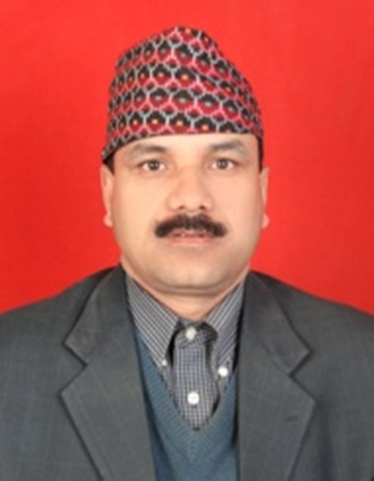
Author: Keshav Badi (Nepali)
(Human Rights and Social Activist)